

Home Nursing Assessment in Adelaide: When to Refer
A dressing that is no longer staying in place, repeated catheter blockages, redness over a pressure area, or a bowel routine that has become unpredictable can quickly turn an ordinary support roster into a clinical risk. A home nursing assessment in Adelaide gives participants, families and care teams a clear picture of what is happening, what needs to change and who needs to be trained to provide care safely.
For NDIS participants with complex health support needs, the value of an assessment is not simply confirming that nursing is required. It is about translating day-to-day health needs into practical routines, clinical care plans and evidence that Support Coordinators can use with confidence.
What a home nursing assessment looks at
A practical nursing assessment is completed where care actually occurs: at home, in supported accommodation or another community setting. This matters because clinical risks are often shaped by the real environment. A participant may have a well-written routine, for example, but the supplies may be stored out of reach, hand hygiene facilities may be inadequate, or support workers may have different understandings of when to escalate a concern.
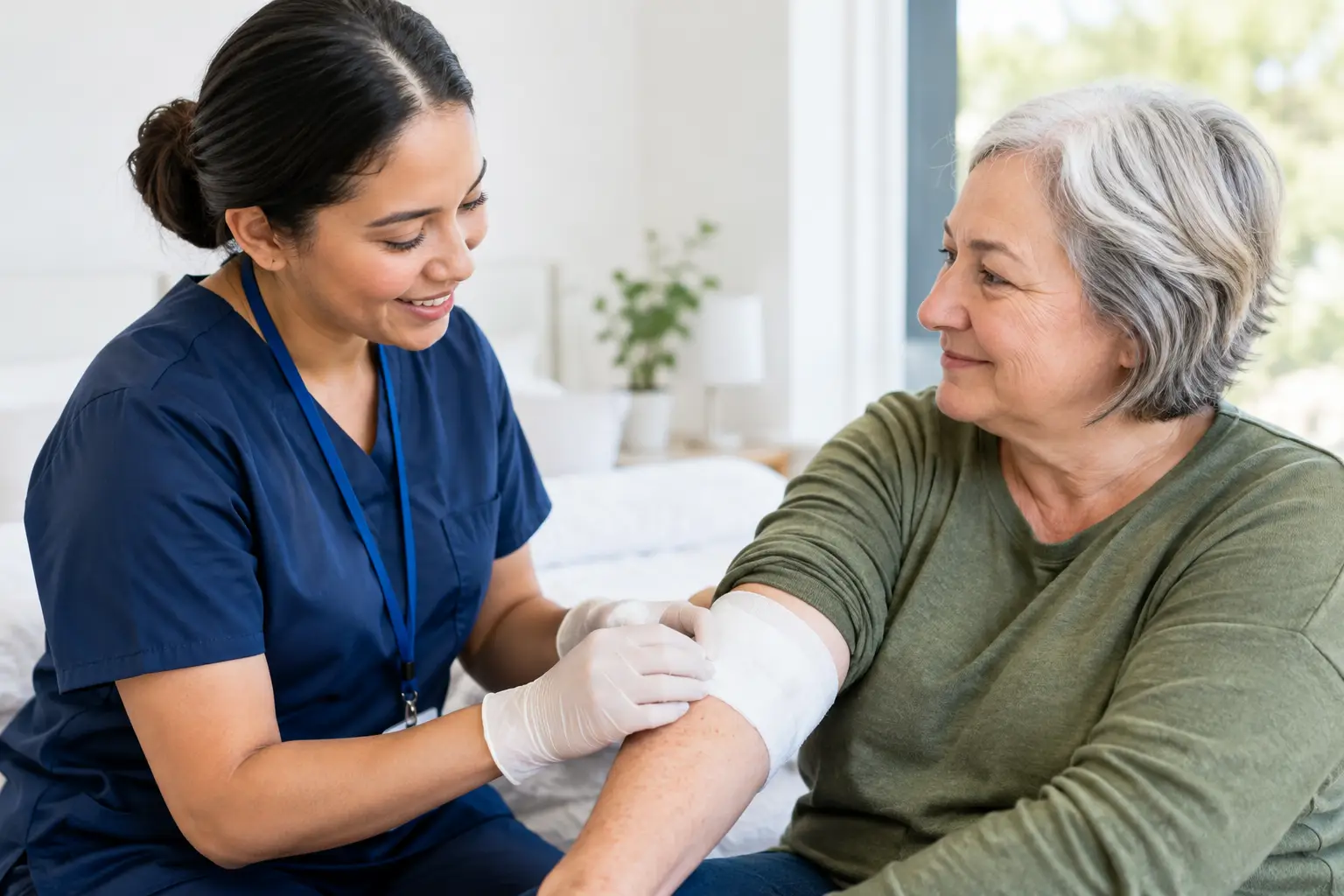
The nurse will listen to the participant and the people who know their usual health and care routines best. They will review relevant clinical history, current care arrangements, medication information where appropriate, existing plans and recent changes in health. The assessment may also involve observing a wound dressing routine, stoma care, catheter management, continence supports, skin care or diabetes-related tasks.
The focus remains safe, dignity-focused care. That includes asking whether a routine is comfortable and respectful for the participant, whether it protects privacy, and whether it is realistic for the people expected to carry it out. A plan that looks good on paper but cannot be followed consistently will not reduce risk.
When to refer for a home nursing assessment in Adelaide
A referral is often appropriate when a health need is becoming more complex, when current supports are unclear, or when there is no current nursing documentation to guide the team. Early input can prevent smaller concerns from becoming urgent problems.
Support Coordinators and families may seek clinical support in the home when a participant has a new wound, recurring skin breakdown, signs of pressure injury risk, frequent infections, changes in continence, constipation or bowel accidents, or difficulties with a stoma, catheter or feeding-related routine. Nursing input is also valuable when a participant is returning home after hospital, has had a significant change in health, or needs a care routine reviewed because it is no longer working.
Another common trigger is workforce confidence. If support workers are uncertain about a high-intensity task, receiving inconsistent instructions, or relying on informal verbal handovers, the service needs stronger clinical oversight. This does not mean workers have done anything wrong. It means the care arrangement needs clear direction, documented competency requirements and an escalation pathway.
A nursing assessment can also be timely before an NDIS plan review or change of circumstances. Where complex health needs affect the level, frequency or nature of supports required, well-structured nursing evidence helps explain the functional and clinical impact. It is not a guarantee of funding outcomes, but it can give decision-makers a clearer, evidence-based account of the support required to maintain safety at home.
From assessment to a workable care plan
A thorough assessment should produce more than a list of concerns. It should result in practical recommendations that can be implemented by the participant’s team.
For continence and bowel or bladder care, this may include reviewing the routine, identifying likely contributing factors, documenting skin protection measures and setting out clear actions if there is retention, constipation, leakage, pain, blood in urine or other warning signs. For catheter care, the plan may clarify daily checks, hygiene requirements, bag management, supply needs and when urgent medical review is needed.
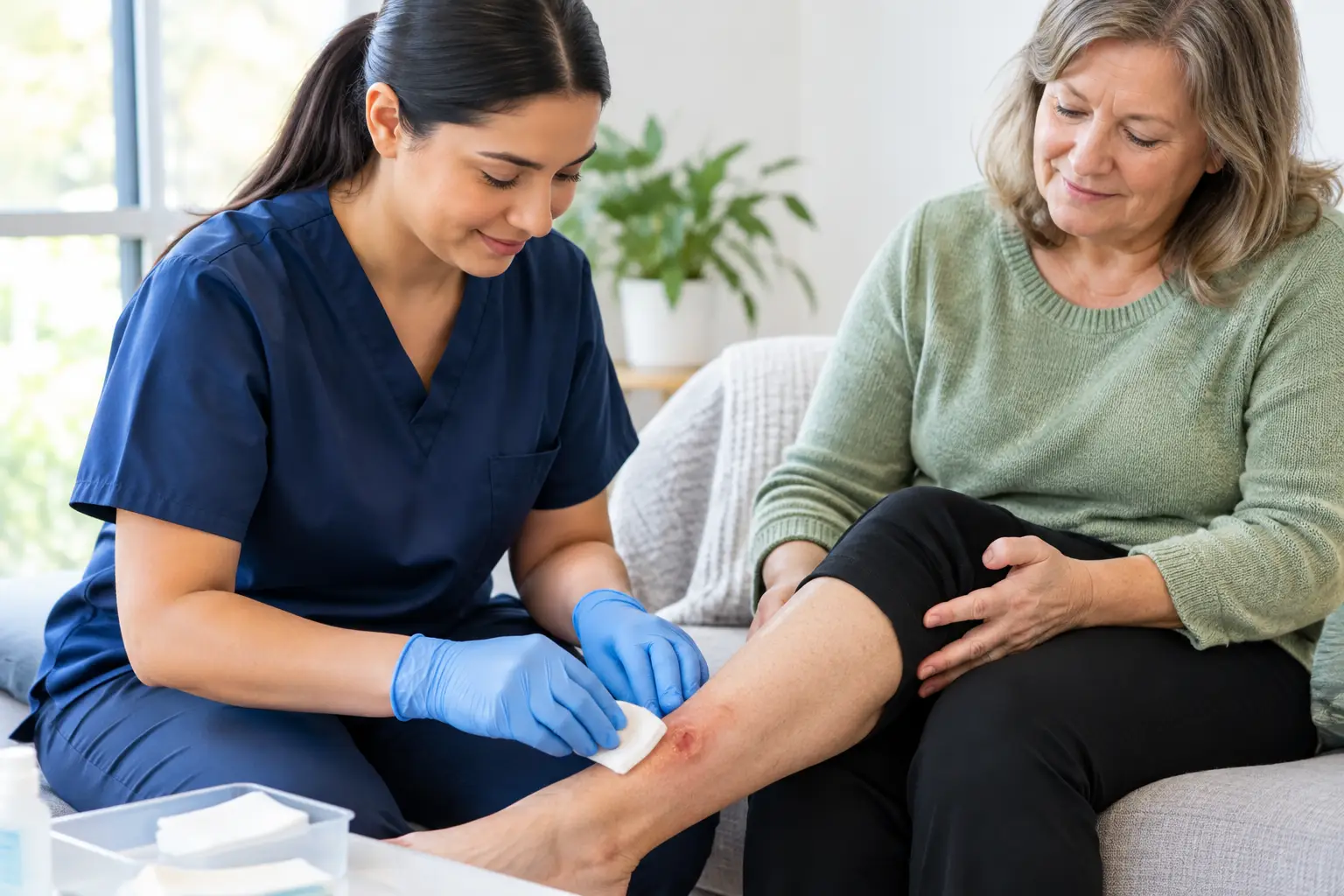
For wounds and pressure care, the nurse considers wound characteristics, surrounding skin, pain, exudate, infection indicators, dressing suitability and the factors that may be delaying healing. Pressure injury prevention is broader than a dressing. It can include skin monitoring, repositioning routines, moisture management and clear guidance on when a change in skin colour, temperature or integrity requires escalation.
Stoma care assessments may address the condition of the stoma and peristomal skin, appliance fit, leakage, output patterns and whether the participant and support workers have the knowledge and supplies needed for a reliable routine. Diabetes and medication-related support may require a similarly detailed approach, with appropriate boundaries between nursing responsibilities, prescribing clinicians and the support team.
The final clinical care plan should use plain, specific language. It needs to state what is to be done, how often, what equipment or consumables are required, what observations must be recorded and who to contact when a concern arises. Vague instructions such as ‘monitor skin’ leave too much room for interpretation. Clear instructions help workers recognise whether a minor change can be monitored, whether the nurse should be contacted, or whether urgent medical attention is needed.
Why reports matter for Support Coordinators
Support Coordinators often need to make decisions quickly while balancing participant preferences, provider capacity, family concerns and NDIS documentation requirements. Clear reports for Support Coordinators reduce uncertainty.
A useful nursing report describes the participant’s clinical needs, current risks, required supports and the consequences of care not being delivered consistently. It should connect recommendations to daily care realities, rather than relying on broad statements about a diagnosis. For example, a report may explain how a catheter routine requires trained workers, clinical review after recurrent blockages and a documented response plan, rather than simply listing the participant’s medical history.
Good documentation is also useful across the care team. It can support communication with guardians, Plan Managers, allied health professionals, GPs and discharge teams, while keeping the participant’s nursing needs central. Where consent and appropriate information-sharing arrangements are in place, a shared understanding prevents duplicated work and contradictory instructions.
Training is part of safe implementation
An assessment identifies what needs to happen. Support worker training and clinical oversight help make sure it happens safely and consistently.
Training should be tailored to the actual task and participant. A generic session may not prepare a worker to manage an individual’s stoma appliance, recognise the early signs of a specific wound complication or follow a participant’s established bowel routine. Practical teaching can cover the care steps, infection prevention, documentation expectations, participant communication, limits of the worker’s role and escalation requirements.
Competency is not static. When a participant’s condition changes, a new product is introduced or a clinical incident occurs, the plan and training may need review. Ongoing nursing oversight gives the team a process for checking whether the routine remains safe, effective and respectful.
Preparing a referral
A referral can move faster when the nurse has enough information to understand the immediate clinical issue. The most helpful referral includes the participant’s contact details and consent arrangements, current diagnoses or relevant history, a brief description of the concern, recent hospital or medical information where available, current care plans, medication information if relevant, and details of the existing support team.
It also helps to state the outcome needed. The request may be for a continence assessment, wound review, catheter care plan, high-intensity support worker training, clinical report for a plan review, or broader assessment of complex health support needs. If there is an immediate concern such as fever, rapidly spreading redness, severe pain, confusion, uncontrolled bleeding or acute deterioration, urgent medical care should be sought rather than waiting for a routine assessment.
Compassion Wings provides nurse-led NDIS care across Adelaide, including northern, eastern, southern and western suburbs, with assessments designed to lead to usable plans, appropriate training and clinically sound documentation.
The right time to seek nursing input is usually before the care arrangement reaches crisis point. A timely assessment can give the participant and their team a safer routine, clearer decisions and the reassurance that complex care is being managed with clinical care and dignity.