
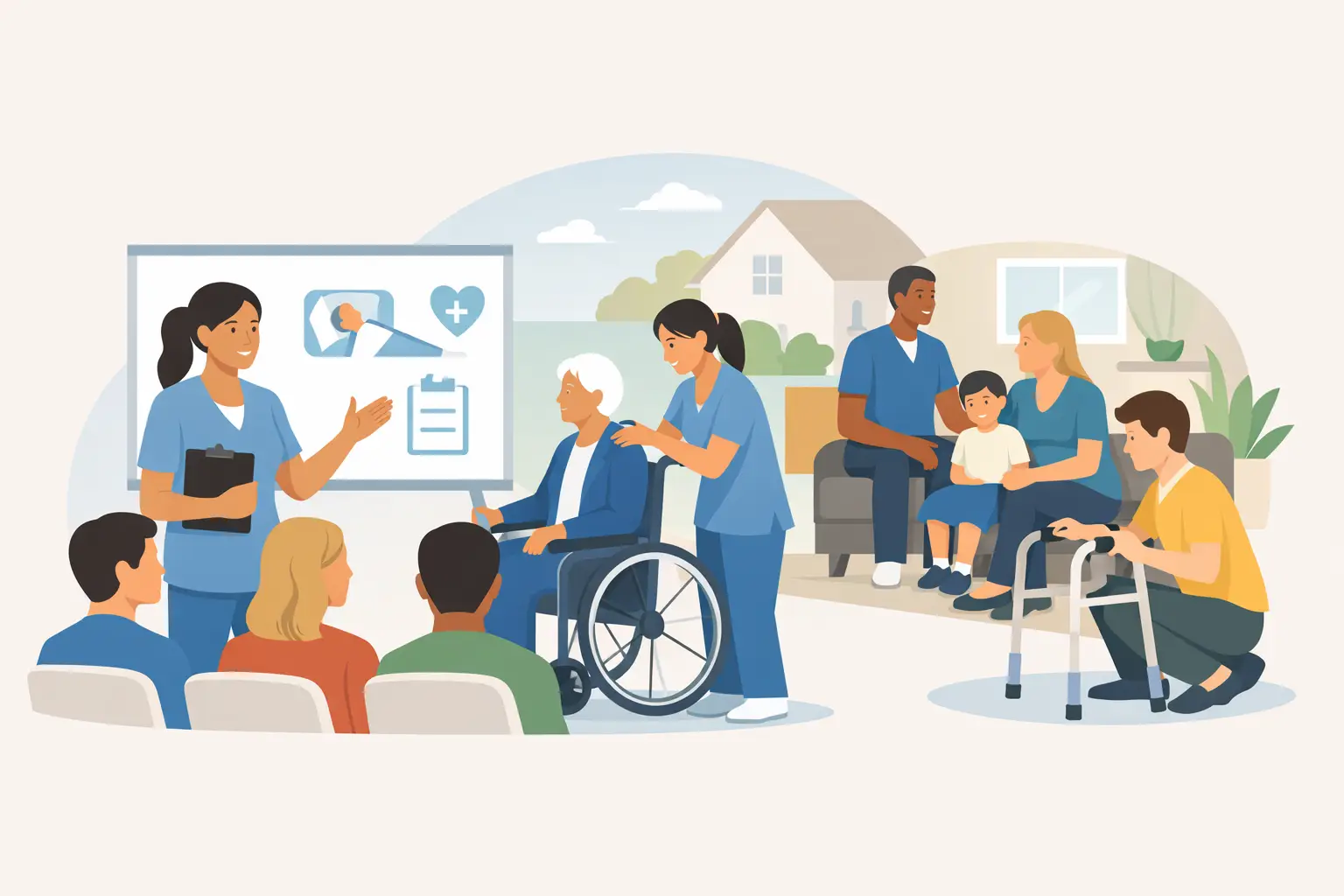
Support Worker Training in Nursing Care
A support worker may be doing everything with care and goodwill, yet still miss the early signs of skin breakdown, a catheter problem, a worsening wound or an unsafe bowel routine. That is where support worker training nursing input matters. For NDIS participants with complex health needs, the difference between routine support and nurse-led guidance can be the difference between stability at home and an avoidable hospital presentation.
For Support Coordinators, families and SIL teams, the pressure is usually the same. You need care that is practical in the real world, clinically sound and documented clearly enough that everyone understands what safe care looks like. Training is not just about showing someone a task once. It is about building consistent routines, recognising risks early and making sure support workers know when to continue, when to pause and when to escalate.
Why support worker training nursing input matters
When a participant has complex health support needs, day-to-day care often sits with support workers, but the clinical reasoning behind that care should come from a nurse. A continence routine, pressure care schedule, wound dressing plan, diabetes support process or medication-related observation is not simply a checklist. Each task has risks, exceptions and warning signs.
Without proper clinical oversight, support workers can be left relying on habit, handover notes or verbal instructions passed between shifts. That is where errors creep in. A dressing may stay on too long because the wound looked “about the same” yesterday. A participant may become constipated or dehydrated because a bowel and bladder routine was never properly explained. A red area on the skin may be treated as minor irritation when it is actually the start of a pressure injury.
Nurse-led NDIS care brings structure to those situations. Training helps support workers understand not only what to do, but why it matters and what changes should trigger review.
What good support worker training in nursing care should include
Strong support worker training in nursing care is specific to the participant, not generic. A broad manual or one-off induction is rarely enough for people with high-intensity needs. Training should be based on practical nursing assessments, the participant’s current presentation, their risks and the environment where care is actually delivered.
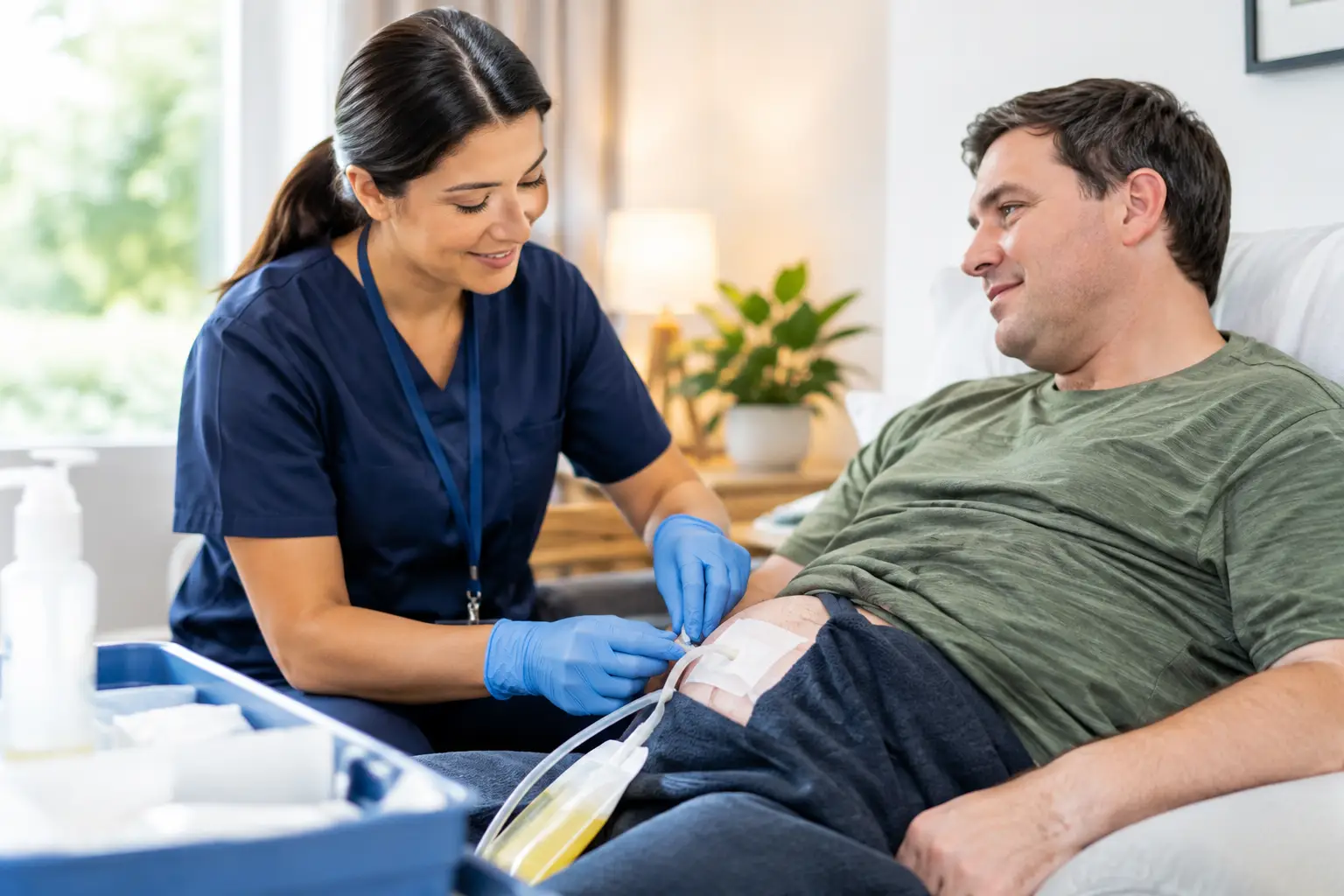
That often starts with an RN assessing the participant in the home. The nurse can review skin integrity, continence patterns, wound status, stoma or catheter needs, diabetes routines, medication supports and any current incidents or concerns. From there, the training can be tailored to the real tasks support workers are expected to carry out.
Just as importantly, the nurse should translate clinical information into plain, usable guidance. Support workers do not need vague statements such as “monitor closely”. They need to know what to look for, how often to check, what normal looks like for that participant and what requires escalation. Good training reduces guesswork.
Where nursing oversight makes the biggest difference
Some areas carry greater risk and need more than a quick handover. Continence care is a common example. If routines are inconsistent, participants may experience skin breakdown, recurrent infections, constipation, leakage, embarrassment and reduced comfort. Nurse-led assessment can identify patterns, recommend practical changes and guide support workers in safe, dignity-focused care.
Wound care and pressure care are another area where training matters. A support worker may be responsible for repositioning, checking pressure areas, reporting skin changes or supporting a dressing routine around a nurse visit. If they do not understand early warning signs, the participant can deteriorate quickly. Clear training protects both the participant and the team around them.
Stoma care, catheter support, bowel routines, diabetes monitoring and medication-related observation also benefit from support worker training and clinical oversight. These are not areas where teams should rely on assumptions. Even experienced support workers need participant-specific education when the clinical picture is changing.
Training is not a substitute for nursing care
This is an important distinction. Support worker training does not replace the need for nursing assessment, review or escalation. It supports safe implementation of a care plan within the worker’s role. If a participant has unstable wounds, recurrent infections, frequent catheter issues, complex bowel concerns or changing skin integrity, the answer is not simply “more training”. The answer is often more active nursing involvement as well.
That balance matters for Support Coordinators and providers trying to keep supports safe and audit-ready. It also matters for families who may feel reassured when someone says staff are trained, without realising the participant’s condition has moved beyond routine implementation.
What Support Coordinators should look for before referring
If you are coordinating supports for a participant with complex needs, there are a few signs that nurse-led input is needed. Repeated incidents, unclear care instructions, frequent staff questions, inconsistent routines, skin concerns, continence issues, medication concerns or a recent hospital discharge are all common triggers.
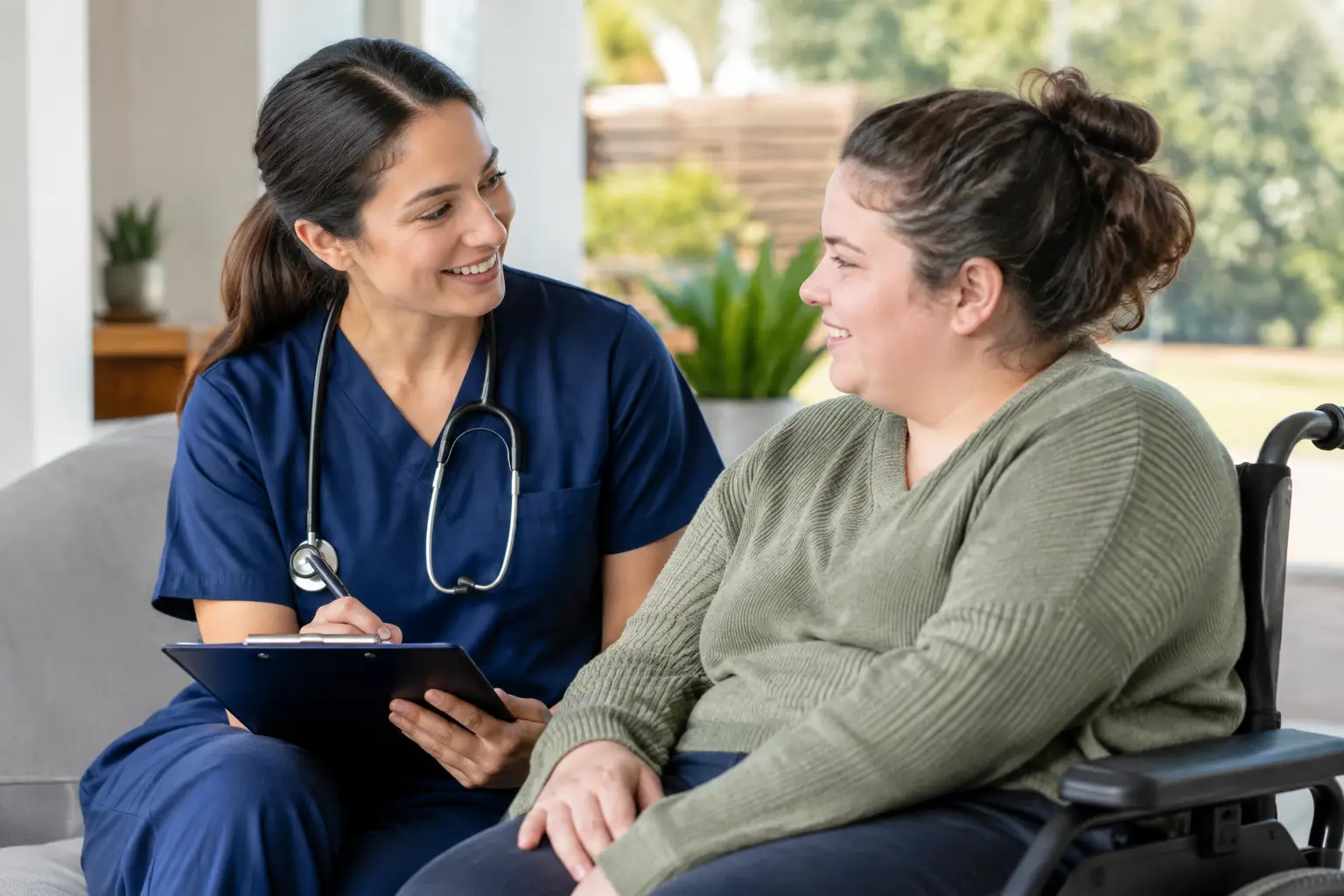
Another sign is when everyone is doing their best, but no one feels fully confident. Families may be worried that supports are not being delivered consistently. Support workers may be uncertain about what is normal and what is not. SIL teams may have incidents but no clear clinical framework to reduce risk. In those cases, practical nursing assessments and clear reports for Support Coordinators can make a substantial difference.
A useful referral usually includes the participant’s diagnosis or main health concerns, current support arrangements, recent discharge information if relevant, existing care plans, incident patterns and any specific concerns about skin, continence, wounds, stoma, catheter, diabetes or medication support. The clearer the starting information, the faster the nursing team can assess risks and recommend a plan.
Documentation matters as much as the training itself
Training that is delivered well but documented poorly creates problems later. In the NDIS space, teams often need evidence that risks were assessed, instructions were clear, staff were educated and clinical review occurred when needed. This is especially relevant when participants are seeking plan review evidence or change of circumstances documentation related to complex care needs.
Good documentation should show what was assessed, what training was provided, what support workers were taught to observe, when they should escalate and what ongoing review is required. This helps create safer care on the ground, but it also gives Support Coordinators confidence that the service is clinically accountable.
For participants and families, this level of documentation can feel reassuring rather than bureaucratic. It means care is less likely to rely on memory or verbal handover. It creates consistency across workers and across shifts.
The practical outcome is safer care at home
The goal of support worker training nursing input is not to make care look more clinical than it needs to be. It is to make daily routines safer, clearer and more sustainable. When support workers understand the participant’s clinical risks, they are better placed to notice deterioration early, follow care plans correctly and preserve the participant’s dignity during personal and often sensitive routines.
That can mean fewer preventable skin issues, better continence management, earlier escalation of wound concerns, more consistent bowel and bladder support and stronger communication between workers, families and clinicians. Over time, it can also reduce avoidable hospital presentations and the cycle of crisis-based care.
For Adelaide participants living with complex health needs, that kind of clinical support in the home is often what allows routines to remain stable. It gives families confidence that concerns are being taken seriously and gives referrers a clearer pathway when risks are emerging.
Compassion Wings approaches this work through nurse-led NDIS care, practical nursing assessments, support worker training and clinical oversight, with a strong focus on helping participants stay safe at home. The most effective training is never generic. It is built around the person, their health needs, their environment and the reality of who is supporting them each day.
If a participant’s care feels more complex than the current team setup can safely manage, that is usually the point to bring nursing in – not after something has gone wrong, but while there is still time to prevent it.



6 Comments
High Intensity Daily Activities Nurse Guide - Compassion Wings
June 5, 2026[…] Support worker training and clinical oversight should be practical, specific and matched to the participant. Generic information is rarely enough. Workers need to understand not only what to do, but what to look for, what not to do and when to escalate. They also need confidence. A worker who is unsure about a catheter bag setup, a wound dressing change or a bowel routine may either hesitate when action is needed or continue despite signs that something is wrong. […]
How to Support Stoma Care Safely - Compassion Wings
July 6, 2026[…] Support worker training and clinical oversight help reduce that variation. A nurse-led service can assess the current routine, identify risks, provide practical education and document the steps clearly. That creates safer handover between staff and gives providers confidence that high-intensity supports are being managed properly. […]
Continence Assessment Example for NDIS - Compassion Wings
July 10, 2026[…] toileting routine, a bowel monitoring chart, review of fluid timing, skin protection strategies, staff training in prompt changing and perineal hygiene, updated continence product recommendations, and a written […]
Clinical Reports for Plan Reviews That Show Need - Compassion Wings
August 17, 2026[…] that a wound needs skilled assessment to detect deterioration early, or that support workers need competency-based training before undertaking a high-intensity task. These details help distinguish a routine from a […]
Complex Care at Home Planning That Keeps Care Safe - Compassion Wings
August 20, 2026[…] Support worker training and clinical oversight can cover practical skills such as catheter-related support, stoma care, pressure care routines, bowel and bladder management, wound observation, medication-related procedures and diabetes support. Training should be connected directly to the participant’s plan, not delivered as a one-size-fits-all session. […]
How to Document Medication Incidents Safely - Compassion Wings
September 16, 2026[…] Support worker training and clinical oversight can be especially helpful where medication support involves complex regimes, diabetes management, PEG-related medicines, swallowing concerns, PRN medications or medicines that require close monitoring. Training should be practical and participant-specific, not a generic tick-box session. […]