

When NDIS Nursing Services Adelaide Are Needed
A participant may appear settled at home while a wound is worsening, a catheter routine is inconsistent, or support workers are relying on informal instructions that have never been clinically reviewed. These are the moments when NDIS nursing services Adelaide can make a material difference. The right nursing input turns uncertainty into an assessed plan, gives workers clear guidance, and helps protect the participant’s health, dignity and NDIS evidence.
For families, the concern is often practical: “Are we doing this safely?” For Support Coordinators, it may be whether clinical needs are being documented clearly enough for a plan review or change of circumstances. Nurse-led NDIS care addresses both questions through assessment, care planning, training and ongoing clinical oversight.
What makes a nursing referral different?
Not every support need requires a nurse. However, clinical nursing involvement is appropriate where a participant’s health needs carry risk, require skilled judgement, or depend on workers following a specific clinical routine. This is particularly relevant when care has changed after a hospital admission, an illness, a decline in mobility, a new diagnosis or a skin integrity concern.
A nursing referral is not simply a request for hands-on care. It begins with practical nursing assessments that identify what is happening, what may place the participant at risk, and what needs to change. The outcome may include a clinical care plan, recommendations for consumables or monitoring, escalation guidance, support worker training, and a nursing report that explains the functional and clinical impact of the person’s needs.
This distinction matters. A general description such as “needs help with continence” does not explain the frequency of care, infection risks, equipment requirements, skin concerns, the skills workers need, or what should trigger a clinical review. Clear clinical information supports safer implementation and gives Support Coordinators usable evidence when needs need to be reconsidered.
When to refer for NDIS nursing services in Adelaide
A referral should be considered when an existing routine is no longer safe, predictable or sustainable. Waiting for a crisis can lead to avoidable hospital presentations, pressure injuries, infections, carer distress and preventable disruptions to daily life.
Continence, bowel and bladder concerns
Continence support becomes clinical when there are repeated urinary tract infections, constipation, bowel accidents, skin breakdown, leakage, pain, changes in output, or uncertainty about the current routine. Participants with indwelling, suprapubic or intermittent catheters also need clear instructions about catheter care, monitoring and escalation.
A continence assessment considers more than products. It looks at bladder and bowel patterns, fluid intake, mobility, cognition, skin integrity, current equipment, infection history and the practical reality of who provides care. The aim is a routine that is safe, realistic and dignity-focused, rather than one that leaves families and workers trying to troubleshoot each day.
Wounds, pressure areas and fragile skin
A small area of redness can become serious quickly when pressure, moisture, poor nutrition, reduced mobility or friction are involved. Nursing input is appropriate for existing wounds, recurring skin tears, slow healing, pressure injury risks, oedema-related skin concerns and wounds requiring regular monitoring.
Clinical support in the home can include wound assessment, dressing recommendations within the nurse’s scope, skin integrity monitoring, pressure care planning and clear guidance on when medical review is required. The plan needs to work in the participant’s actual environment. A recommendation that cannot be followed by the people delivering daily care will not reduce risk.
Stoma care and catheter-related support
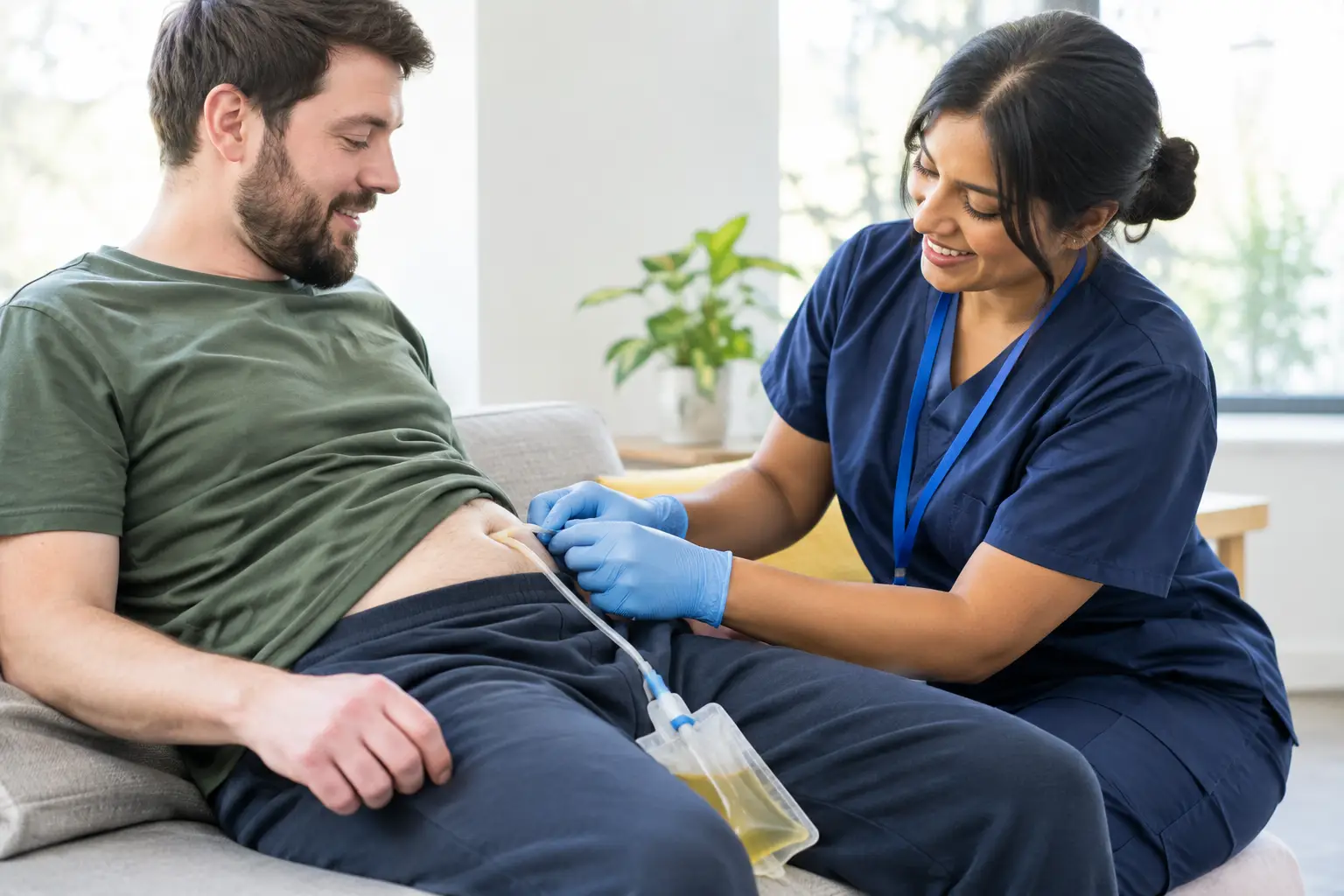
Stoma and catheter care can be managed confidently when workers understand the participant’s usual presentation, equipment, hygiene steps and red flags. Without that shared knowledge, minor changes can be missed or staff may respond inconsistently.
A nurse can assess the current routine, identify issues such as leakage, skin irritation, blockages or recurrent infections, and develop practical guidance for the team. Support worker training and clinical oversight are especially valuable where multiple workers are involved, because they create a consistent standard of care across shifts.
Diabetes, medication and complex health support
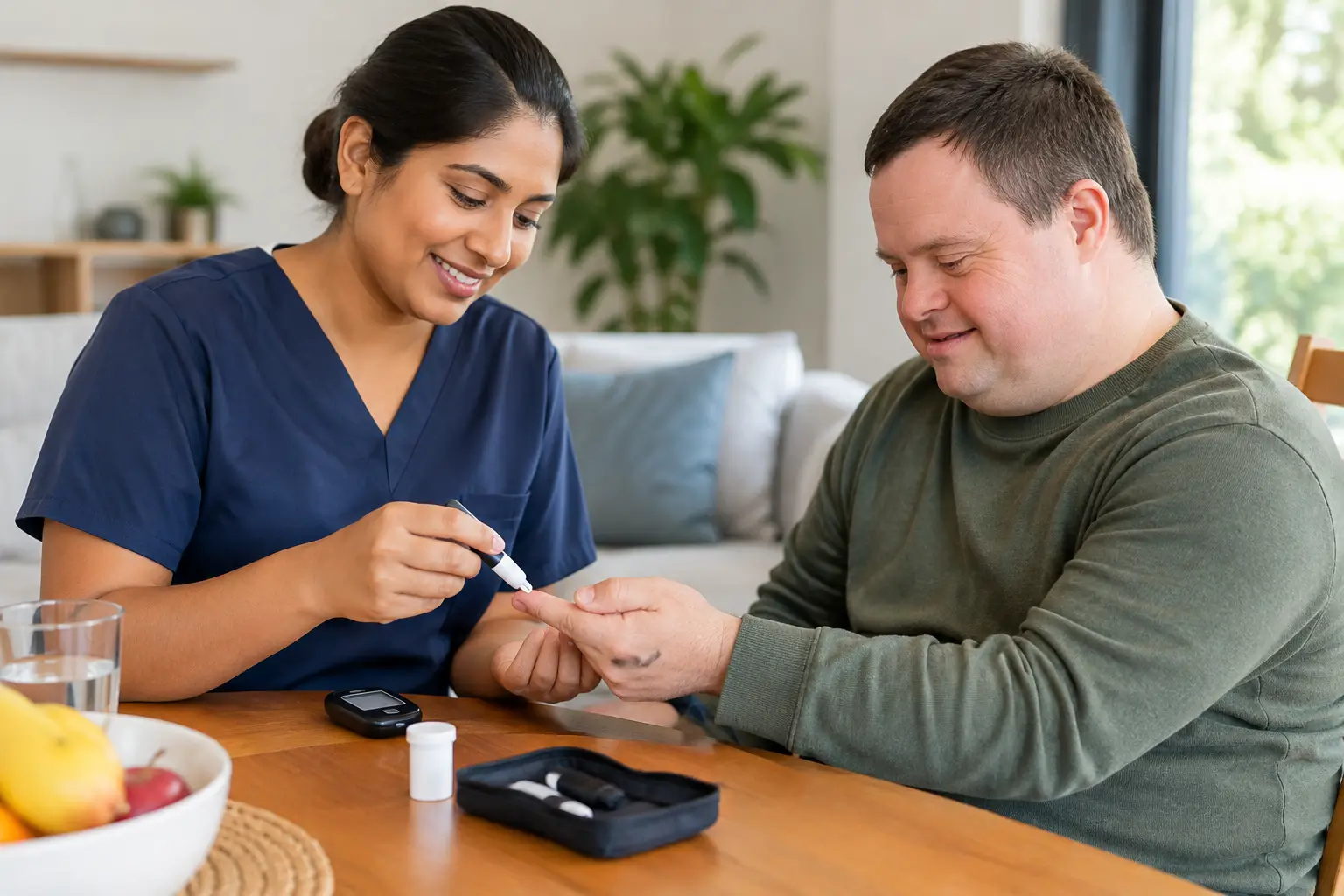
Participants with diabetes may need support around blood glucose monitoring, recognising hypo- or hyperglycaemia symptoms, food routines, documentation and escalation. Medication-related concerns may also warrant nursing involvement where there is confusion about administration processes, side effects, missed doses, changing health status or the need for a clearer medication support plan.
The level of nursing involvement depends on the participant’s circumstances, their treating team’s directions and the complexity of the task. A nurse-led assessment helps define what workers can safely do, what requires training, and when a registered nurse or medical practitioner needs to be contacted.
What a useful nursing assessment should provide
Good clinical documentation should be specific enough to guide day-to-day care and clear enough to be understood by non-clinical readers. It should not be a generic template that lists risks without explaining how to manage them.
A thorough assessment usually brings together the participant’s health history, current routines, relevant diagnoses, observed clinical issues, risks, equipment or consumables, treating practitioner advice, and the capabilities of the people providing support. It should also identify the participant’s preferences. Safe care is more likely to be followed when it respects privacy, routines and individual dignity.
From there, the nurse can develop a clinical care plan that sets out the required supports, step-by-step guidance where appropriate, infection-control measures, monitoring expectations and escalation pathways. For example, a pressure care plan may identify high-risk areas, repositioning needs, skin checks, reporting requirements and the signs that require urgent clinical attention.
For Support Coordinators, clear reports for Support Coordinators should explain the clinical rationale in plain language. The report should connect the participant’s health needs to the support required, describe the consequences of unmet needs, and identify why nursing assessment, training or oversight is necessary. It should be evidence-based and tailored to the participant, not framed as a guarantee of funding.
Why support worker training matters
A well-written plan cannot improve care if the people implementing it have not been trained or do not understand the reasons behind it. This is where support worker training and clinical oversight become essential.
Training may cover safe procedures, hygiene, documentation, recognising changes in condition, privacy and dignity, and the exact circumstances that require escalation. It is not about expecting support workers to make clinical decisions. It is about ensuring they can follow an agreed plan competently, recognise when something is not normal, and seek help early.
Consistency is particularly important when a participant receives care from a larger team. Different approaches to catheter bags, wound observations, bowel routines or skin checks can create confusion and increase risk. A nurse can provide practical education, answer questions from workers, and review the plan as the participant’s needs change.
Preparing a referral without delaying care
A referral does not need to be perfect before a nurse can begin assessing risk. Useful information includes the participant’s NDIS plan details, current health concerns, relevant diagnoses, recent hospital discharge information, medication list where relevant, treating team contacts, existing care plans, incident history and the names of those involved in daily support.
Photos or wound charts may be helpful where consent and privacy processes are in place, but they do not replace an assessment. Similarly, a family member’s observations are valuable, particularly when they can describe what has changed from the participant’s usual condition.
If there is an urgent deterioration, signs of infection, severe pain, uncontrolled bleeding, chest pain, breathing difficulty, altered consciousness or another acute concern, emergency or medical services should be contacted first. NDIS nursing is not a substitute for urgent medical care.
Building safer care at home
For participants with complex health needs, the strongest care arrangements are not built around guesswork or a single handover. They are built around a current clinical picture, practical instructions, capable workers and a clear route for escalation.
Compassion Wings provides nurse-led NDIS care across Adelaide for participants who need this level of clinical attention, from continence and wound assessments through to high-intensity support worker training, care plans and nursing evidence for reviews. The purpose is straightforward: helping participants stay safe at home while giving families and referral teams confidence that clinical risks are being managed properly.
The most helpful next step is often simply to identify the change that has made the current routine uncertain. Once that concern is assessed early, a safer and more consistent plan can follow.