

When Home Nursing for Complex Disability Helps
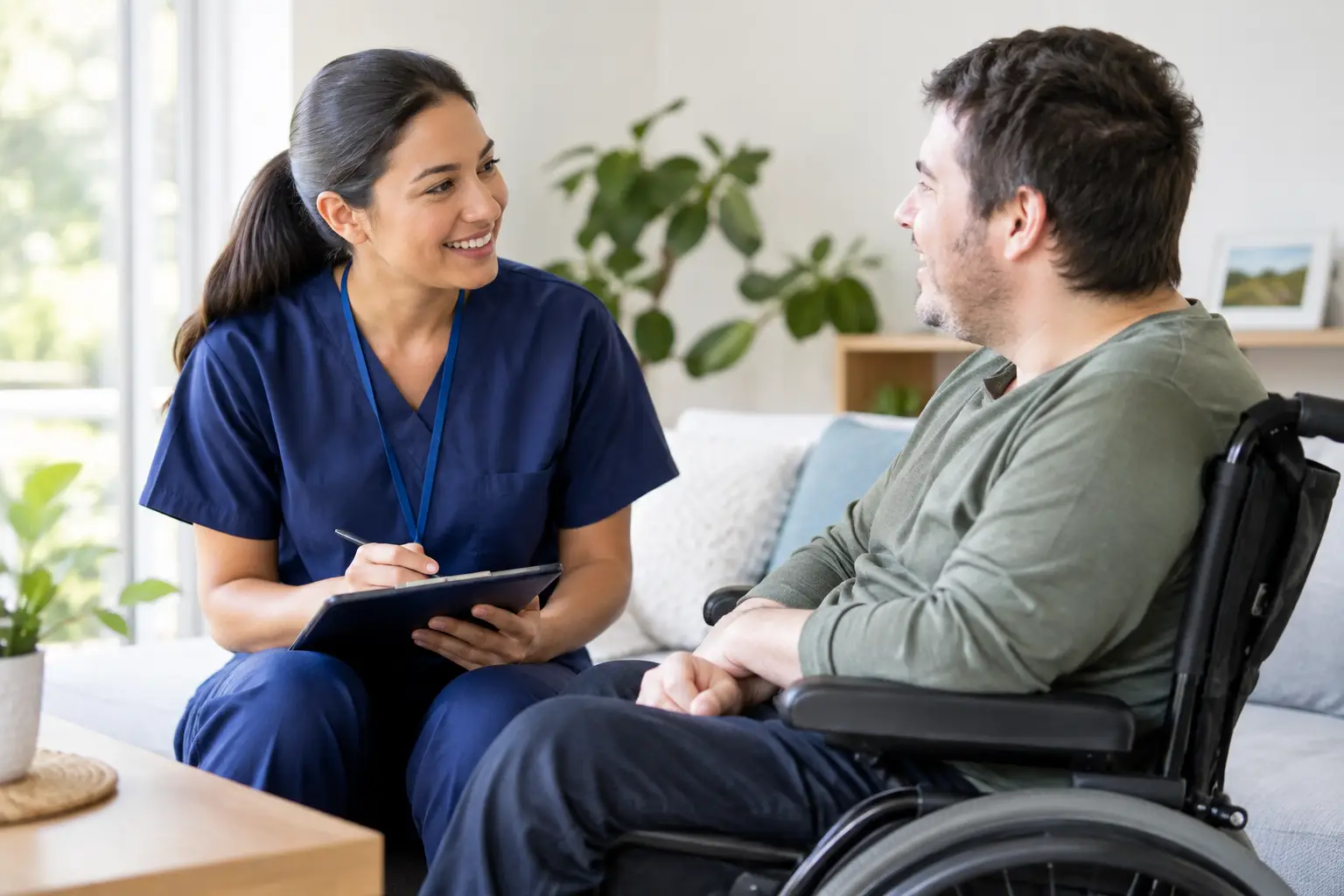
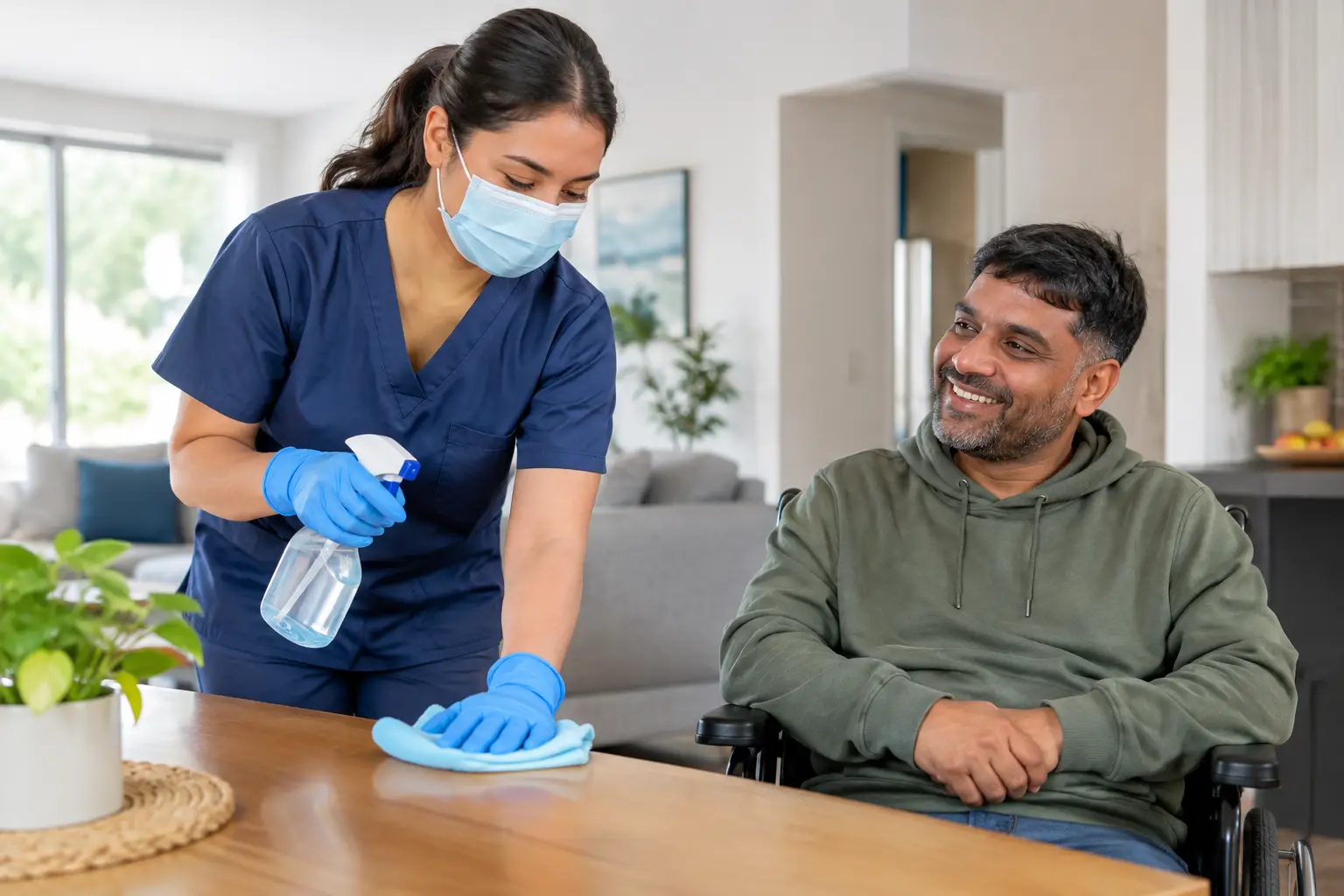
A catheter that blocks overnight, a wound that is not healing, recurrent urinary tract infections, or a bowel routine that is becoming harder to manage can quickly turn a stable home arrangement into a clinical risk. Home nursing for complex disability brings qualified nursing assessment and oversight into the setting where care actually happens, so concerns can be identified early and daily routines can be made safer, clearer and more dignified.
For participants and families, this may mean less uncertainty about what to do when symptoms change. For Support Coordinators, Plan Managers and service teams, it means having practical clinical evidence, clear care instructions and appropriate escalation pathways rather than relying on informal handovers or assumptions.
What clinical support in the home involves
Complex disability does not always mean a person needs constant nursing attendance. It often means their health needs require skilled assessment, a well-designed plan and ongoing review as their condition changes. The right level of support depends on the person’s diagnosis, risks, living situation, current supports and the tasks that need to be completed safely.
Nurse-led NDIS care starts by looking beyond the task itself. For example, a catheter change in routine may be straightforward, but repeated leakage, sediment, pain or infections require assessment of the broader pattern. A wound dressing is not simply a dressing change if the wound is deteriorating, the surrounding skin is fragile, pressure is contributing or infection is suspected.
Practical nursing assessments can consider skin integrity, continence, nutrition and hydration factors, medication concerns, infection risk, mobility-related pressure risks and the capability of the people implementing care. The outcome should be useful in real life: a clinical care plan that explains what to do, what to observe, when to document and when to escalate.
Common reasons to involve a nurse
Nursing input is particularly valuable where routine support has become inconsistent, a participant has had repeated hospital presentations, or a health issue is affecting comfort, safety or daily function. Referrals commonly relate to continence and bowel management, wounds, pressure injury prevention, stoma care, catheter-related support, diabetes support, medication oversight and monitoring of skin concerns.
It can also be appropriate when there is no immediate crisis. A person may be managing with a long-standing routine, yet their needs have changed after illness, weight change, reduced mobility or a discharge from hospital. Early review can prevent a manageable issue from becoming urgent.
When home nursing for complex disability is needed
A clinical referral is often warranted when workers or family members are being asked to perform tasks without enough guidance, training or confidence. This is not a reflection on their commitment. Complex health support needs clear boundaries, competency-based training and access to nursing oversight when conditions change.
Consider nursing assessment when there are recurring skin tears, redness over pressure areas, wound odour or increased exudate; changes in catheter output, blockage or discomfort; stoma leakage or peristomal skin damage; constipation, faecal incontinence or unpredictable bowel routines; or frequent hyperglycaemia, hypoglycaemia or uncertainty about diabetes procedures. Any acute or serious change should be escalated through the appropriate urgent medical pathway. Home nursing does not replace emergency care or a treating doctor.
A nurse can distinguish between a routine issue that can be managed through an updated plan and a change that needs prompt medical review. That judgement is one of the most useful protections for participants living with complex health needs.
Assessment before assumptions
It is tempting to respond to a problem by purchasing products, changing a schedule or adding more workers. Sometimes those actions help, but they can also miss the underlying cause. A pressure area may relate to transfer technique, moisture, positioning, equipment use, nutrition, time spent in one position or a combination of factors. Continence issues may relate to fluid patterns, constipation, medications, infection risk, product fit or gaps in the established routine.
A thorough assessment creates a sound clinical rationale before recommendations are made. It also protects participant dignity. Care should be based on what matters to the person, including comfort, privacy, communication preferences and the routines that work in their home.
Care plans that work on an ordinary shift
A clinical care plan should not be a document that sits unread in a folder. It needs to translate nursing judgement into specific, practical directions for the people providing day-to-day support.
For a wound, that may include the dressing regime, infection indicators, skin protection measures, documentation expectations and clear triggers for escalation. For bowel and bladder care, it may explain the established routine, products or equipment used, signs of constipation or retention, hygiene requirements and the action to take if the routine does not work as expected.
Good plans also make roles clear. They identify what can be completed by trained workers, what requires nursing review, and when medical input is needed. This reduces the risk of staff being placed in situations beyond their training and helps services maintain consistent care across changing rosters.
Plans must be reviewed when there is a meaningful change, rather than being treated as permanent. A wound that improves may need a different approach from one that stalls. A participant returning from hospital may have new medication, equipment or follow-up requirements. Clinical support in the home should adapt to these realities.
Support worker training and clinical oversight
High-intensity support can only be delivered safely when workers understand both the procedure and the reason behind it. Support worker training and clinical oversight give teams a structured opportunity to learn the participant’s individual care requirements, practise safely where appropriate, ask questions and understand their escalation responsibilities.
Training is strongest when it is connected to a current clinical plan rather than delivered as generic instruction. Workers need to know the signs that matter for this person: what their usual skin condition looks like, how they communicate discomfort, what changes in output or behaviour may indicate a problem, and who to contact.
Ongoing oversight matters because confidence can fade, staff can change and conditions can evolve. A nurse-led service can review practice, update documentation and respond when a team identifies a concern. This supports safer implementation without expecting support workers to make clinical decisions alone.
Why clear nursing reports matter to NDIS decisions
When health needs increase, a participant may require evidence that explains the functional impact, clinical risks and support required. Broad statements that a person has “high needs” are rarely enough. Decision-makers need clear, relevant information that links the condition to the care tasks, frequency, risks and consequences if support is unavailable or inconsistently delivered.
Clear reports for Support Coordinators can assist with plan reviews or a change of circumstances by documenting assessment findings, current routines, recommendations, training needs and the rationale for clinical oversight. They can also clarify whether needs are stable, increasing or affected by recent health events.
The purpose is not to promise a funding outcome. It is to provide accurate nursing evidence so that requests and planning discussions are based on the participant’s current circumstances. Well-documented clinical information can also help the wider team communicate consistently with treating practitioners and support services.
What makes a referral easier
A referral can begin with the available information. Useful details include the participant’s diagnosis and current health concerns, recent hospital or specialist information, existing care plans, medication information where relevant, known risks, current providers and the reason nursing input is being sought.
It also helps to describe what has changed. Is there a new wound, increased leakage, repeated infection, reduced ability to follow a previous routine, or uncertainty about whether workers are trained? Even if all records are not yet available, this context allows the nurse to prioritise assessment and identify what else is needed.
Compassion Wings provides nurse-led NDIS care across Adelaide for participants whose health needs require assessment, practical planning, staff education and ongoing clinical attention. The focus is safe, dignity-focused care that can be applied in the home, not generic support delivered without clinical direction.
When a health routine is becoming difficult to manage, the most helpful next step is often a timely nursing assessment. Clear clinical advice today can prevent avoidable distress, hospital presentations and uncertainty for the people supporting the participant tomorrow.