

Clinical Care Plan NDIS: What It Should Cover
When a participant has wounds that are not healing, recurrent UTIs, unstable blood sugars, catheter issues or skin breakdown risks, general support notes are not enough. A clinical care plan NDIS document needs to translate health needs into clear, safe, day-to-day directions that support workers, families and coordinators can actually follow. Done properly, it reduces confusion, protects participant dignity and helps everyone respond early when something changes.
For Support Coordinators and families, this is often the difference between a care routine that feels improvised and one that is clinically guided. For participants with complex health support needs, it can also mean fewer avoidable hospital presentations and more confidence that clinical support in the home is being delivered safely.
What is a clinical care plan NDIS document?
A clinical care plan in the NDIS context is a nurse-led document that sets out how identified health needs should be managed in everyday practice. It is not just a list of diagnoses and it is not a generic service agreement. It should be based on practical nursing assessments, current risks, the participant’s usual routines, and what supports can be delivered safely in the home or community.
The best plans are specific. If a participant has a stoma, pressure injury risk, diabetes, catheter care needs or bowel and bladder routines that require monitoring, the plan should explain what needs to be done, how often, what to watch for and when to escalate. It should also be clear about who is responsible for each part of care, especially where support worker training and clinical oversight are needed.
This matters because many participants sit in the gap between hospital-level concern and day-to-day disability support. They may be medically stable enough to live at home, but still need structured clinical input to stay safe there.
When a clinical care plan NDIS referral makes sense
Not every participant needs a formal clinical care plan. But when health needs are complex, changing, high-risk or difficult for teams to manage consistently, nursing input becomes important.
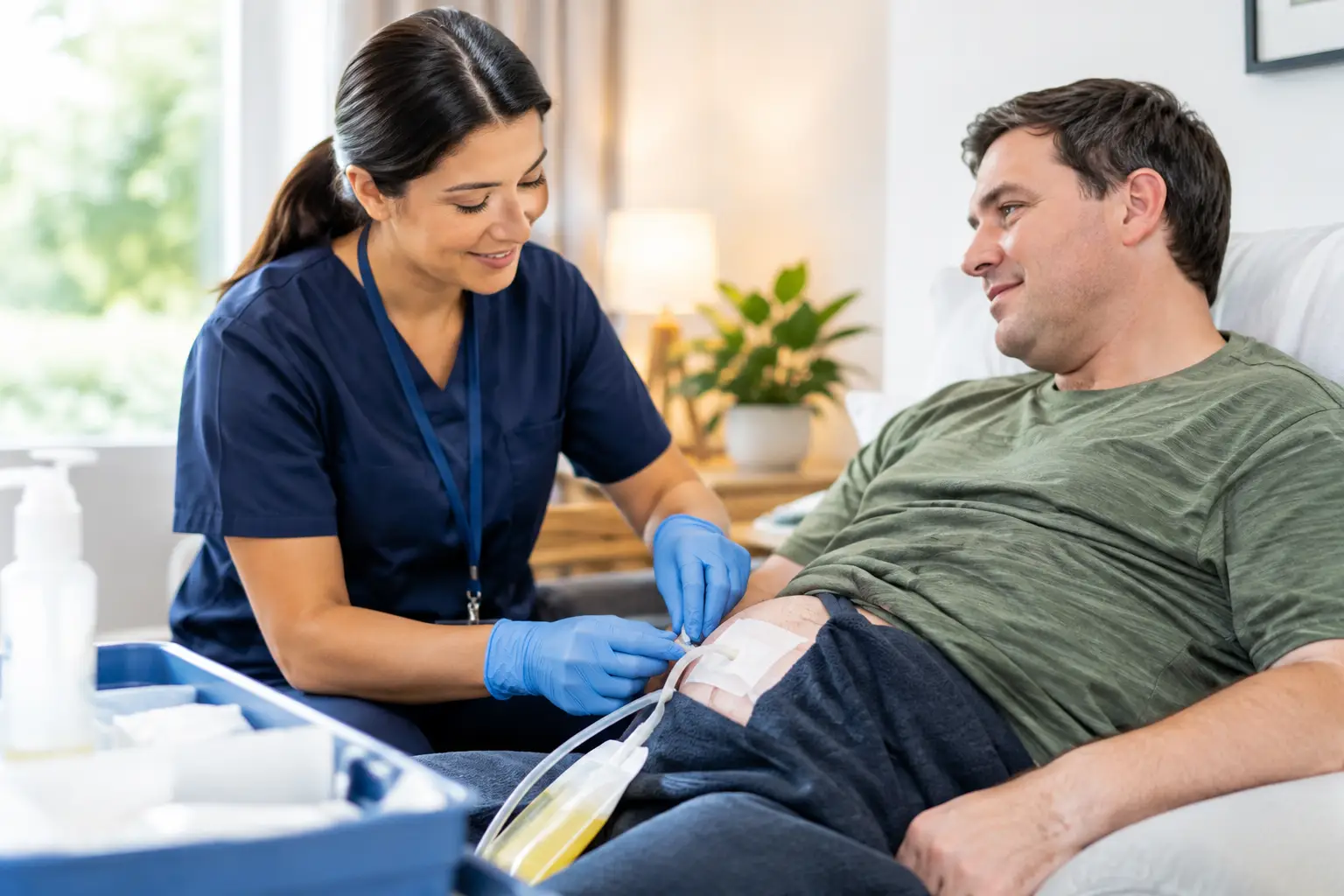
Common examples include participants needing continence assessments, wound care, pressure care, stoma care, catheter-related support, bowel and bladder care, medication oversight, diabetes support or skin integrity monitoring. It is also appropriate when support workers are unsure about task boundaries, when there have been repeated incidents, or when a Support Coordinator needs clear reports for Support Coordinators and plan review evidence.
Sometimes the need is not obvious at first. A participant may simply appear to be needing “more support”, but the real issue is that no one has clinically mapped the risk. Recurrent constipation, leaking appliances, redness over bony areas, repeated missed medications or frequent ambulance call-outs are all signs that a practical nursing assessment may be overdue.
What a good clinical care plan should cover
A useful plan starts with the participant, not the task. It should describe relevant health conditions, how those conditions affect daily care, and what the current priorities are. That sounds basic, but poor plans often skip this and jump straight to a task list with no clinical reasoning.
Health status and current risks
The plan should identify the participant’s current clinical picture in plain language. That includes existing diagnoses where relevant, current concerns, recent changes, infection risks, skin issues, continence concerns, swallowing or medication considerations if they affect care, and any history that changes risk.
Risk documentation should be practical rather than alarmist. For example, a participant with reduced mobility and fragile skin may need a pressure care schedule, positioning guidance, equipment considerations and clear escalation steps if redness does not resolve. A participant with a long-term catheter may need routine care instructions plus clear signs of blockage, trauma or infection.
Daily care instructions that people can actually follow
This is where many plans either become too vague or too clinical. A good plan bridges both worlds. It should explain the daily routine in enough detail for consistent care, while keeping instructions within the skill level of the people delivering support.
That may include personal preparation, infection control steps, equipment use, skin checks, fluid monitoring, bowel or bladder routine timing, dressing frequency, blood glucose prompts, medication support requirements or documentation expectations. If there are participant preferences that affect dignity-focused care, those should be included too. Clinical safety and dignity are not separate issues.
Escalation pathways
Every clinical care plan should explain what to do when something changes. Support workers and families should not be left guessing whether a wound needs review, whether a stoma colour change is urgent, or whether reduced urine output is significant.
Escalation instructions should cover what changes to monitor, who to contact, when nursing review is required, and when urgent medical attention is needed. This is particularly important in home settings where subtle deterioration can be missed until it becomes a hospital issue.
Training and delegation requirements
Some participants can only be supported safely when workers have been trained in the specific routine. In those cases, the plan should state where support worker training and clinical oversight are required. This might include catheter-related support, bowel care routines, diabetes-related tasks, pressure area monitoring or complex continence management.
A written plan on its own is not always enough. If the task is high intensity or if worker confidence is low, training needs to sit alongside documentation.
Why generic care notes create problems
Generic notes often look acceptable until something goes wrong. They may say a participant needs “continence support” or “skin care monitoring” without clarifying what that means. That leaves workers interpreting care differently, families carrying the stress of explaining the same routine repeatedly, and Support Coordinators trying to resolve issues with incomplete evidence.
The trade-off is that detailed plans take time and clinical judgement to produce. But without that detail, services become reactive. Minor issues are missed, workers lose confidence, and participants can experience avoidable discomfort, embarrassment or deterioration.
This is especially true where multiple providers are involved. If nursing, support workers, allied health and family are all contributing, there needs to be one clear clinical reference point.
How nurse-led NDIS care supports safer planning
A nurse-led approach matters because complex care is rarely just about completing a task. It is about assessing whether the task is still appropriate, whether risks have changed, whether documentation matches the participant’s current presentation, and whether the team understands the plan.
That is why practical nursing assessments are central to good care planning. An experienced nurse will usually look beyond the immediate referral reason. A wound review may uncover pressure care issues. A continence concern may reveal dehydration risk, poor toileting routines, skin damage or an infection pattern. A medication concern may sit alongside cognitive change, inconsistent worker prompts or poor communication between providers.
This broader view helps participants stay safe at home. It also gives coordinators and families a clearer basis for decision-making when support needs increase or a change of circumstances report is required.
What Support Coordinators should gather before referral
The referral process is smoother when a few basics are available upfront. Useful information includes the participant’s diagnosis or key clinical concerns, current support arrangements, recent discharge paperwork if relevant, medication or treatment summaries, known risks, incident history, photos or wound information where appropriate, and the reason the current arrangement is not working.
It also helps to be clear about the outcome needed. Sometimes the request is for a one-off nursing assessment and clinical care plan. In other cases, the participant also needs ongoing review, support worker training, or a nursing report for plan review. Those are different pieces of work, and being clear early saves time.
If details are incomplete, that should not stop a referral. It simply means the assessment may need to start with clarification and risk screening.
Clinical care plans and NDIS evidence
A well-prepared clinical care plan can support broader NDIS documentation, but it should never be treated as a funding shortcut. Its primary job is safe care. That said, clear nursing evidence often helps explain why certain supports are reasonable, why worker training is required, or why the current level of support is no longer enough.
This is particularly useful when a participant’s presentation has changed. Skin breakdown, recurrent infections, increased continence complexity, more frequent blood glucose instability or higher risk around bowel and bladder care can all alter the support model. A clinically sound plan and review report make those changes easier to articulate.
For coordinators under pressure, audit-safe documentation matters. So does timeliness. When care is unstable, waiting too long for nursing input can create bigger problems than the original referral issue.
What good care planning feels like in practice
When a clinical care plan is done well, the participant is not repeating the same explanations to every new worker. Families are not left carrying all the clinical knowledge. Support workers know the routine, understand the warning signs and feel safer escalating concerns. Coordinators have documentation they can rely on.
Most importantly, the participant receives safe, dignity-focused care that reflects their actual health needs rather than a generic support template. That is the real value of nurse-led NDIS care.
For Adelaide participants with complex health support needs, including those requiring wound care, catheter support, continence assessment, pressure care or diabetes support in the home, a clear clinical plan can bring structure to situations that otherwise feel fragile. Compassion Wings provides this kind of practical nursing assessment and documentation with the clinical oversight that families and referrers often need.
If a participant’s health needs are starting to outgrow general care notes, that is usually the moment to bring nursing in before a manageable issue becomes a crisis.




3 Comments
Nurse Led Care vs Standard Support - Compassion Wings
June 24, 2026[…] than repositioning reminders. They may need a skin integrity review, pressure area monitoring, a clinical care plan and training for the people providing daily […]
Wound Report Example for Plan Review Explained - Compassion Wings
August 20, 2026[…] selection and treatment adjustment, with additional review if deterioration occurs. A written wound care plan and escalation pathway are required. Support workers require documented instruction in observing […]
When Nurse Oversight Versus Basic Care Matters - Compassion Wings
August 25, 2026[…] Verbal handovers can be helpful, but they are not a substitute for a current, individualised clinical care plan. When staff turnover occurs, informal knowledge is often the first thing […]