
How to Document Medication Incidents Safely
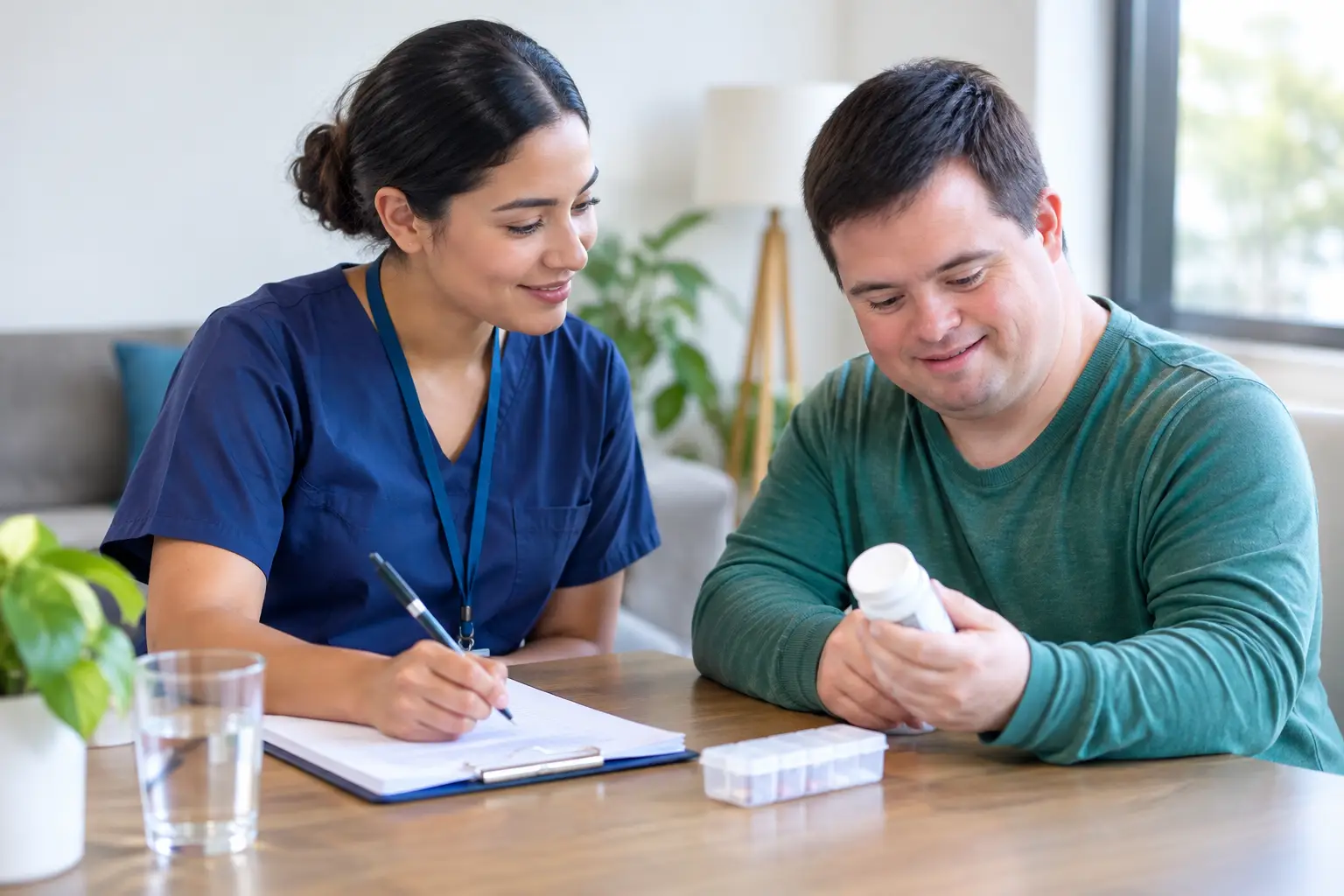
A missed tablet, an incorrect dose, medication given at the wrong time, or a dose that cannot be confirmed can become a significant clinical concern quickly. Knowing how to document medication incidents gives the next worker, family member, nurse and treating team the information needed to respond safely. It also protects the participant’s right to safe, dignity-focused care and ensures risks are not lost between shifts.
For NDIS participants with complex health support needs, medication documentation is more than an administrative task. It is part of clinical safety. Records must show what happened, what action was taken, who was notified, and whether the participant was monitored or reviewed afterwards.
What counts as a medication incident?
A medication incident is any event where medication has not been managed as intended, or where it is unclear whether it has been managed correctly. Harm does not need to have occurred for an incident to require documentation.
Examples include a missed or refused dose, medication administered late or early outside the approved window, an incorrect medication or dose, an omitted medication signature, a medication given to the wrong participant, or a medicine that has been dropped, damaged, expired or stored incorrectly. It may also involve a discrepancy between the medication administration record and the pharmacy-packed medication.
Some situations are immediately high risk. Insulin errors, anticoagulants, anticonvulsants, opioids, medications for Parkinson’s disease, sedatives and medicines with narrow dosing ranges may require urgent clinical advice even when the participant appears well. The response always depends on the medicine, dose, time involved, the participant’s health condition and any current symptoms.
Documentation should never replace escalation. If a participant is unwell, has concerning symptoms, has received the wrong medication, or there is any doubt about immediate safety, seek urgent clinical direction according to the person’s care plan and organisational procedure. Call emergency services when required.
The first priority is safety, then a clear record
Before writing an incident report, ensure the participant is safe and supported. Check their condition, follow the medication care plan, and obtain advice from the appropriate clinician, prescriber, pharmacist, on-call nurse or emergency service. Do not guess whether a missed or extra dose should be corrected. Giving an additional dose without authorised advice can create a second incident.
Once immediate actions are underway, document promptly while the details are clear. Delayed documentation often leads to gaps: the exact time is forgotten, observations are not recorded, or staff members rely on assumptions about what someone else did.
A good record separates facts from interpretation. Write what was observed and done, not what you think another person meant or intended. For example, “The 0800 blister pack compartment for metformin remained full at 1030” is a factual observation. “The night worker forgot the medication” is an assumption unless it has been verified.
How to document medication incidents clearly
Medication incident documentation usually sits alongside, rather than replaces, the medication administration record (MAR), daily progress notes and your organisation’s incident reporting system. Each document has a different purpose.
The MAR should accurately show the administration status in line with the organisation’s procedure. Never alter, backdate or obscure an entry. If an error has been made, correct it using the approved process so there is a transparent audit trail.
The incident report records the event, risk, response and follow-up. Progress notes provide the clinical narrative for the shift, including observations and communication. Where a registered nurse becomes involved, nursing documentation should record the assessment, clinical advice, escalation and review plan.
A complete medication incident record should cover these essential details:
- the date, exact time and location of the incident or when it was identified
- the medication name, strength, prescribed dose, route and scheduled administration time
- what occurred, including whether the medication was missed, delayed, duplicated, refused, unavailable or administered incorrectly
- the participant’s presentation, relevant observations and any reported symptoms
- immediate actions taken, including medicines withheld, monitoring commenced or medication secured
- who was contacted, when they were contacted, the advice provided and the name or role of the clinician
- the outcome, follow-up requirements and handover information for the next shift
Use direct, respectful language. Avoid labels such as “non-compliant” when documenting a refusal. Instead, record what the participant said or did, any information they gave about their decision, and what support or explanation was offered. A participant may refuse medication because of nausea, swallowing difficulty, pain, fear, a change in routine or a genuine preference. These details can point to a clinical issue that needs review.
Example of factual medication incident wording
“On 14 May at 0905, the 0800 dose of levetiracetam 500 mg was found in the participant’s Webster-pak compartment. MAR had not been signed. Participant stated they were unsure whether they had taken the dose. Participant was awake, alert and reported no seizure activity or adverse symptoms. Registered nurse contacted at 0910. Advice received not to administer an additional dose until prescriber or pharmacist advice was confirmed. Participant monitored as directed. Pharmacist contacted at 0930 and advised to omit the uncertain dose and resume the next scheduled dose at 2000. Family guardian notified at 0940 with participant consent. Incident report completed and handover provided to afternoon staff.”
This example does not assign blame or make a clinical decision outside scope. It gives a clear timeline and shows that advice was sought before acting.
Include the participant’s condition and clinical context
A medication incident report is incomplete if it only states the error. The person reviewing the event needs to understand the potential impact on the participant.
Record relevant observations such as conscious state, breathing, skin colour, blood glucose level where indicated, pain, vomiting, dizziness, seizure activity, blood pressure or other observations specified in the care plan. Document the time each observation was taken. If there were no symptoms, state that clearly, but do not write “no harm caused” unless this has been clinically determined after appropriate monitoring.
Context matters too. Was the medication chart current? Was the dose recently changed? Was there a pharmacy supply issue? Did the participant return from hospital with altered medication instructions? Was a support worker unclear about a handwritten direction? These factors help identify whether the event is isolated or reflects a systems issue requiring action.
Record communication and escalation precisely
Medication incidents often involve several people: the participant, family or guardian, support workers, a registered nurse, pharmacist, GP, prescriber, ambulance service and Support Coordinator. Record only communications relevant to the incident and in accordance with consent, privacy and organisational requirements.
Be specific about who was contacted, the time, the method of contact, advice received and what occurred next. “Nurse notified” is not enough. A safer entry identifies the nurse, records the advice and confirms whether it was implemented.
For participants receiving nurse-led NDIS care, clear escalation records are particularly valuable when support workers provide medication support across multiple shifts. They allow clinical oversight to identify repeated late doses, recurring refusals, missed signatures, supply problems or training gaps before they lead to more serious harm.
Do not use incident reports to apportion blame
The purpose of documentation is to support safe care, not to punish staff or place responsibility on a participant. Blame-focused wording discourages early reporting and can hide the circumstances that caused the error.
Instead, describe contributing factors objectively. For example, “Medication was stored in two locations and staff were unable to confirm which pack was current” is more useful than “staff were careless”. It identifies a practical risk that can be addressed through clearer storage, labelling, handover or care plan updates.
That said, factual documentation must not minimise serious events. If the wrong medication was administered, if a dose was omitted without advice, or if records cannot confirm administration, record this plainly and escalate through the required clinical and organisational channels.
Turn the incident into safer practice
A well-documented incident should lead to a proportionate review. A single late dose due to a delayed pharmacy delivery may need a supply plan and clearer communication. Repeated omissions, uncertain MAR entries or frequent medication refusals may indicate that the participant needs a nursing assessment, medication routine review or updated clinical care plan.
Support worker training and clinical oversight can be especially helpful where medication support involves complex regimes, diabetes management, PEG-related medicines, swallowing concerns, PRN medications or medicines that require close monitoring. Training should be practical and participant-specific, not a generic tick-box session.
Compassion Wings provides practical nursing assessments, medication-related clinical documentation and support worker training for participants with complex health needs in Adelaide. Clear reports for Support Coordinators can identify the clinical risks, actions taken and evidence needed to strengthen ongoing care arrangements.
The most useful medication incident record is written early, based on facts, and followed through until the participant is safe and the next worker knows exactly what to do. That simple discipline helps prevent a small uncertainty from becoming a preventable hospital presentation.