

How to Document Complex Care Needs for NDIS
A participant may be managing a catheter, a chronic wound, diabetes, recurrent infections or a detailed bowel routine at home – yet their existing NDIS records may only say they need “assistance with personal care”. That description does not show the clinical skill, frequency, risk, supervision or training required to keep them safe. Knowing how to document complex care needs for NDIS means turning day-to-day clinical concerns into clear, practical evidence that a Support Coordinator, planner and care team can understand.
Good documentation is not about making a condition sound more serious than it is. It is about accurately showing what happens when care is delayed, missed, completed incorrectly or left to an untrained person. It should also show what safe, dignity-focused care looks like in the participant’s own home and routine.
Start with a practical nursing assessment
Complex health support should be documented from a current assessment, not assumptions or a list of diagnoses. A diagnosis may explain why a person has a health need, but it does not necessarily explain what support is required at 7 am, during a community outing, overnight, or when the usual routine changes.
A nurse-led assessment considers the participant’s health condition alongside their functional capacity, environment, communication, cognition, routine and support network. For example, two people may both have a stoma, but one may independently manage it with occasional monitoring while another requires hands-on assistance, skin checks, supply management and escalation for frequent leaks or peristomal skin breakdown.
The assessment should record what the participant can do safely, what they can do with prompting, and what requires trained support or a registered nurse. This protects participant independence while avoiding a care plan that leaves risks unaddressed.
Describe the care task, not just the diagnosis
Broad phrases such as “requires continence care” or “has diabetes” are rarely enough on their own. Documentation should name the actual task and its clinical purpose. For instance, catheter-related support may involve monitoring urine output and colour, maintaining hygiene, securing drainage equipment, observing for blockage or infection, and knowing when urgent escalation is needed.
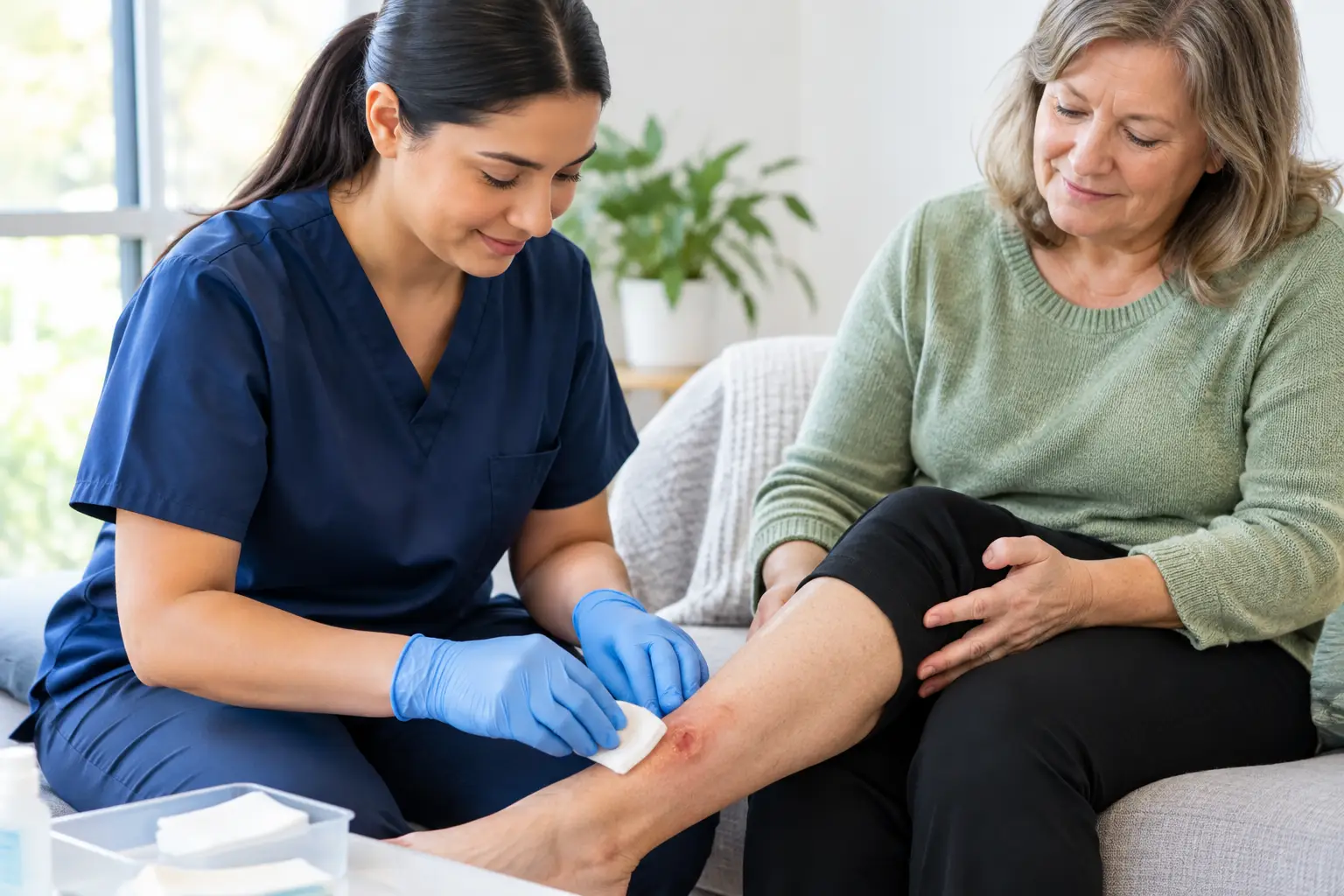
For wound care, documentation should specify wound location, current presentation, dressing requirements, treatment frequency, pain or exudate concerns, infection indicators, pressure risk and the clinician responsible for review. If support workers are involved, the record must clearly separate delegated or trained tasks from care that requires nursing assessment or intervention.
This level of detail helps teams organise safe clinical support in the home. It also prevents support workers from being asked to make clinical decisions beyond their training or role.
Link care needs to functional impact and risk
The strongest reports explain the consequences of an unmet care need in plain, evidence-based language. A clinical issue becomes relevant to everyday support when it affects the participant’s safety, health, capacity to complete routines or ability to remain safely at home.
For example, a bowel routine may require assistance because the participant has limited hand function, poor mobility, reduced sensation or cognitive impairment. The documentation should then explain the likely consequences if the routine is inconsistent: constipation, faecal impaction, autonomic dysreflexia where relevant, pain, incontinence, skin injury, emergency presentation or loss of participation in usual daily activities.
Avoid vague statements such as “high risk” without explaining the risk. State what has occurred, what is currently observed, what triggers deterioration and what action is required. Clinical evidence may include nursing observations, wound measurements, continence charts, blood glucose records, medication incident records, hospital discharge information, GP correspondence and reports from relevant treating clinicians.
A useful clinical record addresses five questions:
- What care is required, how often and at what times?
- Why can the participant not safely complete the task alone?
- What could happen if the task is missed, delayed or done incorrectly?
- What level of skill, training or supervision does the task require?
- What is the escalation pathway when the participant’s condition changes?
The answer will vary by person. A stable, well-understood condition may need periodic nursing review and trained implementation. A changing wound, recurrent catheter blockage, unstable diabetes or deteriorating skin integrity may require more frequent clinical oversight. Documentation should reflect the current situation, rather than applying a one-size-fits-all level of support.
Record frequency, duration and variability
A common gap in NDIS documentation is that it identifies a task but not the realistic time involved. “Dressing change twice weekly” may sound straightforward, but the total support can include preparation, infection-control measures, positioning, pain management, skin checks, documentation, disposal of clinical waste, communicating changes and arranging urgent review when needed.
Document usual frequency as well as foreseeable variation. Some care needs are stable most days but become more demanding during infection, illness, skin breakdown, constipation, medication changes or supply problems. This does not mean estimating worst-case support as the daily norm. It means explaining the pattern honestly, including the additional nursing response required when clinical signs change.
For participants with multiple needs, show how tasks interact. Reduced mobility can increase pressure injury risk. Incontinence can affect skin integrity and wound healing. Diabetes may complicate wound management and infection risk. A clear report connects these factors without becoming overly technical.
Make the care plan usable for the people providing support
Clinical documentation should not sit in a folder only to be read at a plan review. A practical clinical care plan gives the care team clear instructions for routine support, monitoring and escalation.
A well-written plan identifies the participant’s preferences and consent, their usual routine, required supplies, hygiene and infection-control steps, observable warning signs, who to contact, and when to call emergency services. It should use language that trained support workers and family members can follow, while retaining enough clinical detail to guide safe practice.
Participant dignity belongs in the documentation too. This includes preferred language, privacy needs, cultural considerations, how the participant communicates discomfort, and the way they want sensitive care such as continence, stoma or bowel support approached. Care plans work better when they respect the person’s established routine rather than forcing a generic process onto their home.
Include training and competency requirements
Where support workers assist with high-intensity or clinically sensitive tasks, documentation should specify the required training, competency checks and clinical oversight. “Staff to be trained” is not sufficiently clear. The plan should identify which task requires training, the key safety steps, the limits of the worker’s role and the circumstances that require escalation to a nurse.
Support worker training and clinical oversight are particularly relevant for catheter care, diabetes support, complex bowel and bladder routines, pressure care, stoma support, wound monitoring and medication-related tasks. Training should be participant-specific where possible. A general course may build knowledge, but it cannot replace clear instruction about one person’s equipment, routine, risks and warning signs.
Keep records of training completed, competency observations, refresher needs and clinical reviews. These records support continuity when staff change and demonstrate that complex health support is being managed responsibly.
Use reports that explain the clinical picture clearly
A nursing report for a plan review or change of circumstances should be concise enough to be read, but detailed enough to show the genuine complexity of care. It should summarise the assessment findings, current care requirements, functional impact, risks, recommended clinical supports and any required worker training or ongoing review.
The report should distinguish between treatment provided through the health system and disability-related support needed for the participant to manage their condition safely in daily life. This distinction matters. Documentation should not assume a funding outcome or make unsupported claims. Instead, it should present clear clinical evidence that helps decision-makers understand the participant’s actual support needs.
If circumstances have changed, record what changed and when. Examples include a new pressure injury, increased catheter complications, declining capacity to manage medication, recurrent hospital presentations, a newly established stoma routine, or a family carer no longer being able to provide complex care safely. Include objective details where available, rather than relying solely on a general statement that support needs have increased.
When to seek nursing input
Support Coordinators, families and providers should seek nursing assessment when a participant’s care needs are unclear, staff are uncertain about safe task delivery, a health condition is deteriorating, or existing documentation does not reflect the level of clinical risk. Early input can prevent avoidable gaps between hospital discharge recommendations, everyday routines and the people expected to provide support.
At Compassion Wings, practical nursing assessments can translate complex health information into clear reports for Support Coordinators, individualised care plans and support worker education. For Adelaide participants with continence, wound, pressure care, stoma, catheter, diabetes, medication or bowel and bladder needs, this nurse-led NDIS care helps teams work from the same safe clinical plan.
The best documentation gives everyone something useful to act on: the participant knows their preferences are respected, family members know what to watch for, support workers know their responsibilities, and coordinators have a clear clinical picture when arranging care. That clarity is often what helps a participant stay safe at home when their needs are anything but simple.