
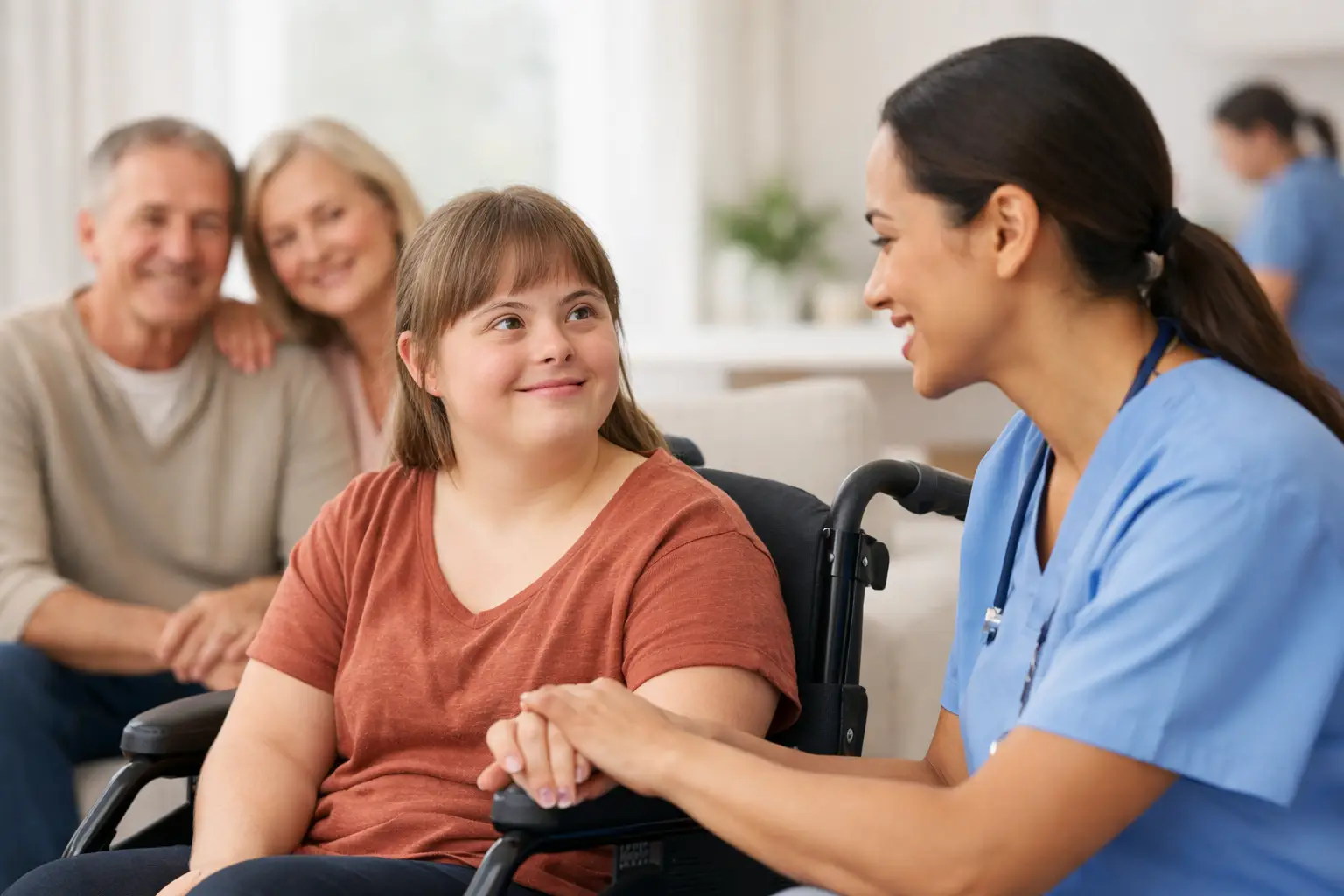
Who Needs an NDIS Nursing Assessment?
When a participant is having repeated UTIs, skin breakdown, medication issues, wound concerns or increasing care needs at home, the question is not whether support is needed. It is who needs an NDIS nursing assessment, and whether that assessment is being done early enough to prevent avoidable problems.
For Support Coordinators, families and care teams, that question usually comes up when day-to-day supports are no longer enough on their own. A participant may already have workers in place, but the clinical side of care can still be unclear. Routines might be inconsistent, risks may not be documented properly, and support workers may be doing their best without the training or oversight needed for high-intensity supports. That is where nurse-led NDIS care becomes essential.
Who needs an NDIS nursing assessment?
An NDIS nursing assessment is usually appropriate for participants with complex health support needs that affect safety, function, daily care routines or the ability to remain well at home. It is not only for people with obvious medical instability. Often, the strongest reason for referral is that care has become clinically complex, difficult to manage consistently, or hard to justify properly in NDIS documentation.
A participant may need a nursing assessment if they have continence concerns, wounds, pressure injury risk, a stoma, a catheter, bowel care needs, diabetes-related support, medication complexity, skin integrity issues or recurring infections. It is also commonly needed when support workers require training and clinical oversight to carry out delegated tasks safely.
In practice, the people who benefit most are those whose health needs sit in the middle of disability support and clinical care. They may be living at home, in shared supports, or receiving assistance from family and workers, but without clear nursing guidance the risk of deterioration can increase quickly.
When a nursing assessment becomes necessary
The need for practical nursing assessments often appears gradually. A participant who was previously stable may start needing more frequent pad changes, develop redness over pressure areas, have trouble managing a catheter, miss medications, or rely on family members for tasks that should be clinically reviewed. In other cases, the trigger is more obvious, such as hospital discharge after a wound, surgery, infection or decline in mobility.
Support Coordinators often refer when there is uncertainty about what supports are clinically required and how to document them. Families usually notice the strain first – more accidents, more pain, more skin issues, more anxiety about whether care is being done correctly. SIL and in-home support teams tend to raise concerns when staff are expected to perform tasks that need clear protocols, training and escalation pathways.
An assessment is also important when the participant’s current plan no longer reflects what is happening in the home. If care routines have changed, if risks have increased, or if support workers are managing more complex tasks than before, clinical evidence may be needed for a plan review or change of circumstances.
Common situations where nursing input matters
Continence, catheter and bowel or bladder concerns
Continence issues are one of the most common reasons a participant needs nursing input, but they are often under-recognised. People may be managing leakage, constipation, urinary retention, catheter complications, recurrent UTIs or skin damage linked to moisture and poor product fit. Without proper assessment, support can become reactive rather than safe and dignity-focused.
A nurse-led assessment can look at the participant’s routine, skin condition, risks, equipment use, hydration patterns, toileting support, infection history and whether current products are appropriate. It can also identify where support worker training is needed so daily care is done consistently.
Wounds, pressure care and skin integrity
Any participant with current wounds, fragile skin or pressure injury risk should be considered for clinical support in the home. This includes people with reduced mobility, long periods in bed or a chair, poor circulation, incontinence, diabetes or a history of skin breakdown.
The issue is not only treatment. Prevention matters just as much. A nursing assessment can clarify what is causing the skin damage, what dressing or pressure care approach is appropriate, how often monitoring should occur, and what support workers need to watch for. Clear documentation also helps referrers show why ongoing nursing or high-intensity supports are reasonable and necessary.
Stoma care and medication complexity
Participants with a stoma may need nursing review if there are leaks, skin irritation, poor appliance fit, reduced independence, changes in output or uncertainty about who can safely assist. Medication-related concerns are another major reason for referral, especially where there are multiple medicines, inconsistent administration, swallowing issues, diabetes management needs or missed doses affecting health stability.
These situations can look manageable from the outside until something goes wrong. A practical nursing assessment helps identify the real level of risk and whether routines in the home are actually safe.
Who should refer for an NDIS nursing assessment?
Referrals often come from Support Coordinators because they are trying to hold together a safe support arrangement while also preparing for reviews, sourcing providers and answering family concerns. A clear nursing report gives them something concrete – evidence of risk, current care needs, recommended supports and areas needing clinical oversight.
Families and guardians also refer when they are carrying too much of the clinical load or worrying that care is becoming unsafe. Allied health professionals may identify issues outside their scope, particularly where skin, continence, wounds or medication concerns are affecting progress. Discharge teams may refer when a participant is returning home with changed care needs and needs community-based nursing follow-up.
SIL providers and support worker organisations should also consider referral when staff are expected to deliver high-intensity supports without enough structure. In those cases, the assessment is not just about the participant. It is also about safer systems, clearer delegation and support worker training and clinical oversight.
What a good nursing assessment should actually provide
Not all reports are equally useful. For NDIS purposes, the assessment needs to do more than note a diagnosis. It should explain how the participant’s health needs affect daily function, what risks exist in the home setting, what support is required, and what clinical reasoning sits behind those recommendations.
That matters because broad statements rarely help at review time. Support Coordinators and Plan Managers usually need clear reports for Support Coordinators, practical recommendations and documentation that reflects what is really happening day to day. The best reports connect the participant’s condition to care tasks, safety risks, frequency of support, worker training requirements and the need for nursing oversight.
There is also a balance to strike. An assessment should be detailed enough to support funding evidence, but practical enough that families and support teams can use it. If a report is clinically accurate but impossible to apply in the home, it has missed the point.
It depends on complexity, not diagnosis alone
One of the biggest misconceptions is that only participants with a particular diagnosis need a nursing assessment. In reality, complexity matters more than the label. Two participants with the same condition may need very different levels of nursing involvement depending on mobility, cognition, home supports, skin status, continence issues, medication burden and the skill level of the people assisting them.
That is why referrals should not wait for a crisis. If care is becoming harder to manage, if there are repeated incidents, or if everyone is working around a clinical issue without a clear plan, nursing input is likely warranted.
For participants across Adelaide, especially those trying to avoid repeated hospital presentations or preserve safe routines at home, early assessment often makes ongoing care more stable. It can reduce guesswork, improve dignity, and give the broader team confidence that complex health support is being managed properly.
What information to gather before referral
A referral is usually smoother when the current issues are clearly described. Useful information includes recent hospital summaries, wound or continence history, medication lists, incident trends, current support arrangements and any concerns from family or workers. It also helps to explain what has changed – for example, increased infections, more frequent assistance, new skin concerns or reduced ability to self-manage.
This allows the nurse to assess not only the clinical issue itself, but how it is playing out in the participant’s actual environment. Good nurse-led NDIS care is grounded in what happens at home, not just what appears in old medical notes.
Compassion Wings works with participants, families and referrers who need practical nursing assessments, clear documentation and ongoing clinical input where complexity is affecting safety. That includes helping participants stay safe at home through assessment, care planning, worker education and reports that support decision-making.
If you are unsure whether a participant’s needs have crossed into nursing territory, that uncertainty is often the sign to ask the question. A timely assessment can clarify risks, strengthen the evidence for the right supports, and make daily care safer for everyone involved.



2 Comments
NDIS Wound Clinical Governance at Home in 2026 - Compassion Wings
June 27, 2026[…] expected, if the cause is unclear, or if support teams are struggling to maintain a safe routine, early nursing referral is usually the better option. Waiting until there is obvious deterioration often means more […]
How to Document Complex Care Needs for NDIS - Compassion Wings
July 26, 2026[…] health support should be documented from a current assessment, not assumptions or a list of diagnoses. A diagnosis may explain why a person has a health need, […]