


Best Practices for Pressure Care at Home
A pressure injury can develop quietly, then become painful, complex and difficult to heal. The best practices for pressure care begin well before skin breaks down: noticing changes early, understanding each person’s risk, and making daily routines clinically safe without taking away comfort or dignity. For NDIS participants with limited mobility, altered sensation, continence needs or complex health conditions, pressure care needs more than a checklist.
Best practices for pressure care start with assessment
Pressure injuries occur when prolonged pressure, or pressure combined with friction and shear, reduces blood flow to the skin and underlying tissue. They often develop over bony areas such as the sacrum, heels, hips, ankles, elbows and the back of the head. A person may also be at risk from medical devices, including oxygen tubing, catheters, braces or poorly fitting footwear.
A practical nursing assessment considers far more than whether a participant can reposition independently. It looks at mobility, transfers, time spent in bed or sitting, sensation, pain, continence, nutrition and hydration, existing wounds, medications, cognition, skin history and the equipment already used in the home. Recent illness, weight loss, infection, hospital discharge and reduced capacity after a fall can all change risk quickly.
This is why standard advice such as “turn every two hours” is not enough on its own. Repositioning frequency and methods need to suit the person’s skin condition, comfort, sleep, mobility, medical needs and care setting. Some participants need a more frequent plan; others may have a safe, documented plan that avoids unnecessary overnight disturbance. The key is an individualised clinical decision, reviewed as circumstances change.
Inspect skin consistently, not only when there is a wound
Daily skin inspection is one of the most effective ways to identify early concerns. For people at higher risk, support workers and family members need to know what to look for and when to report it. On lighter skin tones, early pressure damage may look like persistent redness that does not fade after pressure is relieved. On darker skin tones, it may appear as a darker, purple, blue or ashen area, or feel firmer, warmer, cooler, swollen or unusually tender.
Ask the participant about pain, stinging, numbness or discomfort. Their report matters even when the skin change is subtle. Do not massage a red or discoloured pressure area. Massage can increase tissue damage where skin and deeper tissue are already vulnerable.
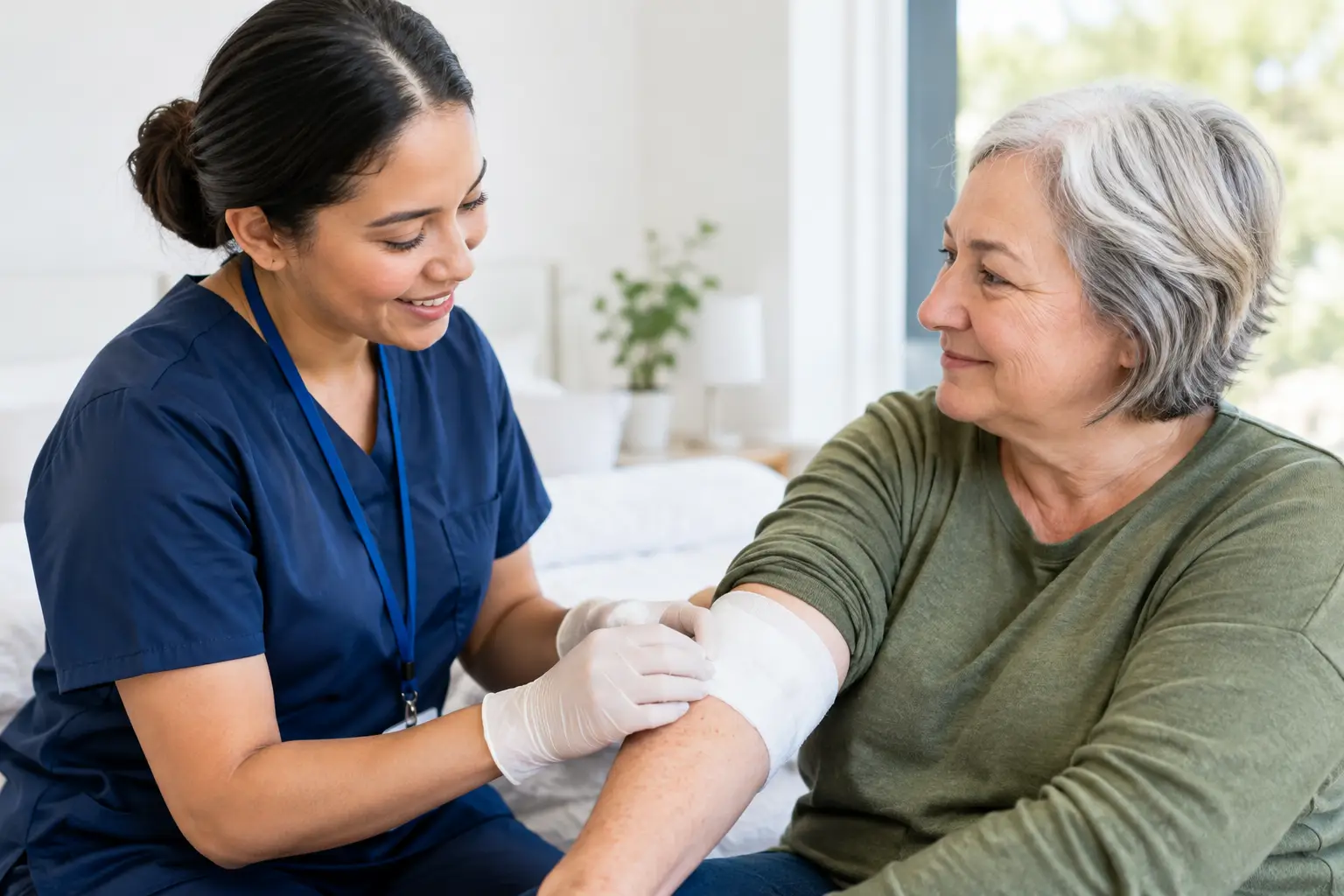
Checks should be built into ordinary care routines, such as dressing, showering, continence care, transfer assistance and bedtime preparation. This is safer and more dignified than treating skin inspection as a rushed task. Any concern should be documented clearly, including the location, appearance, size if relevant, pain level, surrounding skin and the action taken.
Make repositioning and transfers safer
Pressure care is not simply about moving someone more often. The way a participant is moved can either protect skin or create friction and shear. Dragging across a bed, allowing the person to slide down in a chair, or using poorly positioned slings can damage fragile skin even where no obvious pressure point is present.
A care plan should describe the participant’s preferred positions, transfer method, required assistance, equipment and signs that a position is no longer comfortable or safe. It should also specify how heels are protected, how feet are supported when seated, and whether repositioning aids are required. Support workers need practical training, not just written instructions, particularly where manual handling and high-intensity clinical needs overlap.
Seating deserves close attention. A participant who sits for long periods in a wheelchair, recliner or lounge may be at risk if they cannot shift their weight, if cushions are worn, or if their posture causes one area to take most of the load. A nursing review can identify concerns in the daily routine and coordinate clinical observations with the wider care team where needed.
Manage moisture, continence and skin protection
Moisture from urinary or faecal incontinence, perspiration, wound drainage or leakage around a stoma can weaken the skin and make it more susceptible to damage. Continence-related skin irritation and pressure injuries can look similar, but they are not managed in exactly the same way. Accurate assessment prevents the wrong products or routines from worsening the problem.
A safe plan may include timely continence care, gentle cleansing, careful drying, appropriate skin barrier products and review of products that trap moisture or cause irritation. It should also address the practical cause of leakage, such as an unsuitable continence product, an incomplete bowel routine, catheter issues or changes in fluid intake. Repeated redness should not be accepted as a normal part of care.
For participants with catheters, stomas or complex bowel and bladder routines, pressure points from tubing, straps, bags and appliances must also be checked. Securement should reduce pulling without creating local pressure. A nurse can assess the skin, identify contributing factors and provide clear instructions for day-to-day implementation.
Support healing with nutrition, hydration and health monitoring
Skin needs adequate nutrition, fluids and circulation to remain resilient and heal. Poor appetite, swallowing difficulties, illness, diabetes, infection and unintended weight loss can all increase risk or delay wound healing. Nursing input can identify when concerns need escalation to the participant’s GP, dietitian, wound specialist or other treating clinician.
Blood glucose management is particularly relevant for some participants. High or fluctuating blood glucose can affect healing and infection risk, while reduced sensation can mean injuries are missed until they are more advanced. Pressure care should sit alongside the participant’s broader clinical care plan, rather than being treated as a separate task.
Use a clear pressure care plan that workers can follow
A good clinical care plan turns assessment findings into practical actions. It should be easy for support workers to follow during a busy shift while still providing enough detail for safe, consistent care. Vague directions such as “monitor skin” leave too much room for interpretation.
For participants with complex health support needs, the plan should clearly state:
- areas of skin at risk and existing wounds or healed pressure injury sites
- positioning, repositioning and transfer instructions, including equipment and level of assistance
- skin inspection routine, moisture management and approved skin products
- what to document, who to notify and when to escalate concerns
- any clinical restrictions, pain considerations and review dates.
Plans need to be current. A change in mobility, hospital admission, new wound, new equipment, decline in health or change in support staff should prompt review. Clear reports for Support Coordinators can also document the clinical risk, care requirements, training completed and evidence supporting ongoing nursing oversight.
Know when pressure care needs urgent clinical review
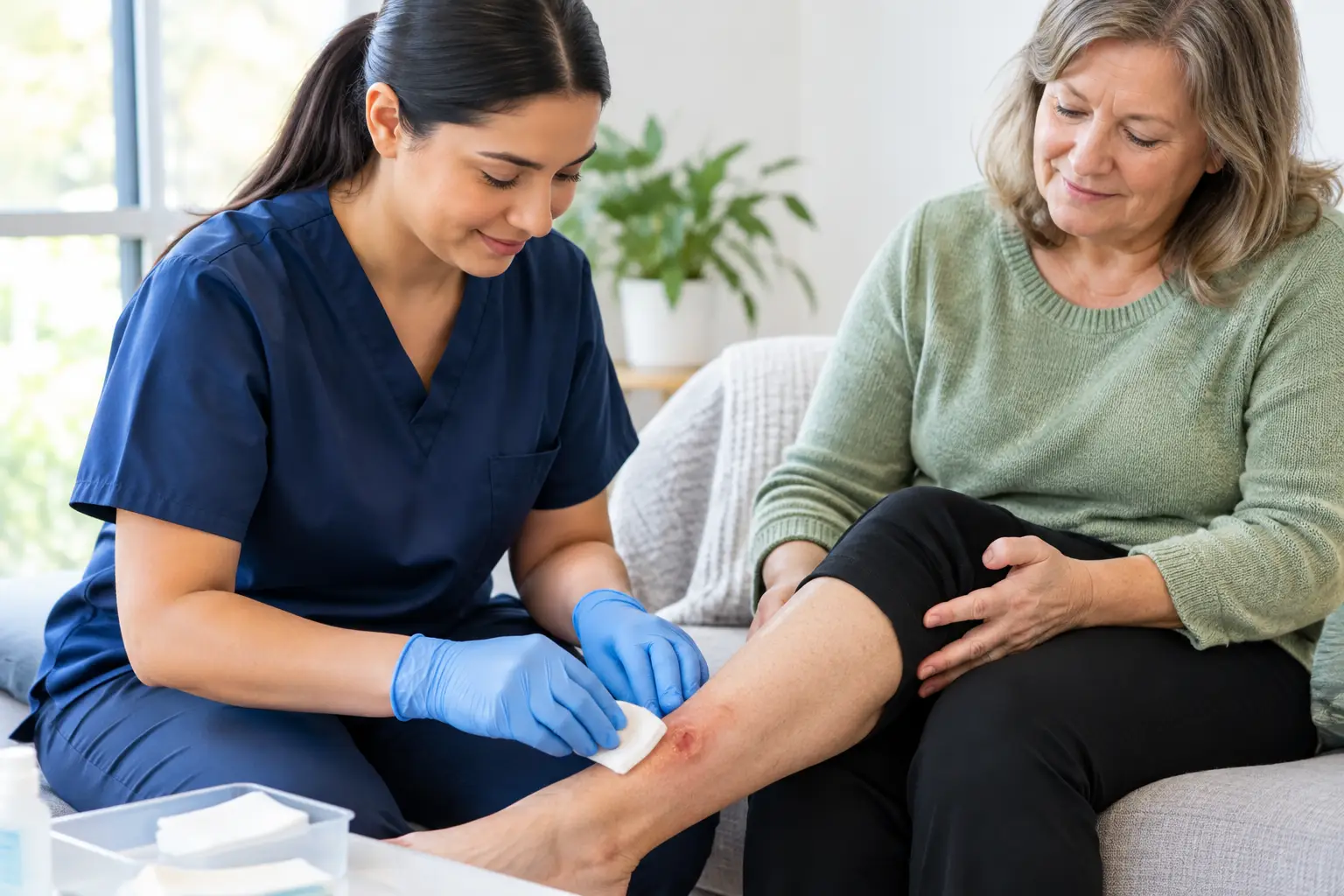
Early nursing review can prevent a small issue becoming an avoidable hospital presentation. Refer promptly when there is persistent redness or discolouration, a blister, broken skin, increasing pain, an area that feels unusually hot or cold, unexplained swelling, worsening moisture damage, or a wound that is not improving as expected.
Urgent medical assessment may be needed where there are signs of infection, including spreading redness, increasing heat, pus or odour, fever, sudden confusion, escalating pain or a participant becoming generally unwell. Deep wounds, black tissue, rapidly changing skin colour or suspected damage beneath intact skin also require timely clinical escalation. Support workers should not attempt to stage wounds or select advanced dressings without direction from an appropriately qualified clinician.
Give support workers the training and oversight they need
Even a well-written plan cannot protect a participant if the people implementing it are unsure what they are seeing or what action to take. Support worker training and clinical oversight are central to safe, dignity-focused care. Training should be specific to the participant’s routines, risks, positioning needs, continence supports and escalation pathway.
It also needs to be reinforced. Staff turnover, changes in health and different settings can create gaps between the plan and what happens each day. Nurse-led NDIS care provides a way to assess risk, observe care routines, update documentation and give workers practical guidance they can apply confidently in the home.
For Adelaide participants with complex health needs, Compassion Wings can provide practical nursing assessments, pressure care plans, wound and skin integrity monitoring, staff education and clinical reports. The aim is not to make care more complicated. It is to help participants stay safe at home with routines that are clear, realistic and responsive when their needs change.
Pressure care works best when it is treated as a shared daily responsibility: the participant’s comfort is heard, workers know the plan, families can recognise early changes, and a nurse is involved before a small skin concern becomes a serious wound.



4 Comments
Safe Home Care for Complex Needs in Adelaide - Compassion Wings
August 11, 2026[…] wounds and pressure care, nursing assessment considers wound location, tissue type, drainage, odour, pain, surrounding skin, […]
Continence Report Provider Adelaide Review: Key Checks - Compassion Wings
August 24, 2026[…] concerns often overlap with other clinical issues. Moisture-associated skin damage can increase pressure injury risk. Constipation may affect appetite, behaviour, comfort and urinary function. Repeated catheter […]
When to Book a Clinical Care Plan Review in Adelaide - Compassion Wings
September 3, 2026[…] a participant has continence needs, wounds, pressure injury risks, a stoma, catheter, diabetes, complex medication routines or changing skin integrity, an old plan […]
When an Adelaide Wound Assessment Is Needed - Compassion Wings
September 11, 2026[…] should be considered when there is a pressure injury or a high risk of one developing. Participants who spend long periods in bed or seated, have […]