
Top Signs of Wound Deterioration to Act On
A dressing change can reveal more than whether a wound is clean. A new odour, increased fluid, fragile skin or a participant who is suddenly reluctant to transfer may be among the top signs of wound deterioration. For people with complex health needs, early changes can progress quickly, particularly where pressure, diabetes, poor circulation, continence issues or reduced mobility are involved.
Wounds do not always deteriorate dramatically overnight. Often, the first warning is a small but consistent change from the person’s usual wound appearance, pain level or care routine. Recognising that change, documenting it clearly and arranging timely clinical review can help prevent avoidable infection, hospital presentation and loss of function.
What wound deterioration can look like
A healing wound should generally show gradual improvement over time. The rate depends on the wound type, its location, the participant’s health, nutrition, circulation and ability to reposition. Some wounds heal slowly without being infected, so a slow course alone does not confirm deterioration. What matters is the overall trend.
The following signs warrant closer assessment, especially when more than one appears or the change is occurring over days rather than weeks.
Increasing redness, heat or swelling
Redness that spreads beyond the wound edge, skin that feels warmer than surrounding areas, or new swelling can indicate inflammation, infection or pressure-related damage. In darker skin tones, redness may be less visible. Look instead for a change in skin colour, warmth, firmness, shininess, swelling or tenderness.
For a pressure area, a patch that does not fade when pressure is removed needs prompt attention. A participant may describe burning, tingling or pain before visible skin breakdown occurs.
A change in wound fluid or odour
Some drainage can be expected, depending on the wound. Concern rises when there is a clear increase in volume, fluid begins soaking through dressings sooner than usual, or the drainage changes colour or consistency. Thick yellow, green, grey or cloudy fluid should be clinically reviewed.
A persistent or worsening unpleasant odour, particularly after cleansing and application of a fresh dressing, is another reason to escalate. Odour can have several causes, including dressing saturation or dead tissue, but it should not be dismissed when it is new or accompanied by other changes.
Worsening pain or new discomfort
Pain is a valuable clinical indicator, including for participants who find it difficult to communicate verbally. A wound that becomes more painful, painful at rest, or painful during routine dressing care may be deteriorating. New agitation, guarding, reduced sleep, refusal of transfers, or withdrawal from usual activities can also signal discomfort.
This needs context. A dressing change may cause temporary discomfort, and some wound treatments can sting. However, a sustained increase in pain, particularly with redness, heat or discharge, requires assessment rather than simply increasing comfort measures.
The wound is getting larger or deeper
Reliable measurements matter. If the length, width or depth is increasing, if the edges are breaking down, or if a new area of skin damage is appearing nearby, the wound is not progressing as expected. Undermining or tunnelling, where tissue damage extends beneath the surrounding skin, also needs experienced nursing assessment.
For Support Coordinators and providers, vague notes such as “wound looks worse” are not enough to guide safe decisions. Clear documentation of wound location, measurements, tissue appearance, drainage, pain, dressing response and actions taken provides a much stronger clinical picture.
Changes to the wound bed or surrounding skin
Healthy healing tissue is often pink or red and moist. Tissue that becomes black, grey, brown, increasingly yellow or dry may indicate devitalised tissue, reduced blood supply or another complication. The skin around the wound can also show deterioration before the wound bed changes.
Watch for maceration, where skin becomes pale, soggy or fragile from excess moisture. This is common where dressings are leaking, continence care is difficult, or wounds sit in skin folds. Cracked, blistered, purple or shiny skin around a pressure area also requires action.
Top signs of wound deterioration that need urgent escalation
Some wound changes should not wait for the next scheduled review. Seek urgent medical advice if there is rapidly spreading redness, fever, chills, confusion, marked drowsiness, fast deterioration, severe or escalating pain, red streaking from the wound, or significant bleeding that does not stop with appropriate pressure.
A wound with exposed bone, tendon or deep structures also requires urgent review. So does a foot wound in a person with diabetes, particularly if there is new discolouration, swelling, discharge or reduced sensation. Poor circulation can mean damage is more advanced than it first appears.
If the participant is acutely unwell, has difficulty breathing, collapses, becomes severely confused, or there are signs of a medical emergency, call 000. For less immediate but concerning changes, contact the participant’s treating GP, wound clinic or relevant health service promptly and follow the existing clinical escalation plan where one is in place.
Why pressure, continence and diabetes can change the risk
Wound care is rarely just about the dressing. A sacral wound, for example, may continue to worsen if a participant is spending long periods in one position, sliding during transfers, or experiencing moisture exposure from continence episodes. A lower-leg wound may not heal as expected where swelling or circulation problems have not been addressed. Diabetes can reduce sensation and affect healing, allowing small injuries to worsen before they are noticed.
This is why practical nursing assessments look at the whole situation: mobility and pressure exposure, nutrition and hydration, skin hygiene, continence routines, diabetes management, medication factors, equipment use and the capability of everyone delivering daily care. The best dressing will have limited effect if the underlying cause remains unchanged.
What support teams should do when they notice a change
The first priority is to protect the participant and avoid making the wound worse. Follow the current wound care plan, use the prescribed dressing products and maintain infection-control practices. Do not introduce creams, antiseptics or new dressings based on guesswork, as some products can delay healing or interfere with clinical assessment.
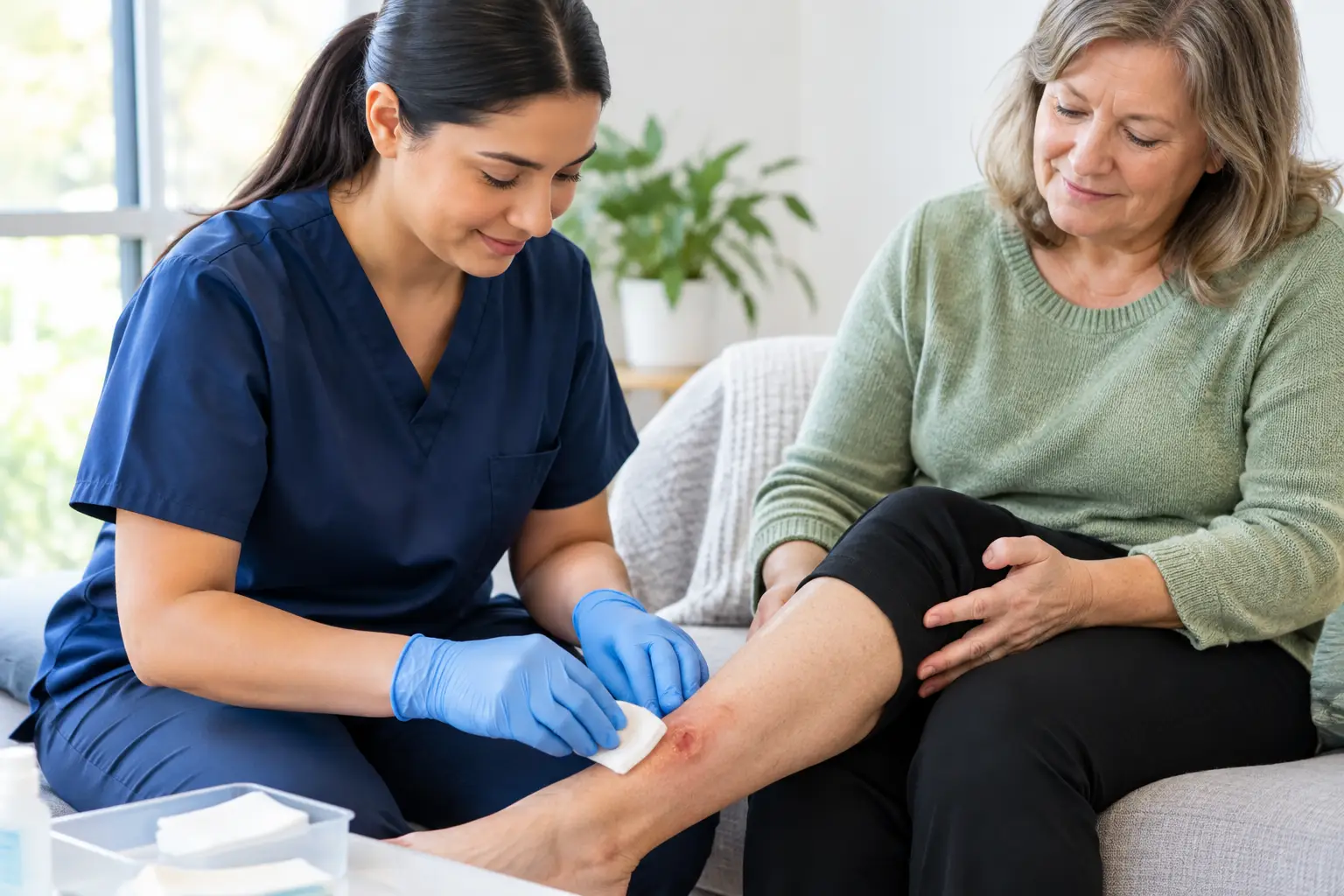
Record what has changed and when it was first noticed. Where consent and organisational policy allow, consistent wound photographs can support monitoring, provided they are securely stored and taken with a measurement guide. Record pain, wound drainage, odour, surrounding skin changes, dressing strike-through, temperature if available, and any contributing events such as a continence episode, fall, reduced mobility or missed repositioning routine.
Then escalate to the appropriate clinician. A timely phone call with clear observations is far more useful than waiting until a wound has deteriorated significantly. Families should feel comfortable raising concerns even when they are unsure whether a change is serious. Early review is usually safer than assuming it will settle.
When nurse-led NDIS wound care is needed
Nursing input is particularly valuable when wounds are recurring, slow to heal, difficult to dress safely, affected by pressure or moisture, or creating uncertainty for the wider support team. It is also appropriate when a participant has multiple risks, such as diabetes, reduced sensation, limited mobility, catheter or stoma care needs, or difficulty communicating pain.
Nurse-led NDIS care can provide a practical wound and skin assessment, a clear clinical care plan, recommendations for pressure and moisture management, and support worker training and clinical oversight. For Support Coordinators, thorough nursing documentation can clarify the participant’s current risks, required supports and why consistent implementation matters. Clear reports for Support Coordinators are especially helpful when wound needs have changed and evidence is required for a plan review or change of circumstances.
Compassion Wings provides clinical support in the home for Adelaide participants with complex health support needs, with safe, dignity-focused care at the centre of each assessment. The aim is not simply to change a dressing. It is to identify what is driving deterioration, support the people providing daily care and help participants stay safe at home.
A wound concern is often easier to address when it is still a small change. Treat new pain, skin changes, increasing drainage or a stalled healing pattern as a reason to look closer, document clearly and seek the right clinical advice.