




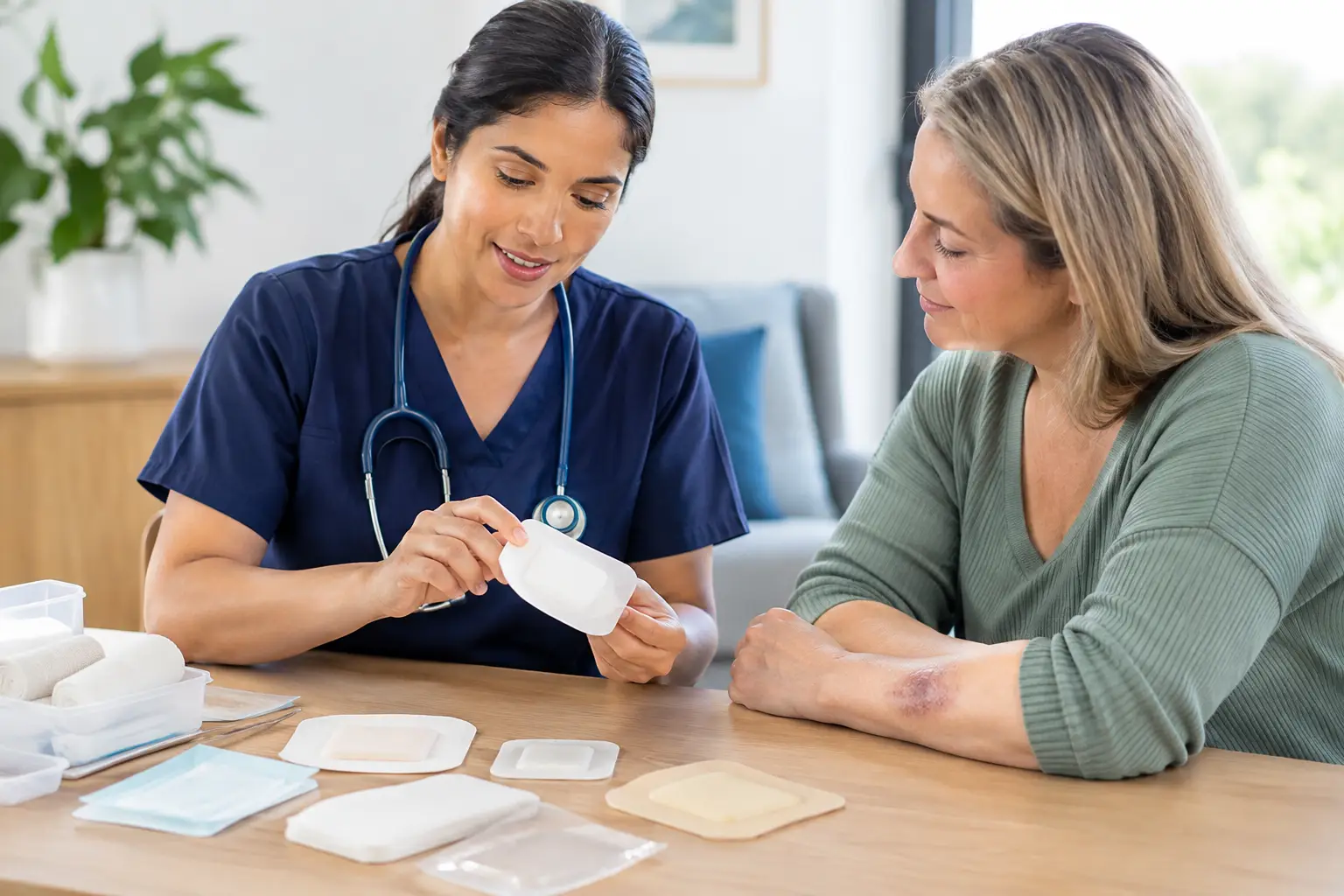
A Nurse-Led Guide to Wound Dressing Selection
A dressing is not simply a cover placed over a wound. The wrong choice can dry out a healing wound, trap too much moisture against fragile skin, cause pain during removal or conceal a worsening infection. This guide to wound dressing selection explains why nurse-led assessment matters, particularly where an NDIS participant has complex health needs, limited mobility, diabetes, continence concerns or a history of pressure injuries.
For families and Support Coordinators, the goal is not to memorise product names. It is to make sure the wound, the person’s health risks and the daily care routine are assessed together. Safe wound care depends on that clinical picture.
Start with the wound, not the dressing
A dressing should be selected after a practical nursing assessment, not before it. Two wounds that look broadly similar can need very different management. Their cause, location, depth, amount of fluid, condition of the surrounding skin and signs of infection all affect the decision.
A nurse will first consider whether the wound is acute or chronic. A skin tear after a transfer, a surgical wound, a venous leg ulcer, a diabetic foot wound and a pressure injury do not follow the same pathway. Treating the surface without addressing the cause can lead to repeated breakdown and avoidable hospital presentations.
The assessment should also record wound measurements, tissue type, exudate level and odour, pain, bleeding, edges and periwound skin. Clear baseline documentation makes it possible to identify whether the wound is improving, static or deteriorating. It also provides useful clinical evidence when a participant’s NDIS plan review or change of circumstances requires nursing input.
A guide to wound dressing selection: the key clinical questions
The most suitable dressing usually balances moisture, protection and safe removal. It must also be realistic for the home environment and for the people completing daily care.
How much fluid is the wound producing?
A dry wound may need support to maintain a moist healing environment. An overly absorbent dressing on a dry wound can adhere to the wound bed and cause trauma when removed. By contrast, a wound with moderate or heavy exudate needs a dressing that can absorb fluid while protecting the surrounding skin from maceration.
Exudate is not just inconvenient moisture. A sudden increase, change in colour or new odour may indicate infection, deterioration or another issue requiring review. Continence-related moisture can complicate this further, especially around the sacrum, buttocks, groin or upper thighs. Dressing choice must sit alongside an effective continence routine and skin protection plan.
What tissue is visible in the wound bed?
Healthy granulation tissue is generally red and moist. Slough may appear yellow or cream, while necrotic tissue can be brown or black. These findings influence the management plan, but they should not be interpreted in isolation. A wound with black tissue, increasing pain, redness or reduced circulation needs timely clinical assessment rather than a routine dressing change.
Some dressings support moisture balance and gentle removal of non-viable tissue. Others protect fragile new tissue or manage heavier fluid levels. The nursing decision is based on the whole wound presentation, not a single colour chart or a dressing already kept in the cupboard.
Is the surrounding skin at risk?
The skin around the wound often tells an important part of the story. White, soggy edges can suggest excess moisture. Redness, itching or stripping may point to adhesive injury, contact irritation or frequent dressing changes. Fragile skin is common in older people, people taking certain medicines, people with poor nutrition and participants who require regular assistance with transfers or personal routines.
Silicone contact layers and gentle adhesive options may reduce pain and skin trauma for some people. However, they may not be appropriate in every situation. The dressing must stay in place, protect the wound and still be removable without causing unnecessary distress.
Is pressure, friction or shear involved?
No dressing can compensate for ongoing pressure. If a wound is on the heel, sacrum, hip or another pressure-prone area, the care plan must address repositioning, seating, transfers, mattress use and daily skin checks. A pressure injury will struggle to heal if the source of pressure continues.
This is where clinical support in the home becomes especially valuable. A nurse can assess the wound while also observing the practical realities of care: how the participant sits, how transfers occur, whether the dressing survives showering or continence episodes, and whether support workers have clear instructions they can follow safely.
Dressing categories and their practical role
Dressings are commonly described by their function, but categories overlap and selection remains individualised. Films may protect low-exudate superficial wounds and allow visibility. Foam dressings can provide cushioning and absorb exudate. Hydrofibre or alginate dressings may be considered where exudate is higher. Hydrogels may assist in selected dry wounds, while antimicrobial dressings can have a defined role when infection risk or local infection is clinically assessed.
These labels are a starting point, not a treatment plan. An antimicrobial dressing, for example, is not a substitute for investigating spreading redness, fever, increasing pain, purulent discharge or a participant who becomes unwell. Likewise, a highly absorbent dressing may manage fluid but will not correct untreated oedema, pressure or poor blood flow.
Frequency of change matters too. A dressing that theoretically lasts several days may need earlier replacement if it becomes saturated, loose, contaminated or displaced. Conversely, unnecessary daily removal can interrupt healing, increase pain and damage fragile skin. The plan should state what support workers need to observe, when to change the dressing, and when to contact the nurse or seek urgent medical review.
Consider the person’s broader clinical risks
Wound healing is affected by far more than the dressing. Diabetes, reduced circulation, oedema, malnutrition, smoking, immune suppression, medication, limited mobility and incontinence can all delay progress. Pain and cognitive changes can also affect whether a participant can report problems early or tolerate dressing changes.
For participants with diabetes, a new foot wound, blister, colour change or unexplained swelling should never be treated as routine. For those with reduced sensation, the absence of pain does not mean the wound is minor. Where arterial disease or poor circulation is suspected, compression or certain wound approaches require careful clinical and medical direction.
A good care plan also considers dignity. Wounds in intimate areas, stoma-adjacent skin problems or moisture-associated skin damage can be distressing. Safe, dignity-focused care means using respectful language, maintaining privacy and giving workers enough clinical guidance to provide consistent support without improvising.
When routine wound care needs escalation
Families, Support Coordinators and support workers should know the difference between a planned dressing review and a potential clinical escalation. Prompt nursing or medical assessment is needed when there is increasing redness, warmth, swelling, pain, malodour, pus, wound enlargement, blackening tissue, fever, new confusion or a general decline in wellbeing.
Urgency is higher for wounds on a diabetic foot, wounds with exposed deeper structures, rapidly spreading redness, uncontrolled bleeding or signs of systemic illness. If there is immediate concern about a serious infection or acute deterioration, seek urgent medical assistance rather than waiting for the next scheduled dressing change.
Photographs can support monitoring when taken with consent and according to privacy processes, but they do not replace an in-person assessment where the wound is changing. Accurate written observations remain essential.
Turn the dressing plan into safe daily care
Even a clinically appropriate dressing can fail if the instructions are unclear. Support worker training and clinical oversight help translate nursing recommendations into consistent care at home. The written plan should identify the dressing regime, hand hygiene and infection-control steps, required equipment, pain considerations, waste disposal, documentation expectations and clear escalation triggers.
For Support Coordinators, clear reports for Support Coordinators can show the wound’s impact on daily support needs, clinical risk and the need for ongoing nursing review. For families, they reduce the burden of having to explain the same wound history repeatedly. For providers, they create an auditable pathway for care rather than reliance on verbal handover.
Compassion Wings provides nurse-led NDIS care for participants who need wound assessment, pressure care planning, support worker education and practical clinical reporting in Adelaide. The focus is helping participants stay safe at home while ensuring changing wound risks are recognised early.
The best dressing is rarely the most familiar or the most expensive option. It is the one chosen after sound assessment, reviewed as the wound changes and supported by a care routine that protects both healing and dignity.