

Can Nurses Train SIL Staff for Complex Care?
When a participant’s daily routine includes a catheter, stoma, complex bowel program, insulin, wound dressing or pressure care, the question is not simply whether staff have been shown what to do. Can nurses train SIL staff to provide that support safely, consistently and within the right clinical boundaries? In many circumstances, yes. But effective training must be specific to the participant, documented properly and supported by ongoing clinical oversight.
For families and Support Coordinators, this matters because a one-off demonstration can leave too much to chance. Complex health support changes over time. Skin breaks down, wounds deteriorate, equipment changes, infections emerge and a routine that worked last month may no longer be appropriate. Nurse-led NDIS care brings assessment, training and escalation planning together so staff can act confidently while participants receive safe, dignity-focused care.
Can nurses train SIL staff under the NDIS?
Registered nurses can provide support worker training for many clinical and high-intensity support tasks, provided the training sits within their professional scope and is based on a proper assessment of the participant’s needs. The nurse must also be satisfied that the individual worker can demonstrate the required knowledge and practical skill before they are considered competent.
Training is not a blanket permission for every staff member to perform every clinical task. The right approach depends on the participant’s diagnosis, current health status, prescribed treatment, the complexity of the procedure and the worker’s role, experience and demonstrated competency.
The provider employing the staff also has responsibilities. It needs suitable policies, staffing arrangements, records, incident processes and clinical governance. A nurse can assess, teach and verify competence, but the organisation must make sure trained staff are appropriately rostered, receive refreshers where needed and know when to stop and escalate.
This distinction is particularly important where a participant requires high-intensity clinical support. The focus should never be on getting a task ticked off quickly. It should be on reducing foreseeable risk while preserving the person’s comfort, privacy and usual routine.
What nurse-led training should include
A useful training session starts well before the nurse meets with staff. Practical nursing assessments identify the participant’s condition, their usual baseline, the clinical purpose of the task and the risks that staff need to recognise. This assessment informs an individualised clinical care plan rather than a generic instruction sheet.
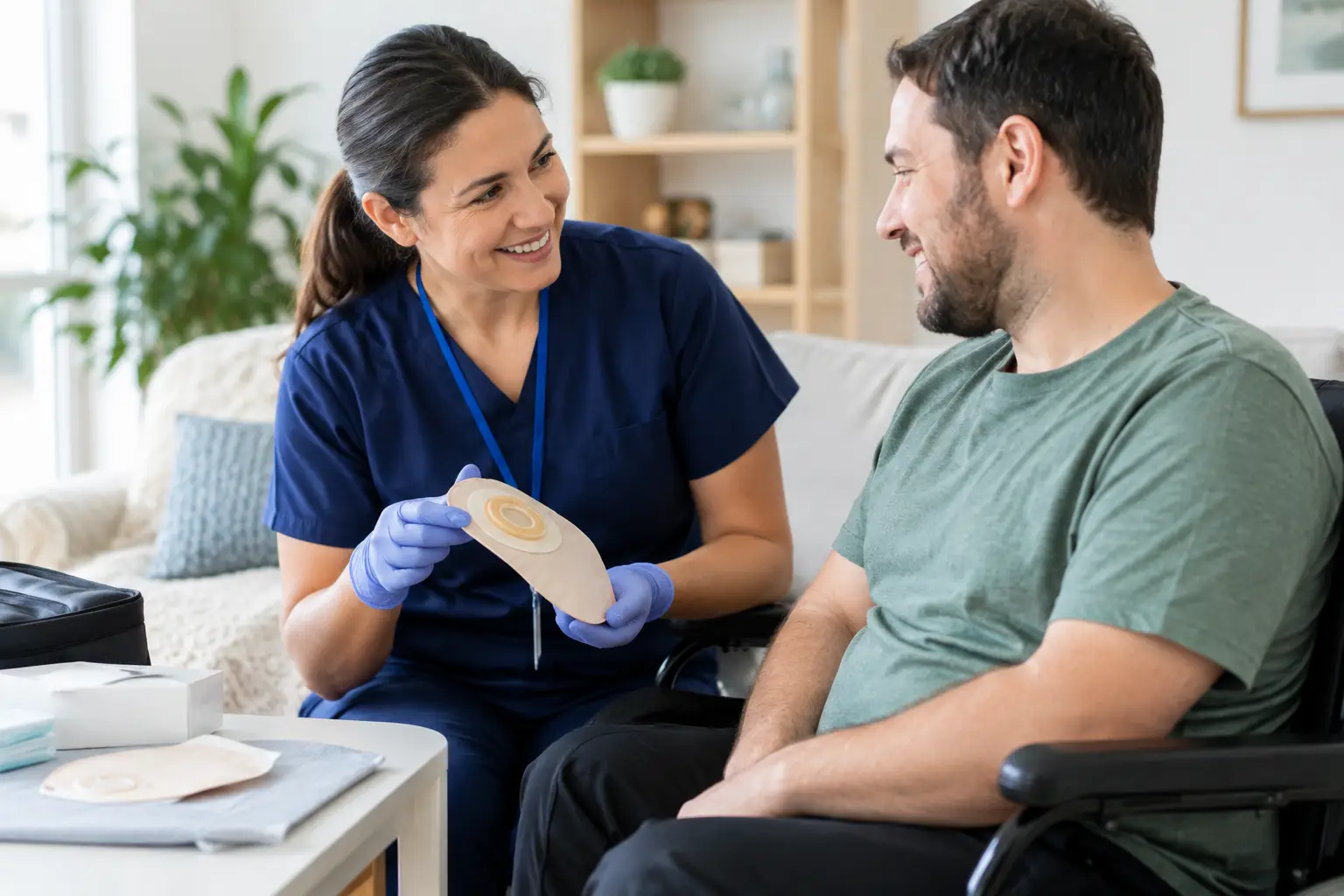
For example, catheter care training should explain more than emptying a drainage bag. Staff need to understand infection warning signs, reduced output, leakage, pain, blockages, securement, fluid considerations where relevant and who to contact if the participant becomes unwell. A worker also needs to understand what they should not attempt without nursing review.
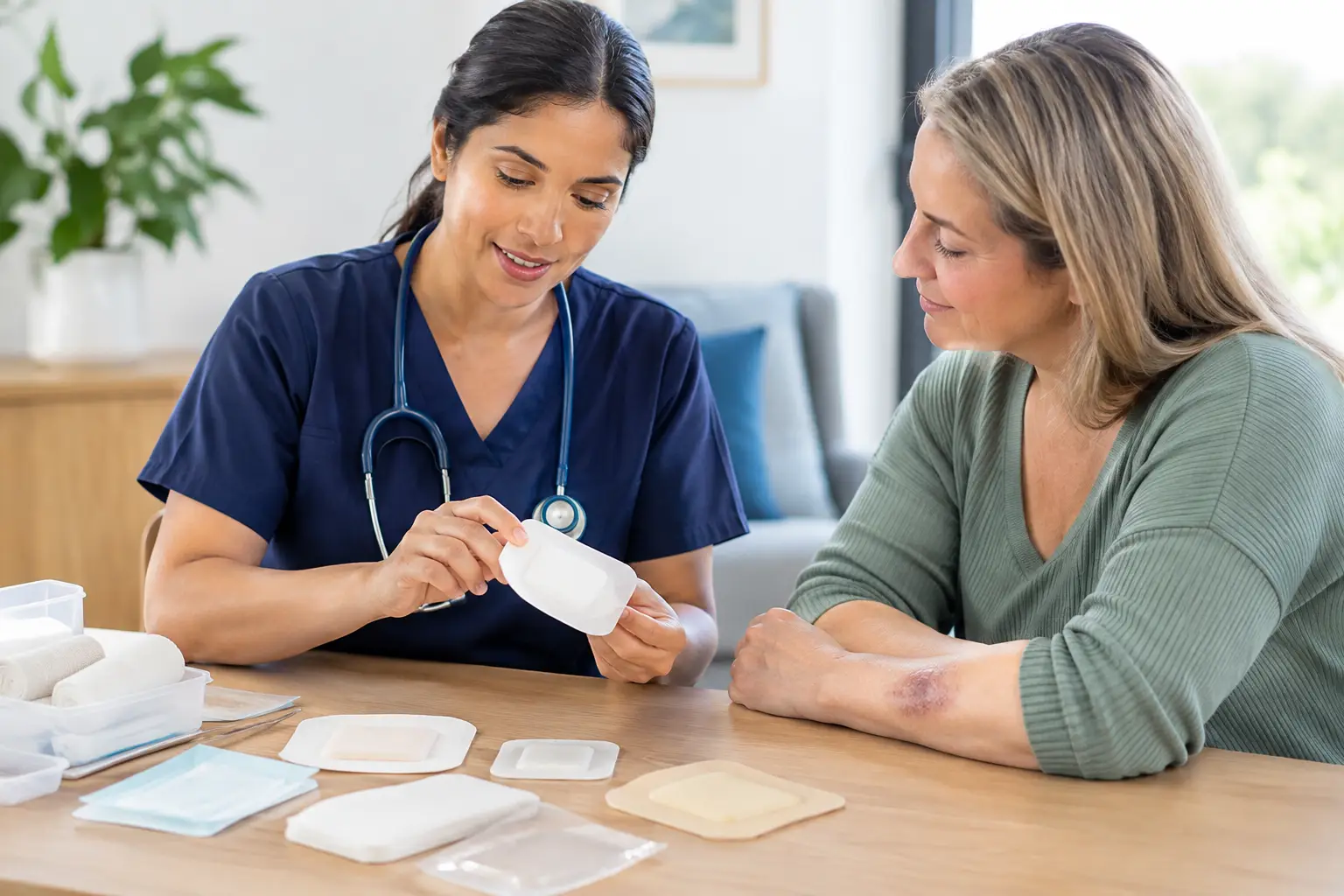
Similarly, wound care training needs to reflect the wound type, dressing regime, skin condition, pain considerations, infection risk and the required frequency of review. If a wound changes, staff should not continue with an outdated routine simply because it appears in an old care plan.
Effective support worker training and clinical oversight generally covers the clinical task, infection prevention, consent and privacy, documentation, equipment and consumables, warning signs, emergency actions and clear escalation pathways. The participant’s preferences should be embedded throughout. Safe care is not just technically correct care. It is care delivered respectfully, in a way that protects dignity.
Competency needs to be observed, not assumed
Reading a care plan or attending a group session does not, by itself, prove that a worker is competent. A nurse should observe the worker performing the relevant task, or using a realistic simulation where appropriate, and assess whether they can follow the care plan safely.
Competency assessment should consider both technical steps and clinical judgement. Does the worker recognise when something is different? Do they document accurately? Can they explain the escalation process? Are they able to seek help rather than working beyond their training?
The answer may be different for each worker. One person may need further supervised practice, while another may demonstrate sound competence immediately. Recording this outcome is essential for continuity, staff management and audit-safe documentation.
When training alone is not enough
There are situations where a nurse should remain directly involved rather than training staff to carry out a task independently. This may be because the participant’s health is unstable, the intervention is changing frequently, there is a high risk of rapid deterioration or the task requires ongoing nursing assessment.
A participant with a newly formed stoma, a deteriorating pressure injury, recurrent catheter blockages or unstable diabetes management may need more than a single training visit. They may require regular nursing review, updated instructions, liaison with treating clinicians and reassessment when circumstances change.
It is also appropriate to pause a routine and seek nursing input after a hospital admission, medication change, infection, new wound, unexplained pain or repeated incidents. Continuing a familiar task in an unfamiliar clinical situation can create avoidable risk.
For Support Coordinators, a useful referral question is: does the team need education only, or does the participant need an assessment, care plan, training and ongoing review? Where complex health support is involved, the second option is often the safer starting point.
Common areas where SIL staff may need nurse training
Nurse-led training can be particularly valuable when staff support participants with continence and catheter routines, stoma care, bowel management, diabetes support, medication-related clinical risks, wound care, skin integrity concerns and pressure injury prevention.
The level of training should match the task and the person. A participant with an established, stable routine may need clear task instructions and periodic competency review. Someone whose health status is changing may need closer nursing involvement, more frequent review and a revised clinical care plan.
Bowel and bladder support is a good example of why individualisation matters. The same diagnosis can present very differently between participants. Training must account for prescribed routines, privacy needs, autonomic dysreflexia risk where relevant, signs of constipation or impaction, hydration considerations and the participant’s preferred way of communicating discomfort.
Documentation protects participants and staff
Good clinical documentation is not administrative clutter. It is what allows a rostered worker, a nurse, a Support Coordinator and a family member to understand the current plan and act consistently.
A clear clinical care plan should set out the task, required equipment, step-by-step procedure where appropriate, expected outcomes, precautions, signs that require escalation and relevant contact pathways. Training records should identify who attended, what was covered, the competency outcome, any limitations and when review is due.
Daily notes also matter. They create a picture over time. A record of increased redness around a wound, reduced urine output, repeated high blood glucose readings or changes in bowel patterns can prompt earlier nursing review before a problem becomes an emergency.
Clear reports for Support Coordinators can also help explain why clinical input, training, consumables or review are required. The strongest reports connect the participant’s functional situation and health risks to practical recommendations. They do not overstate needs, but they do provide the evidence required for safer decision-making and plan review discussions.
How to arrange appropriate nursing input
Before training is booked, provide the nurse with available clinical information: current care plans, hospital discharge summaries, specialist instructions, medication charts where relevant, recent incident records and details of the staff who need training. It is also helpful to identify what is currently going wrong or causing concern.
The nurse can then determine whether an assessment is needed first, whether the existing instructions are current, and whether staff training can safely proceed. In some cases, the most helpful next step is a practical nursing assessment in the home, followed by an updated plan and hands-on education.
Compassion Wings provides nurse-led NDIS care across Adelaide for participants requiring complex health support. Our approach is practical: assess the clinical need, document a clear plan, train the relevant workers, confirm competency and remain available for review when the participant’s needs change.
The safest care arrangements give staff a clear role, give families confidence that concerns will be recognised early, and give participants the consistency they deserve. When clinical needs change, asking for nursing review early is often the step that helps participants stay safe at home.