

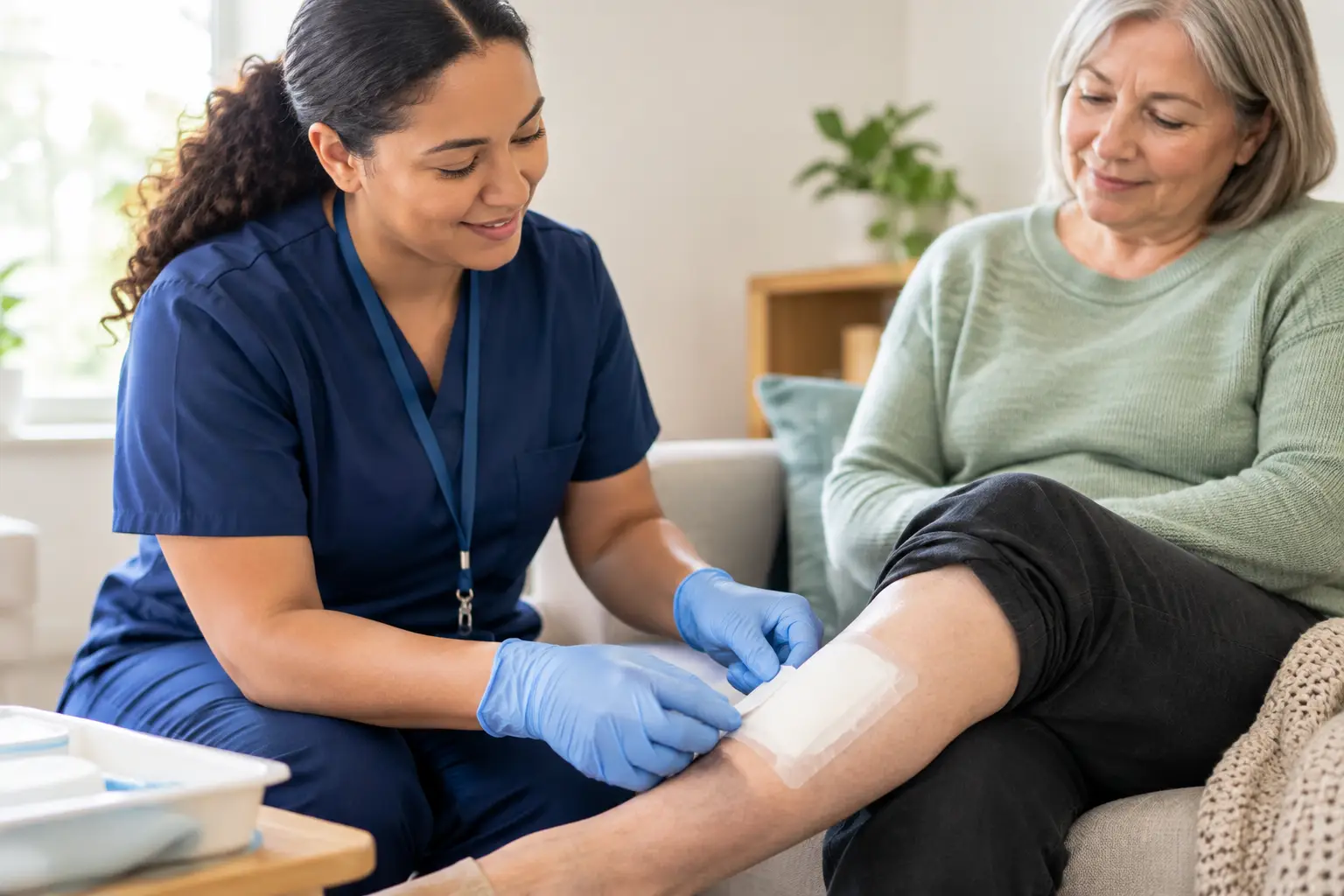
Wound Dressings: When Nurse-Led Care Matters
A dressing that looks clean at a morning visit can still conceal a worsening wound. For NDIS participants with fragile skin, reduced mobility, diabetes, continence-related moisture or complex health needs, wound dressings are not simply a consumable to change on a schedule. The dressing is one part of a broader clinical decision about healing, comfort, infection risk, pressure management and who can safely provide care at home.
For families and Support Coordinators, the difficulty is often knowing when a routine needs nursing review rather than another box of dressings. Nurse-led NDIS care brings practical assessment, clear documentation and clinical oversight to that decision, helping participants stay safe at home while giving the wider support team a plan they can follow.
Why the right dressing starts with assessment
There is no single best dressing for every wound. A product that is appropriate for a shallow, low-exudate wound may be unsuitable for a wound with heavy drainage, fragile surrounding skin or signs of infection. The type of wound matters, but so do its location, depth, drainage, odour, pain, healing progress and the participant’s broader health.
A practical nursing assessment considers the person as well as the wound. For example, a wound on the heel may not improve if ongoing pressure is not addressed. Skin damage linked to incontinence may continue if cleansing, continence products and skin protection are not working together. A surgical wound requires a different level of monitoring from a long-standing pressure injury, even if both appear small at first glance.
This is why changing a dressing without an up-to-date clinical plan can create risk. The aim is not to use the most advanced-looking product. It is to select and apply a dressing approach that supports the wound environment, protects surrounding skin and is realistic for the participant’s daily setting.
What a nurse looks for before choosing wound dressings
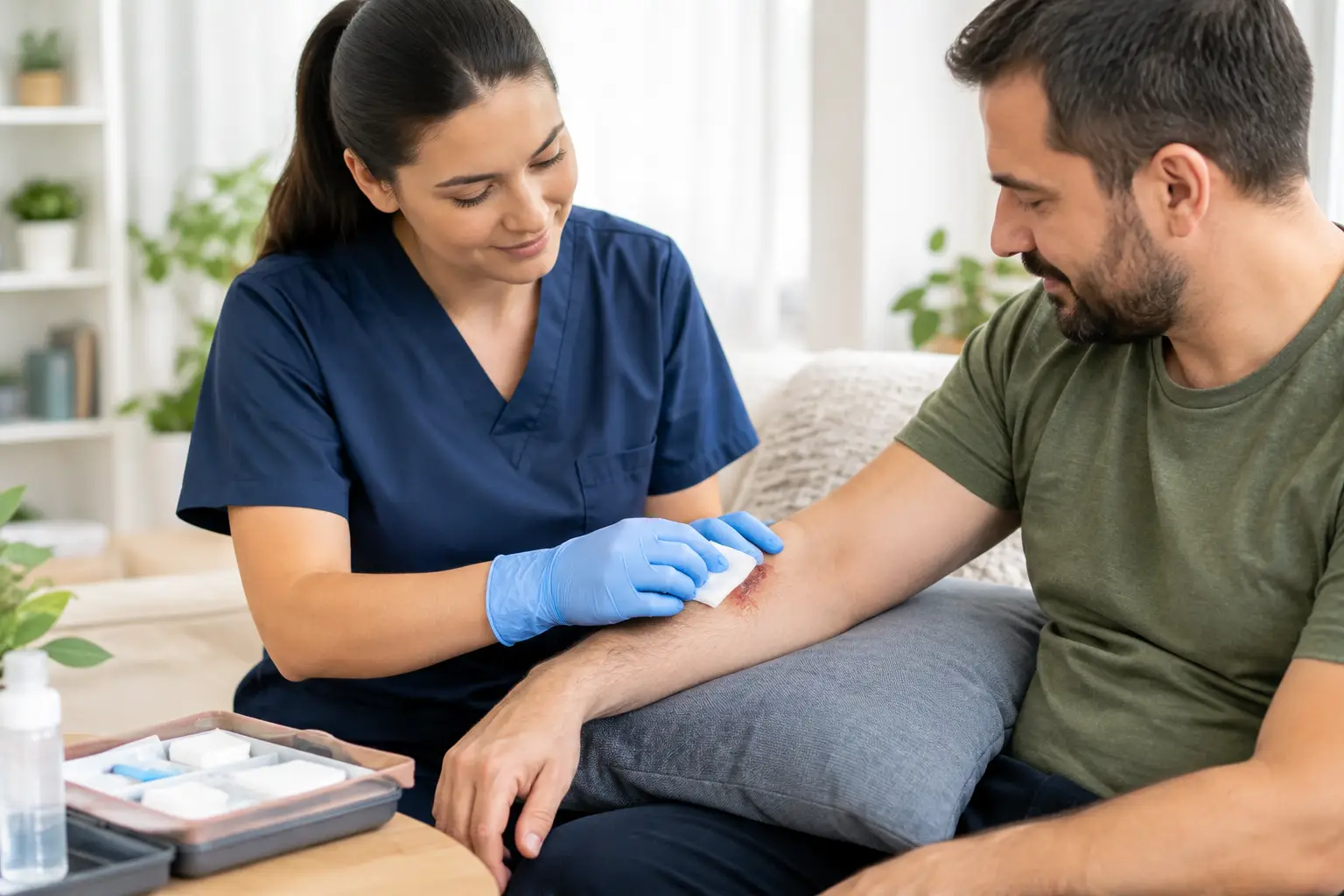
A nurse-led assessment should establish a reliable baseline, rather than relying on a verbal description such as “it looks a bit red”. This usually includes wound measurements, tissue appearance, drainage amount and type, surrounding skin condition, pain and relevant photographs where consent and local processes permit.
The assessment also considers factors that can delay healing or increase complications. These may include diabetes, poor circulation, oedema, reduced sensation, limited mobility, medication effects, nutrition concerns, continence needs and the ability of the participant or support team to complete the care routine consistently.
The questions matter because a dressing can only do part of the job. If a participant spends long periods in one position, has frequent moisture exposure or cannot report increasing pain due to communication barriers, the care plan needs to account for those realities. A clinically sound plan should be practical enough for support workers and family members to use, while retaining clear limits about when nursing review or urgent medical escalation is required.
Dressing selection is a clinical decision, not a stock order
Modern wound dressings have different purposes. Some manage moisture, some support a dry wound environment, some protect vulnerable skin, and some may be used as part of a clinician-directed approach for wounds with higher bioburden or infection concerns. The right option depends on assessment findings and can change as the wound heals.
The trade-off is important. A highly absorbent dressing may help manage drainage but may not be appropriate if the wound is dry. An adhesive border can hold a dressing in place but may damage very fragile skin during removal. A dressing that works well on the sacrum may be impractical on a foot, elbow or skin fold. Comfort, wear time and the participant’s tolerance are also relevant, particularly where dressing changes cause pain or distress.
A nurse should document the rationale for the dressing regimen, not just the product name. That record gives Support Coordinators, families, GPs and other treating teams a clearer picture of what is being managed, why the approach was chosen and what outcomes are being monitored.
When routine wound care needs urgent review
Not every change in a wound means there is an emergency, but delay can be serious when infection, pressure damage or circulation concerns are present. Support workers and families should know the escalation pathway in the clinical care plan and seek timely nursing or medical advice when there is a clear deterioration.
Signs that need prompt attention can include:
- increasing redness, warmth, swelling or pain around the wound
- new or worsening odour, pus-like drainage, bleeding or a sudden increase in fluid
- fever, feeling unwell, confusion or other changes in general condition
- darkened skin, rapidly spreading discolouration, wound separation or a wound that is not progressing as expected.
For a participant at immediate risk or who is acutely unwell, emergency medical care may be needed. For less urgent but concerning changes, early nursing assessment can prevent a small issue becoming a hospital presentation. The care plan should make these distinctions clear rather than leaving support workers to guess.
Pressure, moisture and movement often decide healing
A dressing cannot compensate for ongoing pressure. Pressure injuries can develop quickly when someone has limited mobility, altered sensation or difficulty repositioning independently. The first visible change may be persistent redness, but deeper tissue damage can occur before a wound opens.
Pressure care requires a whole-routine response. Nursing input may include skin checks, repositioning guidance, review of transfer practices, monitoring of high-risk areas and education for the people providing daily support. Where a wound is already present, the plan should connect dressing changes with pressure reduction and regular reassessment.
Moisture is another frequent contributor to skin breakdown. Urine, faeces, sweat and wound drainage can weaken skin, particularly around the buttocks, groin, abdominal folds and stoma sites. Continence routines, cleansing methods, barrier products and dressing selection need to work together. Treating the visible wound while leaving the moisture cause unchanged rarely delivers lasting improvement.
Clear plans make care safer across a support team
Many participants receive care from more than one person across the week. Without a clear plan, one worker may use a different dressing technique, another may be unsure what to document, and changes in the wound may not be recognised early. Consistency is a safety issue, not an administrative preference.
A useful wound care plan sets out the wound location and current condition, required equipment, step-by-step dressing instructions, infection control measures, observation requirements, pain considerations and escalation triggers. It should also identify what tasks support workers can complete, what requires nursing input and how concerns are recorded and communicated.
Support worker training and clinical oversight are particularly valuable where a participant has recurring skin tears, pressure injury risk, complex continence needs or a dressing routine that must be completed exactly as directed. Training should be practical and specific to the participant’s plan. It is not enough to provide generic advice if staff are unsure how to protect fragile skin, identify deterioration or report a missed dressing change.
Documentation supports continuity and NDIS decision-making
For Support Coordinators, good nursing documentation provides more than a progress update. It creates evidence of the participant’s clinical needs, risks, care frequency, required oversight and the consequences of an interrupted routine. This can be useful when preparing clear reports for Support Coordinators, plan reviews or a change of circumstances.
Effective records show the baseline, actions taken and response to care. They can demonstrate why a higher level of nursing input, support worker education or ongoing monitoring is needed. They also help prevent fragmented care when hospital discharge teams, GPs, allied health professionals, families and providers are involved.
Clinical reports should be factual and specific. They should describe observed needs and risks without making unsupported funding promises. That distinction matters: strong evidence helps decision-makers understand the practical impact of a wound or skin integrity issue on daily care and safety.
When to refer for nurse-led wound care
A referral is appropriate when a wound is new, recurring, slow to heal, changing in appearance or creating uncertainty for the support team. It is also appropriate after hospital discharge, when dressing instructions are unclear, when pressure injury risk is increasing, or when there is a need to train staff and establish an audit-ready clinical care plan.
Useful referral information includes the wound history, current medical directions, discharge paperwork if available, recent photos with consent, current dressing products, relevant diagnoses, medication information and details of who provides day-to-day care. Even when information is incomplete, a nursing assessment can identify what needs to be clarified with the treating team.
Compassion Wings provides nurse-led clinical support in the home across Adelaide for participants whose wound care requires more than a routine dressing change. The focus is safe, dignity-focused care: practical nursing assessments, clear care plans, support worker training and timely escalation when the clinical picture changes.
The most helpful next step is often to act before a wound becomes complicated. A timely nursing review can turn uncertainty into a clear routine, give support teams defined escalation points and keep the participant’s comfort, skin integrity and safety at the centre of care.