
Best Ways to Monitor Wounds at Home Safely
A dressing can look neat while the wound beneath it is deteriorating. For NDIS participants with reduced sensation, diabetes, limited mobility, continence issues or a history of pressure injuries, the best ways to monitor wounds are not simply about looking at the skin once a day. They involve a consistent routine, clear records, early escalation and nursing assessment when healing is not following the expected course.
Good monitoring protects more than skin integrity. It can reduce pain, prevent infection, avoid unnecessary hospital presentations and help support teams provide safe, dignity-focused care at home. It also gives Support Coordinators and families useful clinical information when care needs change.
Start with a clear wound baseline
A wound can only be reliably monitored when everyone knows what it looked like at the beginning. A nurse should assess the wound type, location, size, depth where appropriate, surrounding skin, drainage, odour, pain and likely contributors to delayed healing. These contributors may include pressure, friction, moisture, poor circulation, diabetes, nutrition, oedema, medication effects or an inability to reposition independently.
A baseline assessment is especially valuable where several people provide care. Without it, one worker may describe a wound as “looking better” while another notices increased drainage or redness but has no previous measurement for comparison. Practical nursing assessments turn observations into a care plan that can be followed consistently.
The wound care plan should clearly state which dressing is required, how often it is changed, how the wound is cleaned, what must be documented, when photographs are appropriate and who should be contacted if concerns arise. It should also address the cause. Replacing a dressing without relieving pressure, managing moisture or reviewing a continence routine may not allow a wound to heal.
Use the best ways to monitor wounds consistently
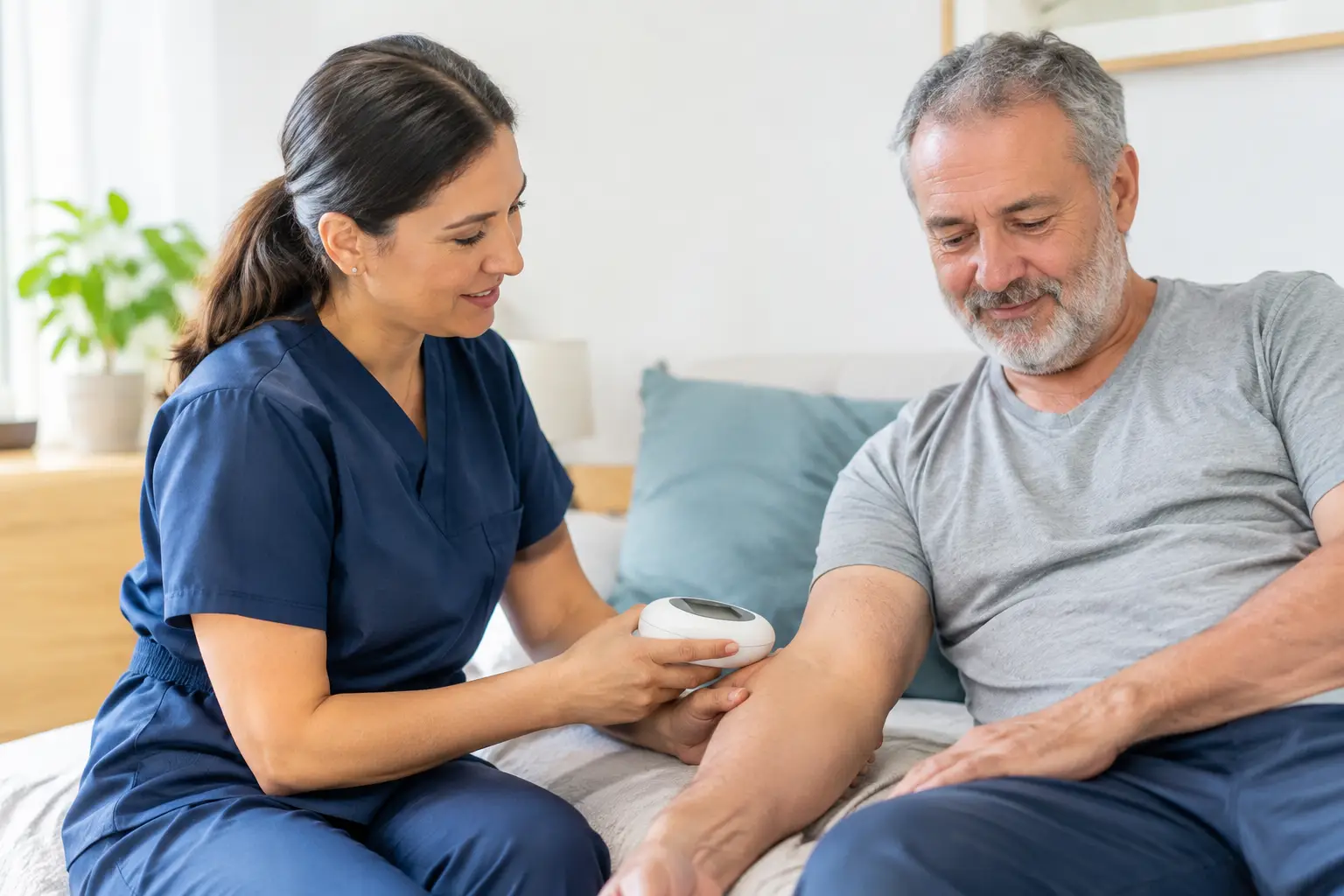
The most useful observations are made at each planned dressing change and whenever a participant reports new discomfort, dampness or a change in how they feel. A quick glance from a distance is rarely enough. Monitoring should be structured, gentle and respectful of the participant’s privacy.
Check the wound and the surrounding skin
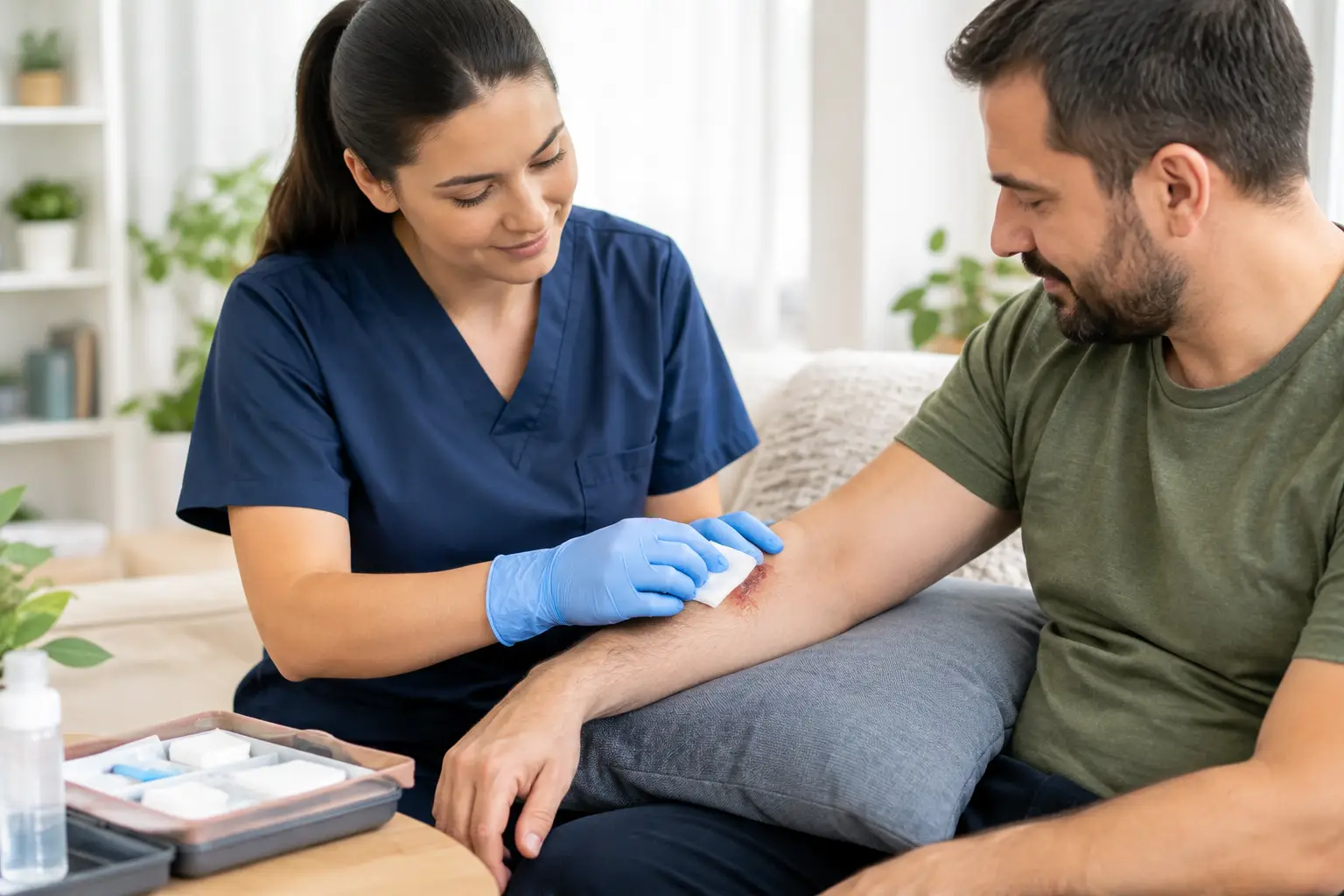
Look at the wound bed as well as the skin around it. Is the wound becoming smaller, remaining unchanged or increasing in size? Is there healthy red or pink tissue, or is there slough, black tissue, unusual bleeding or a new area of breakdown? The answer depends on the wound type, so a wound should not be judged by colour alone.
Pay close attention to the edges and surrounding skin. Spreading redness, heat, swelling, shininess, new blistering, maceration from excess moisture or skin that feels firmer than usual can all signal a problem. For a pressure area, non-blanching redness is particularly important. This is redness that does not fade briefly when gentle pressure is applied, and it needs prompt clinical review.
Record drainage, odour and pain accurately
Drainage is not automatically a sign of infection, but a sudden increase, change in colour, thicker consistency or new odour requires attention. Record whether the dressing was dry, lightly stained, moderately wet or saturated. Vague notes such as “some ooze” make it difficult for a nurse to identify a trend.
Pain can be an early warning sign, particularly for people who can describe a new burning, throbbing or sharp sensation. However, some participants have reduced sensation or difficulty communicating pain. In these situations, changes in sleep, appetite, agitation, guarding an area, withdrawing from transfers or refusing usual care may be equally significant.
Measure progress rather than relying on memory
Where clinically appropriate, wound length and width should be measured in centimetres using a consistent method. Depth, undermining or tunnelling should be assessed by a qualified clinician when indicated, rather than guessed by untrained staff. Consistent measurements help distinguish a wound that is slowly healing from one that is stagnant or worsening.
Clinical photographs can also support monitoring, provided consent, privacy and organisational procedures are followed. Use the same distance, lighting and body position where possible, include a measurement guide when clinically required and store images securely. Photographs are an addition to a written assessment, not a replacement for one.
Look beyond the dressing
Wounds often tell a wider story about a person’s health and daily routine. A sacral wound may be affected by time spent sitting, transfer technique, continence-related moisture or an unsuitable repositioning schedule. A foot wound may require review of footwear, diabetes management, circulation and whether the participant can safely inspect their own feet. A skin tear may point to fragile skin, medication effects, handling techniques or repeated knocks during transfers.
This is why clinical support in the home is often more effective than treating the wound in isolation. A nurse can observe the environment, daily care routine and risks that are difficult to see in a brief appointment. They can then recommend practical changes and provide support worker training and clinical oversight so the plan is followed safely between nursing visits.
For participants with continence needs, timely cleansing, appropriate barrier products, dry and breathable materials, and regular changes can be central to wound prevention and healing. Moisture-associated skin damage is sometimes mistaken for a pressure injury, yet the management can differ. Accurate assessment matters.
Keep documentation useful and audit-safe
Clear notes protect the participant and help the whole team make sound decisions. Documentation should record the date and time, the wound location, dressing removed, wound appearance, drainage, surrounding skin, pain or behaviour changes, treatment completed and any escalation. It should also note whether the planned dressing regimen could not be completed and why.
Avoid language that overstates certainty. “Redness approximately 2 cm from wound edge, warmer than surrounding skin, participant reports increased pain” is more useful than “infected wound”. Diagnosis and treatment decisions should sit with an appropriately qualified clinician or medical practitioner.
For Support Coordinators, regular nursing records and clear reports can demonstrate why a participant needs ongoing clinical monitoring, revised care arrangements or further assessment. They also create continuity when family members, support workers, GPs, allied health teams and nursing providers are involved.
Know when a wound needs urgent escalation
Do not wait for the next routine visit when the wound or participant’s condition has changed significantly. Contact the treating nurse, GP or relevant health service promptly for clinical advice. Seek urgent medical assessment, including emergency care where needed, if there are signs such as:
- rapidly spreading redness, swelling or heat around the wound
- fever, chills, confusion, marked lethargy or a participant becoming generally unwell
- pus, a strong new odour, sudden heavy drainage or unexpected bleeding
- black or purple skin, a rapidly deepening wound, or a new pressure injury in a high-risk participant
- severe or escalating pain, particularly pain out of proportion to the wound’s appearance
- a diabetic foot wound, especially where there is new redness, swelling, drainage or reduced circulation.
The threshold for escalation should be lower for people with diabetes, poor circulation, immune suppression, reduced sensation, a history of pressure injuries or limited ability to report symptoms. It is better to seek clinical advice early than to wait for a wound to become harder to treat.
When nurse-led NDIS care is needed
A simple, healing wound may only need a short period of monitoring under the direction of the treating health team. Nursing input becomes particularly valuable when a wound is complex, recurrent, deteriorating, difficult to classify, linked to pressure or moisture, or being managed by multiple support workers. It is also appropriate when a family is carrying the clinical risk alone and needs a safe, practical plan.
Compassion Wings provides nurse-led NDIS care for participants across Adelaide who require wound assessment, pressure care planning, clinical documentation, wound care oversight and training for the people implementing daily care. Clear reports for Support Coordinators can outline current clinical risks, recommended supports and the evidence behind those recommendations.
The goal is not to make every dressing change complicated. It is to ensure that the person changing it knows what normal healing looks like for that participant, what changes cannot wait, and exactly who to contact. That kind of consistent clinical attention helps participants stay safe at home while giving families and support teams confidence that concerns will be recognised early.