
Guide to Diabetic Health Monitoring at Home
A blood glucose reading is only useful if the person supporting the participant knows what it means, what to record and when to act. This guide to diabetic health monitoring is written for NDIS participants, families, Support Coordinators and support teams managing diabetes alongside complex health needs at home.
Diabetes monitoring should never become a box-ticking task. It is part of a wider clinical picture that may include food and fluid intake, medication timing, infection, skin integrity, continence routines, cognitive changes and the participant’s ability to recognise symptoms. A nurse-led approach turns those separate observations into a safer daily plan.
Why diabetic health monitoring needs a clear plan
For some people, diabetes can be managed with a straightforward routine. For others, monitoring is more complex because of insulin use, variable appetite, communication difficulties, reduced sensation, impaired vision, kidney disease, wounds or a history of hospital presentations.
A written clinical care plan gives everyone a consistent reference point. It should set out the participant’s individual glucose range as prescribed by their treating team, when readings are required, what symptoms to watch for, and exactly who to contact if results fall outside the agreed plan. It should also make clear which tasks can be completed by trained support workers and which require a nurse or other clinician.
This is particularly important where several workers, family members and services support the same person. Without clear direction, one worker may see a low reading as urgent while another may wait for the next scheduled check. Consistent monitoring and escalation reduce that uncertainty.
The daily checks that give nurses the full picture
Blood glucose monitoring is central, but it is not the only useful observation. The right monitoring routine depends on the participant’s diagnosis, prescribed treatment and clinical history. A person using insulin, for example, may have a different schedule and escalation pathway from someone managed with non-insulin medication.
Blood glucose readings and trends
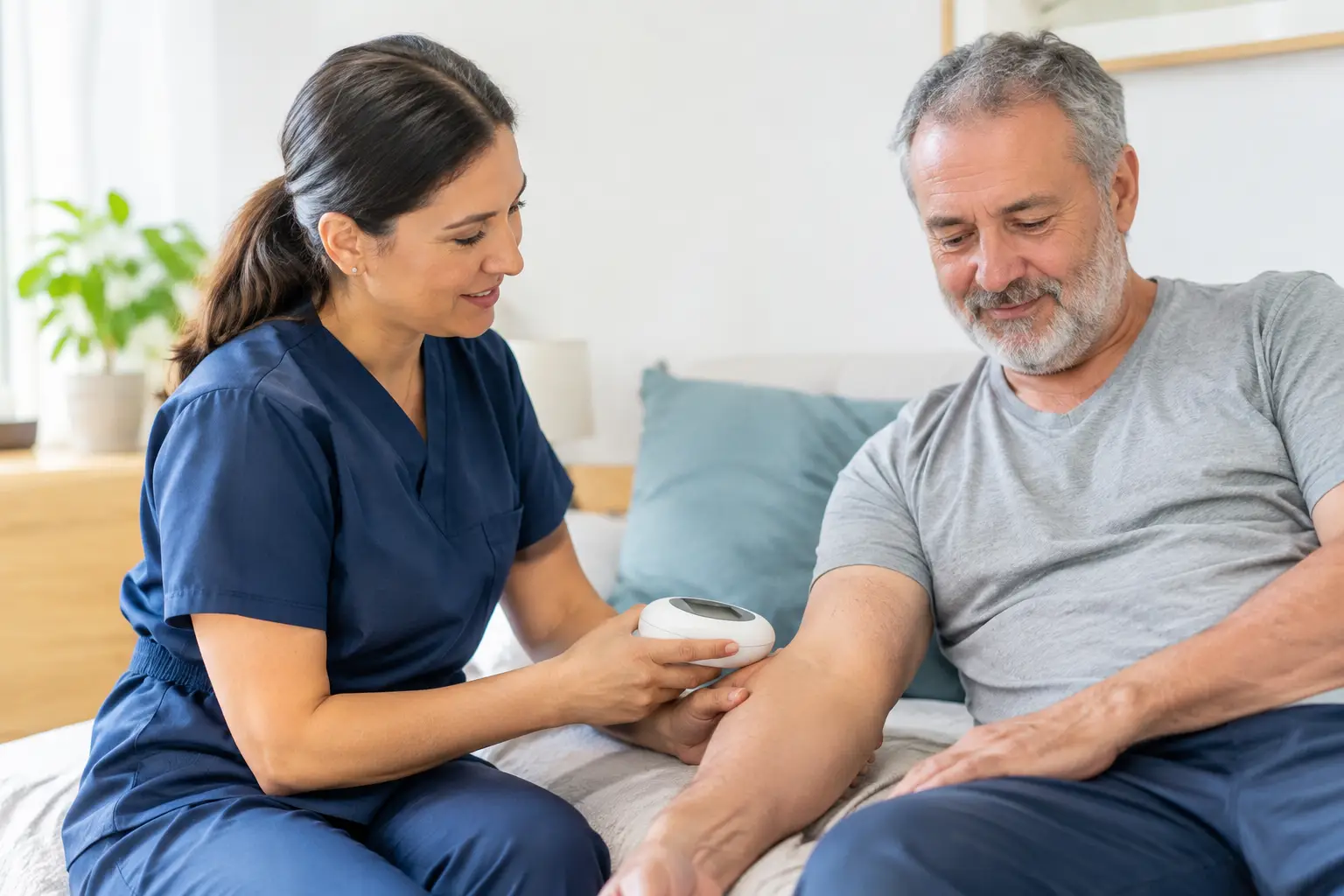
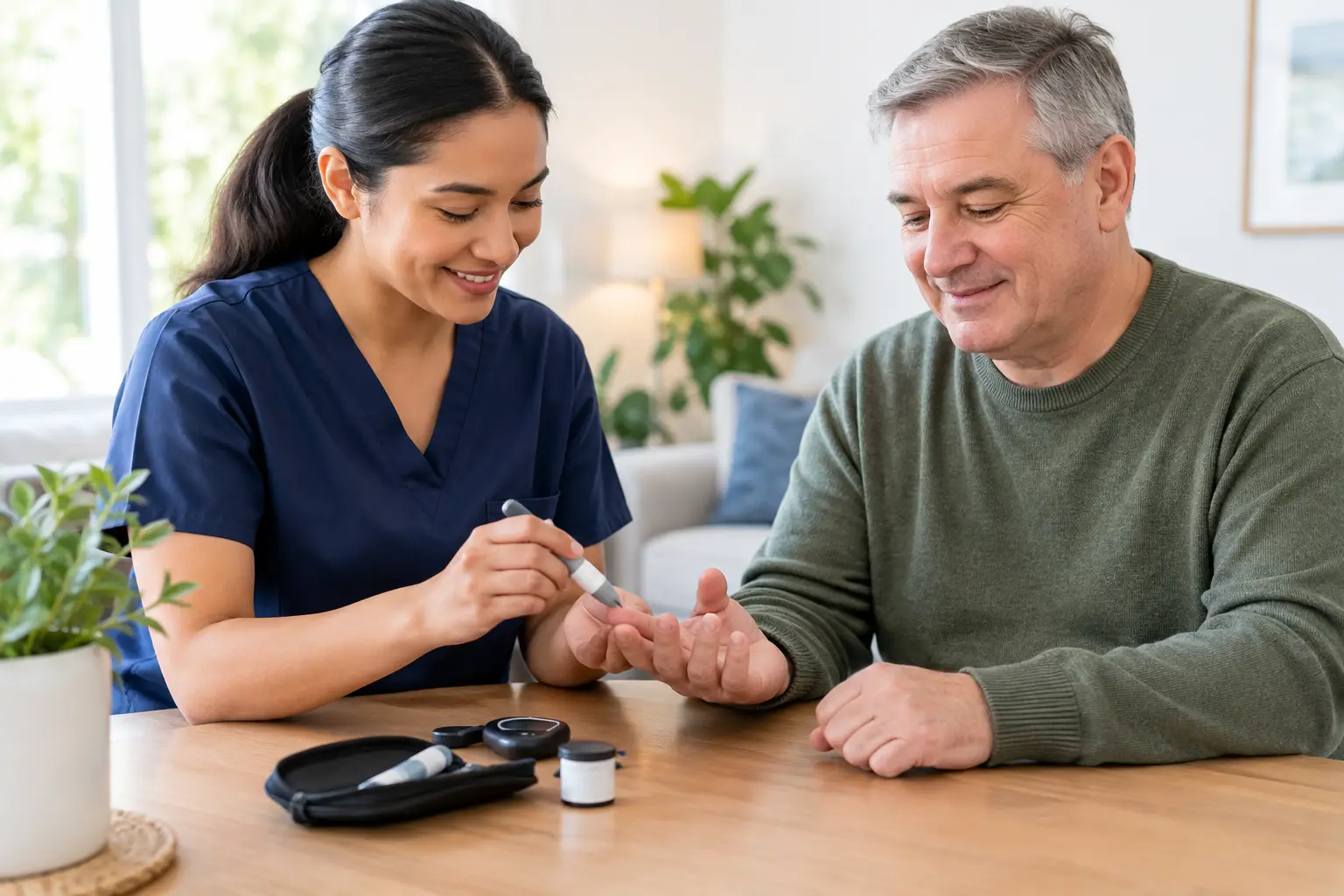
Record readings at the times specified in the participant’s care plan, using the meter or continuous glucose monitor correctly. Where a sensor is used, staff should understand the device alerts, how to respond to a reading that does not match the person’s symptoms, and when a finger-prick check may be required under clinical direction.
A single reading matters, but a pattern often matters more. Repeated overnight lows, rising pre-meal readings, or unpredictable results after a medication change need clinical review. Accurate records help a nurse identify these patterns and provide clear reports for Support Coordinators and treating teams where needed.
Symptoms, intake and routine changes
Support workers should document relevant observations alongside the number. This can include whether the participant ate their usual meals, drank enough fluid, was unwell, had vomiting or diarrhoea, missed medication, exercised more or less than usual, or showed signs of infection.
Symptoms of low blood glucose may include sweating, shaking, hunger, headache, irritability, confusion, drowsiness or behaviour that is out of character. High blood glucose can present with thirst, frequent urination, fatigue, blurred vision, nausea or increasing confusion. Not every participant will describe these symptoms clearly, so staff who know the person’s usual presentation play an important role.
Feet, skin and injection sites
Diabetes can affect circulation, sensation and healing. Daily observation of the feet and skin is particularly valuable for participants who have reduced mobility, neuropathy, continence-related skin exposure or a history of pressure injury.
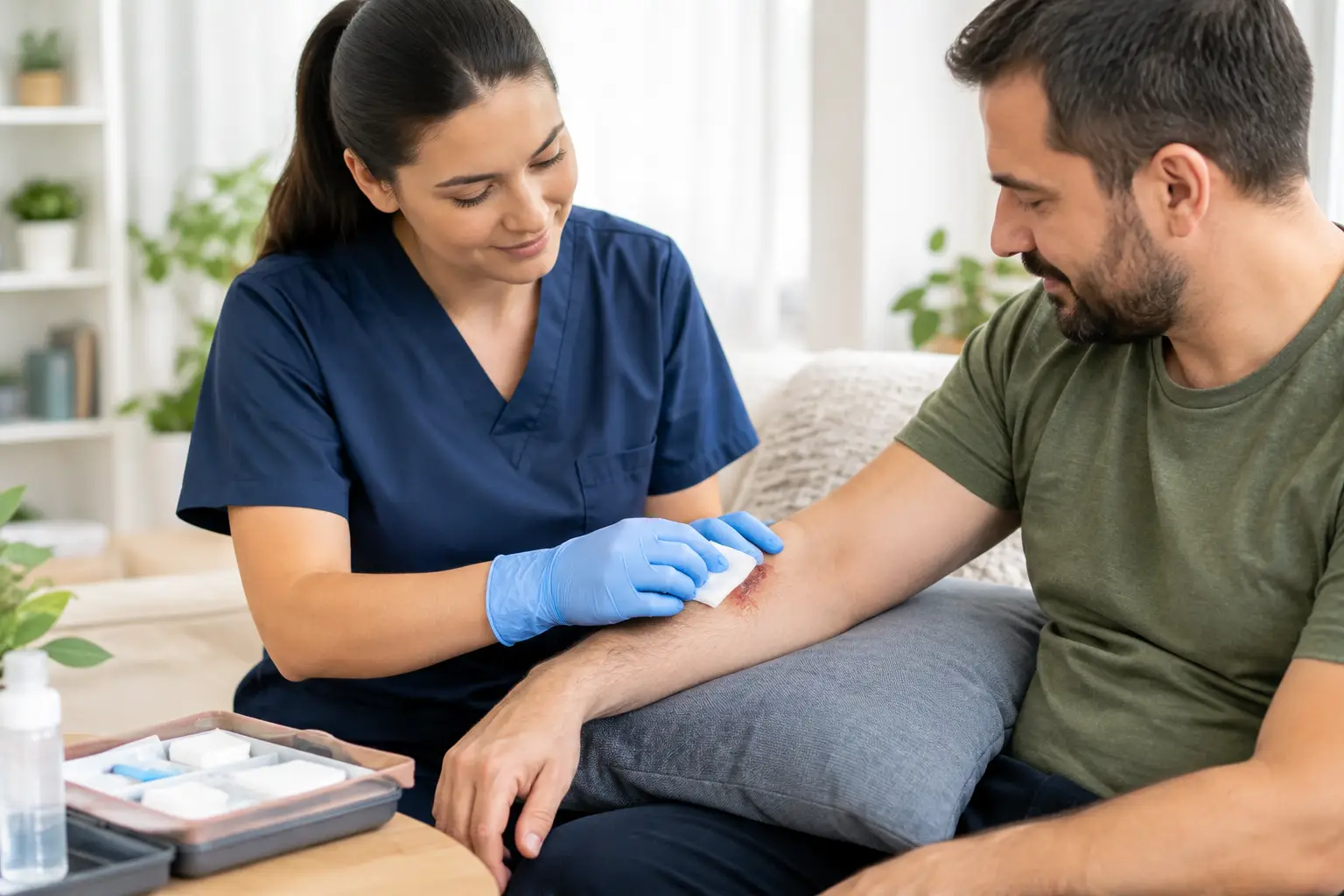
Check for redness, broken skin, blisters, swelling, warmth, cracks, new pain, discharge or changes in colour. Injection sites should also be observed for bruising, lumps, redness or repeated use of the same area. These concerns do not always require an emergency response, but they do require timely clinical assessment before a small problem becomes a wound or infection.
Knowing when to escalate
A good monitoring plan does not leave workers to make clinical decisions alone. It gives practical actions based on the participant’s prescribed instructions and identifies when urgent help is needed.
If a participant has symptoms of hypoglycaemia, follow their individual hypo management plan immediately and do not wait to see whether symptoms settle. If they are unconscious, having a seizure, unable to swallow safely, significantly confused or deteriorating rapidly, call 000. Staff should not give food or drink by mouth to someone who cannot swallow safely.
Persistently high readings, high readings with illness, vomiting, abdominal pain, deep or rapid breathing, dehydration, drowsiness or increasing confusion also need urgent assessment. The participant’s diabetes plan may include instructions about ketone testing and who to contact. Where those instructions are absent, unclear or no longer reflect the person’s needs, nursing review is warranted.
There is a balance to strike. Sending someone to hospital for every unusual reading can be distressing and disruptive, but waiting too long can be dangerous. The safest approach is an individualised escalation plan supported by current clinical assessment, staff training and reliable documentation.
Support worker training and clinical oversight
High-quality diabetes support depends on workers understanding both the task and the reason behind it. Training should be specific to the participant, not a generic handout about diabetes.
For example, a support worker may need competency-based instruction in using the participant’s glucose meter, recording results, recognising their usual signs of a hypo, following the prescribed response plan, storing supplies correctly and reporting concerns. Where insulin administration or other high-intensity supports are involved, training, delegation and oversight must align with the participant’s assessed needs and applicable requirements.
Training should also cover what staff must not do. Workers should not alter insulin doses, make medication changes or rely on assumptions because a previous reading looked similar. When circumstances change, such as illness, weight loss, a new wound, reduced oral intake or a hospital discharge, the care plan may need to be reviewed rather than simply continued.
Clinical oversight helps ensure that workers remain confident and that records are meaningful. It can include observation of practice, review of glucose charts, refreshers after an incident, and advice when a routine no longer appears safe or workable in the home.
When Support Coordinators should refer for nursing input
A nursing referral is useful before risk becomes a crisis. Consider clinical support in the home when there are recurring hypoglycaemic events, fluctuating readings, recent hospital presentations, difficulty completing monitoring, concerns about insulin-related supports, recurrent infections, foot or skin concerns, or uncertainty about who is responsible for escalation.
Nursing input can also help where a participant’s informal supports are carrying too much responsibility or where support workers need structured education and written guidance. Practical nursing assessments can clarify the daily routine, identify clinical risks and develop care plans that translate medical advice into clear steps for the people delivering support.
For Support Coordinators, this assessment can provide evidence of the participant’s complex health support needs, the clinical risks involved and the training or oversight required. Clear reports for Support Coordinators are especially helpful during plan reviews or a change of circumstances, where vague descriptions of “diabetes support” may not adequately explain the level of clinical input needed.
What to prepare before a nursing assessment
The most useful referral includes recent hospital discharge information where available, current medication lists, the participant’s diabetes management plan, glucose records, details of recent incidents and the names of treating clinicians involved. It also helps to explain who currently provides support, what tasks are causing concern and whether there are related issues such as wounds, continence care, reduced appetite or cognitive changes.
The assessment should remain centred on the participant’s preferences and capacity. Some people want to take an active role in every check; others need staff to complete most of the routine while involving them in ways that preserve dignity and choice. Safe, dignity-focused care means matching the plan to the person, not forcing the person to fit a standard process.
For Adelaide participants with complex diabetes needs, Compassion Wings can provide nurse-led NDIS care that brings assessment, documentation, support worker training and ongoing clinical oversight together. The goal is practical: helping participants stay safe at home while giving families and referrers a clear, reliable pathway when health needs change.
The most reassuring diabetes plan is not the longest one. It is the one that tells the right person what to check, what to record and what to do next – before a concerning reading becomes an avoidable emergency.