
When an Adelaide Wound Assessment Is Needed
A wound that is slow to heal can quickly become more than a dressing issue. For an NDIS participant, it may affect pain, sleep, mobility, continence routines, transfers and the ability of support workers to provide care safely. A timely Adelaide wound assessment gives everyone involved a clear clinical picture, practical next steps and a plan for managing risk at home.
For families and Support Coordinators, the goal is not simply to record that a wound exists. It is to understand why it developed, whether it is healing as expected, what may be delaying healing and what clinical oversight is needed to prevent deterioration or an avoidable hospital presentation.
What a nurse-led wound assessment looks at
A practical nursing assessment begins with the participant, not just the wound. An experienced nurse considers the person’s health history, diagnoses, medication, nutrition and hydration, mobility, sensation, continence, diabetes status and current care arrangements. These factors can all influence skin integrity and healing.
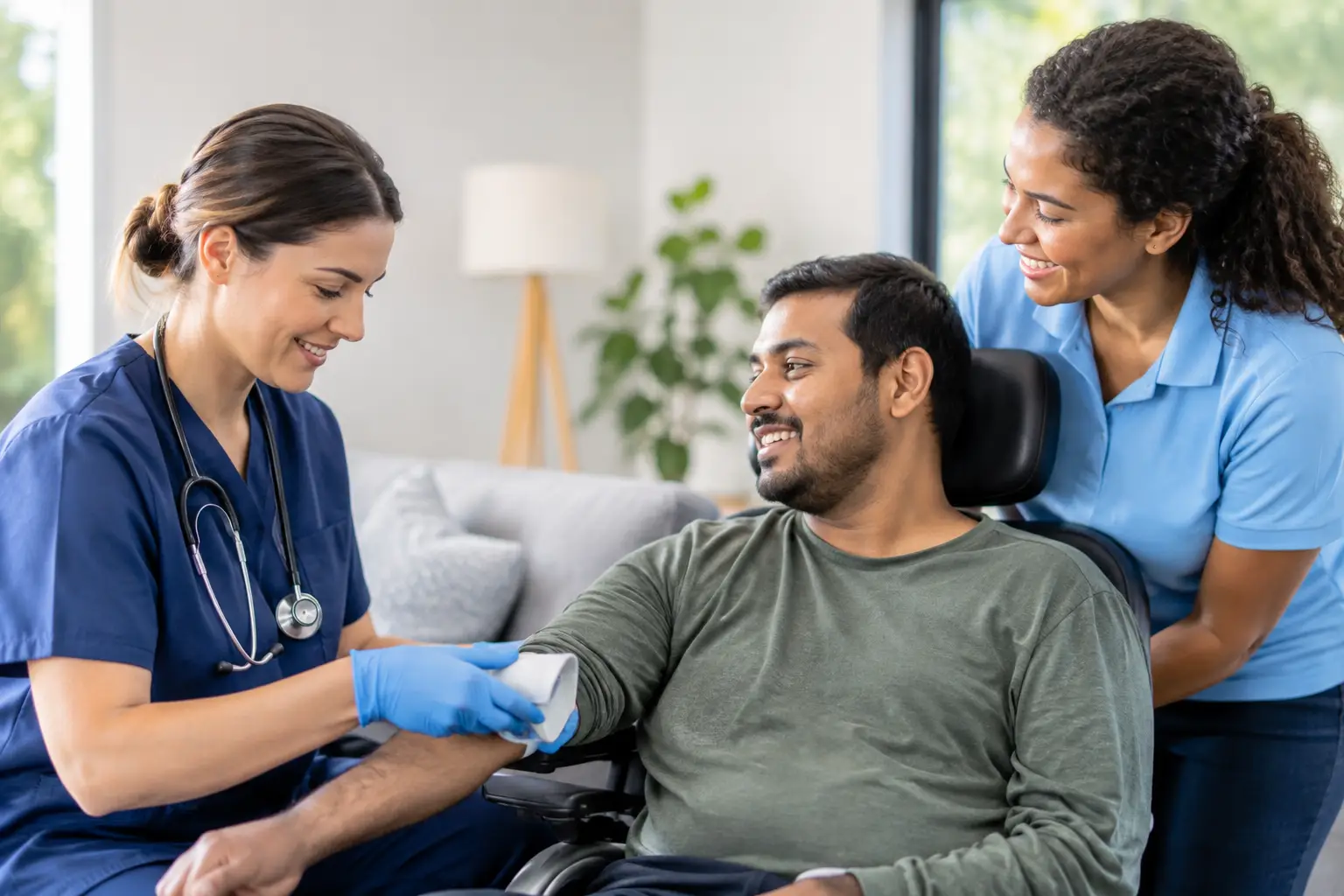
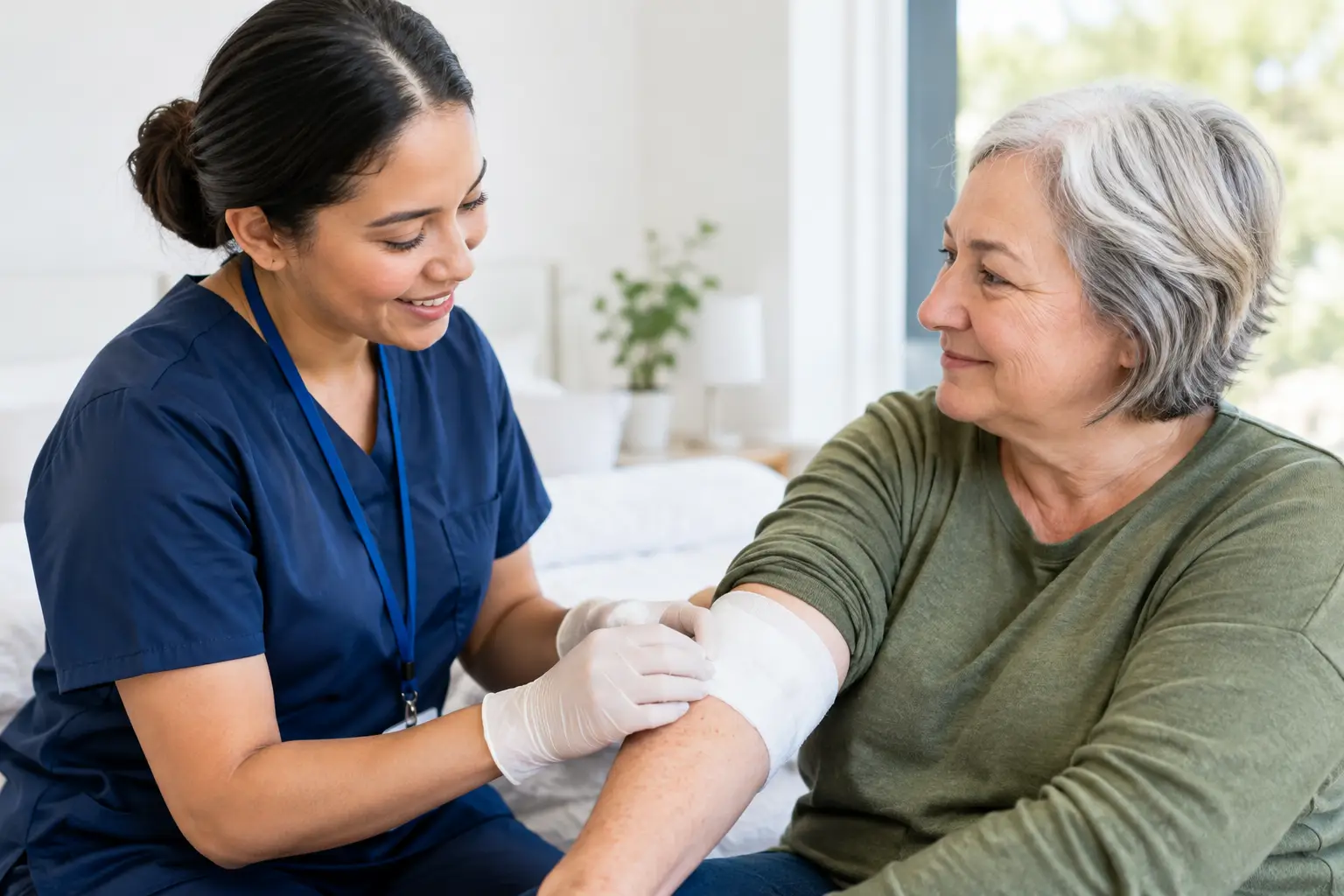
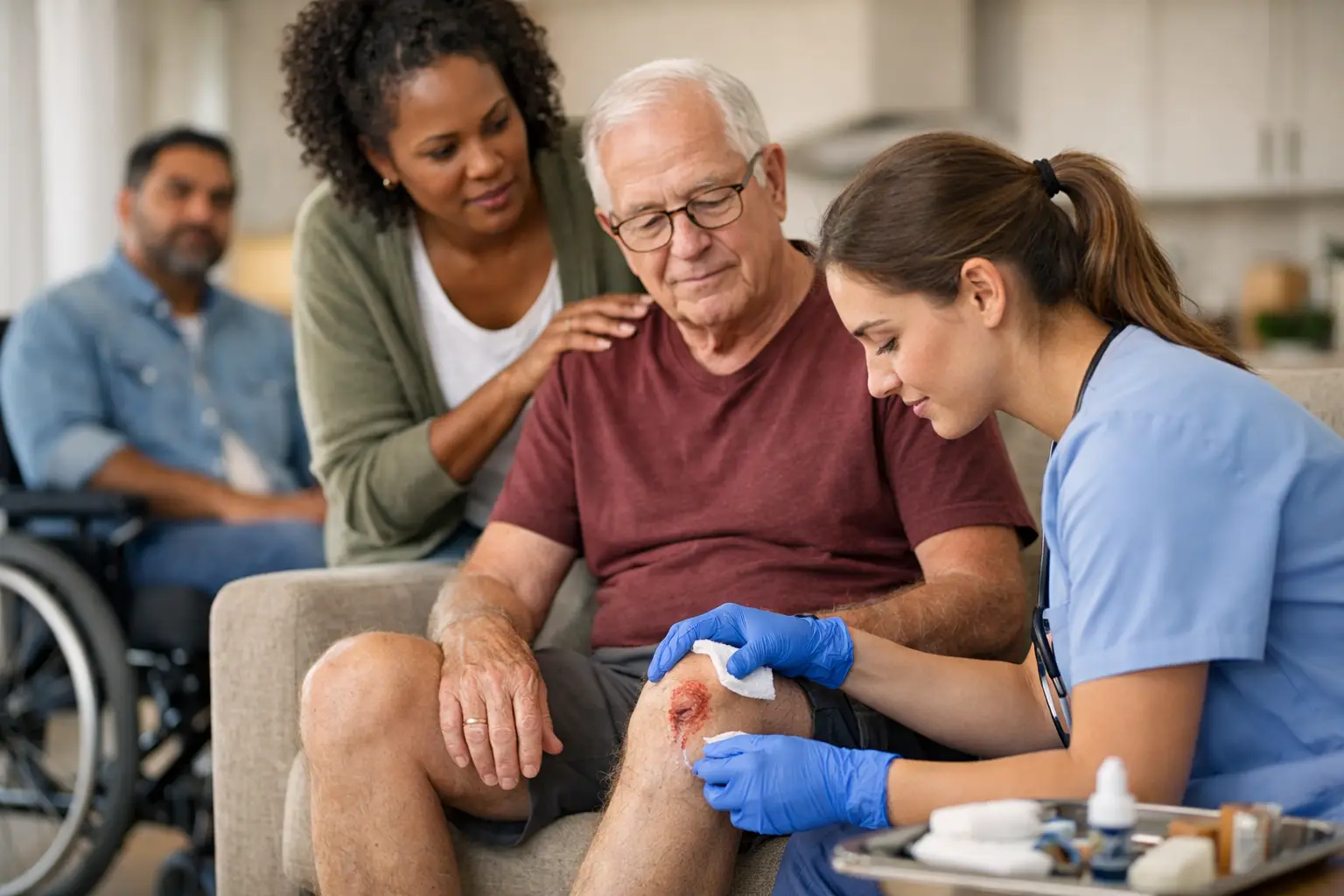
The wound itself is assessed in a respectful, consent-led manner. This may include its location, type, size, depth, wound bed, edges, drainage, odour, surrounding skin, pain and signs of infection. Photographs and measurements may be used with consent so healing or deterioration can be tracked accurately over time.
Just as importantly, the assessment considers the practical reality of care in the home. Is the current dressing routine workable? Are supplies available? Can the participant and their support team recognise a change in the wound? Is pressure, moisture, friction or shear continuing to affect the area? A clinically sound recommendation that cannot be followed consistently is unlikely to improve outcomes.
When to arrange an Adelaide wound assessment
Nursing input is valuable when a wound is new, recurring, deteriorating, slow to heal or difficult for an informal carer or support team to manage. It is also appropriate after discharge from hospital, particularly where a participant returns home with dressing requirements, pressure care needs or unclear instructions.
Referral should be considered when there is a pressure injury or a high risk of one developing. Participants who spend long periods in bed or seated, have reduced sensation, experience incontinence-associated skin damage, have limited mobility or require assistance with repositioning need proactive skin integrity planning. Small changes in skin colour, temperature, pain or texture can be early warning signs, especially where the participant cannot reliably feel or communicate discomfort.
An assessment is also useful where wound care is being completed by multiple people across shifts. Without a clear plan, staff may use different techniques, miss important changes or be uncertain about when to escalate. Consistent documentation and support worker training help turn a complex task into a safer daily routine.
Why wound healing can stall at home
Wounds rarely stall for one simple reason. Pressure, moisture, diabetes, poor circulation, infection risk, reduced mobility and inadequate nutrition can each play a part. A dressing may be suitable in theory but fail in practice if it does not stay in place, creates discomfort, is not changed at the intended interval or is difficult to apply correctly.
Continence needs often need careful consideration. Urine or faecal exposure can break down fragile skin and compromise wound healing, particularly around the sacrum, buttocks, groin or upper thighs. In these situations, wound care, continence routines and pressure care should be addressed together rather than treated as separate issues.
There are trade-offs in every plan. A dressing regimen may need to balance wound moisture, skin protection, comfort, frequency of changes and the skills available in the home. Repositioning schedules must be clinically appropriate while remaining realistic for the participant’s health, tolerance and daily routine. This is why individualised clinical support in the home is more useful than a generic instruction sheet.
What a clear wound care plan should provide
A wound assessment should translate into a plan that families, Support Coordinators and support workers can act on. It should identify the wound and relevant risks, outline the agreed care routine, specify what needs monitoring and clearly state escalation pathways.
For participants receiving regular support, the plan may also set out hygiene requirements, dressing change steps, pressure-relieving routines, continence-related skin care and who is responsible for ordering or checking supplies. It should define the observations that need to be documented at each visit, so the nursing team can identify trends rather than rely on memory or incomplete handover notes.
Clear instructions protect participant dignity as well as safety. Wound care can feel intrusive, painful or embarrassing. A good plan supports privacy, explains how consent is obtained, respects the participant’s preferred communication style and avoids unnecessary exposure. Safe, dignity-focused care should remain central even when clinical needs are complex.
Red flags that need prompt clinical escalation
Support workers and families should not be expected to diagnose a wound. They should, however, know which changes require prompt contact with the treating nurse, GP or other relevant clinician. Urgent assessment may be needed if there is increasing redness or heat around the wound, swelling, worsening pain, increasing drainage, a new odour, fever or a sudden decline in the participant’s general condition.
Other concerns include blackened tissue, rapidly spreading skin changes, bleeding that does not stop with appropriate first aid, a wound that opens significantly, or signs that a pressure area is worsening despite the current plan. If a participant is acutely unwell or there is an emergency, urgent medical care is required. Nursing oversight complements medical treatment and helps ensure concerns are escalated early, not after a routine has already failed.
Documentation that helps Support Coordinators act
For Support Coordinators, a wound assessment is often most valuable when it creates clear, usable evidence. A nursing report can describe the participant’s current clinical needs, wound-related risks, the frequency and type of nursing input required, and the support worker competencies or oversight needed for safe implementation.
This information can assist with care coordination, plan reviews and changes of circumstances where there is a genuine shift in clinical need. It should be factual and specific: what is happening, what risks are present, what care is required and what may occur if that care is not available. It should not make assumptions about funding outcomes.
Good documentation also strengthens communication between the participant, family, GP, allied health team, discharge team and providers. It reduces the chance that vital wound history is lost during staff changes, hospital discharge or transitions between services.
The role of support worker training and clinical oversight
Many wound care plans rely on support workers to notice changes, follow hygiene procedures, assist with pressure care and report concerns. That does not mean workers should be left with vague instructions or asked to work beyond their competence. The right approach depends on the wound complexity, the participant’s condition, the task required and the worker’s training.
Nurse-led NDIS care can provide targeted education on the participant’s specific plan: what normal healing looks like, how to protect surrounding skin, what to document, how to maintain privacy and when to contact the nurse. Clinical oversight then keeps the plan current as the wound heals or the participant’s needs change.
This is particularly helpful in shared support environments or where several workers are involved. A consistent, well-understood routine can reduce variation in care and give families confidence that concerns will not be overlooked.
Preparing a useful referral
A referral can be made even when all details are not yet available. The most helpful starting information includes the participant’s contact and consent arrangements, wound location and known history, recent hospital or GP information, current dressing routine, relevant health conditions, infection concerns, mobility and continence needs, and the people currently involved in care.
Photos, discharge summaries and existing care plans can assist where consent has been obtained, but they do not replace an in-person clinical assessment. If the wound is changing quickly, say so at referral. Early information helps the nurse prioritise the response and arrive prepared.
Compassion Wings provides practical nursing assessments across Adelaide for participants with complex health support needs, with clear reports for Support Coordinators and guidance that can be implemented in the home. The most helpful next step is often simply to arrange assessment before a small skin concern becomes a more serious clinical problem.