


Best Home Strategies for Pressure Area Protection
A pressure injury can begin as a small area of redness that does not fade, a patch of darker or discoloured skin, or a painful spot over a bony area. For a person with limited mobility, reduced sensation, continence needs or complex health conditions, that small change can deteriorate quickly. The best home strategies for pressure area protection combine consistent daily routines with prompt nurse-led assessment when skin integrity changes.
Pressure area protection is not simply about reminding someone to move more. It requires an individual plan that considers mobility, transfers, nutrition and hydration, continence, medical conditions, medicines, skin history and the practical realities of care at home. Safe, dignity-focused care also means making routines achievable for the participant, family and support team.
Start with a practical pressure risk assessment
Pressure injuries commonly develop where skin and tissue are compressed between bone and a chair, bed or other surface. Heels, sacrum, buttocks, hips, ankles, elbows and shoulder blades are frequent risk areas. Friction from sliding in bed or a chair, and shear caused when the skin stays in place while the body moves, can cause significant tissue damage even when the surface looks minor at first.
Risk is higher when a participant cannot independently reposition, spends long periods sitting or lying down, has had a previous pressure injury, or has reduced feeling due to neurological injury or diabetes. Poor nutrition, dehydration, illness, fever, swelling, vascular problems and continence-associated moisture can all reduce skin tolerance.
A practical nursing assessment turns these risks into a care routine. It identifies which areas need checking, how often repositioning is realistic and safe, what signs require escalation, and who is responsible for each task. This is particularly valuable where several support workers, family members or providers are involved. A verbal handover alone is rarely enough for a complex health support need.
Build pressure protection into ordinary daily care
The most effective plans are specific. “Reposition regularly” leaves too much room for uncertainty. A clinical care plan should state the participant’s preferred positions, any positions to avoid, whether assistance or transfer equipment is needed, how long they can usually tolerate sitting, and what to document.
Reposition according to the person, not a generic timetable
Some people need frequent position changes; others can manage longer periods with appropriate support surfaces and regular skin monitoring. The right schedule depends on the person’s skin condition, ability to move, comfort, medical status and the surface they are using. If a participant is unable to shift their weight independently, planned assistance is essential.
Small movements can matter. Weight shifts in a chair, changing the angle of recline, adjusting leg position and avoiding prolonged pressure on heels may all reduce risk. However, a routine that causes pain, distress, breathlessness or unsafe transfers needs review. Pressure care should protect both skin and comfort, rather than becoming a rigid task completed without clinical judgement.
Check skin at the times it is easiest to see changes
Daily checks are most reliable when linked to established routines, such as personal care, dressing, continence care and getting ready for bed. Look and feel gently for redness, discolouration, warmth, coolness, firmness, swelling, broken skin, blisters, weeping, unusual odour or pain.
On darker skin tones, early pressure damage may not appear as obvious redness. Changes in temperature, texture, tenderness, shiny skin or a persistent darkened area can be more useful clues. Any area that does not return to its usual colour after pressure is relieved deserves attention.
Documentation should be clear and factual. Record the location, size if skin is open, appearance, pain reported, likely contributing factors and action taken. A dated photo may assist clinical monitoring where consent and privacy processes are in place, but photographs do not replace a nursing assessment.
Keep moisture and friction under control
Continence needs are a major pressure risk when urine, faeces or sweat remain against the skin. Moisture weakens the skin barrier and makes friction damage more likely. Timely continence care, gentle cleansing, thorough drying and clinically appropriate barrier products can protect vulnerable areas.
Avoid rubbing fragile skin briskly with towels or using heavily scented products that may irritate. Clothing, bedding and continence products should sit smoothly, without creases or bunching that create local pressure. If leakage is frequent, a continence assessment may be needed to review the underlying routine rather than repeatedly changing products after the fact.
Make beds and chairs part of the care plan
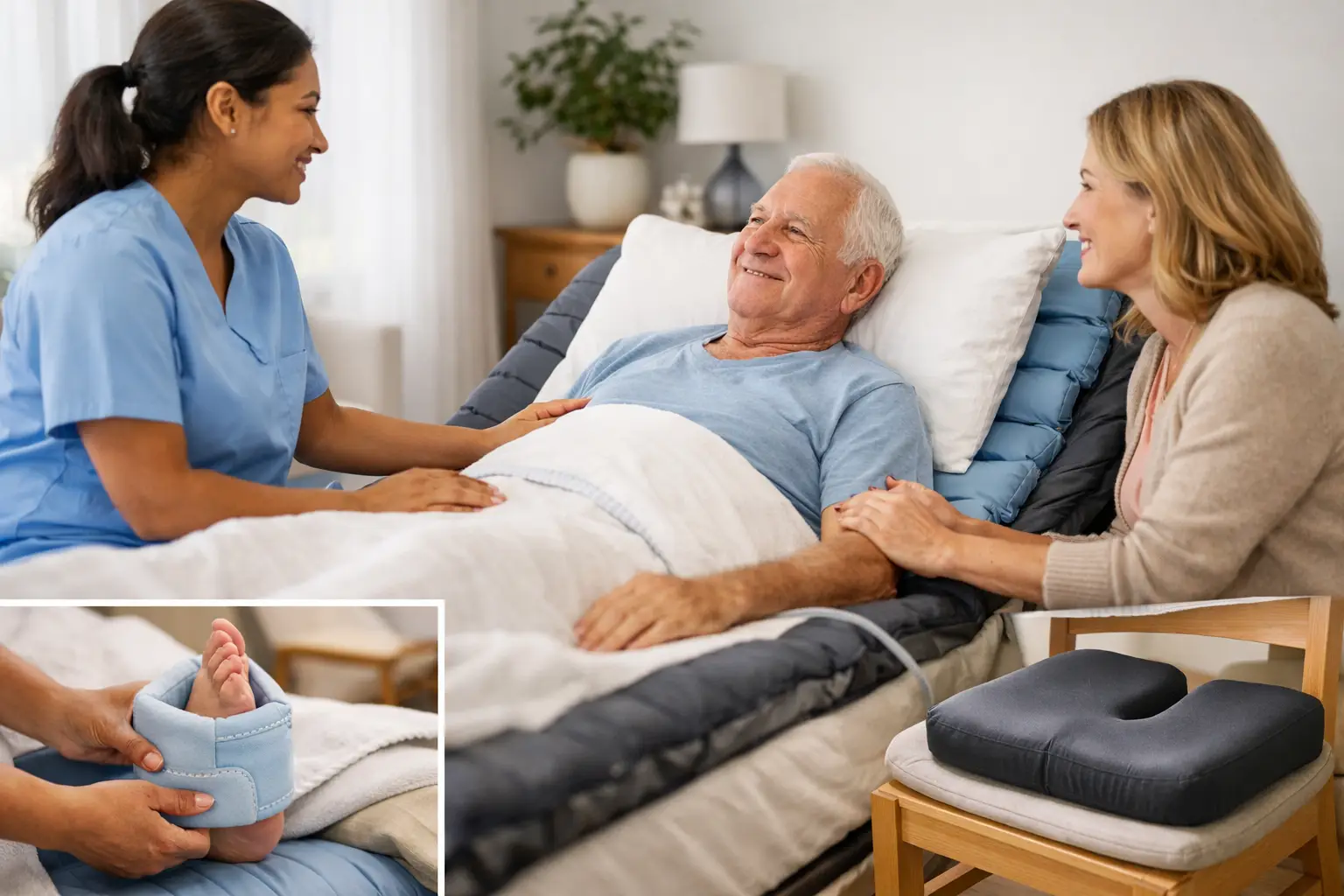
A mattress, cushion or positioning aid can help distribute pressure, but it is not a substitute for skin checks and repositioning. The right surface depends on the person’s size, posture, mobility, clinical risk and how they use their bed or chair. An unsuitable surface can create new problems, including difficulty moving, poor positioning or increased sliding.
In bed, heels should not rest for long periods against the mattress if they are at risk. In a chair, encourage stable posture with feet supported and minimise sliding forward. Repeated sliding causes shear at the sacrum and buttocks, particularly where a participant has low muscle tone, fatigue or difficulty maintaining position.
Support workers need practical instruction, not just a written note saying “pressure care required”. Training should cover the person’s safe repositioning method, handling precautions, skin warning signs, documentation expectations and the escalation pathway. Support worker training and clinical oversight are especially important after hospital discharge, a recent wound, an illness or a decline in mobility.
Support skin from the inside as well
Skin needs adequate fluids, protein, energy and micronutrients to remain resilient and heal. Reduced appetite, swallowing difficulties, nausea, weight loss or infection can increase pressure injury risk. Where intake has changed, the care team should identify it early and involve the appropriate clinician.
Diabetes management also matters. High blood glucose levels may affect healing and increase infection risk. For participants receiving diabetes support, skin changes should be considered alongside glucose patterns, circulation, sensation and any existing foot concerns.
This does not mean families or support workers should attempt to manage nutritional or medical issues alone. Their role is to notice patterns, document concerns and escalate them through the agreed clinical pathway.
Know when pressure area concerns need a nurse
Early nursing input can prevent a manageable skin concern from becoming a complex wound. Refer for clinical support in the home when there is persistent redness or discolouration, broken skin, a blister, increasing pain, a wound that is not improving, new swelling, warmth, odour or discharge. Urgent medical review may be needed where there are signs of infection, rapidly worsening skin, fever, confusion or severe pain.
A nurse can assess the pressure risk, review contributing factors, develop a practical care plan, provide wound care where required and train the people delivering day-to-day support. Clear reports for Support Coordinators can document the clinical risk, recommended supports, participant outcomes and the need for ongoing monitoring. This helps ensure decisions are based on current nursing evidence rather than a brief description of a skin issue.
For participants with recurring wounds, continence-related skin damage, high-intensity care needs or a recent decline in function, waiting for a wound to become severe is rarely the safest option. Compassion Wings provides nurse-led NDIS care across Adelaide, including practical nursing assessments, pressure care planning and education for support teams.
Pressure area protection works best when it is treated as a daily clinical routine: observe the skin, reduce sustained pressure, manage moisture, record changes and act early. That approach helps participants stay safe at home while giving families and Support Coordinators confidence that emerging risks will be recognised and managed properly.





1 Comment
Continence Report Checklist for NDIS Reviews - Compassion Wings
August 28, 2026[…] Skin integrity and pressure risk: Record redness, moisture-associated skin damage, pressure areas, wounds, fungal rash, pain or signs of infection. Recurrent leakage or delayed changes can quickly lead to skin injury, particularly where mobility is limited or a participant spends extended time in bed or seated. […]