


Complex Home Care in Adelaide Needs Nurse-Led Care
A catheter that blocks overnight, a wound that changes quickly, repeated urinary infections, or a bowel routine that is no longer working can turn an ordinary home support arrangement into a clinical risk. Complex home care Adelaide participants need is not simply more hours of assistance. It is nurse-led NDIS care that identifies what is happening, documents the risks clearly and gives everyone involved a safe, practical way forward.
For families, this can mean fewer frightening decisions made after hours. For Support Coordinators and providers, it means having reliable clinical evidence, clear delegation boundaries and care instructions that support workers can follow with confidence. The goal is straightforward: helping participants stay safe at home while protecting dignity, comfort and daily routines.
What complex home care in Adelaide involves
Complex health support is needed when a participant’s health needs require clinical judgement, monitoring, skilled interventions or structured escalation. The level of nursing input depends on the person, their diagnosis, the stability of their condition, the capability of their support team and the consequences if something goes wrong.
A participant may be managing well most of the time, yet still need nursing oversight because a small change can become serious. Skin redness can progress to a pressure injury. Constipation can lead to pain, distress or hospital presentation. A leaking stoma appliance may affect skin integrity, confidence and participation in daily life. Diabetes management can become unsafe when meals, medications and blood glucose patterns are inconsistent.
This is where clinical support in the home adds real value. A nurse can assess the issue in context: how the participant moves, communicates discomfort, manages equipment, sleeps, eats, takes medication and receives support across different shifts. That practical picture is often more useful than a generic care note.
When a nursing referral should happen
A referral does not need to wait for a crisis. In fact, earlier nursing involvement often prevents a manageable issue becoming an urgent one. Support Coordinators should consider a clinical referral when current strategies are unclear, staff are receiving inconsistent instructions, family members are carrying tasks they cannot safely sustain, or a participant’s health needs have changed.
Common reasons for referral include continence concerns, recurrent skin breakdown, wounds that are slow to heal, catheter or stoma complications, bowel and bladder routines that are difficult to maintain, medication concerns and diabetes support needs. A referral is also appropriate after discharge from hospital, when there has been a decline in function, or where a provider needs clinical direction before workers can safely implement a high-intensity support task.
Nursing evidence is particularly valuable when a participant needs a plan review or change of circumstances. A clear report can describe the clinical issue, its functional impact, the risks of inadequate support and the reasonable nursing recommendations required to manage care safely. This gives Support Coordinators stronger information for planning conversations without making unsupported promises about funding outcomes.
Signs that care arrangements need review
Sometimes the concern is obvious, such as an infected wound or frequent catheter blockage. At other times, the warning signs are quieter: repeated toileting accidents, rushed handovers, missing documentation, increased pain, unexplained changes in appetite, staff uncertainty or a family member who is exhausted from being the only person who understands the routine.
These are not simply staffing problems. They can indicate that the participant needs a practical nursing assessment, a revised care plan, more targeted training or closer clinical oversight.
Assessment comes before a care plan
Good complex home care does not begin with a template. It begins with understanding the participant’s health history, current routines, preferences, environment and goals for care. The nurse also needs to know who is involved, what supports are already in place, which clinicians are treating the participant and what has or has not worked previously.
A continence assessment, for example, should look beyond products. It may consider fluid intake, bowel patterns, medication effects, skin condition, mobility, cognition, communication, toilet access, infection history and the participant’s preferred routine. The result should be recommendations that are realistic for the person and their support setting, not a one-size-fits-all schedule.
The same principle applies to wound and pressure care. A dressing choice matters, but so do pressure redistribution, transfers, nutrition, moisture management, pain, equipment use and the ability of workers to recognise deterioration. If those factors are missed, even a well-dressed wound may not improve.
Clear clinical plans make daily care safer
A useful clinical care plan translates assessment findings into actions people can follow. It should be specific enough to guide practice, while remaining clear and respectful. Vague directions such as “monitor skin” or “assist with catheter care” are not enough when staff need to know what to observe, what to record and when to escalate.
For complex health support, a plan may set out the participant’s usual presentation, step-by-step care requirements, infection-control measures, approved products or equipment, warning signs and escalation pathways. It should also identify when the task requires a nurse and when trained support workers can assist within their role and demonstrated competency.
This distinction matters. Support workers should not be expected to make clinical decisions beyond their training or authority. Equally, nurses need to provide instructions that work in real home routines, including handovers, weekends and changes of staff. Safe, dignity-focused care is built through that shared clarity.
Training is part of the clinical intervention
A care plan alone cannot reduce risk if the people implementing it have not been trained. High-intensity support worker training and clinical oversight help workers understand not only what to do, but why it matters and when they need to seek help.
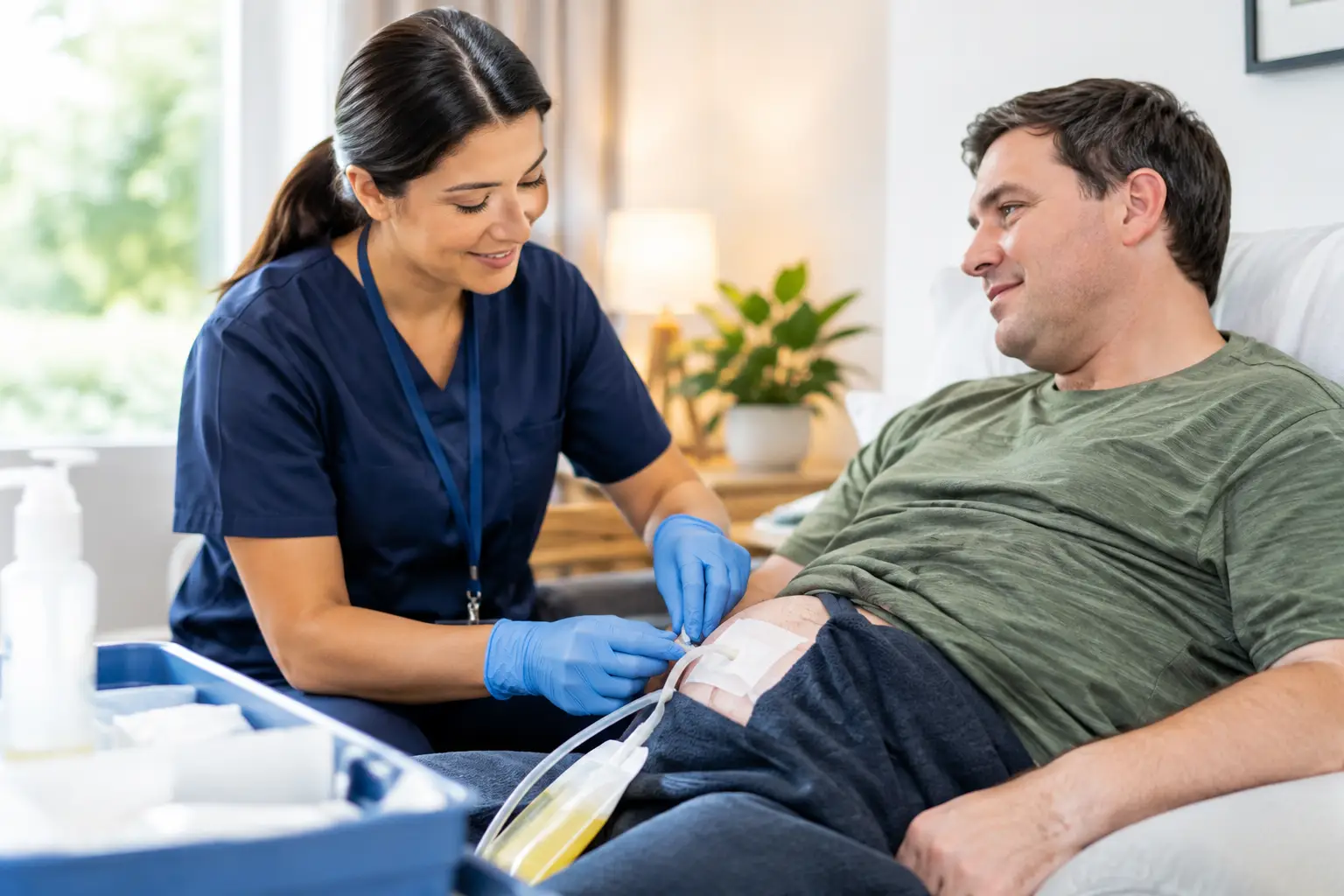
For a participant with a stoma, training may cover appliance changes, protecting peristomal skin, recognising leaks and documenting concerns. For catheter-related support, workers may need guidance on hygiene, positioning tubing, emptying procedures, observing output and knowing which signs require prompt escalation. In diabetes support, the focus may include safe monitoring routines, recording results, recognising concerning patterns and following the established clinical instructions.
Training should be tailored to the participant rather than delivered as a generic session. It also needs follow-up. Staff turnover, changes in health status and new clinical recommendations can all mean the training needs to be refreshed.
Documentation that supports coordinated care
Clinical documentation is often treated as an administrative task. In complex care, it is a safety tool. Accurate notes allow patterns to be recognised, give treating teams a reliable account of what has occurred and provide evidence when a participant’s support needs change.
Clear reports for Support Coordinators should explain the issue in plain language while retaining clinical precision. They may outline assessment findings, current risks, required interventions, support worker training needs, review timeframes and the likely consequences if appropriate support is not available. The most helpful reports connect health needs to the practical assistance required at home.
This is also important for families. They deserve to know what the plan is, who is responsible for each element of care and what to do if something changes. Good documentation should reduce uncertainty, not create more paperwork without purpose.
Choosing the right nursing partner
When referring for complex home care in Adelaide, look for a nurse-led service that can assess, document, train and review – not just attend once and leave a list of recommendations. Continuity matters where needs are ongoing or risks are high.
It is helpful to provide relevant background from the start: the participant’s diagnoses, current concerns, recent hospital or GP information, existing care plans, medication information where relevant, involved providers and the immediate reason for referral. If there is a deadline for a plan review or discharge, say so early. This helps the nurse prioritise the assessment and prepare the right documentation.
Compassion Wings provides specialist community nursing across Adelaide for participants whose care needs call for clinical judgement, practical plans and respectful follow-through. The focus remains on what can be safely implemented in the home, with the participant’s dignity at the centre.
The right nursing input does more than respond to a problem. It gives participants, families and teams a clearer path through the next routine, the next shift and the next change in health – before a manageable concern becomes a crisis.




1 Comment
NDIS Registered Nurse Offer | Clinical Care | Compassion Wings
August 20, 2026[…] at home can allow you to access professional clinical care within familiar surroundings. Our Complex In-Home Care nurses can support pain and symptom management, health checks, vital-sign monitoring, mobility and […]