


When Does an NDIS Participant Need Specialist Nursing?
A routine that looks manageable on paper can become unsafe very quickly when a participant has a wound that is not healing, repeated catheter blockages, unstable blood glucose levels or a bowel routine that depends on precise timing. The question of when does an NDIS participant need specialist nursing is usually not about diagnosis alone. It is about whether day-to-day health tasks require clinical assessment, nursing judgement, documented procedures or ongoing oversight to be completed safely.
For participants and families, the concern may be a growing sense that something is changing or that current supports are no longer enough. For Support Coordinators and providers, it may be an incident pattern, a hospital discharge, unclear delegation arrangements or support workers being asked to perform tasks beyond their training. Specialist nursing can bring structure to these situations through practical nursing assessments, clear care plans and timely escalation when a health risk needs medical review.
When does an NDIS participant need specialist nursing?
An NDIS participant may need specialist nursing when their disability-related support needs include complex health tasks that cannot safely be managed through general assistance alone. This can be a short-term need after illness or surgery, or an ongoing requirement where a participant needs clinical support in the home to maintain health, comfort and dignity.
The key question is not whether a task happens every day. It is whether the task involves clinical risk, assessment or a decision that must be made by an appropriately qualified nurse. A stable, well-documented routine may allow trained support workers to complete defined parts of care. However, that arrangement still needs the right clinical foundation: an assessment, individualised instructions, competency-based training, review points and a clear process for escalation.
Nursing involvement is particularly valuable when needs are changing. A participant whose catheter care has been stable for months may need a nurse urgently if they begin experiencing pain, leakage, blockages, fever or frequent presentations to hospital. Similarly, a small area of redness can require early nursing input where a person has reduced mobility, altered sensation, diabetes or a history of pressure injuries.
Clinical signs that should trigger a nursing referral
A referral is appropriate when there is uncertainty about safety, a new clinical concern, or evidence that a current care routine is failing. Waiting for a crisis can mean more pain for the participant, more pressure on family and staff, and potentially avoidable emergency care.
Wounds, skin integrity and pressure care
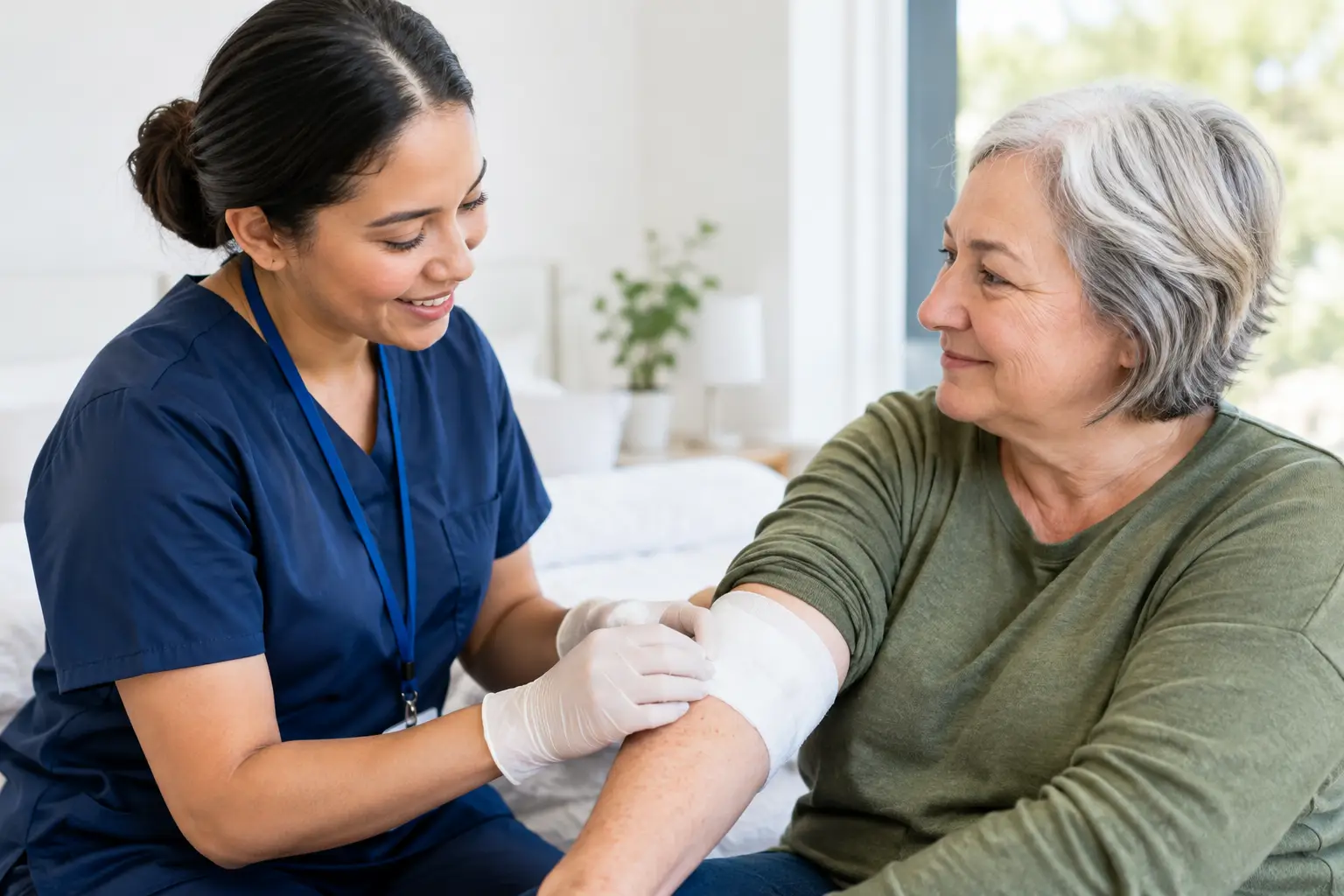
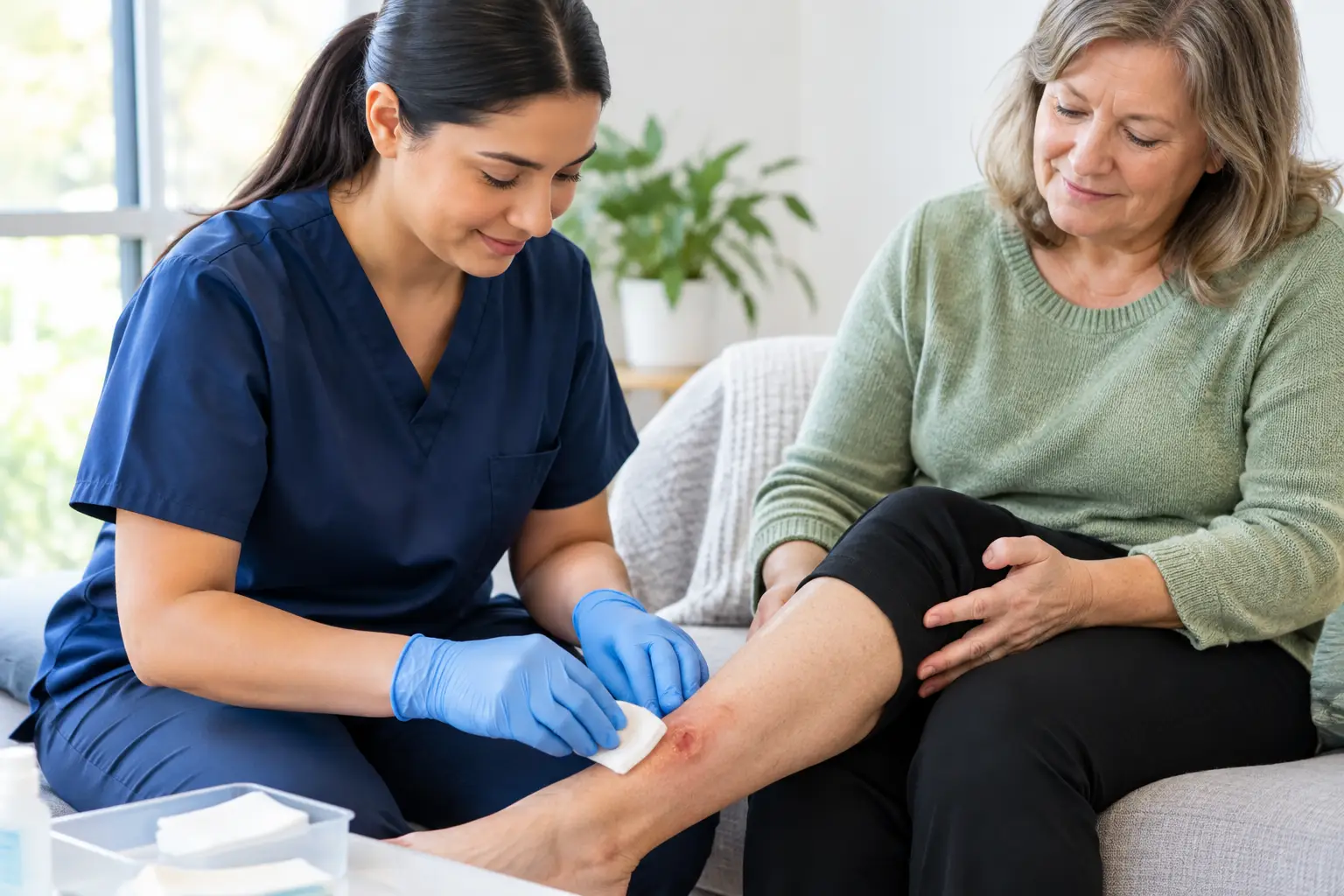
Specialist nursing is needed where a wound requires assessment, dressing selection, monitoring or a documented treatment plan. This includes wounds that are slow to heal, recurrent, leaking, painful, odorous or showing signs of infection. Nursing input is also appropriate for pressure injury prevention when a participant has limited mobility, spends extended periods in bed or a chair, has fragile skin, or cannot reliably report discomfort.
A nurse can assess contributing factors, establish a monitoring routine and provide clear instructions that support workers and families can follow. The aim is not merely to change a dressing. It is to identify deterioration early, protect skin integrity and make sure concerns are escalated appropriately.
Continence, bowel and bladder care
Continence concerns often become clinical when there is recurrent urinary tract infection, constipation, faecal impaction, incontinence-associated dermatitis, pain, frequent accidents, disrupted sleep or a routine that is no longer effective. A continence assessment can clarify patterns, risks, products, fluid considerations and practical strategies that protect the participant’s comfort and skin.
Bowel routines can also require nursing oversight where medication, suppositories, enemas, manual techniques or strict timing form part of the person’s care. These routines should never rely on informal handovers or assumptions. Clear documentation helps support workers understand what to do, what to record and when a change requires escalation.
Stoma and catheter-related support
A stoma or catheter does not automatically mean a participant needs continuous nursing visits. Some people and their trained support teams manage established routines safely. Nursing support becomes necessary when there is a new stoma, a recent discharge, skin breakdown, leakage, equipment difficulties, recurrent blockages, infection risk or uncertainty about the care procedure.
A nurse-led review can establish an individualised plan and train the people delivering regular support. This reduces the risk of inconsistent care while preserving the participant’s privacy and preferences.
Diabetes and medication complexity
Diabetes support may require specialist nursing when glucose monitoring, insulin administration, meal timing, illness management or recognition of hypo- and hyperglycaemia cannot be managed safely under existing arrangements. A participant may also need nursing input after changes to insulin, repeated low or high readings, emergency presentations or when staff are unsure how to respond to symptoms.
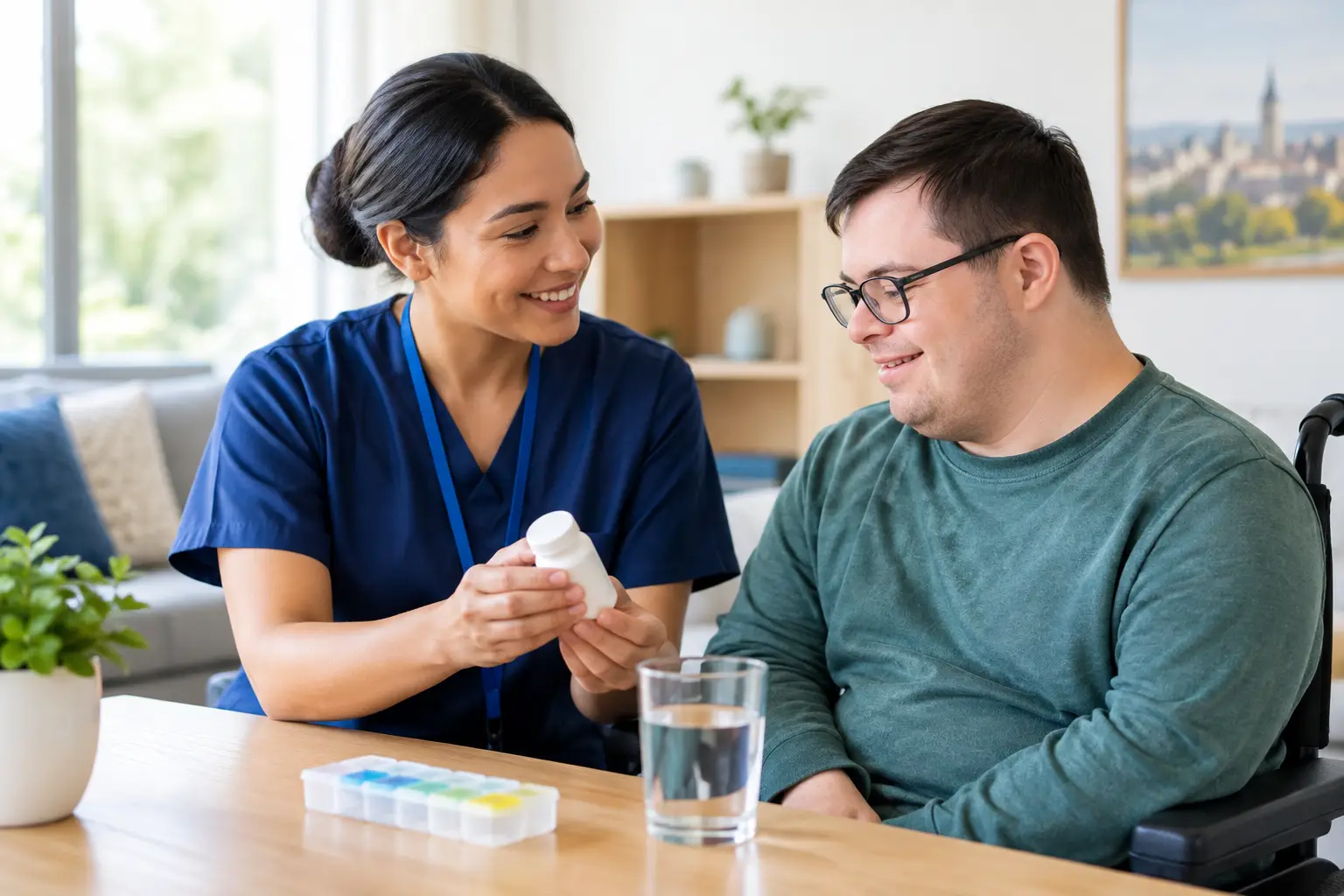
Medication support needs nursing oversight when medicines are high-risk, administered through a complex route, frequently changed, or when missed doses and administration errors are occurring. A nurse can assess the practical workflow, clarify medication-related risks and develop procedures that fit the participant’s actual routine rather than an idealised version of it.
Specialist nursing is about assessment, not just tasks
A common misconception is that nursing is only needed to complete a clinical task. In many cases, the most valuable nursing work happens before a task is delegated or scheduled. It includes assessing risk, understanding the participant’s health history, reviewing what is already happening, identifying gaps and creating a care plan that is usable in real life.
For example, a participant may have frequent skin tears because transfers, continence care and dressing changes are occurring without consistent techniques or records. The solution may involve wound management, but it may also require a skin integrity plan, staff education, clearer observation requirements and a pathway for reporting changes. This is the difference between reacting to individual incidents and managing the underlying clinical risk.
Specialist nursing also brings a dignity-focused perspective. Care plans should account for communication needs, consent, cultural preferences, personal routines and the level of involvement the participant wants in their own health care. Safe care is not only clinically correct. It must be practical, respectful and consistently delivered.
When support worker training and clinical oversight are needed
High-intensity support is safest when support workers have training that is specific to the individual participant, rather than broad instruction that may not reflect their needs. A written procedure alone is rarely enough for catheter support, complex bowel care, diabetes-related tasks, stoma management or pressure care routines.
Nursing input is indicated when a provider is introducing a new clinical task, staff turnover has affected capability, incidents suggest inconsistent practice, or a participant’s health status has changed. Training should explain the task, the person’s individual risks, infection prevention measures, documentation expectations and escalation triggers. Competency should be observed rather than assumed.
Ongoing clinical oversight matters because care needs do not remain static. A plan written after discharge may be suitable at first but become outdated as a wound heals, continence patterns change, equipment changes or new symptoms emerge. Regular review protects participants and gives Support Coordinators confidence that clinical risks are being managed professionally.
Why nursing reports matter for NDIS reviews and changes
When support needs increase, a clear nursing report can help explain what has changed and why additional clinical support may be required. The strongest evidence describes functional impact and risk in practical terms: what care is needed, how often it is needed, what happens without it, what can be safely delegated, and what level of nursing oversight is required.
This is not a guarantee of funding. NDIS decisions are made according to individual circumstances and funding criteria. However, current, detailed clinical evidence can give planners and Support Coordinators a clearer picture of the participant’s disability-related health support needs.
Reports are especially helpful after hospital discharge, repeated infections or wound deterioration, changes in continence needs, a new catheter or stoma, reduced ability to self-manage, or an increase in support worker training requirements. They should be specific enough to support planning discussions and practical enough to guide the team providing daily care.
What to include in a referral to a specialist nurse
A timely referral does not need to contain every clinical record, but a few details help a nurse assess urgency and plan the first visit. Share the participant’s current concern, relevant diagnoses, recent discharge information, existing care plans, medication list where relevant, recent incidents, treating team contacts and the support workers or family members involved in daily care.
It is also useful to explain what is not working. Perhaps dressings are becoming difficult to manage, staff are unsure about a bowel routine, a participant is declining care because it is uncomfortable, or a coordinator needs evidence for a review. This gives the nurse a clear starting point and avoids a generic assessment.
For Adelaide participants with complex health support needs, Compassion Wings provides nurse-led NDIS care that can assess the issue, develop practical clinical care plans, train support workers and prepare clear reports for Support Coordinators. The focus is helping participants stay safe at home while ensuring the people around them understand their responsibilities and escalation pathways.
The right time to involve a specialist nurse is often earlier than people think: when a routine becomes uncertain, a health risk begins to repeat, or the team needs clinical clarity before a small problem becomes a hospital presentation.


1 Comment
Bowel Care Port Adelaide Needs Nurse-Led Support - Compassion Wings
August 6, 2026[…] Nurse-led NDIS care brings these elements together. A practical nursing assessment considers bowel history, current routine, diagnoses, medicines, mobility, hydration, diet-related factors, skin integrity, continence needs and previous hospital presentations. The nurse can then identify where the routine is working, where risk is increasing and what needs clarification with the participant’s treating team. […]