
Guide to NDIS Nursing Evidence for Plan Reassessment
A guide to NDIS nursing evidence for plan reassessment starts with a simple question: what has changed in the participant’s day-to-day clinical care, safety or level of support? A plan reassessment is not strengthened by a long list of diagnoses alone. The most useful nursing evidence shows how a health condition affects ordinary routines at home, what can go wrong without the right support, and what practical clinical measures are required to keep care safe and dignified.
For Support Coordinators, families and providers, this evidence can be the difference between a vague request and a clear clinical case. When continence routines become more complex, a wound is slow to heal, a catheter requires closer monitoring, or support workers need training to perform high-intensity tasks safely, nurse-led documentation brings the clinical detail together.
Why nursing evidence matters at reassessment
NDIS decisions need to be informed by functional impact and disability-related support needs. A nursing report should not attempt to make funding decisions or simply state that more hours are needed. Its role is to provide a well-reasoned clinical picture: the participant’s current presentation, the care tasks required, the risks if those tasks are delayed or completed incorrectly, and the level of competency and oversight needed.
This is particularly valuable where care is easy to underestimate. A bowel routine may take significant planning, monitoring and escalation. A pressure area may look minor on one day but carry a real risk of skin breakdown, infection and hospital presentation when positioning, continence care or wound management is inconsistent. Diabetes support may involve more than reminders if the participant cannot safely recognise symptoms, follow a treatment plan or communicate a change in condition.
Clear reports for Support Coordinators translate these issues into practical, observable evidence. They also help families explain the burden of managing complex health support without relying on distressing anecdotes alone.
What strong NDIS nursing evidence looks like
The strongest evidence is current, specific and connected to daily life. It explains what is happening now, rather than relying solely on historical discharge summaries or a diagnosis recorded years ago. Hospital letters can be useful background, but they often do not describe the care required in the participant’s home after discharge.
A practical nursing assessment commonly considers the participant’s health history, current treatments, cognition and communication, mobility where relevant to care delivery, skin integrity, continence or stoma needs, medication-related risks, infection indicators, and the capacity of informal and paid supports. It should also identify what the participant can do independently, what prompts or assistance they need, and what must be undertaken by a trained worker or nurse.
Good clinical evidence makes the connection between task and consequence. For example, instead of saying that a participant needs help with a catheter, the report may describe the required catheter care routine, signs that require escalation, the risk of blockage or infection, the participant’s inability to manage the task independently, and the training needed for workers providing support.
That level of detail is useful because not every clinical task requires the same response. Some needs can be safely managed through a clear care plan and support worker training with clinical oversight. Others require direct nursing input, frequent review or prompt escalation. The appropriate arrangement depends on clinical complexity, stability, worker skill, participant choice and the risks involved.
Evidence should show change, not just need
For a reassessment or change of circumstances, clearly document what is different from the previous plan period. This may include a new diagnosis, deterioration in skin integrity, increased frequency of incontinence, recurrent urinary tract infections, a new stoma, a change in medication complexity, reduced capacity to self-manage diabetes, or a greater need for support worker supervision.
Change can also be demonstrated through patterns. Repeated wound flare-ups, frequent calls to family for urgent care decisions, missed bowel routines, preventable skin damage or repeated unplanned medical reviews may indicate that the current arrangement is no longer adequate. Clinical documentation should describe the pattern accurately without overstating causation.
Clinical areas that often need nursing input
Complex health needs often overlap. A participant with reduced mobility may have continence-associated dermatitis, pressure injury risk and a wound that becomes harder to manage when routines are rushed. A person with a stoma may also need tailored hydration monitoring, skin care and clear worker instructions. Looking at each task in isolation can miss the cumulative risk.
Nursing evidence is particularly helpful when reassessment involves:
- continence assessment, bladder and bowel routines, recurrent leakage, constipation or skin damage;
- wound care, pressure care, infection risk and skin integrity monitoring;
- stoma, catheter or enteral-related clinical routines;
- diabetes support, medication safety or monitoring requirements;
- a recent hospital discharge that has changed clinical care needs; and
- high-intensity support worker training, competency checks or ongoing clinical oversight.
The report should distinguish between recommendations that address an immediate clinical concern and those needed to sustain a safe routine over time. A wound may require urgent nursing review now, while pressure care education and a written care plan are needed to reduce recurrence over coming months.
Building the evidence before the plan review
Timing matters. A rushed report written immediately before a review may still help, but it can be limited if the nurse has not had the opportunity to assess the participant, observe the setting, review relevant information and clarify who is doing each care task.
Start by gathering the current plan, recent hospital or specialist correspondence, medication information where relevant, incident records, wound charts, continence records, blood glucose records or care logs. Families and support workers can also provide useful observations about what occurs between appointments, including how long routines take, how often they are interrupted and what has prompted escalation.
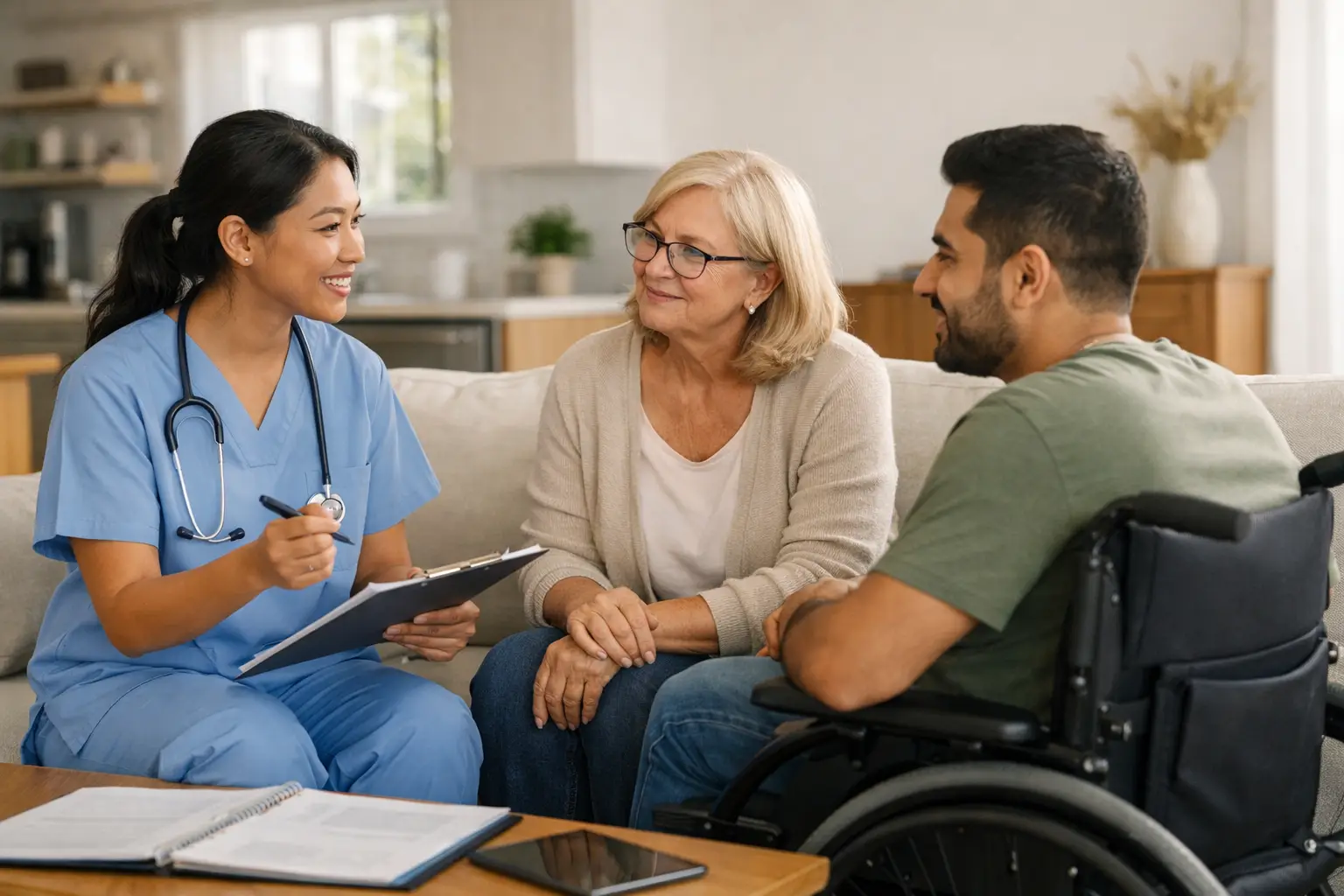
The nurse should then assess the participant in the home or community setting where possible. This is often where practical barriers become clear: supplies may not be stored accessibly, workers may have inconsistent instructions, a care plan may be outdated, or the participant may be trying to manage a clinical task beyond their current capacity.
Make recommendations practical and accountable
Recommendations should be clear enough for a coordinator, family member or service provider to act on. They may outline the frequency and purpose of nursing reviews, the need for a current clinical care plan, defined worker training, competency assessment, documentation requirements and escalation pathways.
Avoid generic wording such as “requires nursing support as needed”. It does not explain what the nurse will assess, why review is necessary, or what risks are being managed. More useful wording identifies the clinical objective. For example, ongoing review may be recommended to monitor wound healing, revise treatment where indicated, train workers in safe dressing procedures and identify deterioration early.
It is also helpful to identify boundaries. A support worker can only perform care within their training, competence, employer arrangements and the documented plan. Where a participant’s condition changes, the plan and worker guidance may need review before the routine continues. This protects the participant and gives providers a defensible process for responding to risk.
Common gaps that weaken a reassessment request
A report can be clinically accurate yet less useful if it does not connect findings to everyday support. A diagnosis without functional impact, a list of medications without medication-related risks, or a statement that workers need training without identifying the task and expected competency will leave important questions unanswered.
Another common gap is relying on informal support as though it is unlimited. If a family member is undertaking complex clinical tasks daily, document the nature, frequency and consequences of that care. The aim is not to diminish family involvement. It is to accurately show what is currently being relied upon and whether it is safe, sustainable and consistent with the participant’s needs.
Evidence should also be internally consistent. Care plans, progress notes, incident records and the nursing report should tell the same clinical story. If a report identifies high risk but daily notes show no monitoring, no escalation process or no trained workers, this may raise questions that delay action.
When to refer for a nursing assessment
A referral is appropriate when a participant’s health routine has become more complex, current worker instructions are unclear, there has been deterioration or repeated escalation, or a plan review requires current clinical evidence. It is especially worthwhile when families are carrying a high level of unrecognised clinical responsibility or providers are unsure whether workers are appropriately trained for the task.
Compassion Wings provides nurse-led NDIS care across Adelaide, including practical nursing assessments, clinical care plans, support worker training and nursing reports for reassessment. The focus is not simply on producing a document. It is on identifying the care required, reducing preventable risk and helping participants stay safe at home with safe, dignity-focused care.
A well-prepared nursing report gives everyone a clearer starting point: the participant knows what support is intended to achieve, families have a documented plan for complex care, and Support Coordinators can put forward evidence that is practical, current and clinically grounded.