


Pressure Injury Prevention Checklist for NDIS Care
A pressure injury can begin with a small area of redness that does not fade when pressure is removed. For a participant who spends long periods in bed, sits for extended periods, has reduced sensation, or needs help with repositioning, that change can worsen quickly. A practical pressure injury prevention checklist gives families, support workers and Support Coordinators a clear daily routine – and a prompt to seek clinical review before a wound develops.
Pressure care is not simply about turning someone at set times. Safe, dignity-focused care considers the participant’s mobility, continence, nutrition, medical conditions, skin condition, daily routines and ability to report discomfort. The right plan is individual, documented and reviewed when circumstances change.
Who needs pressure injury prevention support?
Pressure injuries are caused by sustained pressure, friction or shear. They most often occur over bony areas such as the sacrum, buttocks, hips, heels, ankles, elbows and back of the head. They can also occur beneath medical devices, including tubing, braces or continence products, where these create ongoing pressure or rub against the skin.
A participant may be at higher risk if they have limited mobility, use a wheelchair, spend substantial time in bed, have reduced sensation, experience incontinence, have diabetes, poor circulation, weight loss, dehydration, a current wound or a history of pressure injuries. Acute illness and recent hospital discharge can also change risk quickly.
Risk is not determined by one diagnosis alone. For example, a participant may be able to transfer independently but still be at risk because pain means they avoid changing position. Another person may need full assistance with repositioning but have healthy skin and an effective routine. Practical nursing assessments identify the factors that matter in the person’s own home and care environment.
Pressure injury prevention checklist for daily care
This checklist is designed to support observation and safe follow-through. It does not replace an individualised clinical care plan, particularly where there is an existing wound, complex medical condition or previous pressure injury.
Check the skin at each relevant care opportunity
Observe high-risk areas during personal care, dressing, continence support and repositioning. Look for persistent redness, darker or purple discolouration, warmth, swelling, hardness, broken skin, blisters, grazes, moisture damage or areas the participant says are sore, burning or itchy.
On darker skin tones, redness may be harder to see. Compare the area with surrounding skin and use touch as well as sight. Changes in temperature, firmness, pain or colour can all be meaningful. Do not rely on a quick visual check alone.
If a reddened area does not fade after pressure is relieved, document it and escalate according to the participant’s clinical plan. Do not massage bony areas or damaged skin, as this can increase tissue injury.
Confirm repositioning is realistic and completed
A written plan should state how the participant changes position, what assistance is required, preferred positions, any areas to avoid and how often the routine should be reviewed. There is no single repositioning schedule that suits everyone. Frequency depends on the person’s risk, comfort, tolerance, skin condition and clinical advice.
Support workers should record repositioning where this is part of the care plan, including when it could not be completed and why. A missed reposition due to pain, illness, refusal, equipment issues or staffing changes is useful clinical information, not a reason to leave a gap in the record. It may show that the plan needs adjustment.
When moving or repositioning a participant, use the approved handling approach to reduce dragging across sheets or seating surfaces. Friction and shear can damage skin below the surface even when there is no obvious wound initially.
Keep skin clean, dry and protected
Moisture from urine, faeces, sweat, wound drainage or prolonged dampness can weaken the skin and increase injury risk. Continence routines need to be reliable, respectful and responsive to the participant’s actual pattern, not simply a fixed timetable that does not work.
Use gentle cleansing, dry the skin carefully and apply prescribed or clinically recommended barrier products as directed. Avoid harsh rubbing and avoid introducing new creams, powders or dressings without checking the care plan or seeking clinical advice. Some products can trap moisture or interfere with wound assessment.
Catheter leaks, bowel accidents, frequent loose stools and poorly fitting continence products should be reported promptly. These are not just comfort concerns. They can significantly alter skin integrity risk and may need a continence or nursing review.
Check seating, bedding and devices
Look for creases in bedding, clothing or continence products, objects left under the participant, and tubing or straps pressing into the skin. Check that heels are not resting continuously against a hard surface if the care plan identifies this as a risk.
A cushion, mattress or other pressure-redistributing surface is only helpful when it is used correctly and remains suitable as the participant’s needs change. If the participant is sliding forward in their chair, reporting new pain, spending more time in bed, or developing skin marks, arrange clinical review rather than assuming the current set-up remains appropriate.
Support food, fluids and health changes
Poor intake, dehydration, unplanned weight loss, infection and general illness can reduce the skin’s ability to tolerate pressure and heal. Record meaningful changes in appetite, fluid intake, weight where monitored, fatigue, fever or decline in mobility. Escalate these observations through the appropriate clinical pathway.
This does not mean support workers need to diagnose nutritional problems. Their role is to notice patterns, follow the plan and communicate early. A nurse can determine whether further assessment or coordination with the participant’s treating team is needed.
Documentation turns observations into safer care
In complex health support, vague notes such as “skin checked, all okay” rarely provide enough information for clinical oversight. Records should be factual and useful: the area checked, what was observed, whether the participant reported pain, what action was taken, who was notified and the outcome.
For example, a useful entry may state that a non-blanching red area was observed on the right heel during evening care, the heel was pressure-relieved in line with the plan, the participant reported tenderness, and the nurse or responsible contact was notified. This creates continuity between workers, families and clinicians.
Clear documentation also helps Support Coordinators understand why nursing input, a revised care plan or additional support worker training may be required. Where a participant’s needs have changed, nurse-led assessment and clinical reporting can provide evidence for plan reviews or a change of circumstances.
When to refer for nurse-led NDIS care
A nursing referral is appropriate when a participant has a current pressure injury, recurring skin breakdown, unexplained redness, a recent hospital discharge with wound instructions, increased immobility, frequent moisture-associated skin damage, or a care routine that workers are struggling to implement consistently.
Early referral is often less disruptive than responding after a wound becomes complex. Compassion Wings provides nurse-led NDIS care across Adelaide, including practical nursing assessments, skin integrity reviews, clinical care plans, support worker training and clear reports for Support Coordinators.
Clinical oversight is particularly valuable when several risks overlap. A participant with diabetes, incontinence, reduced sensation and limited mobility may need a coordinated plan that addresses skin checks, continence routines, repositioning, escalation and documentation together. Treating each issue separately can leave important gaps.
Red flags that need prompt escalation
Seek urgent clinical advice in line with the participant’s care plan when there is broken skin, a blister, a wound that is worsening, increasing pain, spreading redness, heat, swelling, odour, discharge, blackened tissue, fever or signs the participant is generally unwell. These symptoms may indicate tissue damage or infection and should not be managed by simply adding a cream or changing a routine without review.
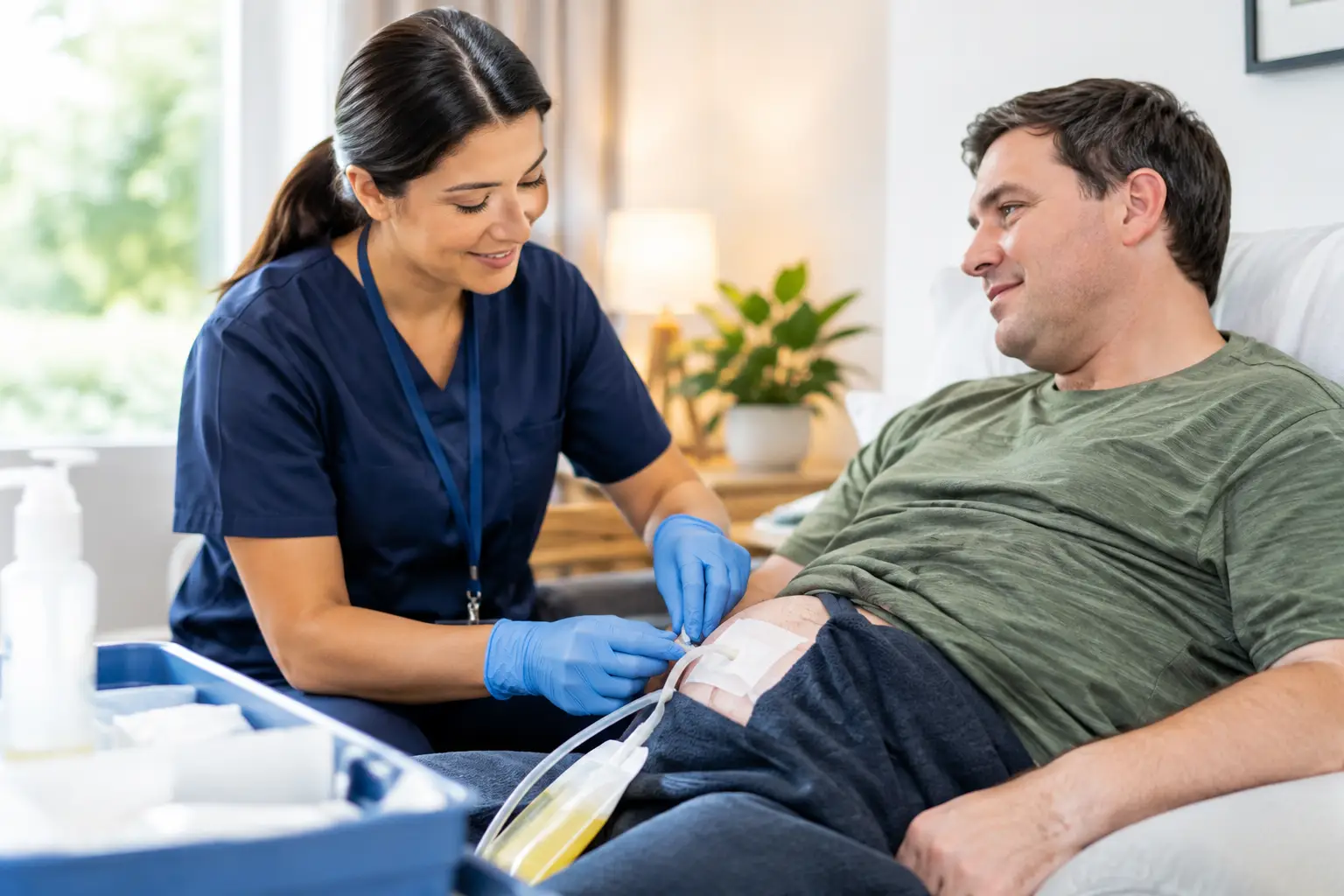
If the participant has a wound plan from a hospital, GP or treating clinician, follow that plan and report changes promptly. Do not remove dressings, alter treatment or use unapproved products outside the worker’s training, delegation and documented instructions.
Make prevention part of ordinary care
The most effective pressure care routines are the ones that fit into daily life. Skin observations can occur during dressing, continence support or transfers. Repositioning can be planned around meals, rest, activities and comfort. Records can be brief, but they need to show what changed and what happened next.
For families and coordinators, the goal is not to create more paperwork. It is to make sure small warnings are noticed, communicated and acted on while there is still time to protect the participant’s skin, comfort and ability to stay safe at home.