

Pressure Care for Safer Support at Home
A red mark that does not fade after pressure is relieved can be the first warning sign of a pressure injury. For a person with reduced mobility, altered sensation, continence concerns or complex medical needs, pressure care is not simply about remembering to reposition. It requires informed assessment, consistent daily routines and clear clinical escalation when skin changes occur.
For families and Support Coordinators, the concern is often practical: who can identify the risk early, create a plan the care team can actually follow, and document the clinical need clearly? Nurse-led NDIS care brings those pieces together, helping participants stay safe at home while protecting comfort, dignity and skin integrity.
What pressure care means in a home setting
Pressure injuries, sometimes called pressure ulcers or bed sores, occur when sustained pressure reduces blood flow to the skin and underlying tissue. They commonly develop over bony areas such as the sacrum, buttocks, hips, heels, ankles and elbows. Friction and shear can also damage the skin, particularly where a person slides down in bed or is moved without the right technique.
The risk is not limited to people who spend all day in bed. A participant may be at risk if they sit for long periods, use a wheelchair, have difficulty changing position independently, experience spasms, have poor nutrition or hydration, or cannot reliably feel pain or discomfort. Moisture from urinary or faecal incontinence can further weaken the skin. Diabetes, poor circulation, weight changes, acute illness and some medications may increase risk as well.
Good pressure care therefore considers the whole clinical picture. A turning schedule by itself may be appropriate for one person and inadequate for another. The plan needs to account for the participant’s mobility, skin condition, daily routine, health conditions, communication needs, preferences and the people delivering support.
When nursing assessment is needed
A nursing referral is appropriate when a participant has a current pressure injury, recurring skin breakdown, non-blanching redness, unexplained wounds, pain over pressure areas or a recent decline in mobility. It is also valuable after discharge from hospital, during a change in health status, or where support workers and family are unsure how to safely manage repositioning, continence-related skin care or wound dressings.
Early referral matters because pressure injuries can deteriorate quickly and may lead to infection, pain, hospital treatment and significant disruption to everyday care. A wound that appears minor on the surface can involve deeper tissue damage. Conversely, not every area of redness is a pressure injury. Clinical assessment helps distinguish the issue, identify contributing factors and determine whether urgent medical review is required.
A practical nursing assessment may include a skin inspection, wound measurement where relevant, review of the participant’s mobility and positioning, pain assessment, continence and moisture review, nutritional risk considerations, current equipment use, and discussion with the participant and their regular support team. It should also identify what is realistically achievable in the home environment. A plan that cannot be followed consistently will not reduce risk.
The foundations of effective pressure injury prevention
Prevention works best when it is built into ordinary care routines rather than treated as an occasional clinical task. The participant’s support team needs clear, specific instructions on what to do, what to observe and when to contact a nurse.
Positioning is individual, not one-size-fits-all
Regular position changes can reduce sustained pressure, but the required frequency depends on the person, their skin tolerance, time spent sitting or lying down, and clinical advice. For some participants, a planned repositioning routine is essential. For others, small weight shifts, supported transfers and avoiding prolonged time in one position may be the more practical focus.
Safe technique matters. Dragging across bedding or allowing a person to slide in a chair can create shear forces that damage fragile skin. Support workers need instruction that fits the participant’s care plan, including how to use slide sheets or other approved aids where they form part of the established routine. Any new concern about manual handling safety should be escalated rather than managed by improvisation.
Skin checks should be purposeful
Support workers and family members are often the first to notice a change. Daily observation of high-risk areas can identify redness, warmth, swelling, tenderness, broken skin, blisters, bruising or changes in skin colour before they become more serious.
For darker skin tones, early pressure damage may not look bright red. It may appear darker, purple, blue-toned, shiny or different in texture, and may feel warmer, firmer or more painful than surrounding skin. This is one reason clinical education and consistent documentation are so valuable. The team should record what was observed, when it started, what action was taken and whether the area changes after pressure is relieved.
Moisture, continence and nutrition cannot be separated from skin health
Skin exposed to urine, faeces, sweat or wound drainage is more vulnerable to damage. Continence routines, prompt cleansing after episodes, gentle drying and appropriate barrier products may form an important part of a pressure care plan. The goal is safe, dignity-focused care, not a rushed response that leaves skin irritated or damp.
Nutrition and hydration also affect healing and skin resilience. Nurses can identify when poor intake, unintended weight loss, swallowing concerns or other clinical issues should be discussed with the participant’s treating team. Nursing input does not replace medical or dietetic care, but it can ensure these risks are recognised and escalated appropriately.
Managing an existing pressure injury
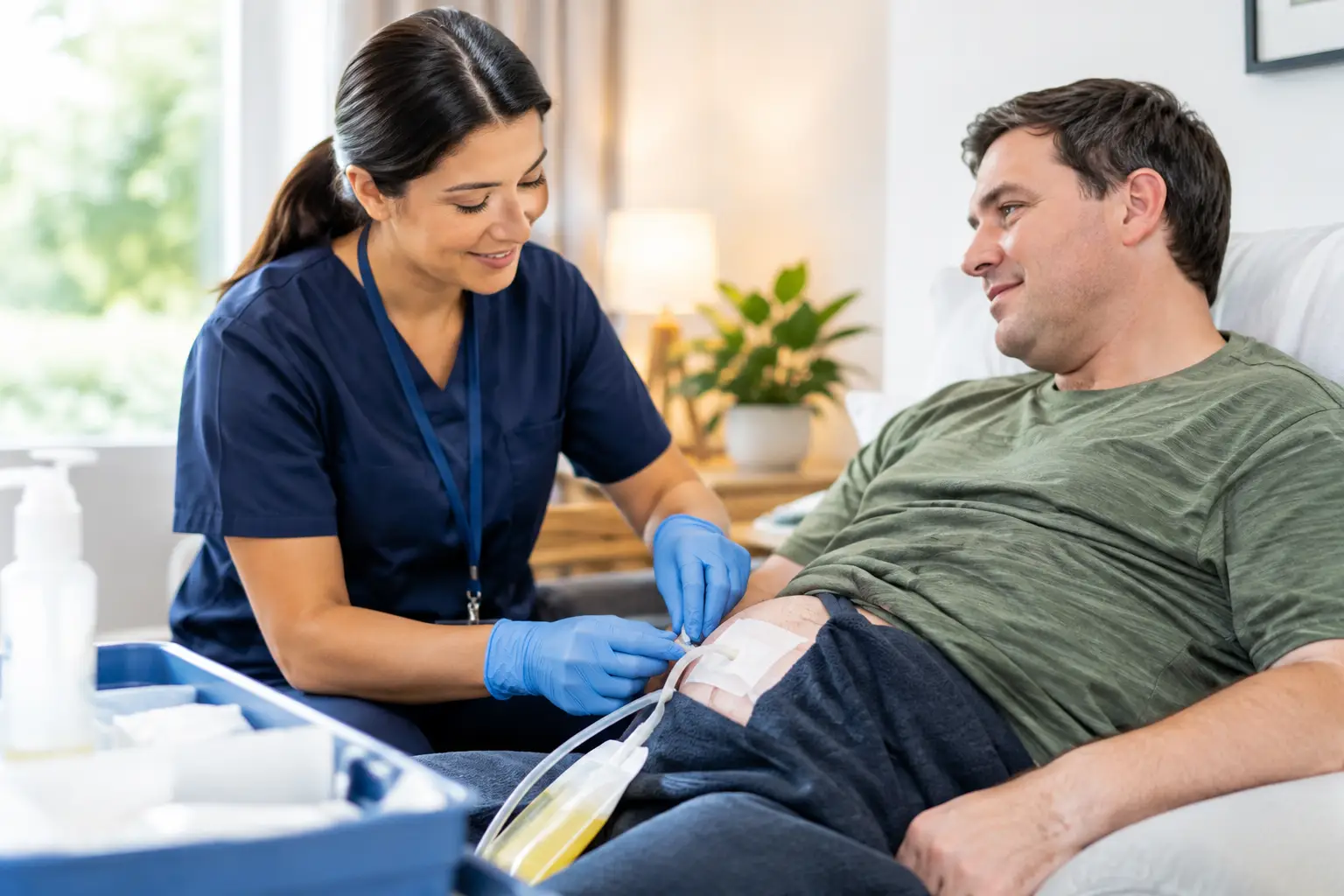
Once skin has broken down, the priority is prompt assessment and a clear wound management plan. This may include wound measurements, tissue description, exudate and infection monitoring, dressing selection in line with clinical assessment, pain management considerations, pressure relief strategies and review dates.
The plan should state who completes each task and what requires escalation. Vague directions such as “monitor wound” are not enough for complex health support. A useful plan explains the signs that require a nurse review, such as increased redness, odour, drainage, pain, heat, fever, wound enlargement or a sudden change in the participant’s condition.
Some situations require urgent medical assessment, particularly if there are signs of systemic infection, rapidly spreading redness, black or discoloured tissue, severe pain, fever, confusion or marked deterioration. Support teams should not wait for a routine visit when the person is unwell or the wound is changing quickly.
Why support worker training and clinical oversight matter
Even an excellent care plan will fall short if the people providing day-to-day support have not been shown how to implement it. High-quality support worker training is practical: it covers the participant’s specific risks, safe positioning routine, skin observation points, hygiene and continence-related strategies, documentation expectations and escalation pathway.
Training also gives workers permission to raise concerns early. They should not be expected to diagnose a wound or make independent changes to dressings. Their role is to follow the plan, observe carefully, document accurately and alert the appropriate clinician when something is different.
Clinical oversight keeps the plan current. Pressure risk can change after illness, a hospital admission, reduced mobility, medication changes or a decline in the participant’s ability to communicate discomfort. Regular review prevents outdated instructions from becoming the default routine.
Clear evidence for Support Coordinators and plan reviews
Pressure care often involves more than a single nursing visit. Participants may need assessment, a clinical care plan, wound monitoring, staff education, review visits and coordination with their treating team. For Support Coordinators managing competing risks and plan timelines, clear reports for Support Coordinators can make the clinical picture easier to understand.
Useful nursing documentation describes the participant’s diagnosed or observed needs, current risks, the care required, who needs training, what may happen without appropriate support and why ongoing review is clinically indicated. It should be factual, individualised and aligned with the participant’s everyday circumstances. This supports informed discussions during plan reviews or a change of circumstances without making unsupported assumptions about funding.
Before a referral, it helps to provide recent discharge information if available, current wound or care notes, known diagnoses, medication information relevant to skin or healing, details of current supports, and any immediate concerns. If information is incomplete, a nurse can still assist with assessment and identify what needs to be clarified.
A safer routine starts with noticing change
Pressure injuries are not always avoidable, particularly for people with significant health complexity. What can often be avoided is delayed action, inconsistent care and uncertainty about who is responsible. Compassion Wings provides nurse-led clinical support in the home across Adelaide, with practical nursing assessments, individual care plans, support worker training and ongoing clinical oversight when pressure risk or skin breakdown requires more than a generic checklist.
The most helpful next step is often simple: if a participant’s skin, mobility or care needs have changed, arrange nursing input before a small concern becomes a difficult wound. Timely assessment gives everyone involved a clearer, safer way forward.