

Skin Integrity Care for Complex Health Needs
A small area of redness over a heel, moisture damage around a continence pad, or a wound dressing that is no longer managing exudate can quickly become a serious clinical issue. For people with reduced mobility, continence needs, diabetes, fragile skin or complex medical conditions, skin integrity is not simply a comfort issue. It affects infection risk, pain, sleep, participation in daily routines and the likelihood of an avoidable hospital presentation.
For families and Support Coordinators, the challenge is often knowing when a skin concern needs nursing input rather than routine observation. Nurse-led NDIS care brings clinical assessment, practical recommendations, clear documentation and education for the people delivering care each day.
What skin integrity means in clinical care
Skin integrity refers to the skin remaining intact, healthy and able to perform its protective function. Healthy skin provides a barrier against bacteria, moisture, friction and injury. When that barrier breaks down, even in a small area, the risk of pain, infection and delayed healing increases.
Skin changes are rarely caused by one issue alone. A participant may spend long periods sitting or in bed, have limited ability to reposition independently, experience urinary or faecal incontinence, have poor circulation, be taking medicines that affect healing, or have reduced sensation that prevents them noticing discomfort. Diabetes, poor nutrition, dehydration and previous pressure injuries can add further risk.
This is why a practical nursing assessment looks beyond the visible area. A nurse considers the person’s health history, mobility, continence routines, current equipment, medication considerations, nutrition and hydration concerns, support arrangements, and the way care is being carried out in the home.
Skin integrity risks that need early attention
A pressure injury can begin as persistent redness or discolouration that does not fade when pressure is relieved. On darker skin tones, early changes may be harder to identify and may appear as altered colour, warmth, coolness, firmness, swelling or a change in sensation rather than obvious redness. Waiting for broken skin before acting is a high-risk approach.
Moisture-associated skin damage is another common concern. Prolonged contact with urine, faeces, sweat or wound fluid can leave skin inflamed, fragile and prone to breakdown. Continence products, cleansing methods and barrier products all need to suit the individual. Products that are helpful for one person can trap moisture, irritate skin or interfere with wound assessment for another.
Friction and shear also matter. Sliding down in bed, dragging during transfers, poorly fitting footwear, tubing that rubs, or a catheter that is not secured appropriately can damage vulnerable skin over time. Stoma appliances may cause irritation or leakage-related damage when the fit is no longer appropriate. These issues need more than a product change – they need a clear understanding of what is causing the problem.
Any new wound, increasing pain, spreading redness, odour, heat, swelling, increasing drainage, fever or a sudden deterioration should be assessed promptly. Where there are signs of acute infection or rapid decline, urgent medical review may be needed. Nursing support does not replace emergency or GP care, but it can help identify concerns early, document changes clearly and support appropriate escalation.
A skin integrity assessment should lead to a usable plan
A good assessment is only useful if it changes daily care in a safe and realistic way. For NDIS participants, recommendations need to work across the people, routines and environments involved in support. A plan that is clinically sound but difficult for workers or family members to follow consistently will not reduce risk.
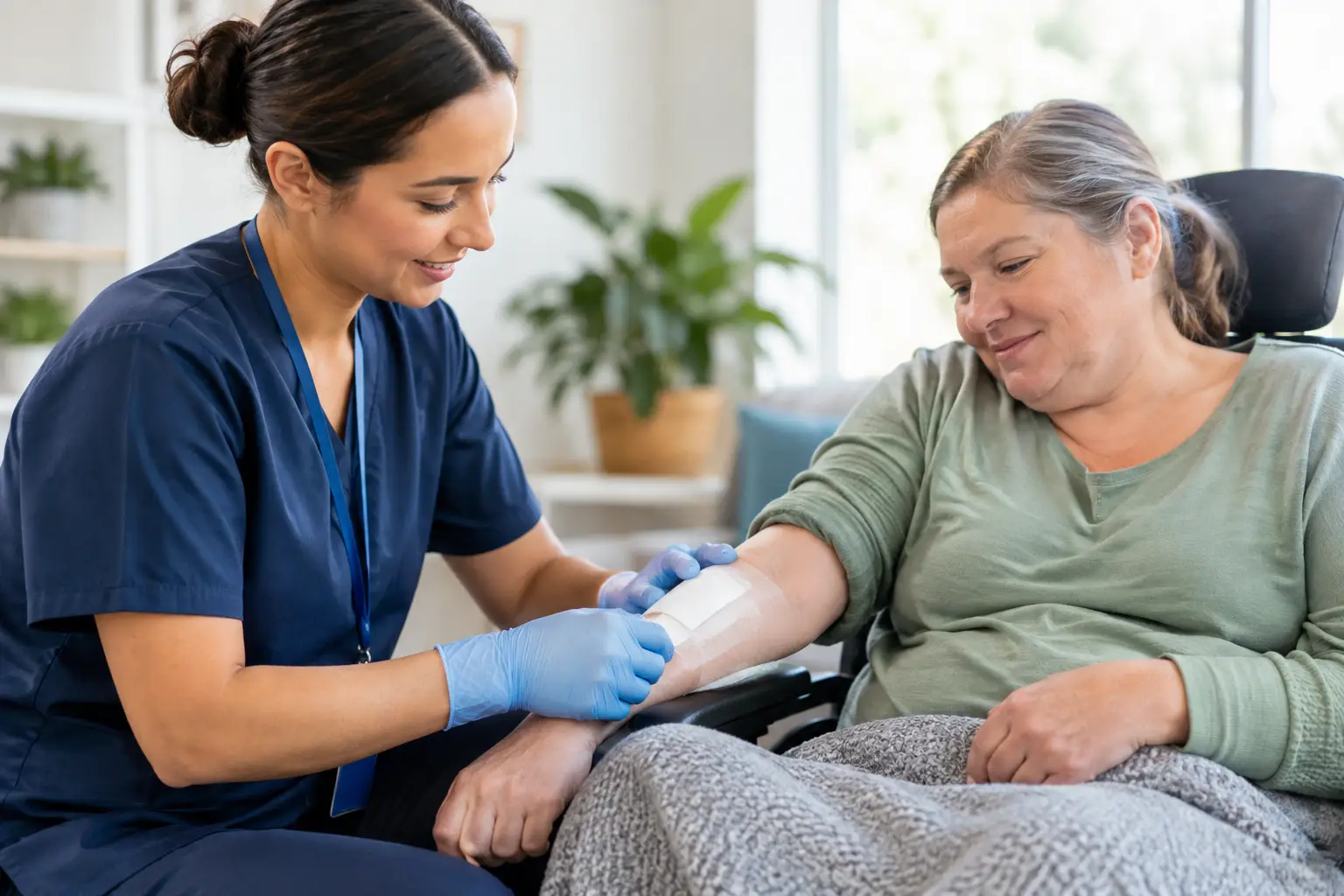
Nurse-led clinical support in the home may include assessment of pressure areas, wounds, continence-related skin concerns, stoma sites, catheter securement areas and areas affected by medical devices. The nurse can identify contributing factors, clarify what should be monitored, recommend an appropriate care approach within scope, and coordinate with the participant’s treating team when required.
The resulting clinical care plan should be clear about what workers need to do, how often they need to do it, what changes must be reported, and when escalation is required. It should use practical language rather than vague instructions such as “monitor skin”. For example, workers may need guidance on repositioning routines, skin checks during personal care, gentle cleansing and drying, correct application of prescribed or recommended products, continence care steps, dressing observation, and documentation of changes.
For Support Coordinators, clear reports for Support Coordinators can help explain the clinical need behind requested supports. A nursing report can describe identified risks, current care requirements, the consequences of inadequate support, education delivered, and recommendations for ongoing clinical oversight. This is particularly valuable where needs have increased or a plan review or change of circumstances requires current clinical evidence.
Prevention depends on consistent daily routines
Preventing skin breakdown is not about asking workers to inspect every centimetre of skin at every visit. It is about creating reliable routines around known risks and responding early when something changes.
Pressure care may involve regular repositioning, checking that clothing and bedding are smooth and dry, observing vulnerable areas during routine care, and ensuring any existing pressure-relieving strategies are being used as directed. The frequency of repositioning should be individualised. It depends on mobility, skin condition, comfort, medical needs and professional recommendations, not a one-size-fits-all timetable.
Continence and bowel routines are equally relevant. Prompt, respectful care after episodes of incontinence can reduce prolonged moisture exposure. Gentle products and careful drying can protect fragile skin, while the right barrier approach may reduce irritation. Frequent loose stools, constipation with overflow, new leakage or changes in urine can all affect skin health and may indicate a broader bowel or bladder issue requiring review.
Nutrition, hydration and general health should not be overlooked. Skin healing and resilience can be affected by poor intake, unplanned weight loss, dehydration, illness and poorly controlled diabetes. A nurse can recognise when a concern should be discussed with a GP, dietitian, diabetes team or other treating clinician.
Why support worker training matters
Many skin concerns worsen not because anyone has been careless, but because early signs were not recognised or workers were unsure what action to take. High-quality support worker training and clinical oversight create consistency across shifts and reduce reliance on verbal handover alone.
Training can cover how to recognise changes in skin colour, temperature, moisture and pain; how to follow a care plan; safe continence and pressure care routines; wound or device observations within the worker’s role; and the difference between an issue to document and one that needs urgent escalation. It should also reinforce dignity-focused care. Skin checks and continence support are personal, and participants should be involved in decisions wherever possible.
Documentation is part of safe care, not an administrative extra. A useful note records what was observed, what care was provided, whether the participant reported pain or discomfort, and who was notified. This creates a clearer clinical picture over time and helps a nurse identify whether a strategy is working.
When to refer for nurse-led skin integrity support
A referral is appropriate when there is an existing wound, recurrent skin breakdown, a pressure injury risk, continence-related skin damage, a stoma or catheter site concern, or a need to establish a safer daily routine. Nursing input is also helpful after discharge from hospital, when a participant’s mobility has changed, when workers need training, or when a Support Coordinator needs current evidence of complex health support needs.
Helpful referral information includes the participant’s diagnosis and relevant medical history, current concerns, wound or skin photographs where consent and secure processes allow, current treatment directions, recent discharge information, medication list, mobility and continence details, and the contact details of involved clinicians. Even where information is incomplete, an initial practical nursing assessment can clarify what is needed next.
Compassion Wings provides nurse-led NDIS care across Adelaide for participants whose skin, wound, continence, stoma, catheter or pressure care needs require more than general observation. The focus is safe, dignity-focused care that can be implemented in the home, supported by clinical care plans, worker education and timely escalation.
Skin concerns are easiest to manage when they are acted on early, before discomfort becomes tissue damage and tissue damage becomes a hospital admission. A timely nursing review can give families, workers and Support Coordinators a clear plan for helping participants stay safe at home.