
Wound Management Versus Hospital Visits at Home
A dressing that has suddenly become saturated, a new odour, increasing pain, or redness spreading beyond the wound edge can turn an ordinary morning into a difficult decision. For participants, families and Support Coordinators, wound management versus hospital visits is not simply a question of convenience. It is about recognising what can be safely managed through skilled nursing in the home, and what needs urgent medical assessment.
For many people with complex health needs, repeated hospital presentations are disruptive. They can interrupt routines, cause distress, expose a person to further infection risk, and leave support teams without a clear plan once the participant returns home. However, keeping someone at home must never mean overlooking clinical deterioration. Safe wound care depends on assessment, documentation, timely escalation and a plan that the whole care team can follow.
Wound management versus hospital visits: the key difference
Hospital care is designed for acute illness, serious infection, surgical intervention, uncontrolled bleeding and situations where rapid diagnostics or specialist treatment are needed. Community nursing has a different, equally valuable role: providing clinical support in the home for wounds that are stable enough to be assessed, treated and monitored outside hospital.
This may include post-operative wounds, skin tears, lower-limb wounds, pressure injuries, diabetic foot wounds, moisture-associated skin damage or wounds affected by continence needs. The appropriate setting depends on the wound, the participant’s health history, circulation, diabetes status, pain levels, capacity to follow the care plan, and whether there are signs of infection or deterioration.
A nurse-led assessment helps separate a wound that needs consistent, planned care from one that requires urgent medical review. It also prevents a common problem: support workers and families being asked to make clinical decisions without the training, authority or information to do so.
When wound care can be managed at home
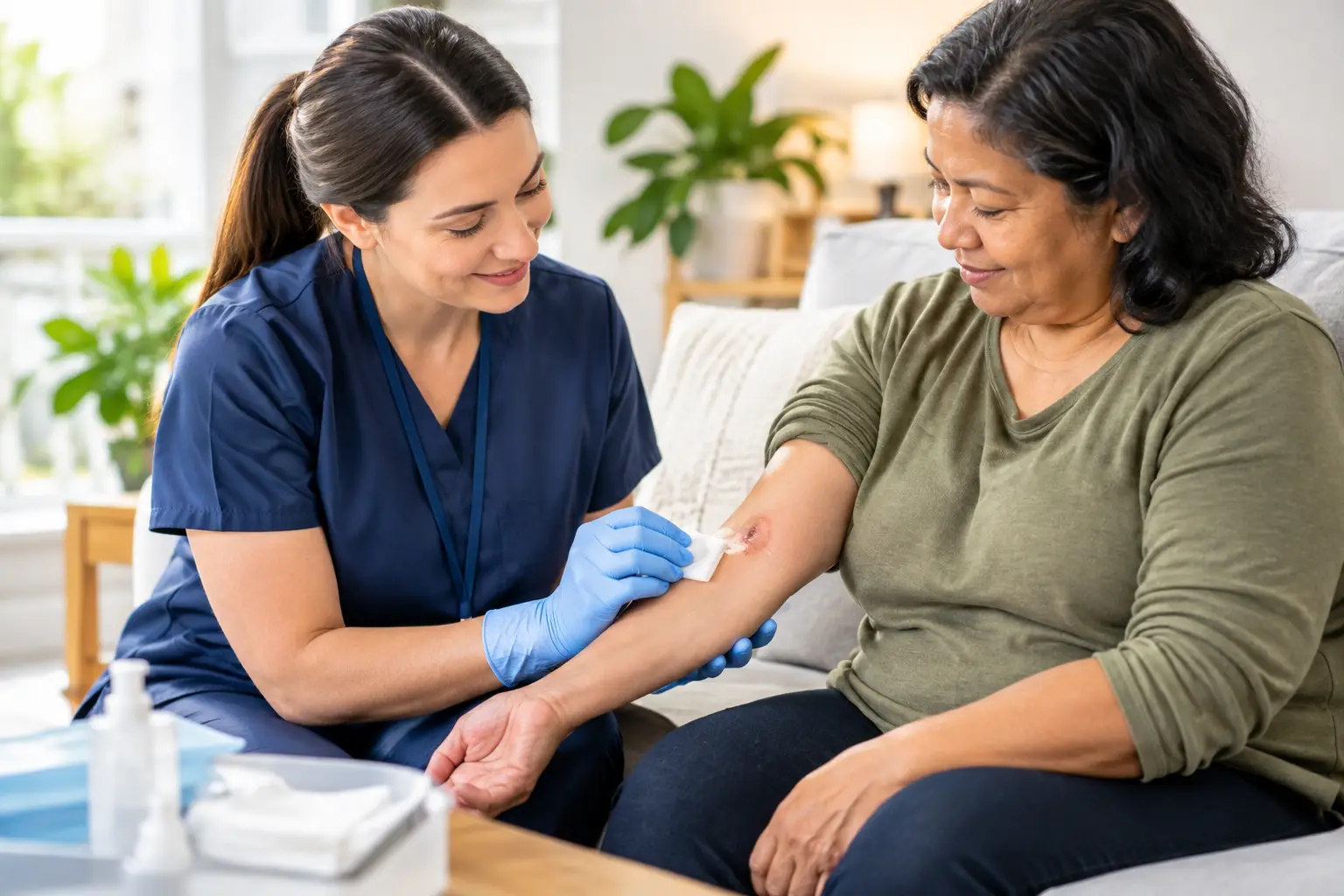
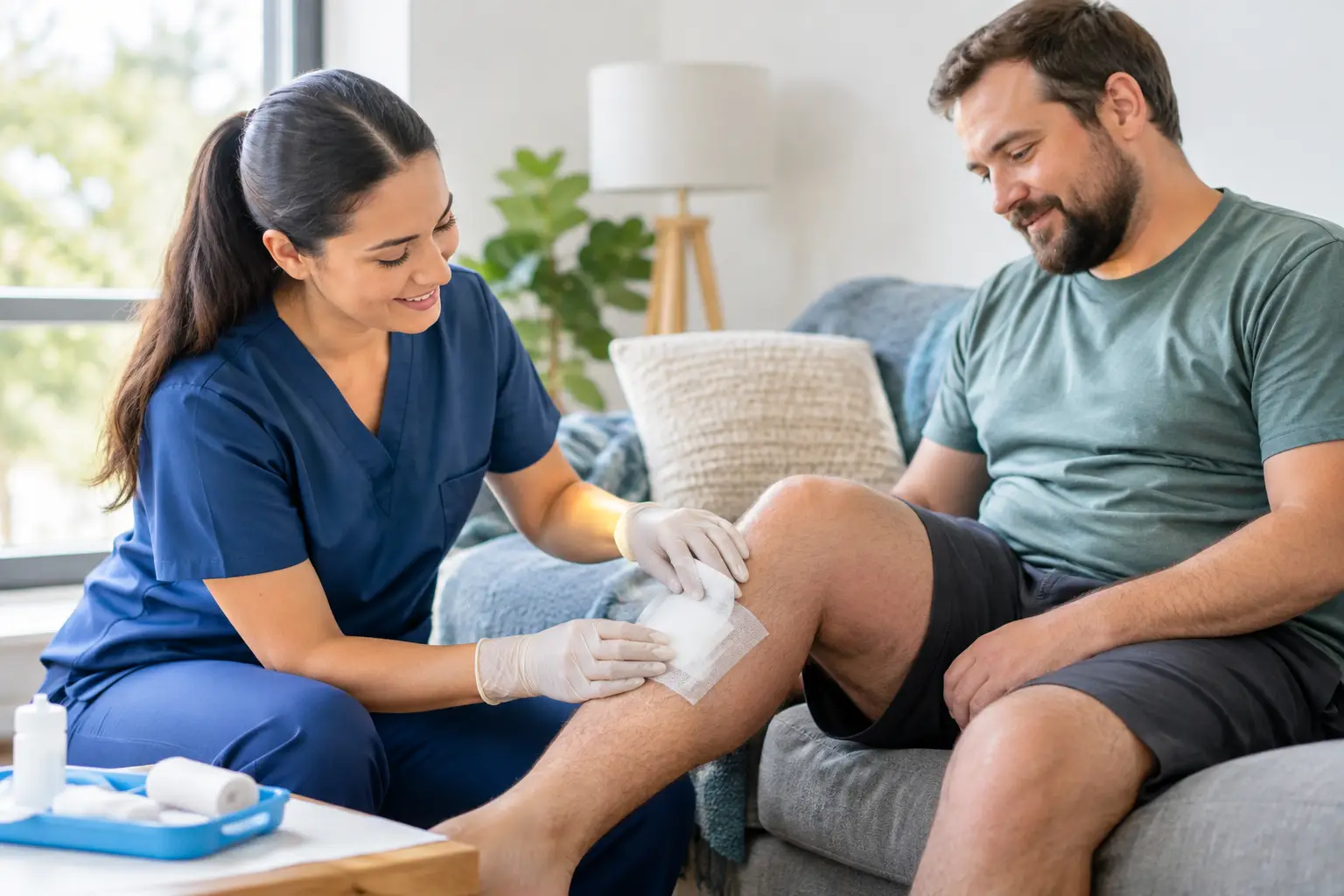
Home-based wound management may be appropriate when the wound has been medically assessed, there is a clear treatment approach, and the participant is clinically stable. A nurse can assess the wound bed and surrounding skin, review drainage and odour, monitor pain, check for pressure or moisture factors, and determine whether the current dressing regime remains suitable.
This is not just a dressing change. Good wound care considers why the wound developed and what may stop it from healing. For example, a pressure injury will not improve if the person continues to spend long periods in the same position without an effective pressure care routine. A wound exposed to urine or faeces may need continence strategies alongside dressing selection. A diabetic foot wound requires close attention to blood glucose management, footwear, mobility and changes in sensation.
Practical nursing assessments can identify these factors early and turn them into workable daily instructions. This gives participants and families greater clarity, while helping support workers understand exactly what they are responsible for and when they must escalate concerns.
The value of ongoing monitoring
Wounds can change quickly, particularly when a participant has reduced mobility, diabetes, poor circulation, compromised skin integrity, nutritional concerns or continence-related skin exposure. A wound that appears stable one week may show early deterioration the next.
Regular nursing review creates a clinical record of wound size, tissue type, exudate, surrounding skin condition, pain and response to treatment. Clear documentation matters for continuity of care, GP or specialist communication, and evidence where a participant’s needs have changed. It also helps prevent care becoming reactive, where a problem is only addressed once it has become serious.
For Support Coordinators, this level of oversight provides a clearer picture of risk and supports well-informed discussions about complex health support. Clear reports for Support Coordinators can outline the current clinical issue, required nursing interventions, support worker instructions, identified risks and recommended review periods.
When a hospital visit or urgent medical review is needed
Nursing care in the home is not a substitute for emergency or acute medical treatment. Some changes need urgent escalation because delays can lead to serious infection, tissue damage or broader health complications.
A participant should be urgently assessed by a medical practitioner or emergency service where there is rapidly spreading redness, marked swelling or heat around the wound, fever or new confusion, severe or escalating pain, uncontrolled bleeding, black or rapidly changing tissue, a deep wound with exposed structures, or signs that the person is becoming generally unwell. Sudden changes in a diabetic foot, including new discolouration, swelling or loss of sensation, also warrant prompt medical attention.
The right action will depend on the severity of symptoms, the person’s medical history and advice from their treating team. When in doubt, it is safer to seek urgent clinical guidance rather than wait for the next scheduled dressing change.
A good home nursing service does not minimise these warning signs. It assesses, documents and escalates appropriately. This is one reason clinical oversight is so important in NDIS settings: the goal is not to avoid hospital at all costs, but to reduce avoidable presentations while ensuring necessary hospital care happens without delay.
Preventing the cycle of repeat presentations
Many hospital presentations related to wounds are driven by issues that develop over time: missed early signs of skin breakdown, unclear dressing instructions, inconsistent pressure care, poor moisture management or a lack of training for the people providing daily support.
Prevention begins with a detailed assessment and a care plan that works in real life. If a participant has a catheter, stoma, bowel routine or continence needs that affect skin integrity, those factors need to be included rather than treated as separate problems. The same applies to medication, diabetes support, mobility patterns and pain management.
A clinical care plan should be specific enough to guide day-to-day practice. It may describe how to protect vulnerable skin, when and how to report drainage, what observations need recording, who can perform particular tasks, and the circumstances requiring a nurse, GP or urgent medical escalation. Vague instructions such as “monitor wound” do not give a support team enough direction.
Support worker training is part of wound safety
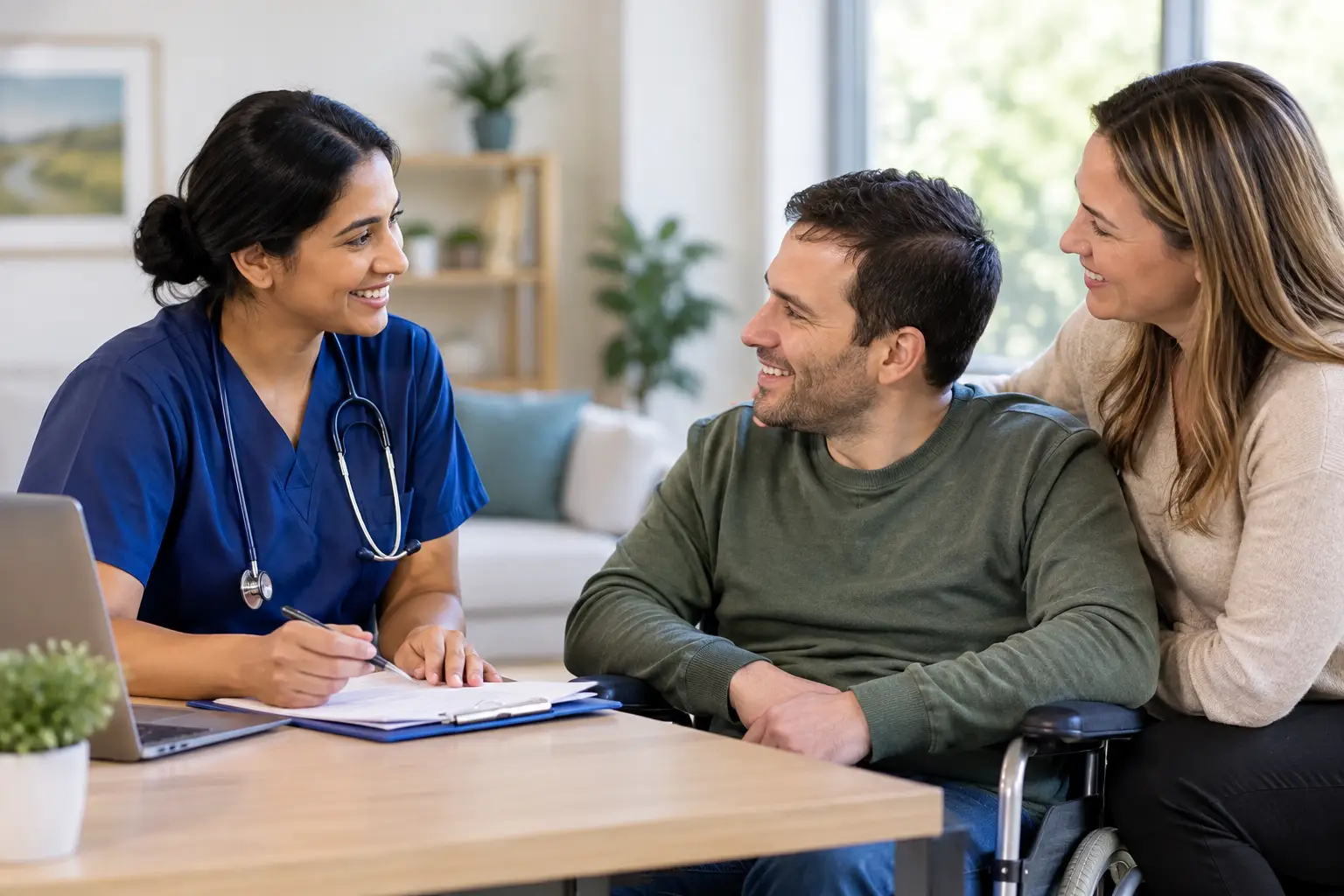
Support workers are often the first people to notice changes in a participant’s skin or routine. With appropriate support worker training and clinical oversight, they can confidently recognise concerns, follow infection-control steps, document observations and escalate in line with the care plan.
Training does not ask support workers to take on nursing responsibilities outside their scope. Instead, it gives them practical guidance for safe implementation of the nurse’s plan. This can be particularly important in shared or rotating support arrangements, where inconsistent handover can lead to missed changes or duplicated interventions.
For families, this approach can reduce the burden of being the only person who understands the wound routine. For providers and Coordinators, it creates a more reliable system around the participant rather than relying on individual memory or informal verbal updates.
What a useful nursing referral should include
A referral does not need to be perfect before nursing input begins, but a few details allow the first assessment to be more focused. Include the wound’s known cause and location, recent changes, current dressing products and frequency, treating GP or specialist details, relevant diagnoses such as diabetes or vascular disease, allergies, pain concerns, and any current hospital discharge instructions.
It is also helpful to explain who provides daily support, whether workers have received wound-related instructions, and what has been difficult to implement at home. Photos may be useful where consent and secure clinical processes are in place, but they should never replace an in-person assessment when a wound is changing or concerning.
Where there is uncertainty about support needs, a nurse can assess the situation and provide evidence-based recommendations. This may include a clinical care plan, training requirements, review schedule and nursing report that clearly explains the participant’s wound-related risks and required supports. Such evidence can be particularly helpful when care needs have increased and documentation is required for an NDIS plan review or change of circumstances.
A safer pathway for complex wound care in Adelaide
For participants with recurring skin issues, pressure injury risk or wounds complicated by continence, diabetes, catheters or reduced mobility, early referral can make a meaningful difference. Nurse-led NDIS care brings assessment, treatment coordination, practical instructions and escalation pathways into the home environment where daily care actually occurs.
Compassion Wings provides clinical support in the home across Adelaide for participants who need safe, dignity-focused care and ongoing nursing oversight. The focus is on helping participants stay safe at home where appropriate, while making sure emerging risks are recognised and escalated promptly.
The most helpful next step is often not waiting until a wound becomes a crisis. A timely nursing assessment can give everyone involved a clear plan, clearer responsibilities and a safer response when the wound changes.