


A Guide to Infection Risk Monitoring at Home
A missed change in wound drainage, urine appearance or a participant’s usual alertness can become a hospital presentation far sooner than families or support teams expect. This guide to infection risk monitoring explains how nurse-led observation, clear documentation and timely escalation can help NDIS participants with complex health needs stay safer at home.
Infection monitoring is not about asking support workers or families to diagnose an illness. It is about giving the right people a clear, practical way to recognise what is different, record it accurately and seek clinical advice before a concern becomes urgent. This is particularly relevant where a participant has a wound, pressure injury risk, catheter, stoma, diabetes, continence concerns or medication needs that require regular clinical oversight.
Why infection risk needs active monitoring
For many participants, infection does not begin with a dramatic symptom. The first sign may be more subtle: a wound that is suddenly more painful, a new odour during catheter care, reduced appetite, unusual fatigue, increasing confusion or a change in blood glucose patterns. A person who has difficulty communicating pain, has reduced sensation, or relies on others for daily clinical routines may not be able to identify or report these changes early.
Risk also depends on the person’s health situation. A small skin break can be more concerning for someone with diabetes or poor circulation. A participant with an indwelling catheter may have baseline changes that need nursing interpretation rather than automatic treatment. A stoma can look different after activity or dietary changes without indicating infection. Context matters, which is why practical nursing assessments are more reliable than a generic checklist alone.
The aim is to establish what is normal for that individual, notice meaningful variation and respond proportionately. This supports safe, dignity-focused care without turning everyday routines into unnecessary alarm.
A guide to infection risk monitoring: what to observe
A useful monitoring plan is specific to the participant’s clinical risks and care routine. It should state what staff and family members need to observe, how often observations are needed, what must be documented and who is contacted when a change occurs.
Skin, wounds and pressure areas
Skin integrity is often the first line of defence against infection. When checking a wound or pressure-prone area, observe whether redness is spreading, warmth is increasing, swelling has developed, or pain is new or worsening. Changes in drainage amount, colour, thickness or odour should also be recorded, along with any change to the surrounding skin.
Not every red area is infected. Pressure, friction, moisture, adhesive reactions and skin conditions can all cause redness. However, a red area that does not settle when pressure is relieved, becomes painful, breaks down or is accompanied by systemic symptoms needs prompt clinical review. A wound care plan should make clear how dressings are changed, what products are approved and when the nurse must be contacted.
Catheters, continence and urinary changes
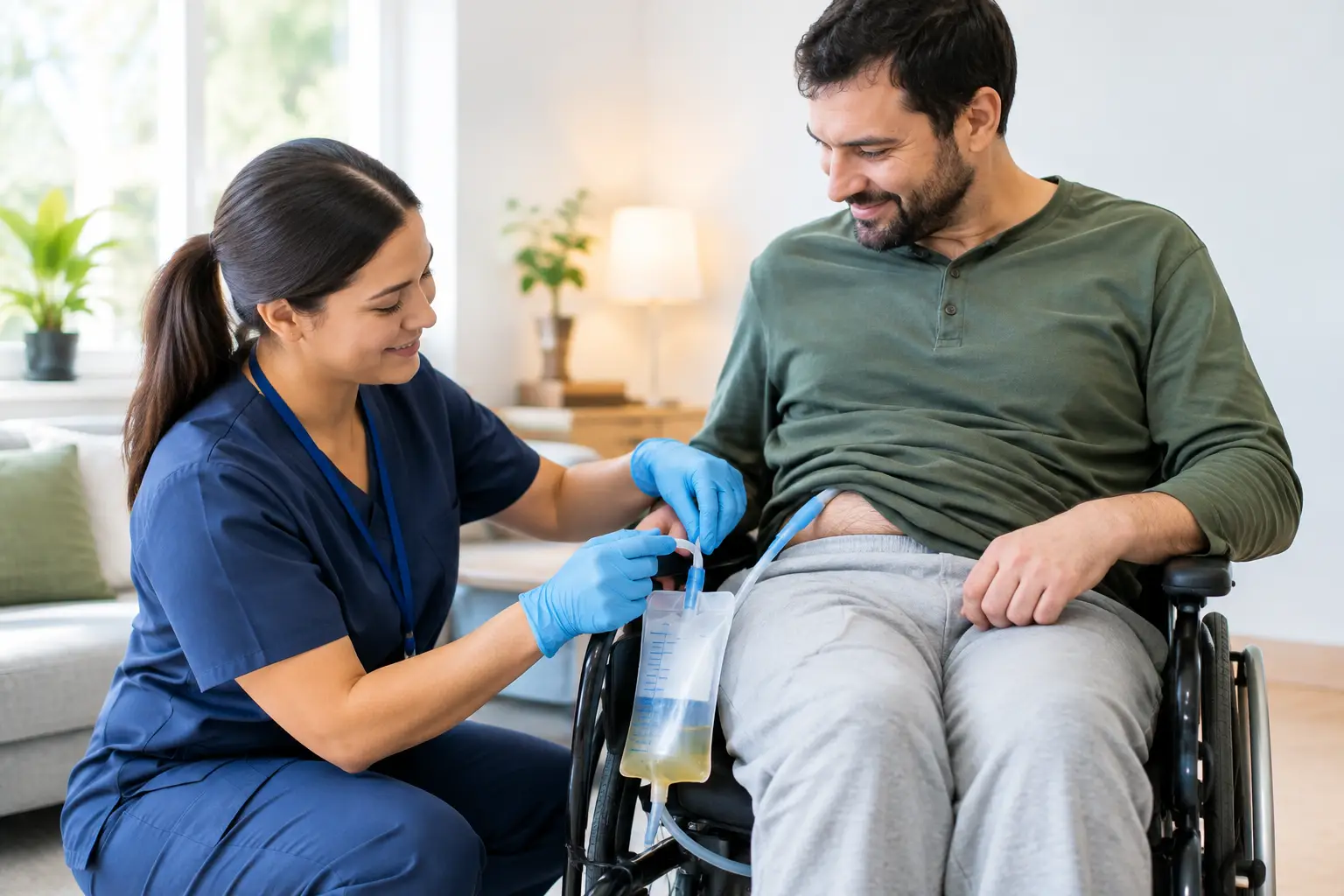
Catheter-related infection risk monitoring needs careful observation because urine can change for reasons other than infection. Hydration, medications, diet and time in the drainage bag can affect colour and smell. Support workers should avoid making assumptions from one sign alone.
More useful information includes the participant’s usual urinary pattern, fluid intake where relevant, discomfort, lower abdominal pain, leakage around the catheter, reduced output, visible blood, blockages, fever or an unexplained change in wellbeing. For people using intermittent catheterisation or managing continence supports, safe hand hygiene, correct technique and clean storage of supplies are central to reducing risk.
A nurse-led continence assessment can identify recurring concerns, clarify routines and provide clear instructions for support worker training and clinical oversight. This is often more effective than repeatedly responding to isolated incidents without reviewing the underlying plan.
Stomas and bowel routines
The peristomal skin should be monitored for irritation, broken areas, swelling, heat, leakage and unusual discharge. Appliance fit matters: ongoing leakage can damage skin and increase infection risk, while frequent changes can also irritate fragile skin. A sudden change in stoma appearance, output, pain or the participant’s general condition should not be managed by trial and error.
Bowel routines require the same attention to patterns. Constipation, diarrhoea, changes in abdominal discomfort and reduced food or fluid intake can affect skin health, continence and overall wellbeing. The care plan should set out the participant’s usual bowel pattern, approved interventions and the circumstances requiring nursing or medical escalation.
General changes in health and behaviour
Infection can present differently across participants. Some may develop fever or chills, while others show reduced participation in their usual routine, increased sleepiness, agitation, confusion or a noticeable decline in appetite. For a participant with communication difficulties, these changes may be the clearest early warning signs.
Support teams should document observable facts rather than broad statements such as “seems unwell”. For example, record that the participant declined breakfast, slept for three hours outside their usual routine, reported pain rated 7 out of 10, or required more prompting than normal. Specific notes help the nurse or GP assess the situation quickly.
Make documentation useful, not burdensome
Good documentation is a clinical safety tool. It creates a timeline, supports handover between staff and provides evidence for nursing review. It also gives Support Coordinators greater confidence that complex health support is being managed with clear accountability.
A daily note does not need to be lengthy, but it should capture the relevant change, when it was observed, any action taken and who was notified. Photos may be useful for wound monitoring where consent, privacy procedures and the clinical plan allow them. Images should never replace a written description or a clinical assessment.
Avoid vague labels such as “infection suspected” unless this has been assessed by an appropriate clinician. Record what was seen or reported instead. For example: “New yellow drainage noted on outer dressing at 9.00 am, approximately 2 cm area, participant reported increased pain during dressing change. Nurse contacted at 9.20 am.” This is clear, factual and audit-ready.
Know when to escalate
A monitoring plan is only effective when escalation pathways are understood by everyone involved. The appropriate response depends on the severity of symptoms, the participant’s known health risks and the clinical advice already in place.
Urgent medical assessment may be required where there is severe pain, rapidly spreading redness or swelling, significant bleeding, shortness of breath, chest pain, reduced consciousness, seizure activity, signs of severe allergic reaction, or a person appears seriously unwell. In an emergency, call 000.
For non-emergency but concerning changes, the support worker or family member should follow the participant’s care plan and contact the nominated nurse, GP or relevant treating team. Escalation should not wait until the next rostered shift simply because the issue has already been written in progress notes. Verbal handover and documented notification are both needed.
It is also sensible to review repeated lower-level concerns. Three episodes of skin irritation, recurrent catheter blockage or ongoing wound odour may not be an emergency, but they indicate that the current plan, supplies, technique or level of clinical oversight needs reassessment.
The value of nurse-led clinical oversight
Complex health support works best when the person providing day-to-day assistance is backed by a current clinical plan and direct nursing guidance. A registered nurse can assess infection risk in the context of the participant’s diagnoses, medications, equipment, skin condition and usual presentation. They can also identify when an issue needs GP review, wound specialist input or urgent care.
This is particularly valuable for Support Coordinators managing competing reports from family, providers and allied health teams. Clear reports for Support Coordinators can set out the clinical concern, assessment findings, risks, recommended supports, training needs and evidence required for a plan review or change of circumstances. The purpose is not to create paperwork for its own sake. It is to make funding and care decisions safer and easier to justify.
At Compassion Wings, nurse-led NDIS care can include wound and skin assessments, continence and catheter support, stoma care, diabetes support, clinical care plans and targeted support worker training. For participants across Adelaide with higher clinical needs, this creates a consistent approach to monitoring, escalation and practical care in the home.
Start with a plan that people can actually follow
The strongest infection risk plan is practical enough for a family member to understand at 7.00 am and clear enough for a new support worker to follow on an afternoon shift. It identifies the participant’s baseline, the specific changes that matter, the required hygiene and care steps, documentation expectations and contact pathway.
If a participant has recurring wound issues, catheter concerns, fragile skin, a stoma or unexplained changes in wellbeing, a nursing assessment can turn uncertainty into a clear plan. Early observation and timely escalation will not prevent every infection, but they give participants, families and support teams the best chance to act before a small change becomes a major disruption.