
Improving Wound Healing Outcomes at Home
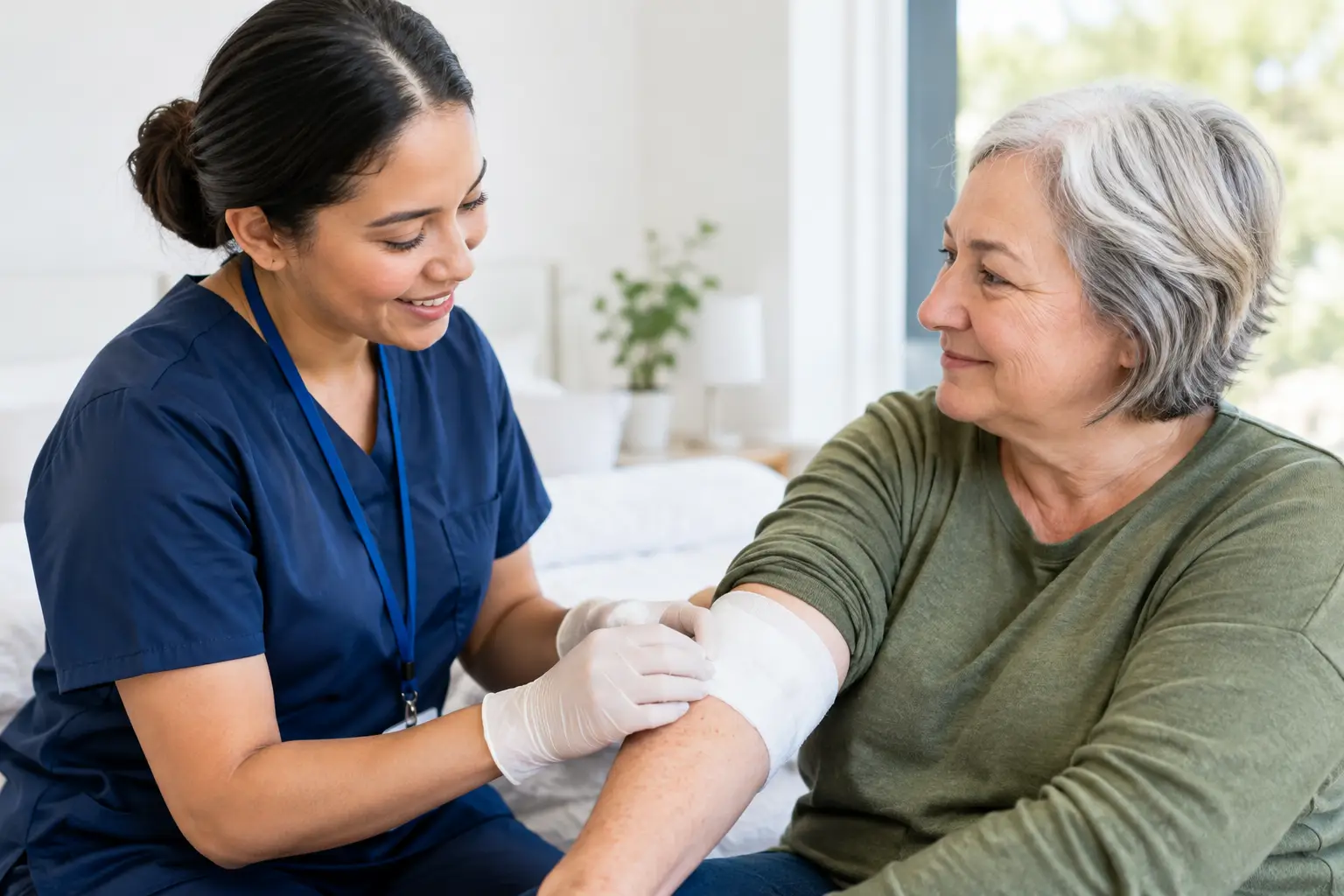
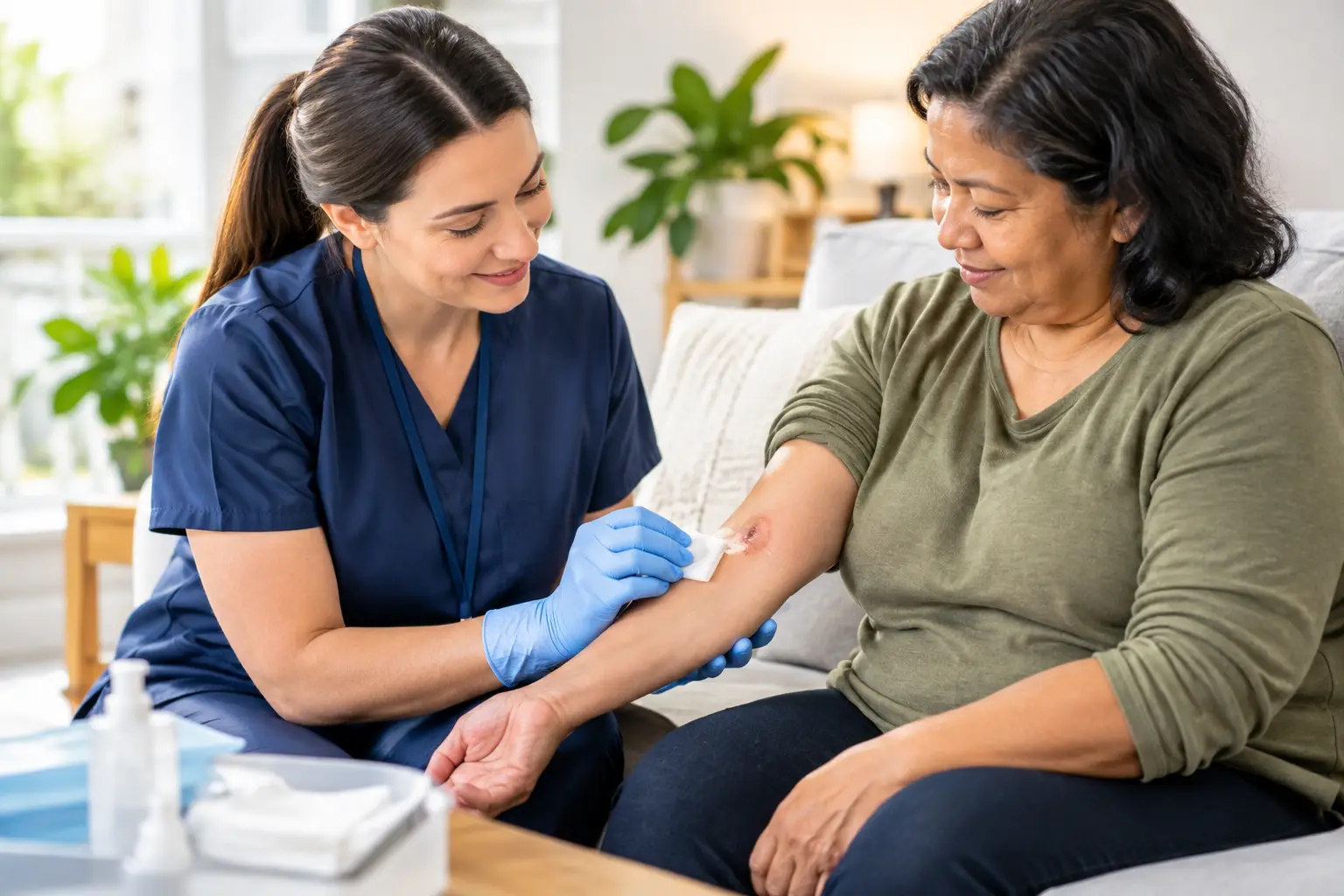
A wound dressing can look clean at a morning visit and still be heading in the wrong direction. Increasing pain, new odour, spreading redness, excess moisture or a wound that has stopped reducing in size can signal a clinical issue before it becomes an avoidable hospital presentation. Good wound healing outcomes depend on more than changing a dressing on schedule. They rely on skilled assessment, a practical plan, reliable daily care and early escalation when the wound changes.
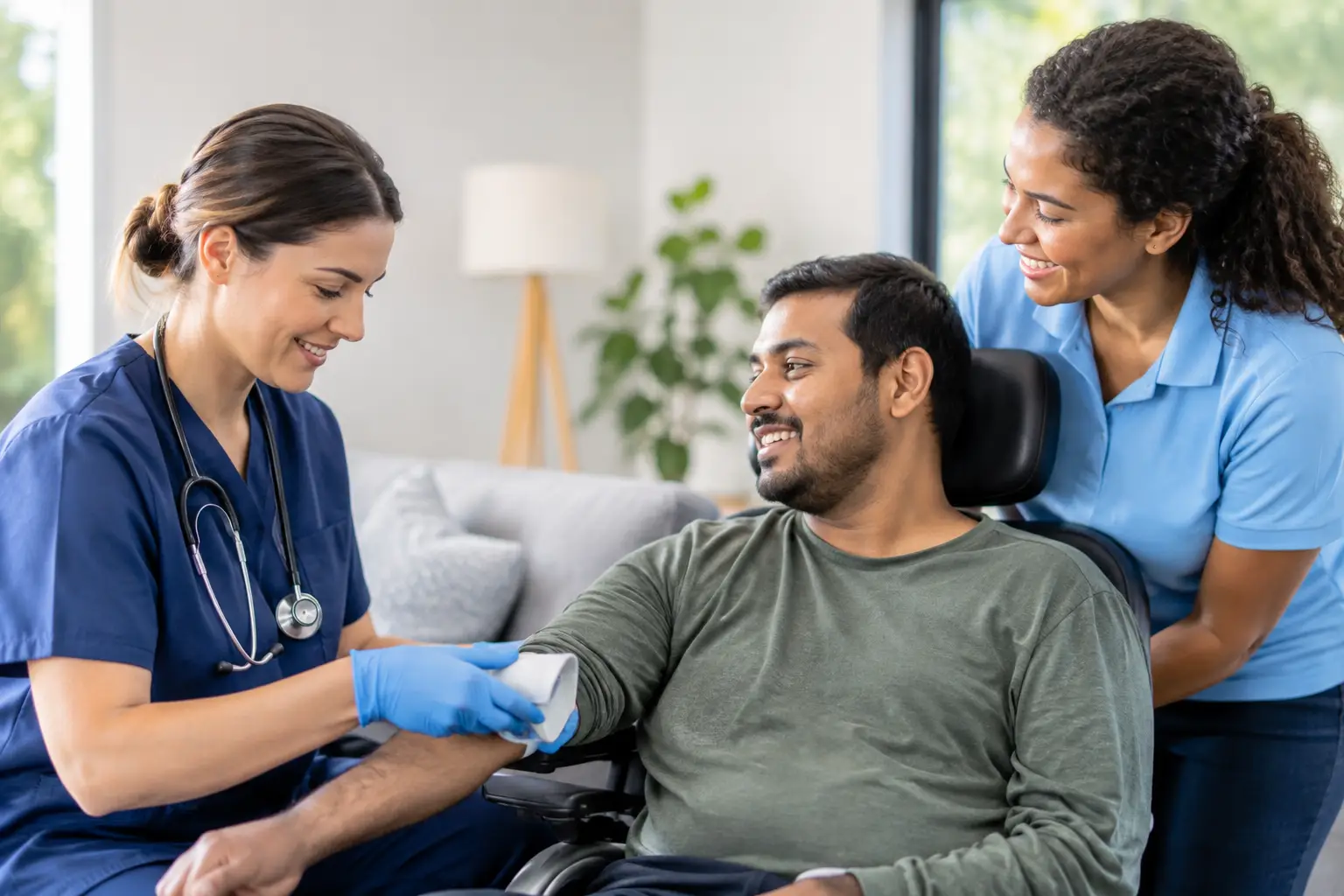
For NDIS participants with complex health needs, wounds are rarely an isolated problem. Reduced mobility, continence concerns, diabetes, poor nutrition, vascular disease, medication effects, pressure, friction and limited ability to report symptoms can all affect healing. Nurse-led NDIS care brings these factors together so wound management is safe, dignity-focused and realistic in the home.
What wound healing outcomes should measure
A healed wound is often the desired outcome, but it is not the only meaningful measure of progress. For some participants, particularly those with chronic illness or circulation concerns, the immediate priority may be preventing deterioration, controlling pain and exudate, protecting surrounding skin and avoiding infection.
A practical nursing assessment looks at whether the wound is reducing in length, width and depth; the condition of the wound bed and edges; the amount and type of drainage; odour; pain; and the health of the skin around it. It also considers what is happening between visits. Is the dressing staying in place? Is moisture from continence care affecting the area? Is the participant spending long periods in one position? Are support workers clear about what to observe and when to report a concern?
This wider picture matters because a dressing product alone does not heal a wound. A wound on a heel, for example, may not progress if pressure continues overnight. A wound in a skin fold may deteriorate if moisture management is inconsistent. A leg wound may need medical review when circulation concerns are suspected. The right plan depends on the cause, location, presentation and the person’s overall health.
Why wounds can stall at home
Delayed healing is not always a sign that somebody has done something wrong. It can mean the original plan needs review. Wounds can stall when pressure, shear or friction continues; when the skin is exposed to moisture; when dressings are not suited to the level of exudate; or when a participant’s health condition has changed.
Diabetes can reduce sensation and affect circulation, meaning a participant may not notice a developing injury until it is more advanced. Continence-associated dermatitis can be mistaken for pressure damage, while pressure injuries may worsen quickly when repositioning plans are unclear or difficult to follow. Catheter tubing, stoma appliances and medical devices can also create pressure or skin trauma if fit and placement are not reviewed.
Nutrition, hydration and medication can influence healing as well. A nurse does not replace the participant’s GP, specialist or dietitian, but nursing observations can identify when further medical or allied health input is needed. Clear communication prevents a wound plan from becoming a set of instructions that no longer matches the participant’s needs.
Start with a thorough nursing assessment
Effective clinical support in the home starts with understanding the wound and the routine around it. This includes the wound history, current treatment orders, relevant diagnoses, allergies, pain, mobility, continence, diabetes management, recent hospital care and who is providing day-to-day support.
A practical nursing assessment should establish a clear baseline. Wound measurements, photographs where consent and clinical policy allow, skin observations and a record of symptoms give the care team a way to judge whether the plan is working. Without this baseline, it is easy for gradual deterioration to be missed.
The assessment should also identify risk beyond the wound itself. A participant with a pressure injury may need a clear repositioning schedule, skin checks and support worker guidance. Someone with a lower-leg wound may need prompt medical review if there are signs of impaired circulation. A participant living with incontinence may need wound protection integrated with a bowel and bladder routine, rather than treated as two separate issues.
Turn the plan into care people can follow
The best clinical care plan is specific enough to guide safe action and practical enough to be used consistently. It should state what dressing or skin care is required under the treating clinician’s direction, how often care is needed, what observations to record, infection-control expectations, pain considerations and the escalation pathway.
It should also make clear what support workers can do within their role and training. High-intensity or complex wound-related tasks may require support worker training and clinical oversight. A vague instruction such as “monitor wound” does not give a team enough direction. Staff need to know what changes are significant, who to contact, and what information to report.
For example, reporting “the wound looks worse” is less useful than documenting increased redness around the wound, a change from light to heavy drainage, new odour, pain during dressing care or a dressing that repeatedly becomes wet or displaced. This level of information helps nurses and treating clinicians make safer decisions quickly.
Pressure care is part of wound care
Pressure injuries need more than dressings. If pressure remains on the affected area, healing is likely to be slow and recurrence is more likely. Prevention and treatment plans should consider bed positioning, chair time, transfers, footwear, device-related pressure and how independently the participant can change position.
There is no single repositioning schedule that suits every person. It depends on skin tolerance, mobility, equipment, comfort, clinical advice and the person’s routine. What matters is that the approach is assessed, documented and reviewed when circumstances change.
Support worker training and clinical oversight can be particularly valuable where multiple workers provide care. A consistent approach to repositioning, skin inspection, continence care and reporting helps reduce gaps between shifts. It also protects participant dignity by ensuring personal care routines are thoughtful, respectful and clinically informed.
Know when escalation cannot wait
Early escalation can protect both health and healing. A nurse should be contacted promptly when there is increased pain, new or spreading redness, warmth, swelling, purulent drainage, odour, fever, a sudden increase in wound size, darkening tissue, uncontrolled bleeding or repeated dressing failure.
Some symptoms require urgent medical assessment rather than waiting for the next scheduled nursing visit. A participant who is acutely unwell, confused, short of breath, experiencing severe pain or showing signs of rapidly spreading infection needs immediate medical attention. Where there is a medical emergency, call 000.
For Support Coordinators and families, the key is not to wait until a wound becomes visibly severe. A timely nursing review can clarify whether the issue is a dressing problem, pressure concern, moisture damage, infection risk or a change requiring GP, hospital or specialist input.
Documentation supports safer decisions
Clear documentation is not paperwork for its own sake. It provides evidence of the wound’s progression, the supports needed to manage it safely and the clinical risks if care is delayed or inconsistent. This is particularly useful when a participant’s needs have changed after discharge from hospital, an infection, reduced mobility or a decline in skin integrity.
Clear reports for Support Coordinators can describe the assessment findings, current risks, recommended nursing input, support worker training needs, care plan requirements and review timeframes. This gives the broader team a reliable clinical basis for coordinating supports and responding to changing needs.
At Compassion Wings, nurse-led NDIS care is designed around practical assessments, clear documentation and care routines that can work in real homes. For participants across Adelaide with complex health support needs, that can mean wound care is coordinated with pressure care, continence management, diabetes support or medication oversight rather than managed in isolation.
A wound does not need to look dramatic before it deserves clinical attention. When healing slows, pain changes or daily care becomes difficult to manage, a timely nursing assessment can give families and Support Coordinators a clearer, safer next step while helping participants stay safe at home.