


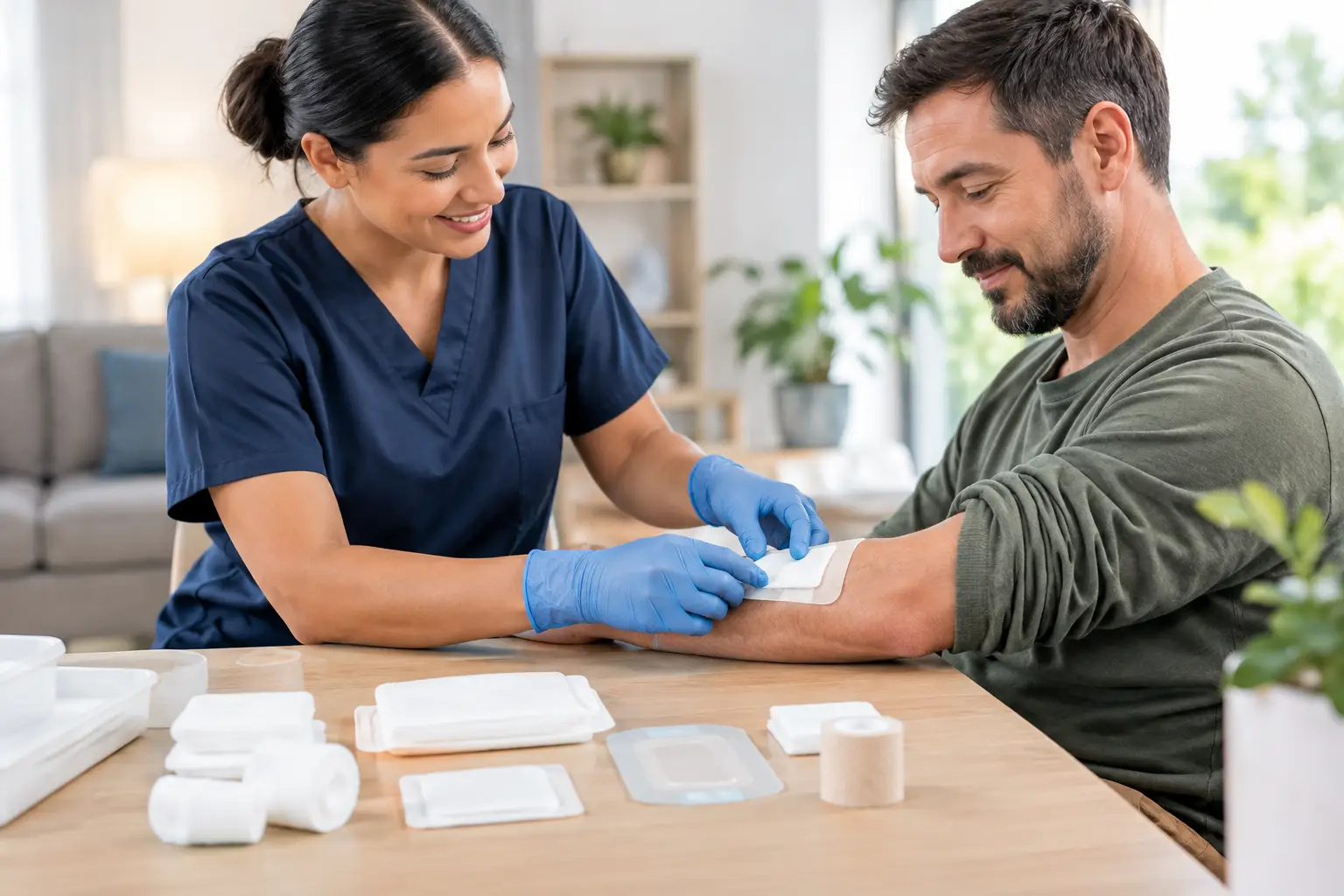
Wound Dressing Comparison for Safer Care
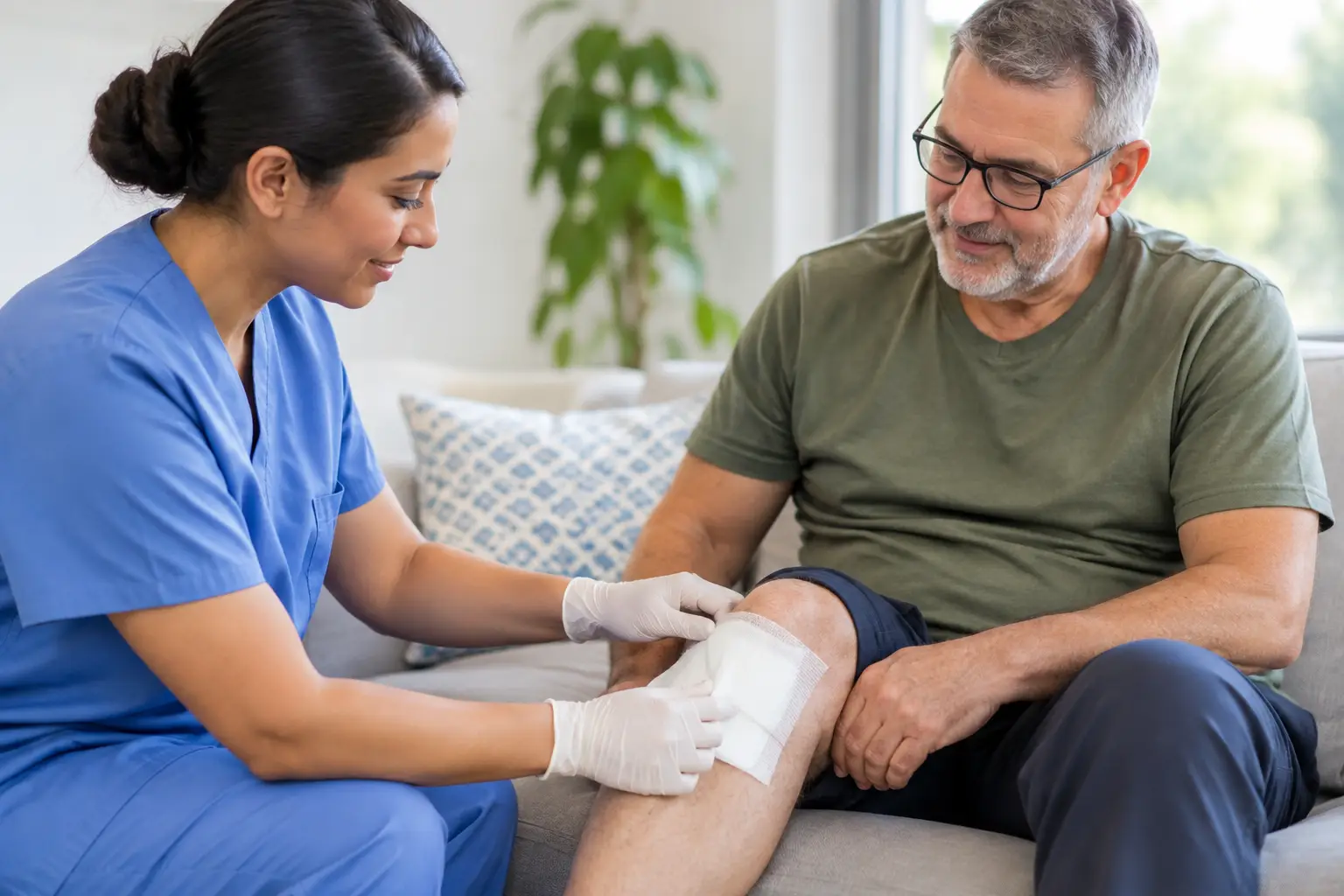
A wound dressing comparison is not about finding the ‘best’ product on the shelf. It is about matching the dressing to the wound’s cause, depth, moisture level, location, infection risk and the person’s daily care routine. For NDIS participants with complex health needs, the wrong dressing can mean leakage, pain, skin damage, delayed healing or an avoidable hospital presentation.
A dressing that worked well last month may not be suitable today. Wounds change, and so do the clinical risks around them. Nurse-led NDIS care brings the assessment, monitoring and practical training needed to make dressing choices safely, particularly where support workers or family members are completing regular wound care in the home.
Why a wound dressing comparison needs clinical context
Dressings do more than cover a wound. They can manage fluid, protect fragile surrounding skin, reduce friction, support an appropriate healing environment and help keep a wound clean between changes. However, a dressing cannot correct an untreated infection, relieve ongoing pressure, improve poor circulation or address diabetes-related risk on its own.
Before comparing dressing types, a nurse needs to understand what has caused the wound. A pressure injury on a heel requires a different approach from a skin tear on an arm, a venous leg ulcer, a surgical wound or a wound affected by moisture and incontinence. The treatment plan may also need to address pressure redistribution, continence routines, nutrition, mobility, footwear, diabetes management or referral back to a GP, wound clinic or hospital team.
This is why a product-only approach can create problems. A highly absorbent dressing may be useful for a heavily exuding wound, but it may dry out a wound with little fluid. An adhesive border may offer security, yet cause skin stripping for someone with fragile skin. Clinical judgement matters as much as the dressing itself.
Wound dressing comparison: common options and trade-offs
Simple non-adherent dressings
Non-adherent contact dressings are designed to sit gently against the wound and reduce trauma when removed. They are often considered where skin is fragile, painful or prone to tearing. Many need a secondary absorbent dressing or bandage to hold them in place and manage fluid.
Their main benefit is comfort during dressing changes. Their limitation is that they may not manage moderate or heavy exudate without an additional layer. If the secondary dressing becomes saturated, moisture can spread onto surrounding skin and increase maceration risk.
Foam dressings
Foam dressings are commonly used for wounds producing low to moderate amounts of exudate, and some are suitable for higher levels depending on the product. They cushion the wound area and can be helpful where protection from minor friction is needed. Border versions may be convenient for areas such as the sacrum, heel or limb, provided the skin tolerates the adhesive.
Foam is not automatically the right answer for every pressure area. A foam dressing does not replace repositioning, pressure care equipment or regular skin checks. When a dressing is repeatedly soaking through or lifting at the edges, the wound and care plan need review rather than simply adding more layers.
Hydrofibre and alginate dressings
Hydrofibre and alginate dressings are generally used to manage wounds with moderate to heavy exudate. They absorb fluid and can conform to irregular wound beds, including some cavity wounds when clinically appropriate. They usually require a secondary cover dressing.
These products can be very useful where fluid management is the priority, but they are not suitable for every dry or lightly exuding wound. Packing a cavity too tightly can create pain and interfere with healing. Any wound with depth, undermining, tunnelling or a change in drainage should be assessed by a nurse rather than managed from a standard dressing routine.
Hydrocolloid dressings
Hydrocolloids form a moist, protective environment and may be used for selected shallow wounds with low to moderate exudate. They can remain in place for several days where clinically indicated, reducing dressing-change frequency and disturbance to the wound.
The trade-off is that hydrocolloids can produce an odour or gel-like residue as they interact with wound fluid, which can be mistaken for infection. They may also be inappropriate where there is significant exudate, fragile periwound skin or clinical concern about infection. The wound should be reviewed according to the care plan, not left unchanged simply because the dressing still appears attached.
Film dressings
Transparent film dressings provide a barrier against external contamination while allowing the wound or skin beneath to be viewed. They are often used for superficial wounds, protection of vulnerable skin or to secure another dressing. Their low profile can be useful in areas where bulk is uncomfortable.
Film dressings have limited absorbency. If they are used over a wet wound, fluid may pool and damage the skin around it. They can also be difficult to remove from fragile skin unless the removal technique is gentle and appropriate.
Antimicrobial dressings
Dressings containing agents such as silver, iodine or medical-grade honey may be considered when there is a specific clinical reason, including local wound infection risk or a wound that is not progressing as expected. They should be used as part of a broader plan, with clear review dates and documentation of the clinical rationale.
An antimicrobial dressing is not a substitute for medical assessment when infection is suspected. Increasing redness, warmth, swelling, pain, malodour, pus-like drainage, fever, confusion or a sudden deterioration requires timely clinical escalation. In some cases, urgent medical review is needed.
Gauze and absorbent pads
Gauze and basic absorbent pads still have a role in some wound care plans, particularly as secondary layers or for short-term management directed by a clinician. They are accessible and versatile, but can adhere to drying wounds, shed fibres or require frequent changes if exudate is high.
For participants with complex wounds, relying on gauze alone without a documented assessment can lead to inconsistent care. The key question is not whether gauze is inexpensive or familiar, but whether it supports the wound’s current needs safely.
The details that change dressing choice
A safe dressing decision considers more than the visible wound. The nurse will assess wound size, tissue type, depth, drainage, odour, pain, wound edges and the condition of surrounding skin. They will also consider circulation, sensation, diabetes, nutrition, medications, continence, mobility and the participant’s ability to report discomfort.
Location matters. A dressing on a lower leg may need a different securing method from one near a stoma, under a skin fold or on the sacrum. If the person experiences incontinence, sweating or frequent transfers, adhesion and moisture management become particularly important. A dressing that is clinically ideal but repeatedly falls off during daily routines is not a practical plan.
Comfort and dignity matter too. Dressing changes can be distressing, especially for participants with pain, altered sensation, trauma history or communication differences. Clear explanations, gentle technique, appropriate analgesia planning and familiar routines can make care safer and more tolerable.
When Support Coordinators and families should request nursing input
Nursing assessment is appropriate when a wound is new, worsening, recurring or not healing as expected. It is also valuable where there is uncertainty about the dressing regime, frequent leakage, pain during changes, fragile skin, pressure injury risk, diabetes, reduced circulation or a need for support workers to complete wound care safely.
For participants receiving complex health support at home, practical nursing assessments can establish a clear baseline and reduce uncertainty across the care team. A clinical care plan should identify the wound, dressing sequence, change frequency, infection and escalation signs, pain considerations, skin protection steps, documentation requirements and who to contact when something changes.
Support worker training and clinical oversight are particularly important when multiple workers provide care. Training should not be a quick product demonstration. Staff need to understand hand hygiene, clean technique, safe removal, how to protect surrounding skin, what must be documented and which changes require escalation rather than a routine dressing change.
Documentation that supports safer home care
A useful wound record shows the wound’s progress over time. It should include consistent measurements where appropriate, drainage level and appearance, pain, surrounding skin condition, dressing used, response to care and any escalation. Photographs may form part of clinical documentation where consent, privacy and organisational procedures allow.
Clear reports for Support Coordinators can also explain the participant’s clinical needs, current risks, required nursing input and the training or oversight needed for safe implementation. This is particularly helpful when a participant’s needs have changed and the wider team requires evidence of why care arrangements must be reviewed.
Compassion Wings provides nurse-led NDIS care across Adelaide for participants who need wound monitoring, pressure care planning, clinical care plans and practical support worker education. The focus is safe, dignity-focused care that helps participants stay safe at home while ensuring concerns are recognised and escalated appropriately.
The right dressing is the one that fits the wound, the person and the care environment at that point in time. When the wound changes, the dressing plan should change with it – guided by sound clinical assessment rather than guesswork.