


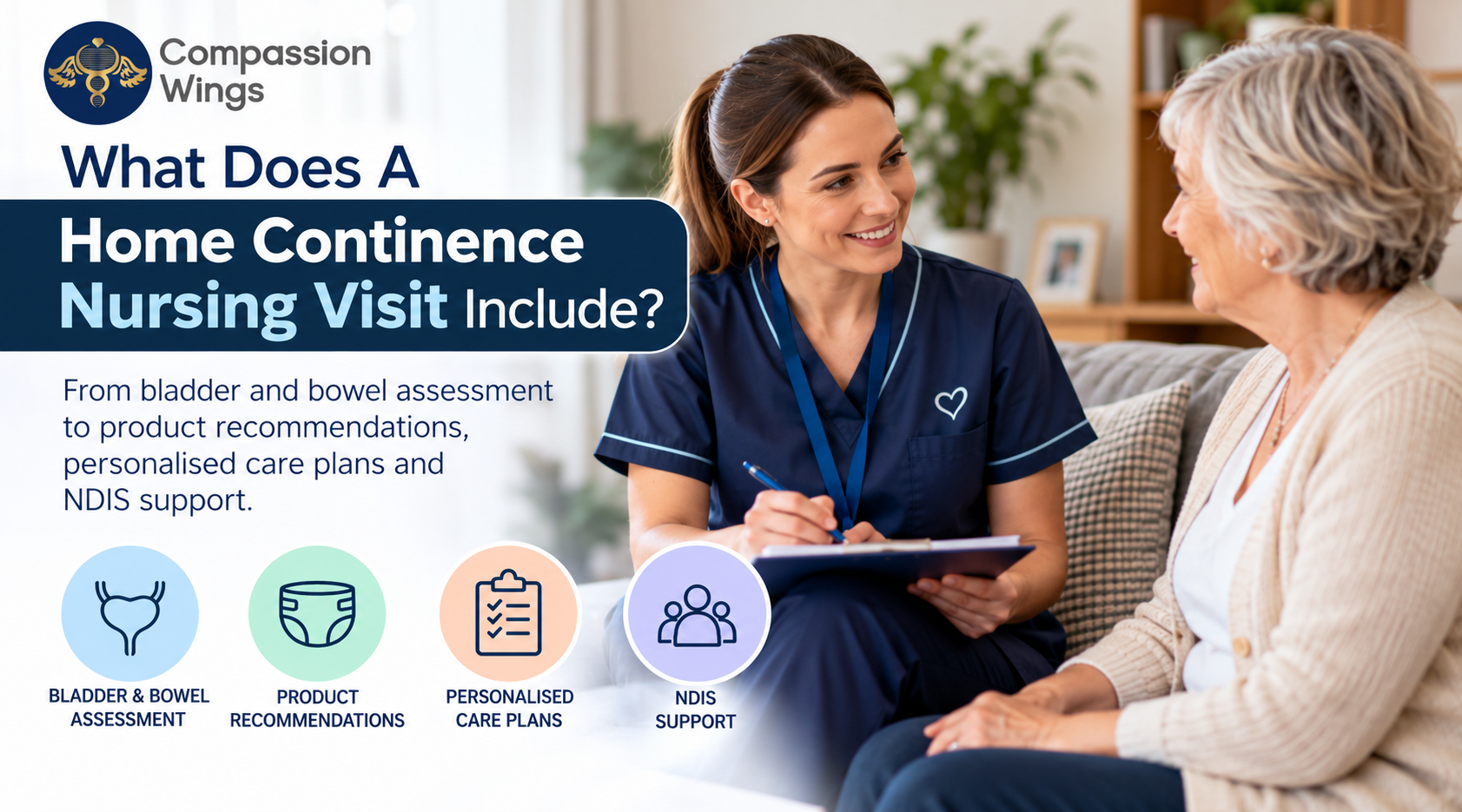
What Does A Home Continence Nursing Visit Include?
Managing bladder or bowel concerns can affect comfort, confidence and everyday independence. A home continence nursing visit provides personalised support in a familiar environment, helping individuals understand their needs and explore practical solutions. At Compassion Wings, a professional continence assessment can help identify suitable management strategies, appropriate continence products and support options tailored to individual circumstances.
What Is A Home Continence Nursing Visit?
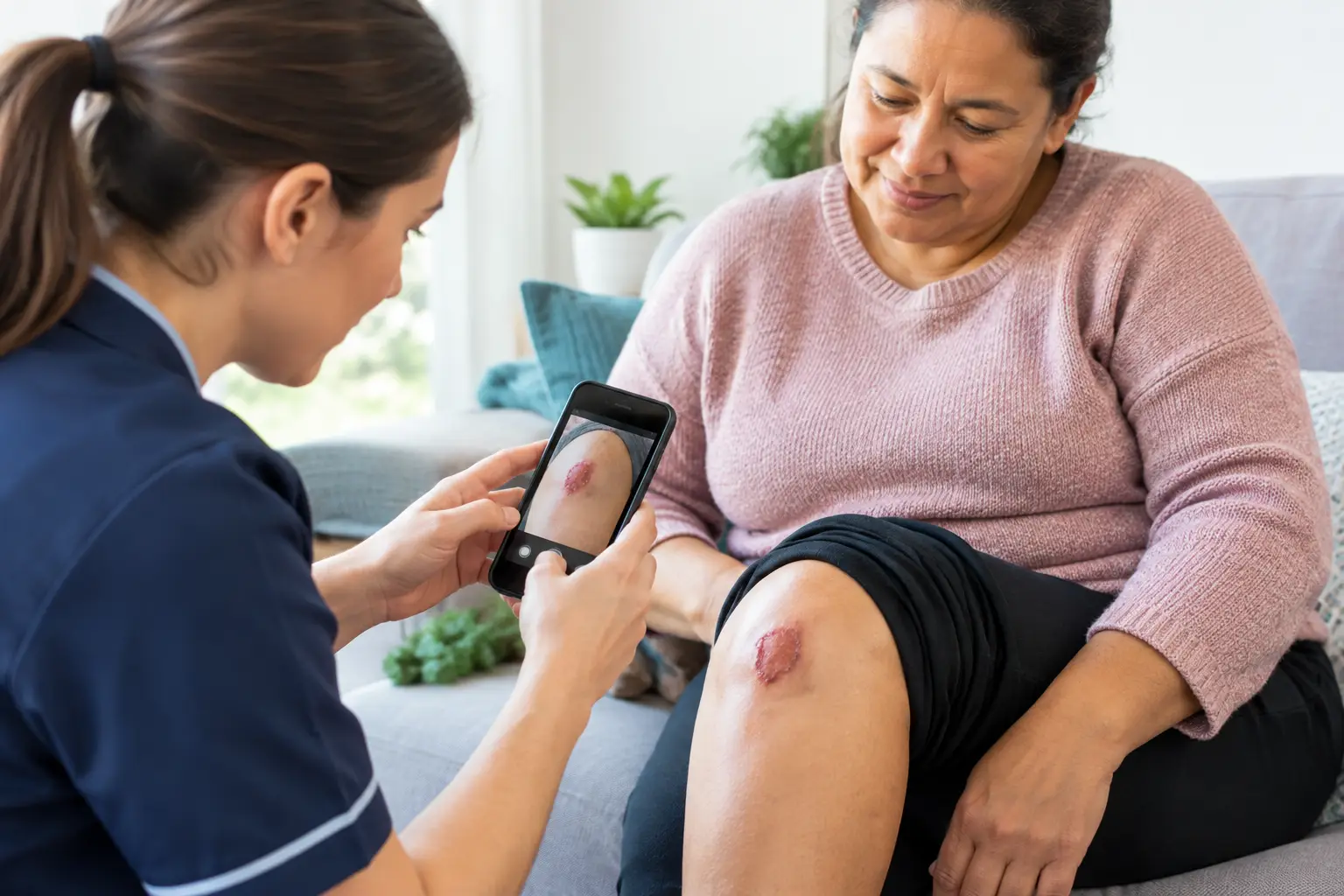
A home continence nursing visit involves a qualified nurse reviewing bladder and bowel health, daily routines and continence-related challenges. NDIS continence assessment Salisbury considers medical history, mobility, toileting access, existing products and the impact of symptoms on everyday activities.
Unlike a clinic appointment, a home visit allows the nurse to consider the person’s living environment and recommend strategies that suit their lifestyle, preferences and level of independence.
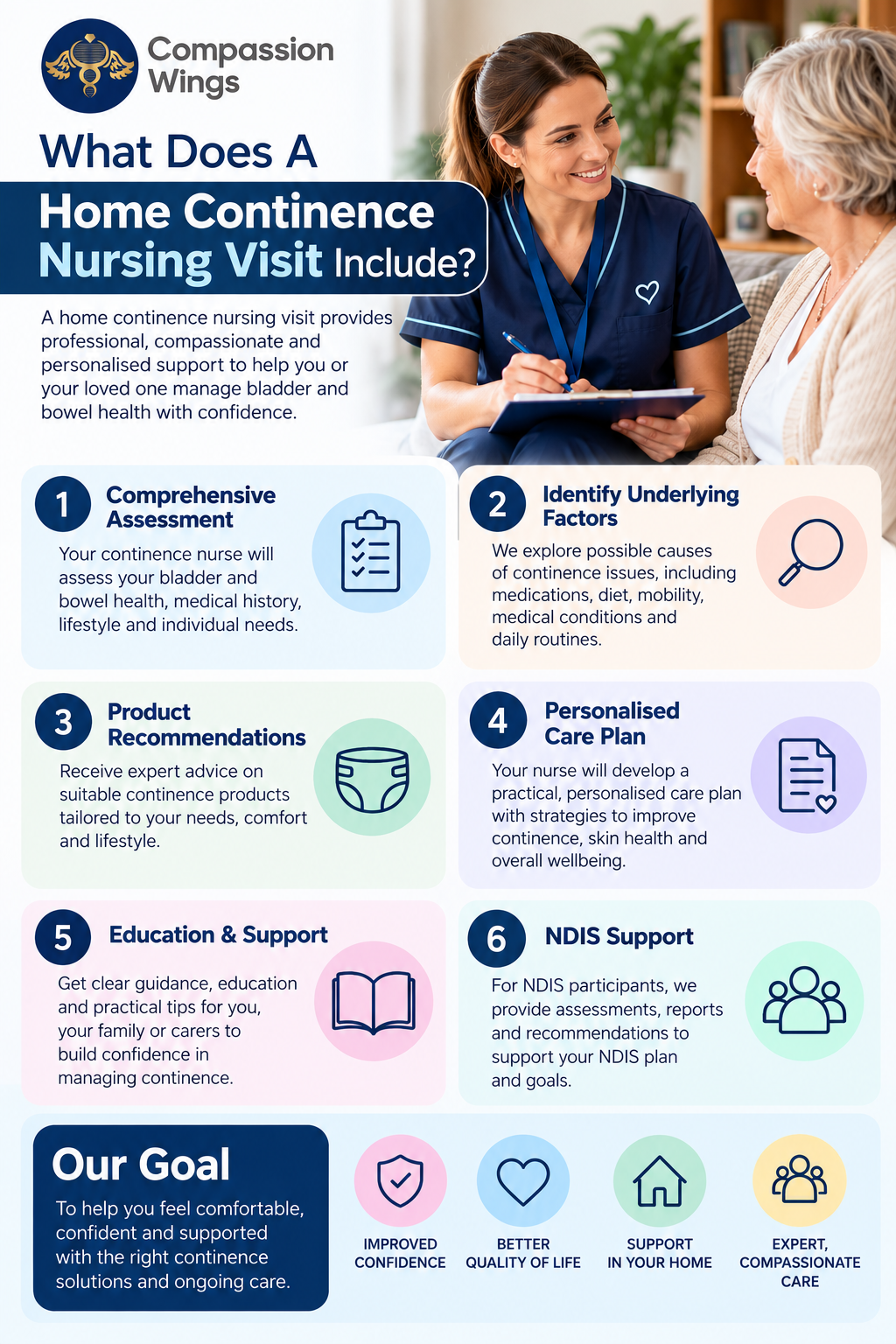
What Happens During A Home Continence Assessment?
Every assessment is personalised, but a typical visit may include several important steps.
1. Medical History And Symptom Review
The nurse discusses existing health conditions, medications, previous treatments and current concerns. Questions may cover urinary leakage, sudden urges to urinate, nighttime toileting, constipation and bowel accidents.
This information helps identify possible contributing factors and determine whether further medical assessment or referral is appropriate.
2. Bladder And Bowel Function Assessment
The nurse reviews bladder and bowel patterns, toileting habits, fluid intake and relevant lifestyle factors. A bladder or bowel diary may be recommended to track symptoms and identify patterns.
Where clinically appropriate, the assessment may also consider mobility, pelvic floor concerns and functional difficulties affecting safe, independent toileting.
3. Continence Product Recommendations
A continence nurse may recommend suitable products based on leakage levels, absorbency requirements, skin sensitivity, comfort and daily activities. Options can include absorbent pads, pull-up underwear and other appropriate continence aids.
Personalised recommendations help individuals manage leakage more comfortably while avoiding unsuitable products and unnecessary changes.
4. Hygiene And Skin Protection Guidance
Continence difficulties can contribute to moisture-related skin irritation and discomfort. Nurses may explain appropriate cleansing routines, skin protection and product use to help maintain personal hygiene and skin integrity.
They can also recommend practical adjustments to daily routines that support dignity, comfort and safer toileting.
5. Personalised Care Plan And Follow-Up
After reviewing the findings, the nurse may develop an individualised management plan. Recommendations can include toileting routines, bladder and bowel management strategies, relevant referrals and ongoing monitoring.
Follow-up may be advised to review progress or adjust recommendations when the person’s needs change.
What Is An NDIS Continence Assessment?
An NDIS continence assessment documents how disability-related bladder or bowel difficulties affect daily functioning and identifies potentially appropriate supports.
An NDIS continence nurse or another suitably qualified health professional can provide evidence about the person’s functional limitations, existing continence products, usage requirements and recommended supports.
The assessment report can help inform NDIS funding decisions and plan reviews. However, completing an assessment does not guarantee funding. Supports must meet the applicable NDIS criteria, including requirements relating to disability and the purpose of the requested support.
Who Can Benefit From A Home Continence Assessment?
A home assessment may help people experiencing:
- Urinary incontinence, leakage or frequent urgency.
- Bowel incontinence or ongoing constipation.
- Mobility difficulties affecting independent toileting.
- Continence challenges associated with disability or other health conditions.
- Skin irritation related to moisture or leakage.
For participants seeking a continence assessment Adelaide, professional guidance can help identify suitable management options, recommend appropriate continence products and develop personalised strategies to support comfort, dignity and independence.
Why Choose A Qualified Continence Nurse?
A qualified continence nurse brings clinical knowledge to assessment, education and care planning. An NDIS registered continence nurse with relevant qualifications and experience may also prepare supporting documentation for NDIS-related requests.
Before booking, confirm the nurse’s credentials, report requirements, service availability and fees. It is also important to clarify whether the assessment addresses your specific clinical needs and intended funding purpose.
Closing Thoughts
A home nursing visit provides an opportunity to understand continence concerns and explore practical, individualised solutions. A comprehensive continence assessment can support informed care decisions, improve daily comfort and encourage independence. Compassion Wings helps participants and families explore suitable continence support options based on their circumstances and care requirements.
Get Expert Continence Care Support
Need assistance with continence care or an NDIS continence assessment? Contact Compassion Wings to discuss your needs, enquire about available services and understand the next steps. Call (08) 7134 2987 / 0423667551 or email haki@compassionwings.com.au or contact@compassionwings.com.au to make an enquiry.
Frequently Asked Questions
How Long Does A Home Continence Nursing Visit Usually Take?
The duration depends on the person’s health history, symptoms and assessment requirements. A comprehensive visit may take 45–90 minutes, although timings vary between providers.
Do I Need To Keep A Bladder Or Bowel Diary Before The Assessment?
A diary can help the nurse understand toileting patterns, fluid intake and leakage episodes. Your nurse may recommend keeping one before the appointment, but it is not always essential.
Can A Continence Nurse Recommend Products For Nighttime Leakage?
Yes. A continence nurse can recommend suitable absorbency products and practical strategies based on nighttime leakage, comfort, skin health and individual needs.
Will A Home Continence Assessment Involve A Physical Examination?
Not always. The assessment may primarily involve discussing symptoms and daily routines. Any physical examination depends on clinical needs, consent and the nurse’s scope of practice.
Can Medications Cause Bladder Or Bowel Incontinence?
Yes. Certain medications can contribute to urinary symptoms, constipation or diarrhoea. A continence nurse may review your medication history and recommend discussing potential side effects with your doctor.
Can An NDIS Continence Assessment Help Justify Continence Product Funding?
Yes. An assessment report may provide evidence of disability-related needs, recommended products and usage requirements. However, NDIS funding depends on the applicable eligibility and funding criteria.
When Should I Seek A Continence Assessment Instead Of Managing Symptoms At Home?
Consider an assessment if leakage persists, symptoms affect daily activities, or existing products and strategies are not working. Sudden changes, blood in urine or stool, or difficulty passing urine require prompt medical advice.