
Pressure Relief Strategies for Safer Skin Care
A red mark on a heel, tailbone or hip can seem minor at the morning handover. If it does not fade after pressure is removed, or if it worsens over the next day, it may be an early sign of skin damage that needs prompt clinical attention. For people who spend long periods in bed, in a chair or with limited ability to reposition independently, pressure relief strategies are a core part of safe daily care, not an occasional task.
Pressure injuries can develop quickly and may lead to pain, infection, hospital presentation and a major disruption to everyday routines. The good news is that many risks can be reduced when nursing assessment, consistent support worker practice and clear escalation processes work together.
Why pressure relief needs a clinical plan
Pressure injury is damage to the skin and underlying tissue caused by sustained pressure, often combined with friction, shear, moisture or poor circulation. Bony areas are particularly vulnerable, including the sacrum, buttocks, hips, heels, ankles, elbows and shoulder blades.
Risk is not determined by mobility alone. A participant may be at higher risk when they have reduced sensation, diabetes, weight loss, oedema, continence concerns, dehydration, a history of wounds, fragile skin, or a condition that affects circulation. Acute illness and changes in usual function can also alter risk quickly.
This is why generic reminders to “move regularly” are rarely enough. A safe plan considers the person’s health conditions, usual positioning, comfort, skin history, transfer method, continence routine, equipment already in use and who provides support across the week. It also records what to look for, what actions are expected and when staff must escalate concerns.
For Support Coordinators and families, practical nursing assessments provide a clearer picture of clinical risk. They can identify whether current routines are appropriate, where support worker training is needed and what evidence may be required for a plan review or change of circumstances.
Pressure relief strategies that work in daily care
The right approach depends on the participant. A person who can independently shift their weight may need reminders, habit-building and a way to recognise early discomfort. Someone with high physical support needs may require a documented repositioning routine, trained staff and clinical oversight. The goal is not to impose a rigid timetable that disrupts sleep or causes distress. It is to reduce prolonged loading of vulnerable areas while maintaining comfort, dignity and safe handling.
Build repositioning into ordinary routines
Pressure relief is more likely to happen consistently when it is built into everyday care. This may include checking position after transfers, changing posture during meals, adjusting leg and heel position before rest, and reviewing comfort at each scheduled support visit.
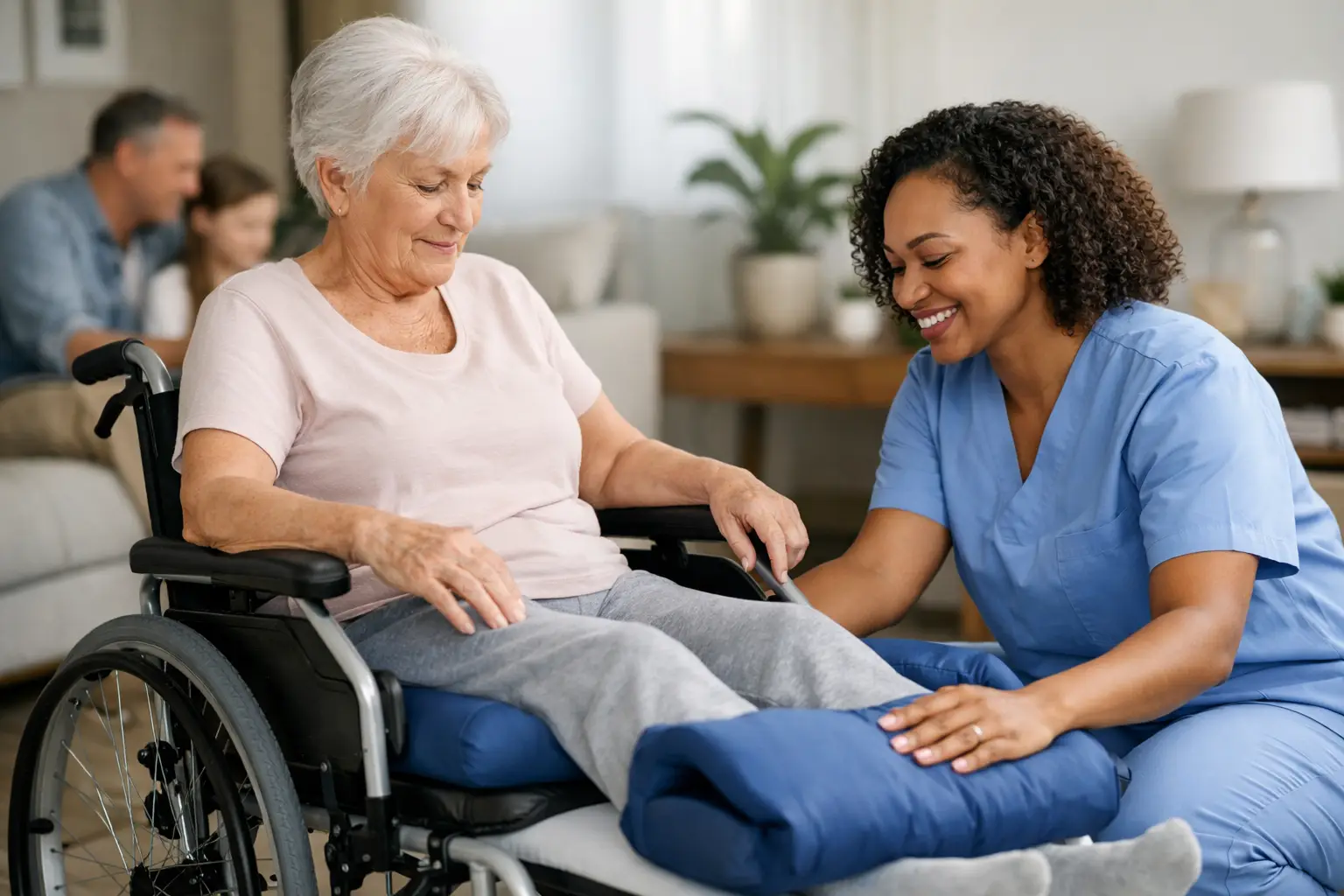
For a person in bed, a nurse may recommend particular positions and techniques that reduce pressure on high-risk sites. For someone seated for extended periods, the plan may include regular weight shifts, assistance to stand where this is safe, and monitoring of posture and sliding. Sliding down in a chair or bed can create shear, which damages tissue even when the skin initially looks intact.
Staff should follow the individual care plan rather than using a one-size-fits-all schedule. Positioning frequency can change when a participant is unwell, less mobile than usual, has new pain, or has existing skin damage.
Protect skin from moisture and friction
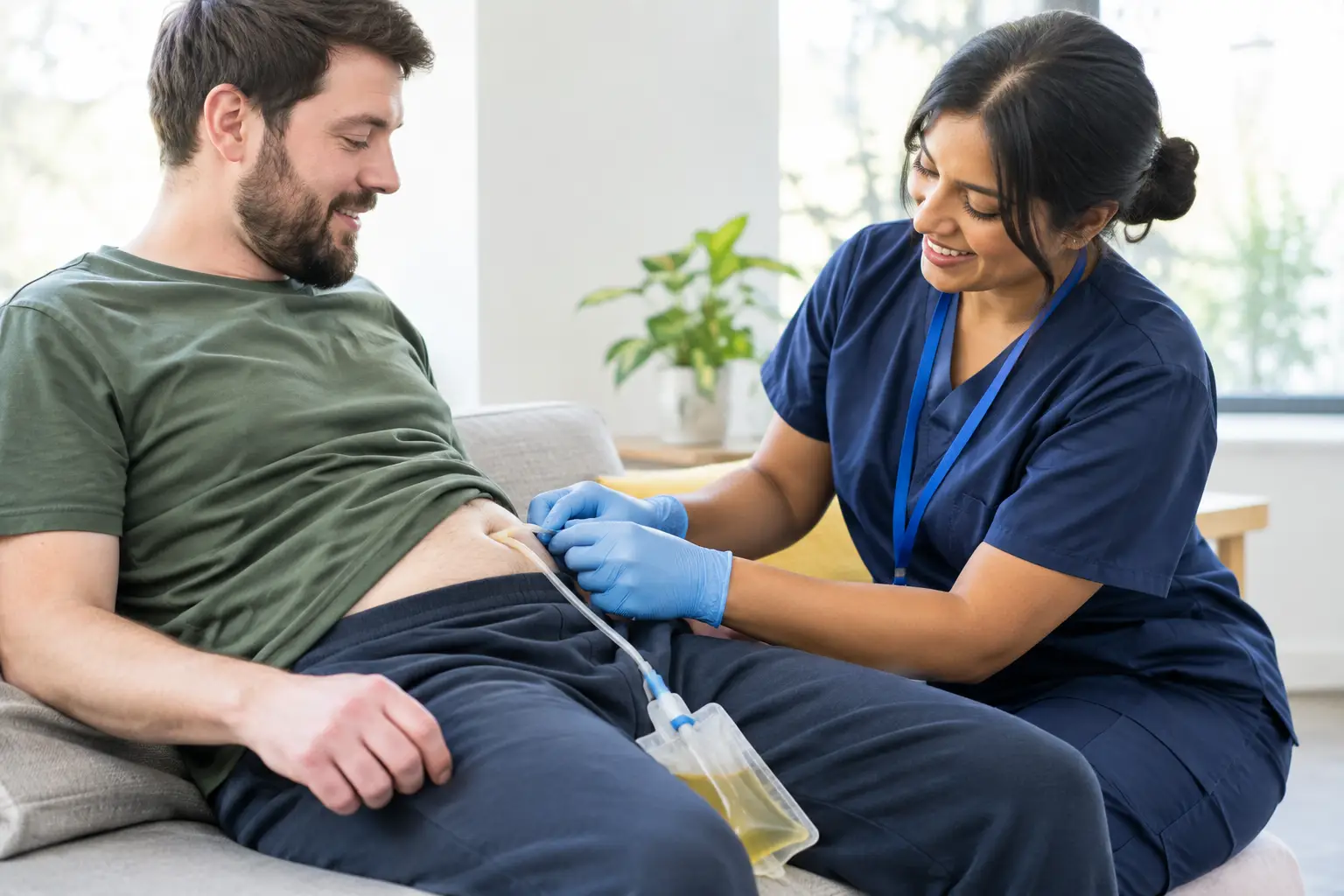
Moisture from urinary or faecal incontinence, perspiration, wound drainage or leakage around a stoma can weaken the skin and increase the likelihood of damage. Continence and pressure care are closely connected. A reliable bowel and bladder routine, appropriate skin cleansing, careful drying and the correct use of prescribed barrier products can make a meaningful difference.
Friction can occur when a person is pulled across bedding, dragged during repositioning or wears poorly fitting clothing or footwear. Safe transfer and repositioning techniques matter. Support workers should use the methods set out in the care plan and seek review if the transfer is becoming more difficult or the participant’s mobility has changed.
Check skin in a consistent, respectful way
Regular skin checks help identify concerns before they become deeper wounds. Checks should be explained to the participant and completed privately, respectfully and with consent. Staff need to know the participant’s normal skin appearance, especially where skin tone makes redness harder to identify.
Early signs can include persistent discolouration, warmth, coolness, swelling, firmness, pain, tenderness, itching, blistering or a change in skin texture. A participant with reduced sensation may not report discomfort, making visual and touch-based observation even more important.
Documentation should be specific. “Skin concern noted” is not enough for safe follow-up. Record the location, appearance, size where relevant, whether the area changes after pressure is relieved, the participant’s symptoms, actions taken and who was notified. Clear records support continuity between family, support workers, nurses and other treating teams.
Support hydration, nutrition and health monitoring
Skin cannot repair or tolerate pressure well without adequate fluid, nutrition and overall health management. Reduced appetite, unexpected weight loss, vomiting, diarrhoea, infection or poor diabetes control can increase risk. These factors do not mean a pressure injury is inevitable, but they should trigger a review of the participant’s usual plan.
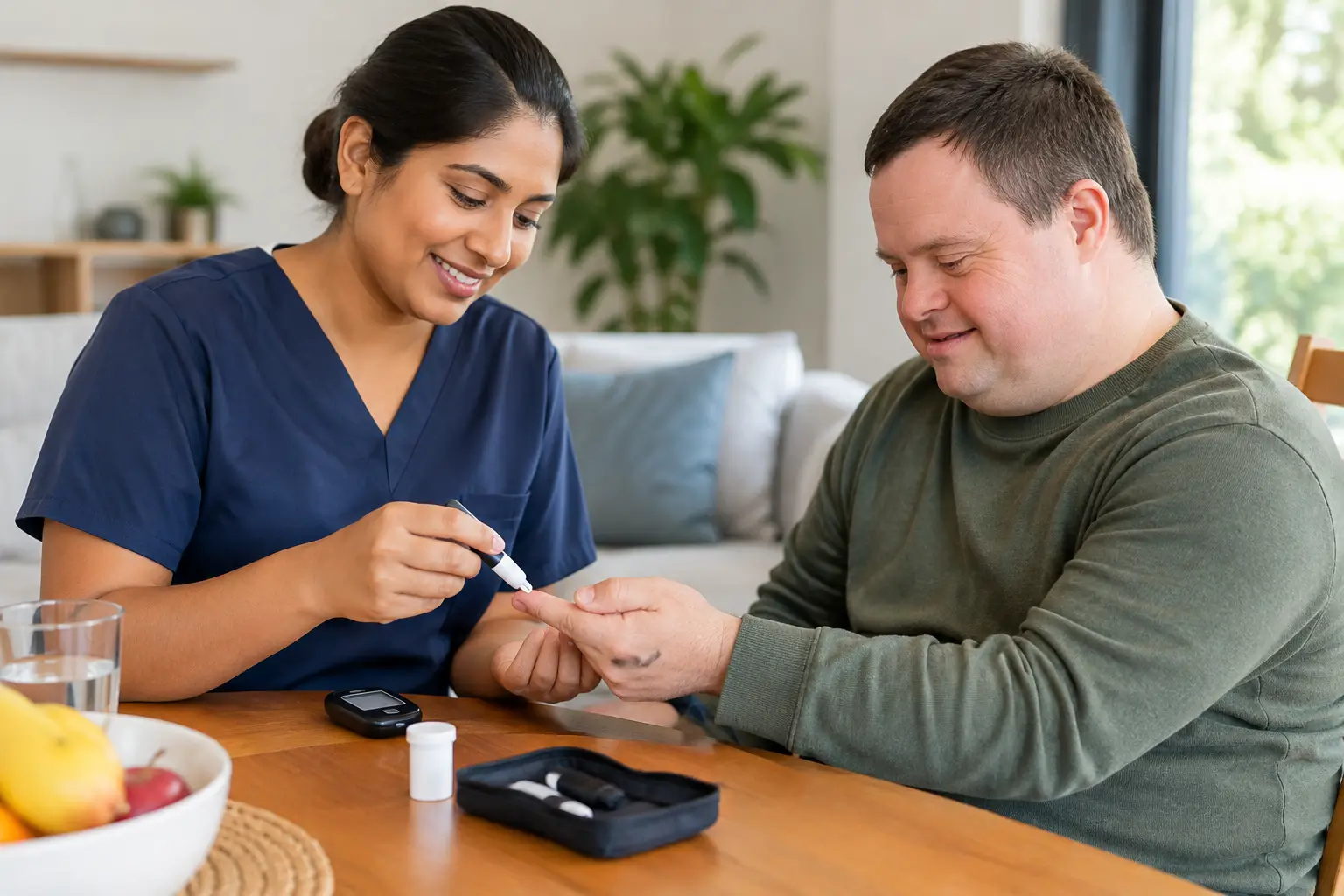
Nursing input is especially valuable where pressure risk overlaps with diabetes support, wound care, continence management, medication changes or complex health support. The clinical picture is often broader than a single skin mark.
When to escalate a skin concern
Early escalation can prevent a small area of damage from becoming a complex wound. Support workers and families should follow the participant’s clinical care plan, while seeking nursing or medical advice promptly if they notice a new or worsening concern.
Urgent review is warranted where there is broken skin, a blister, increasing pain, spreading redness or discolouration, heat, swelling, odour, drainage, fever, confusion, or signs the participant is systemically unwell. A deep purple or maroon area, black tissue, or skin that does not improve after pressure is removed also needs prompt assessment. If the participant appears acutely unwell, seek urgent medical care.
Do not massage a reddened or discoloured pressure area. Avoid applying unprescribed creams, dressings or devices in an attempt to solve the issue. The safest next step is to offload pressure where possible, document the finding and obtain clinical direction.
What nurse-led NDIS care can add
A nurse-led assessment turns broad advice into an implementable plan for the home. It can include skin and pressure risk assessment, review of wound or continence factors, practical positioning recommendations, monitoring requirements, escalation pathways and documentation tools suited to the participant’s support environment.
For participants with existing wounds or recurring skin concerns, ongoing clinical oversight helps ensure the plan remains appropriate as healing, mobility and health needs change. It also gives support workers clear boundaries: what they can safely do, what they need to record and when they must contact a nurse.
Support worker training is particularly important when staff assist with repositioning, skin observations, continence-related skin care, wound care directions or the early identification of infection. Training should be participant-specific wherever possible. A generic competency may show a worker understands a task, but it does not replace a clear plan for one person’s risks, routines and communication needs.
For Support Coordinators, clear reports for Support Coordinators can document the assessed risks, care needs, recommended clinical supports and the consequences of gaps in care. This creates stronger evidence for informed NDIS decision-making without making assumptions about funding outcomes.
When a referral to a nurse is appropriate
Consider nursing referral when a participant has a current pressure injury, recurrent redness or skin breakdown, reduced mobility, a recent hospital discharge, significant continence-related skin concerns, diabetes with fragile skin, unexplained pain when sitting or lying, or a marked change in their ability to reposition.
A referral is also appropriate when several providers are involved and no one has clear clinical ownership of the pressure care plan. Families should not have to interpret wound changes alone, and support workers should not be left to make clinical decisions without direction.
Useful referral information includes the participant’s diagnoses, mobility and transfer arrangements, current skin concern or wound history, continence routine, relevant medication or diabetes information, recent clinical reports, existing care plans and the people who provide daily support. Photos may be clinically useful when taken with consent and managed in line with privacy requirements, but they do not replace an assessment.
Compassion Wings provides clinical support in the home across Adelaide, combining practical nursing assessments, safe documentation, support worker training and ongoing review where needed. The focus is safe, dignity-focused care that helps participants stay safe at home while giving families and coordinating teams a reliable clinical pathway when risk changes.
Pressure care is most effective before a wound develops. When the right observations, routines and escalation steps are in place, small changes can be acted on early, with less pain and less uncertainty for everyone involved.