


Nursing Reports Adelaide for Stronger NDIS Plans
When a participant’s catheter care is becoming harder to manage, a wound is slow to heal, or continence needs have changed, a short statement that they “need more support” is rarely enough. Nursing reports Adelaide participants and Support Coordinators can rely on should set out the clinical facts, the daily risks, and the support required to keep care safe at home.
For families, this documentation can turn a stressful and difficult-to-explain situation into a clear clinical picture. For Support Coordinators, Plan Managers and service teams, it provides practical evidence to inform plan reviews or a change of circumstances request. The purpose is not to promise a funding outcome. It is to ensure the participant’s health needs, functional impact and clinical risks are properly documented.
What a nursing report is designed to show
A nursing report is a professional clinical assessment and written opinion prepared by a qualified nurse. It explains how a health condition affects the participant’s day-to-day care, what may happen if care is delayed or completed incorrectly, and what nursing or trained support worker input is appropriate.
The strongest reports do more than list diagnoses. A diagnosis alone does not explain whether a person needs regular skin checks, a structured bowel routine, stoma support, diabetes monitoring, medication oversight or a nurse to review a worsening wound. The report needs to connect the condition to the real tasks, frequency, skill level and supervision required.
This is particularly relevant where support is complex but often unseen. A participant may be managing moisture-associated skin damage due to incontinence, repeated catheter blockages, pressure areas from limited mobility, unstable blood glucose levels, or recurring constipation that leads to pain and hospital presentations. Each concern can affect comfort, dignity, safety and the ability to remain well at home.
When to request nursing reports in Adelaide
A referral for nursing assessment is often appropriate before an NDIS plan review, but it should not wait until the current arrangements have failed. Early clinical input can identify risks, clarify responsibilities and give the wider team time to put safer routines in place.
Plan reviews and changed support needs
A report may be helpful when a participant’s health needs have increased since their last plan or their existing support no longer reflects the level of clinical care required. This could include a new stoma, a decline in skin integrity, increased catheter-related complications, changed continence needs, a new diabetes diagnosis, or a greater reliance on others for medication and bowel care.
The report should describe what has changed, when it changed and how it affects daily support. Specific examples are more useful than broad statements. For instance, recurring leakage may be causing skin breakdown and extra laundry, while unreliable catheter drainage may require trained staff to recognise early warning signs and escalate promptly.
Clinical concerns affecting daily care
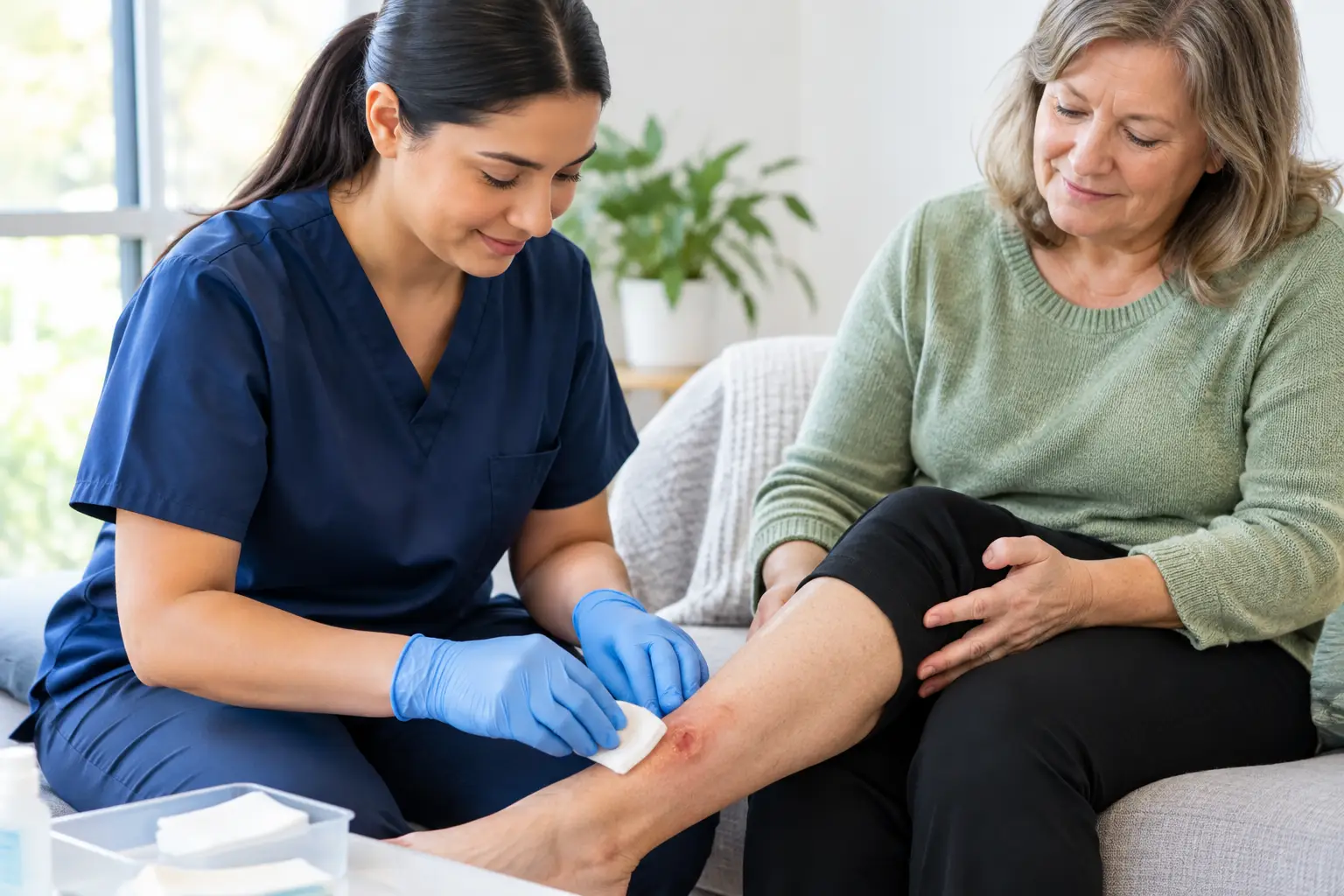
Support Coordinators should consider a nursing referral when staff or family members are unsure whether a task is safe to continue without clinical guidance. This may include wound dressing routines, pressure injury prevention, stoma care, catheter support, bowel and bladder management, insulin-related support or complex medication arrangements.
A practical nursing assessment can determine whether the task requires a nurse, whether it can be performed by a trained support worker under clinical oversight, and what documentation or escalation process is needed. That distinction matters. It supports safe delegation while protecting the participant from avoidable clinical risk.
Hospital discharge or repeated health presentations
A discharge summary can be valuable, but it is not always a complete plan for ongoing community care. It may not explain how wound care, continence routines or diabetes management will work in the participant’s own home, with their usual staff and daily schedule.
Where there have been repeated emergency presentations, infections, falls linked to urgency, constipation-related complications or pressure injuries, a nurse can assess the pattern and make recommendations that are realistic in the home environment. The aim is helping participants stay safe at home, not simply responding after a crisis.
What clear reports for Support Coordinators should include
Useful nursing reports are clinically sound, easy to follow and linked to the support decisions the reader needs to make. They should be detailed enough to show why a recommendation is necessary, without burying the key issues in medical jargon.
A well-prepared report will usually address:
- the participant’s relevant health history, current diagnoses and treating team information
- assessment findings, including skin integrity, continence, wounds, stoma or catheter status, medication concerns or diabetes-related risks where relevant
- the functional impact on daily routines, personal safety, comfort and dignity
- identified clinical risks, warning signs and escalation requirements
- practical recommendations for nursing input, support worker training, clinical care plans and ongoing review.
Recommendations should be proportionate to the participant’s actual situation. Some people need a one-off continence assessment and a clear routine for their care team. Others need ongoing wound review, regular clinical monitoring, staff competency checks or nurse-led oversight because their needs are unstable or high risk.
It depends on the condition, the complexity of the task, the skills of the people providing support and how quickly the participant’s health can deteriorate. A good report makes those factors visible rather than assuming every situation needs the same response.
Turning clinical needs into practical care
A report has the most value when it leads to safer day-to-day practice. Clinical recommendations should be translated into a care plan that staff and family can understand and follow.
For example, pressure care recommendations may specify how often skin is checked, which changes require immediate escalation, how moisture is managed and when a nurse should review the participant. A catheter care plan may outline hygiene measures, bag positioning, signs of blockage or infection, fluid monitoring requirements and who to contact when concerns arise.
This is where nurse-led NDIS care is different from generic support. The focus is not only on completing a task. It is on assessing the clinical risk behind the task, setting safe boundaries and ensuring the people involved know what to observe, document and escalate.
Support worker training and clinical oversight can be particularly important where a participant relies on several workers across a week. Even a well-written care plan is ineffective if staff have not been shown the correct process or do not understand why a small change in skin colour, output, pain or behaviour may need urgent clinical attention.
Nursing report or clinical care plan: which is needed?
These documents have different roles, although they often work best together. A nursing report provides assessment findings and formal clinical recommendations. It can be used to inform discussions about changed needs, plan reviews and the level of support required.
A clinical care plan is an operational document. It guides the everyday delivery of care by setting out routines, precautions, instructions and escalation steps. It may also support staff training and regular review.
Where needs are complex, the sensible approach is often to begin with a nursing assessment and report, then develop or update the care plan based on the findings. This gives the participant and their team evidence for decision-making as well as clear instructions for safe implementation.
Preparing a nursing referral
A focused referral helps the nurse assess the right issue without delay. Include the participant’s contact details and consent arrangements, the reason for referral, relevant diagnoses, recent hospital or treating team information, current care concerns and the specific question that needs answering.
It is also useful to explain what is happening in practice. Are support workers unsure about a wound dressing? Has a family member noticed more frequent catheter leakage? Is skin redness recurring despite the current continence routine? Has a participant’s bowel care become more time-consuming or distressing? These details help shape practical nursing assessments and recommendations.
Compassion Wings provides nursing reports across Adelaide for participants who need clinical evidence that reflects the realities of complex health support in the home. Reports can be supported by clinical care plans, education for support workers and ongoing nursing review where this is clinically appropriate.
A timely report cannot remove every uncertainty from an NDIS decision, but it can ensure the participant’s voice, dignity and health risks are clearly represented. When care is becoming harder to manage, requesting nursing input early gives everyone a safer place to start.



1 Comment
10 Best Wound Documentation Tips for Safer Care - Compassion Wings
August 20, 2026[…] for the wider team. Compassion Wings provides nurse-led NDIS care across Adelaide, including clear reports for Support Coordinators, clinical care plans and education to help staff deliver safe, […]