
When Should Wounds Be Escalated? Nursing Guide
A dressing change that suddenly produces more fluid, a heel that stays red after pressure is removed, or a wound that becomes painful in a person who is usually stoic can signal a clinical change. So, when should wounds be escalated? The answer is not simply when a wound looks “bad”. Escalation is needed whenever healing stalls, infection or pressure injury risk rises, the person becomes unwell, or the current care routine is no longer safe.
For NDIS participants with complex health needs, early nursing assessment can prevent a minor skin concern becoming a painful wound, hospital presentation or prolonged disruption to daily care. Families, Support Coordinators and support workers do not need to diagnose the cause. They do need to recognise change, respond promptly and document clearly.
When Should Wounds Be Escalated for Clinical Review?
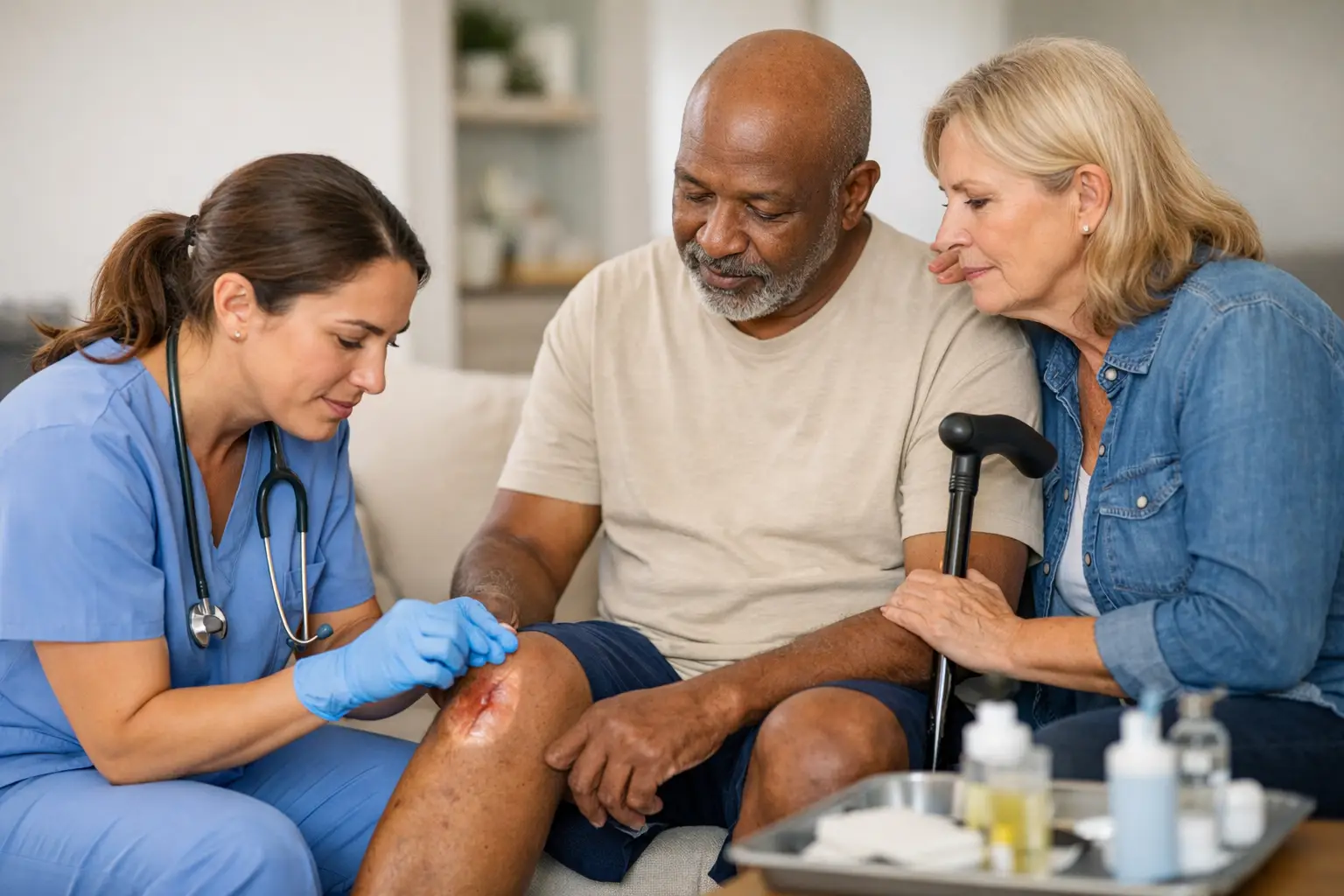
A wound should be escalated to a nurse when there is a meaningful change in its appearance, drainage, odour, pain, surrounding skin or healing trajectory. This includes wounds that are not improving as expected, even where there are no obvious signs of infection.
Wounds can deteriorate quickly when a participant has diabetes, reduced mobility, poor circulation, altered sensation, continence concerns, oedema, malnutrition, cognitive impairment or a history of pressure injuries. A person may also be unable to describe pain or discomfort clearly. In these circumstances, waiting for the next routine visit can be the wrong call.
Nurse-led NDIS care provides practical nursing assessments that look beyond the dressing itself. A nurse considers the cause of the wound, pressure and friction, moisture exposure, circulation, nutrition, medication, transfer routines and whether the current care plan can realistically be followed at home.
Changes that need prompt nurse assessment
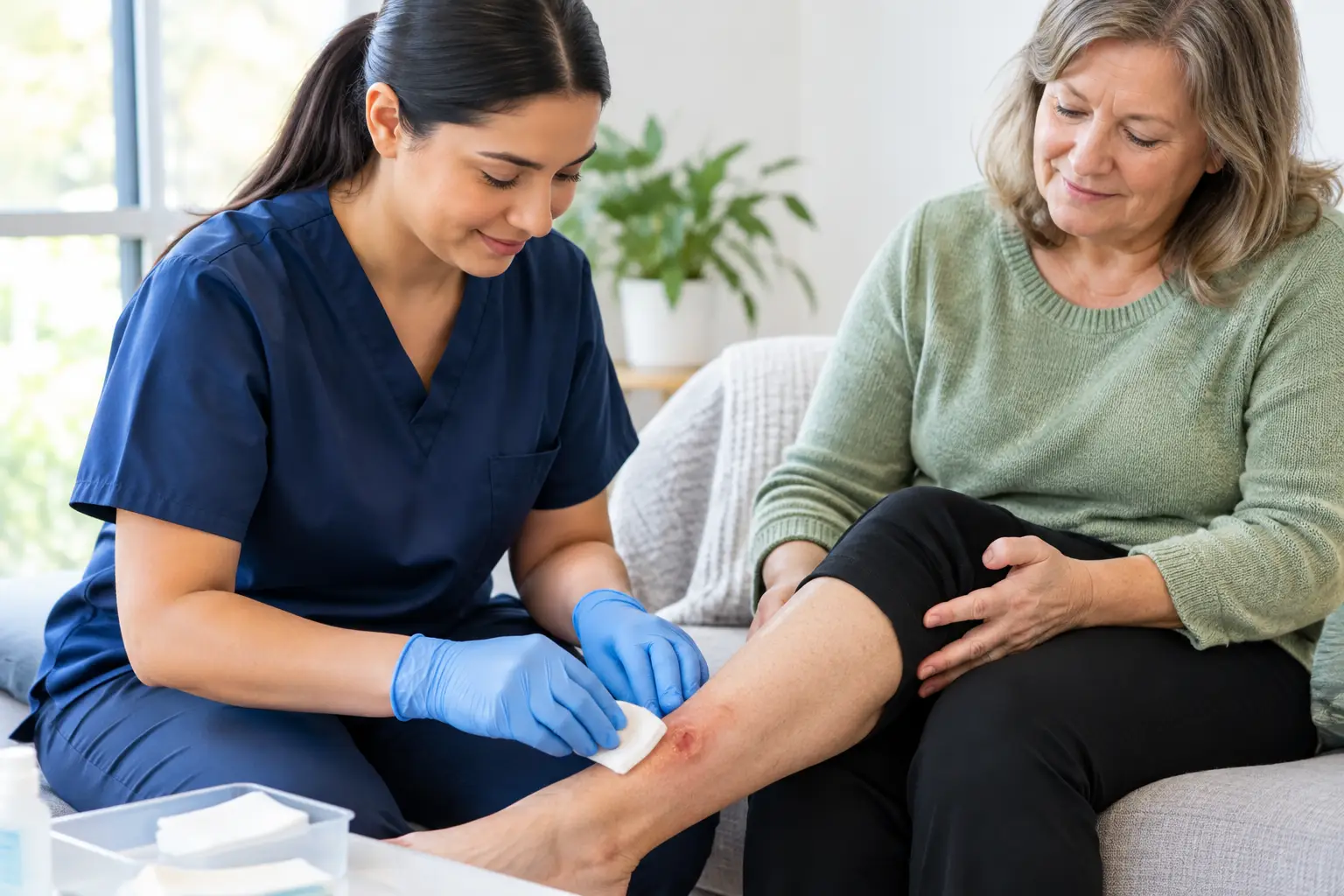
Contact a qualified nurse promptly if a wound is increasing in size or depth, its edges are breaking down, or the tissue colour is changing. Yellow, black, grey or increasingly pale tissue may require assessment, particularly if this is new or spreading.
New or increasing drainage also matters. A small amount of clear fluid may be expected for some wounds, but thick, cloudy, green, yellow or blood-stained drainage needs review. A strong or new odour, increased warmth, swelling, redness spreading beyond the wound edge, or worsening tenderness can indicate infection or inflammation.
Pain should always be taken seriously. Escalate where pain is new, increasing, difficult to settle, occurs during routine cares that were previously tolerated, or appears through non-verbal signs such as guarding, agitation, withdrawal or sleep disturbance. Equally, an absence of pain does not rule out a serious wound in people with neuropathy or reduced sensation.
A wound also needs review if the dressing is frequently leaking, not staying in place, causing skin stripping, or cannot be managed safely by the people providing care. This is often a sign that the dressing choice, change frequency, moisture management plan or support worker training needs to change.
Red Flags That Require Urgent Medical Escalation
Some changes require same-day medical advice rather than waiting for a routine nursing appointment. A nurse can help coordinate the next step, but urgent symptoms should be referred to a GP, urgent care service or emergency department according to severity.
Seek urgent medical assessment if the participant has a fever, chills, confusion, marked drowsiness, rapid deterioration, vomiting, or feels significantly unwell alongside a wound concern. These can be signs that infection is affecting more than the local area.
Urgent review is also needed for rapidly spreading redness, red streaking from the wound, sudden major swelling, uncontrolled bleeding, a wound that opens after surgery, or a new dark purple, maroon or black area of skin. Dark discolouration over a pressure area can indicate deeper tissue damage, even when the skin is not yet open.
For people with diabetes, a new foot wound, blister, crack, ulcer, colour change or hot swollen foot should be treated as a priority. Reduced sensation can mask severity, while infection and circulation issues can progress quickly. Do not encourage the participant to continue walking on a concerning foot wound until they have received appropriate clinical advice.
If there is immediate danger, severe bleeding, breathing difficulty, altered consciousness or signs of severe systemic illness, call 000. For less immediate but concerning changes, document what has been observed and seek clinical direction the same day.
Pressure Areas Need Escalation Before Skin Breaks
The most effective wound response often happens before there is an open wound. Non-blanching redness – redness that does not fade when gentle pressure is removed – is an early warning sign of pressure damage. It requires action, especially over heels, sacrum, hips, elbows, ankles or areas affected by medical devices.
A pressure area should be escalated when redness persists, the skin feels warmer or firmer than surrounding tissue, or the participant reports burning, tingling, pain or discomfort. In darker skin tones, changes may present as darker, purple, blue or shiny skin rather than obvious redness. Comparing the area with surrounding skin and checking for warmth, swelling and texture changes is useful.
The immediate response may include reducing pressure, checking seating and bed positioning, reviewing transfer practices and managing moisture. However, pressure redistribution without a clear monitoring and escalation plan is not enough for a high-risk participant. A nursing review can identify whether the person needs a clinical care plan, more frequent skin checks, changes to continence routines, or support worker training and clinical oversight.
Why “Wait and See” Can Create Risk
A short period of observation can be appropriate for a small, uncomplicated wound that has a clear cause and is improving. But this decision depends on the person’s health risks, not just the wound’s size. A minor skin tear on the shin of a person with fragile skin and oedema may need closer follow-up than a larger but healing superficial wound in someone with no complicating factors.
“Wait and see” becomes unsafe when no one has defined what improvement should look like, when observations are inconsistent, or when different staff are providing different wound care. It also creates risk where wound status is being reported verbally but not documented with dates, measurements and clear descriptions.
Good escalation protects participant dignity. It avoids repeated painful dressing changes that are not working, reduces the chance that families must manage deteriorating care alone, and gives Support Coordinators timely evidence when a participant’s clinical needs have changed.
What Support Workers and Families Should Record
Clear information allows a nurse or medical practitioner to make a safer decision quickly. A wound note should identify the wound location, when the change was first noticed, pain or non-verbal discomfort, drainage amount and colour, odour, surrounding skin changes, dressing used and whether it stayed intact.
Photos can be clinically helpful when consent, privacy requirements and the care plan allow it. They should be taken consistently, stored securely and never replace a written description. A photo without a date, location or account of symptoms is limited evidence.
Support workers should not independently alter wound products or apply treatments outside their training and documented instructions. They should follow the clinical care plan, report changes promptly and record exactly what they observe. Where routines are complex, structured support worker training helps make escalation reliable across every shift.
A Practical Escalation Pathway for NDIS Teams
When a concerning change is identified, first check whether the participant is acutely unwell or needs urgent medical assistance. If not, notify the nominated nurse or clinical lead as soon as possible and provide the relevant wound observations. Continue only with the current documented wound plan unless a clinician directs otherwise.
The nurse can assess the wound in person or determine whether urgent GP, hospital or specialist review is needed. They can also update wound management instructions, clarify dressing requirements, address pressure or moisture contributors and document clinical recommendations.
For Support Coordinators, this is where clear reports for Support Coordinators have real value. A concise nursing report can describe the wound risk, care needs, required monitoring, training needs and consequences if clinical supports are not maintained. It provides evidence for plan reviews or a change of circumstances without making unsupported funding claims.
Compassion Wings provides clinical support in the home across Adelaide for participants who need wound assessment, pressure care planning, practical documentation and consistent nursing oversight. The aim is not to over-medicalise every skin concern. It is to identify risk early and put safe, workable care around the participant.
When a wound is changing, uncertain or difficult to manage, acting early is usually the kinder and safer option. A timely nursing assessment can give everyone involved a clear plan, practical next steps and greater confidence in helping participants stay safe at home.