
Home Wound Documentation Review in Adelaide
A wound can look unchanged at a quick glance while the clinical picture is moving in the wrong direction. Increased exudate, fragile surrounding skin, pain during dressing changes or missed care instructions can all signal risk. A home wound documentation review Adelaide service brings nurse-led assessment and clear evidence together, so the people delivering daily support know what to do, when to escalate and how to protect the participant’s dignity.
Why wound documentation needs clinical review
Wound records are more than a running note of dressing changes. They should show the wound’s current presentation, how it is responding to treatment, the factors affecting healing and the actions required to manage risk. This is particularly relevant for NDIS participants whose care may be shared by family members, support workers, nurses, GPs and allied health professionals.
When documentation is incomplete or inconsistent, small changes can be missed between visits. A record stating that a dressing was changed does not explain whether the wound bed has improved, whether the surrounding skin is breaking down, whether drainage has changed or whether pain is increasing. Without that detail, it is difficult to make safe clinical decisions or demonstrate why ongoing nursing input is required.
A nurse-led review looks beyond the dressing itself. It considers the person, their daily routine, mobility, continence, nutrition, medications, diabetes management, pressure risk and ability to participate in their care. Healing rarely depends on one product or one dressing schedule alone.
When to arrange a home wound documentation review in Adelaide
A review is useful when a wound has stalled, when different workers are recording care differently, or when a family is worried that the plan no longer reflects what is happening at home. It can also be appropriate after hospital discharge, a change in health status, a new pressure injury risk, or before an NDIS plan review or change of circumstances request.
Support Coordinators may seek clinical input when they need clear reports for Support Coordinators that describe the participant’s current needs, the risks of unmet support and the reasonable nursing actions required. Plan Managers and providers may need assurance that claimed supports align with a current clinical care plan. Families often need practical guidance they can trust, especially when wound care has become stressful or uncertain.
A prompt review can be particularly valuable where there are recurring skin tears, pressure areas, diabetic foot concerns, wounds affected by continence, or a catheter or stoma creating moisture and skin integrity issues. The right response depends on the wound type and the person’s broader health needs. Not every wound needs intensive ongoing nursing, but every wound needs a plan that is clinically appropriate and followed consistently.
What a practical nursing assessment examines
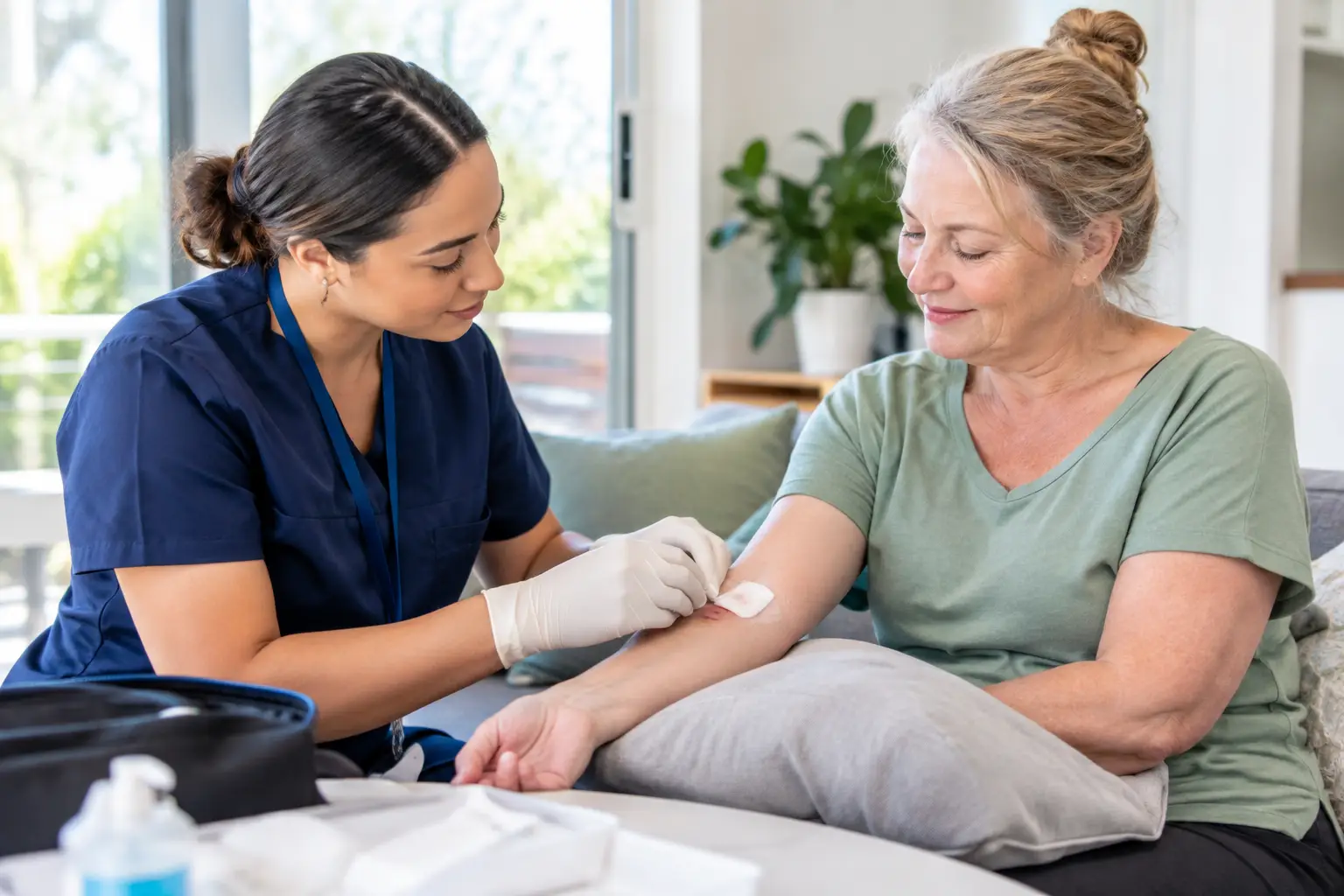
A thorough home wound documentation review starts with current, factual assessment. This may include the wound location, size, tissue appearance, drainage, odour, pain, condition of the surrounding skin and any signs that require medical escalation. Where appropriate and consented to, photographs and measurements can support consistent monitoring over time.
The review should also examine whether the existing plan can be implemented safely in the home. A clinically sound recommendation is of limited use if workers do not have the required training, supplies are unavailable, instructions are unclear or the participant cannot tolerate the routine.
A practical assessment commonly considers:
- the wound’s progress against previous records and agreed treatment goals;
- pressure, friction, moisture, continence and transfer risks that may delay healing;
- infection indicators and the escalation pathway for the treating team or GP;
- dressing procedures, frequency, infection-control steps and supply requirements;
- the participant’s comfort, privacy, consent and preferences during care; and
- whether support workers need education, competency assessment or closer clinical oversight.
This approach produces documentation that is useful on the next shift, not merely compliant after the fact.
Turning records into a clear care plan
Good wound documentation gives every authorised person a consistent reference point. It should state who is responsible for each part of care, what must be observed, what should be recorded and what triggers escalation. Ambiguous phrases such as “monitor wound” can leave too much room for interpretation. Clear instructions describe what workers need to look for and who to contact if the presentation changes.
For example, a care plan may specify the dressing routine delegated by the treating clinician, the expected amount and character of drainage, skin protection steps, pressure-relief measures and the process for reporting increased pain, redness, heat, odour, bleeding or leakage. It may also identify tasks that must remain with a nurse because of clinical complexity.
Documentation should be proportionate. A stable, uncomplicated wound may need a simpler monitoring record than a deteriorating pressure injury or complex post-operative wound. The key is that the record matches the person’s risk, supports safe continuity of care and can show why decisions were made.
Support worker training is part of safe wound care
In many homes, support workers are the first people to notice a change. They need more than a written instruction sheet. They need to understand the purpose of the plan, the boundaries of their role, safe hygiene practices, what observations matter and when a concern needs to be escalated rather than managed at the next scheduled visit.
Support worker training and clinical oversight can reduce variation between staff and help prevent avoidable delays. Training may cover wound observation, skin integrity checks, pressure care routines, continence-related skin protection, documentation expectations and communication with the nurse. It should be tailored to the participant’s actual care needs, not delivered as generic information.
This is also where dignity-focused care matters. Wound and continence care can be deeply personal. Staff should know how to explain each step, maintain privacy, respect choices and recognise distress or pain. Safe, dignity-focused care is both a clinical and human requirement.
How wound evidence supports NDIS decisions
NDIS documentation is strongest when it explains functional impact and clinical risk in plain, evidence-based language. A nursing report should not simply list diagnoses or state that support is needed. It should connect the wound or skin integrity issue with the support required to maintain safety at home.
Depending on the situation, this may include the frequency of nursing assessment, the complexity of dressing procedures, the need for trained workers, risks associated with missed care, the effect of pain or reduced mobility, and the ongoing monitoring needed to identify deterioration early. It can also explain how continence, diabetes, catheter care, pressure care or medication issues intersect with wound healing.
For Support Coordinators, this creates a clearer basis for coordinating services and preparing for plan reviews. For participants and families, it reduces the burden of repeatedly explaining a complex situation. Clinical evidence does not guarantee a funding outcome, but clear, current documentation helps decision-makers understand the support needs and consequences of gaps in care.
What to provide when making a referral
A useful referral does not need to be lengthy, but it should give the nurse enough context to prioritise safely. Current wound notes, discharge summaries, relevant medical instructions, existing care plans, recent photographs where consent has been obtained, medication information and details of any recent change are helpful.
It is also useful to explain who is currently involved, how care is being delivered, whether there have been missed visits or supply issues, and what the referrer needs from the review. That may be an updated clinical care plan, a nursing report for a plan review, support worker education or ongoing clinical support in the home.
Compassion Wings provides nurse-led NDIS care across Adelaide for participants with complex health support needs, including practical nursing assessments, wound care planning and clear clinical reporting. A focused referral helps the nursing team assess urgency and organise the right next step without unnecessary delay.
Know when a wound needs urgent escalation
Documentation review is not a substitute for urgent medical assessment. New or rapidly spreading redness, marked swelling or heat, fever, confusion, severe or escalating pain, uncontrolled bleeding, blackened tissue, a sudden increase in drainage or a participant who appears acutely unwell should be escalated promptly through the appropriate treating clinician, urgent care service or emergency pathway.
For less acute changes, timely nursing review can prevent a concern from becoming a crisis. The aim is not to create paperwork for its own sake. It is to make sure the clinical picture is visible, daily care is workable and participants have the support needed to stay safe at home.