
Guide to Pressure Area Monitoring at Home
A new red mark over a heel, tailbone or hip can become a serious wound far more quickly than many families expect. For participants who spend long periods sitting or lying down, have reduced sensation, limited mobility, continence concerns or complex health needs, a practical guide to pressure area monitoring is part of safe daily clinical care – not simply a skin check when something looks wrong.
Pressure area monitoring helps identify early changes before skin breaks down. It also gives support teams a clear way to communicate concerns, follow a care plan and seek nursing review promptly. Done well, it protects comfort, dignity and health while helping participants stay safe at home.
What pressure area monitoring means
Pressure areas are parts of the body where skin and underlying tissue are exposed to prolonged pressure, friction or shear. They commonly occur over bony areas, including the heels, ankles, hips, tailbone, elbows, shoulder blades and the back of the head. Pressure can also develop beneath or around medical devices, such as tubing, braces or continence products, if these are poorly fitted or left in one position.
Monitoring means looking for changes consistently, recording what is seen, responding according to the participant’s clinical care plan and escalating concerns early. It is not about asking untrained support workers to diagnose a pressure injury. Their role is to observe, document and follow the actions set out by the treating nurse or health professional.
A pressure injury can affect more than the skin. It may lead to pain, infection, reduced mobility, hospital treatment and disruption to everyday routines. Prevention is usually less invasive and less distressing than treating a wound after it has progressed.
Guide to pressure area monitoring: what to check
The frequency of checks depends on individual risk. A participant with a current wound, fragile skin, poor circulation, diabetes, incontinence, reduced sensation or significant mobility limitations may need a more detailed and frequent routine than someone with lower risk. The right schedule should be guided by a practical nursing assessment and documented care plan.
Establish what is normal for the participant
A reliable check begins with knowing the participant’s usual skin condition. Record existing scars, areas of discolouration, chronic skin changes, fragile areas and any current wounds. This baseline helps the team recognise a new change rather than relying on memory or a vague description such as “skin looks worse”.
Checks should occur in good light, with consent, privacy and respectful communication. Explain what you are doing, involve the participant where possible and protect their dignity throughout. If a person can describe discomfort, tingling, burning or pain, those reports should be taken seriously even if the skin change is not yet obvious.
Look, ask and document
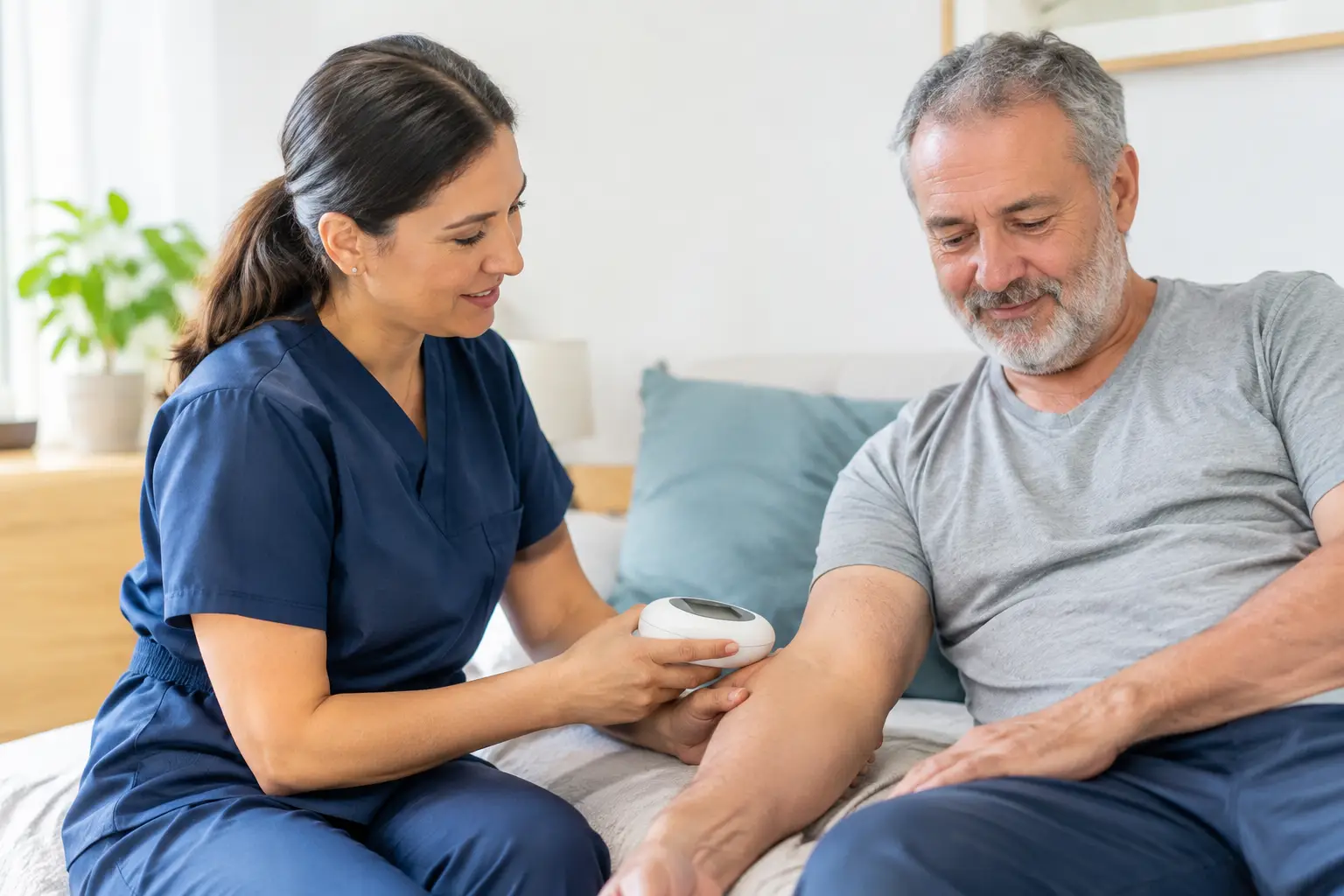
During planned checks, observe common pressure points and any area exposed to moisture, equipment or prolonged contact with a chair or bed. Look for redness, darker or unusual discolouration, bruised-looking areas, swelling, shininess, dryness, cracking, blisters, broken skin, drainage or changes in temperature.
On darker skin tones, early pressure damage may not appear as obvious redness. The area may instead look darker, purple, blue-grey, ashen or different from the surrounding skin. It may feel warmer, firmer, softer or more tender. This is one reason a consistent baseline and careful observation matter.
A useful record states the location, size if relevant, appearance, whether the skin is intact, the participant’s reported pain or discomfort, actions taken and who was notified. Objective language is safer and more useful than assumptions. For example, “2 cm area of non-blanching redness on left heel, skin intact, participant reports soreness, nurse contacted” gives a clinical team much more to work with than “heel looks bad”.
Do not massage a red or discoloured pressure area. Massage can further damage vulnerable tissue. Follow the participant’s existing repositioning, skin care and escalation instructions, and seek nursing advice where there is uncertainty.
Why pressure injuries develop
Pressure is only one part of the picture. Risk rises when several factors occur together. Reduced movement may mean a participant cannot independently shift their weight or reposition in bed. Reduced sensation can mean they do not feel discomfort until tissue damage is already developing. Moisture from sweating, continence issues or wound drainage can weaken the skin and increase friction.
Nutrition, hydration, circulation, infection, fatigue, medication effects and acute illness can also affect skin tolerance and healing. A participant returning home after a hospital admission may have a different risk profile from before their admission, particularly if mobility, weight, appetite or continence routines have changed.
The practical response is individualised. One person may need support to follow a scheduled repositioning plan; another may need review of continence products, catheter positioning or a chair-based routine. A generic turning schedule without assessment can be unhelpful and may not suit the participant’s comfort, sleep, pain levels or medical needs.
When a skin change needs escalation
Any new skin change deserves attention, particularly where the participant is at high risk. Escalate according to the clinical care plan and seek prompt nursing review when there is persistent redness or discolouration, a blister, broken skin, increasing pain, swelling, heat, odour, drainage or an area that is rapidly changing.
Urgent medical assessment may be needed if there are signs of infection or systemic illness, such as spreading redness, increasing wound drainage, fever, confusion, severe pain or the participant becoming generally unwell. Where immediate risk is present, follow emergency procedures rather than waiting for a routine visit.
For Support Coordinators and families, a new wound or repeated skin breakdown is also a signal to review whether existing supports and clinical documentation remain adequate. Clear nursing evidence can describe the participant’s risks, the care tasks required, the training needs of the support team and the clinical oversight needed to implement the plan safely.
The role of documentation and support worker training
Pressure care often fails at handover points. One worker notices a change, another assumes it has been addressed, and the detail is lost between shifts. A clear clinical care plan reduces this risk by setting out what to check, how often to check it, the participant’s known risk areas, skin protection routines, repositioning guidance and escalation pathways.
Support worker training and clinical oversight are particularly valuable when workers are assisting with high-risk routines. Training should be practical: how to recognise early warning signs, how to use the participant’s documentation system, what observations need to be reported and when a concern cannot wait until the next shift.
Good records also support continuity when several providers or family members are involved. They create a clearer picture of whether an area is improving, stable or deteriorating, and they allow a nurse to make informed recommendations without relying on incomplete recollection.
When to refer for nurse-led NDIS care
A nursing referral is appropriate when pressure injury risk is increasing, skin breakdown is recurring, a current wound needs assessment or support workers need clinical direction. It is also helpful after discharge from hospital, a significant change in mobility, a decline in health, changes to continence routines or when the existing plan is unclear.
A nurse-led assessment can consider the whole clinical picture: skin integrity, wound status, continence and moisture management, pain, mobility, equipment-related pressure, nutrition concerns and the capacity of the support team to carry out the plan. The outcome should be practical, with clear recommendations rather than a report that sits unused.
For Adelaide participants with complex health support needs, Compassion Wings provides practical nursing assessments, clinical care plans, wound and pressure care input, support worker training and clear reports for Support Coordinators. This allows teams to respond to risk with safe, dignity-focused care and documented clinical oversight.
The most useful pressure monitoring routine is one that people can actually follow every day. When observations are consistent, concerns are documented clearly and nurses are involved early, small skin changes are far less likely to become a major setback for the participant and their care team.