

A Practical Guide to Diabetes Support at Home
A blood glucose reading can change quickly, but the risks often build quietly: a missed insulin dose, a meal delayed by an appointment, early dehydration during illness, or a support worker unsure whether a reading needs escalation. This guide to diabetes support at home focuses on the practical clinical systems that help NDIS participants manage diabetes safely, with dignity and as much consistency as possible.
Diabetes support is not simply a matter of recording numbers or prompting medication. For participants with complex health needs, it may involve insulin administration, nutrition and hydration routines, recognition of hypoglycaemia, skin checks, infection prevention, clear escalation pathways and appropriately trained staff. Nurse-led NDIS care can bring these moving parts into one workable plan for the home, community and support environment.
What safe diabetes support at home looks like
Safe diabetes care begins with an individual assessment. Diabetes management is never one-size-fits-all. The type of diabetes, prescribed medicines, usual glucose range, ability to recognise symptoms, eating patterns, cognitive capacity, mobility, other health conditions and support roster all affect the right approach.
A practical nursing assessment should establish what happens across an ordinary day, not just what is written on a medication chart. For example, does the participant eat reliably before rapid-acting insulin? Can they use their glucose monitor independently? Is a family member managing changes in routine? Are support workers confident with the participant’s prescribed treatment plan and clear about what they must report?
The goal is not to make daily life overly clinical. It is to make essential care predictable, safe and dignity-focused. A clear plan reduces uncertainty for participants and families, while giving Support Coordinators confidence that complex health support is being managed with appropriate clinical oversight.
The core parts of a home diabetes plan
A useful diabetes care plan translates medical instructions into practical steps that the participant, family and workers can follow. It should be specific enough to guide care at 7 am on a weekend, not just during a weekday nursing visit.
Monitoring that leads to action
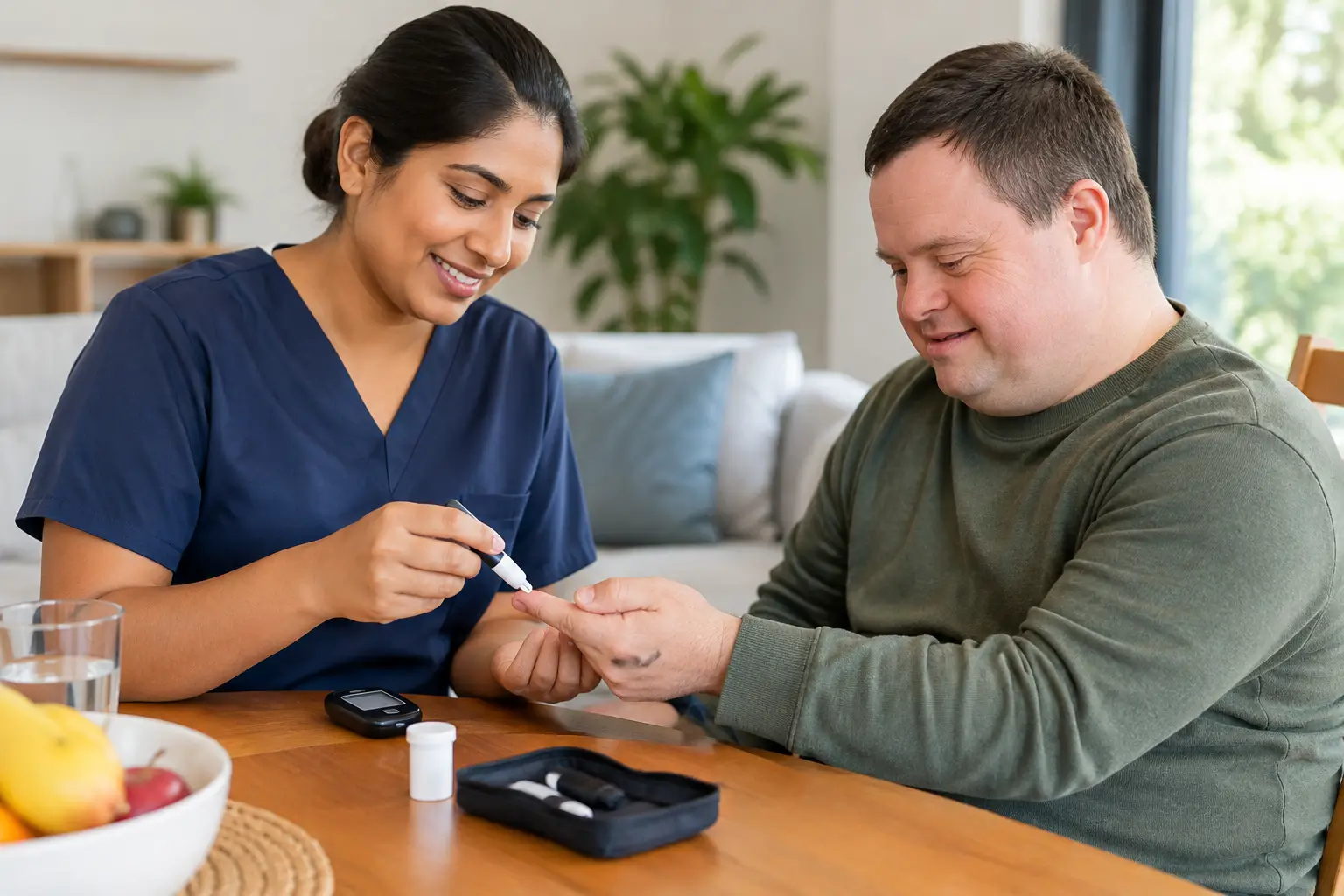
Glucose monitoring is only helpful when the person recording the result knows what to do next. The plan should identify when blood glucose is to be checked, how results are documented, the participant’s prescribed target range, and which readings or symptoms need escalation.
Patterns matter as much as individual readings. Repeated high readings, frequent lows, reduced appetite, vomiting, unexplained tiredness or changes in behaviour may indicate that the current routine needs clinical review. Nursing oversight can identify these patterns early and communicate relevant information to the participant’s GP or diabetes team where required.
For participants using continuous glucose monitoring, support workers may need training in responding to alerts, checking whether a sensor is functioning as expected, and documenting actions without making unauthorised treatment changes.
Medication and insulin safety
Insulin is a high-risk medication. Safe support requires the correct insulin, dose, timing, injection technique, storage and documentation, along with clear procedures for missed or delayed doses. Staff should never guess a dose, substitute products or make dose adjustments unless this is explicitly authorised within the participant’s current clinical instructions.
Where workers are involved in insulin-related tasks, they need competency-based support worker training and clinical oversight. Training should reflect the participant’s actual routine, including their prescribed devices, usual meal timing, communication needs and escalation plan. A generic demonstration is not enough for high-intensity clinical supports.
Injection sites also need attention. Repeated injections into the same area can affect insulin absorption, while bruising, lumps, pain or skin breakdown need assessment. A nurse can support site rotation, safe sharps disposal and documentation that protects both participant safety and staff accountability.
Food, fluids and everyday routines
Diabetes support should fit the participant’s preferences, culture and regular routine. It should not turn meals into a restrictive or punitive experience. However, workers and families need to understand how missed meals, alcohol, reduced fluid intake, unusual activity and illness may affect glucose levels, particularly for people using insulin or certain glucose-lowering medicines.
Practical strategies may include confirming that meals are available before medication is given where relevant, recording poor intake, encouraging fluids in line with clinical advice, and reporting changes that persist. If a participant has swallowing difficulties, kidney disease, a restricted diet or other conditions affecting food and fluid intake, the diabetes plan must align with advice from the relevant treating clinicians.
Sick-day planning
A mild virus, gastro illness or urinary tract infection can destabilise diabetes quickly. Sick-day instructions should be readily available in the home and understood by everyone providing support. They need to state when to increase monitoring, who to contact, what symptoms require urgent review and when emergency care is required.
This is especially important for participants who cannot easily communicate thirst, nausea, pain, confusion or worsening illness. A nurse-led review can make sure the care plan reflects the person’s communication style and known early warning signs rather than relying solely on textbook symptoms.
Recognising when urgent action is needed
Support workers and families should follow the participant’s individual diabetes and emergency plans first. If there is uncertainty, it is safer to escalate promptly than wait for symptoms to worsen.
Urgent clinical advice or emergency assistance may be needed when a participant has:
- symptoms of severe hypoglycaemia, such as confusion, reduced responsiveness, seizure activity or inability to safely swallow
- persistently high glucose readings with vomiting, abdominal pain, rapid breathing, marked drowsiness or increasing confusion
- a significant change from their usual behaviour or level of consciousness
- inability to keep fluids down, signs of dehydration or a suspected serious infection
- a medication error, incorrect insulin dose or uncertainty about whether insulin has been administered.
Where a participant is unconscious, having a seizure, severely confused or otherwise critically unwell, call 000. Do not give food or drink to someone who cannot swallow safely. The exact response to low glucose, including use of prescribed rescue medication, should be set out in the participant’s current clinical plan and delivered by trained people.
Why skin and infection checks belong in diabetes support
Diabetes can affect circulation, sensation and wound healing. For participants with reduced mobility, continence needs, neuropathy, vascular disease or a history of pressure injury, skin integrity needs close attention. A small blister, unnoticed cut or area of redness can deteriorate if it is not identified and escalated early.
Support workers do not need to diagnose wounds. They do need clear instructions about what to observe, what to document and when to contact a nurse. This may include changes in foot colour or temperature, new swelling, drainage, odour, redness, pain, cracked skin or a wound that is not progressing as expected.
Clinical support in the home can connect diabetes routines with wound care, pressure care, continence care and infection risk management. That joined-up approach is particularly valuable when several health issues affect one another.
When Support Coordinators should refer for nursing input
A referral is appropriate when diabetes care is becoming difficult to manage safely, even if there has not yet been a hospital presentation. Common triggers include new insulin requirements, recurrent hypo episodes, unclear worker responsibilities, medication errors, poor documentation, changing health status, wounds or skin concerns, repeated illness, or family members carrying unsustainable clinical responsibility.
Nursing input is also useful when a provider needs a clear diabetes care plan, high-intensity support worker training, competency assessment, or clinical evidence for a plan review or change of circumstances. Clear reports for Support Coordinators can describe the participant’s current risks, required supports, worker training needs and the consequences of unmet clinical care needs. This helps keep discussions focused on functional safety and documented evidence rather than broad assumptions about support.
Before onboarding, it helps to provide current medication information, insulin and glucose-monitoring orders, relevant hospital discharge documents, GP or specialist instructions, recent glucose records where available, existing care plans, known allergy information and details of the participant’s support environment. If records are incomplete, a nurse can identify gaps and develop practical recommendations after assessment.
Building confidence without shifting clinical risk to families
Families often become the informal safety net when diabetes care instructions are unclear. They may receive calls about readings after hours, prepare medication reminders, check whether workers have documented doses, or worry about a parent or adult child being alone during illness. That pressure is understandable, but it is not a sustainable care model when needs are complex.
The most reliable arrangements set out who does what, when they do it, how it is recorded and who receives an escalation call. Participants should be included in these decisions in a way that respects their preferences and capacity. Families should know the plan, but they should not be expected to replace nursing assessment, clinical documentation or trained high-intensity support.
Compassion Wings provides nurse-led NDIS care across Adelaide for participants who need practical diabetes assessments, individualised clinical care plans, support worker training and ongoing clinical oversight. The focus is helping participants stay safe at home while giving families and referral teams a clearer, clinically accountable way forward.
When diabetes routines are clear, documented and reviewed as health needs change, small warning signs are less likely to be missed. That gives the participant more certainty in their day and gives everyone supporting them a safer next step when something does not look right.