

Community Nursing vs Generic Disability Support
A dressing that keeps leaking, a catheter blockage at 7 pm, unexplained skin redness, or a bowel routine that has stopped working are not simply day-to-day support issues. They require clinical judgement. The distinction in community nursing vs generic disability support matters most when a participant’s health needs can change quickly, their routine carries risk, or support workers need clear clinical direction to provide care safely.
For families and Support Coordinators, the question is rarely whether a participant needs support. It is whether the support is backed by the right assessment, care plan, training and escalation pathway. Nurse-led NDIS care is designed for that point where disability-related assistance and complex health support intersect.
Community nursing vs generic disability support: the practical difference
Community nursing brings registered nursing assessment and clinical accountability into the home or community. A nurse does not just follow a task list. They assess what is happening, identify risks, make evidence-based recommendations, document findings and review whether a care routine remains appropriate.
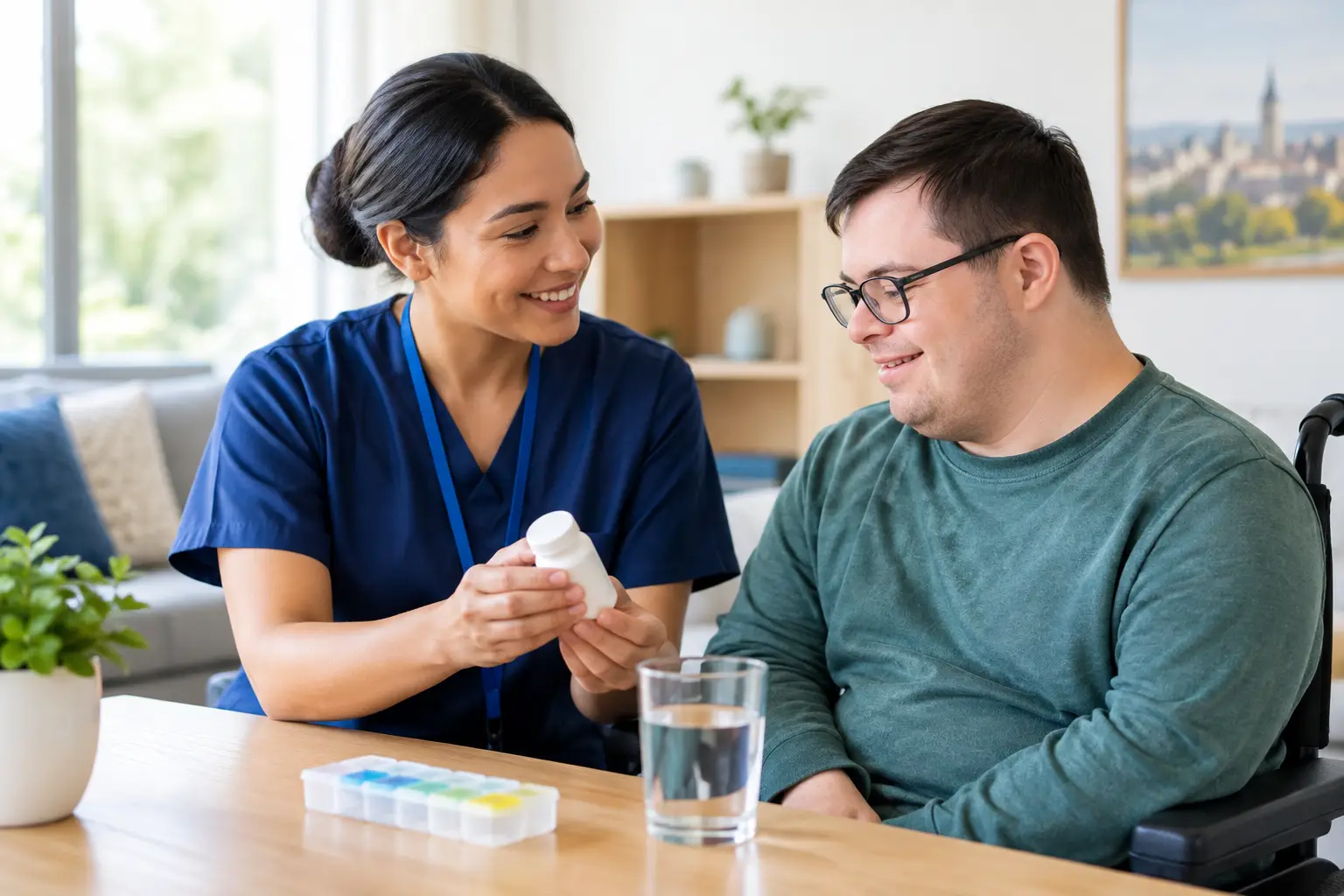
That difference is particularly important for continence, wounds, pressure care, stoma care, catheter management, diabetes, medication support, skin integrity and bowel or bladder routines. These needs may appear stable until they are not. A small change in wound drainage, urine output, blood glucose readings or skin colour can be clinically significant. Recognising that change and knowing what to do next requires nursing knowledge.
This is not a question of one type of service being better for every person. Where needs are straightforward and there is no clinical procedure, risk or change to monitor, nursing input may not be necessary. However, when a participant has a diagnosis, device, treatment routine or history that needs assessment and ongoing clinical oversight, a nursing referral can protect both the participant and the people supporting them.
When a nursing referral is the safer choice
Support Coordinators often seek nursing input when an existing routine is no longer working, a hospital discharge has created new care requirements, or there is uncertainty about who can safely complete a health-related task. Families may notice more practical warning signs: recurrent infections, wet bedding despite a continence routine, wounds that are slow to heal, pain during care, repeated catheter issues, or a participant becoming less willing to leave home because their routine feels unreliable.
A practical nursing assessment is also valuable before problems become urgent. For example, a participant who spends long periods sitting or in bed may benefit from a pressure care review before skin breakdown occurs. Someone with a stoma may need their supplies, skin condition and usual routine checked after weight change, illness or reduced dexterity. A person with diabetes may need a clear plan for monitoring, meal-time considerations, documentation and escalation.
Clinical support in the home can clarify what is actually happening, rather than relying on assumptions or fragmented handover notes. It gives the participant and their team a current baseline, practical actions and clear guidance about when concerns need escalation to their treating doctor or emergency services.
Assessment comes before instruction
A common risk in complex care is moving too quickly to a checklist. A checklist is useful only when it reflects the participant’s current clinical needs. Nursing assessment provides the reasoning behind the routine.
For continence, that may involve reviewing toileting patterns, fluid intake, products, constipation risk, skin condition, mobility, cognition and the impact on sleep or community access. The goal is not merely to choose a product. It is to develop a realistic bowel and bladder routine that supports comfort, dignity and skin health.
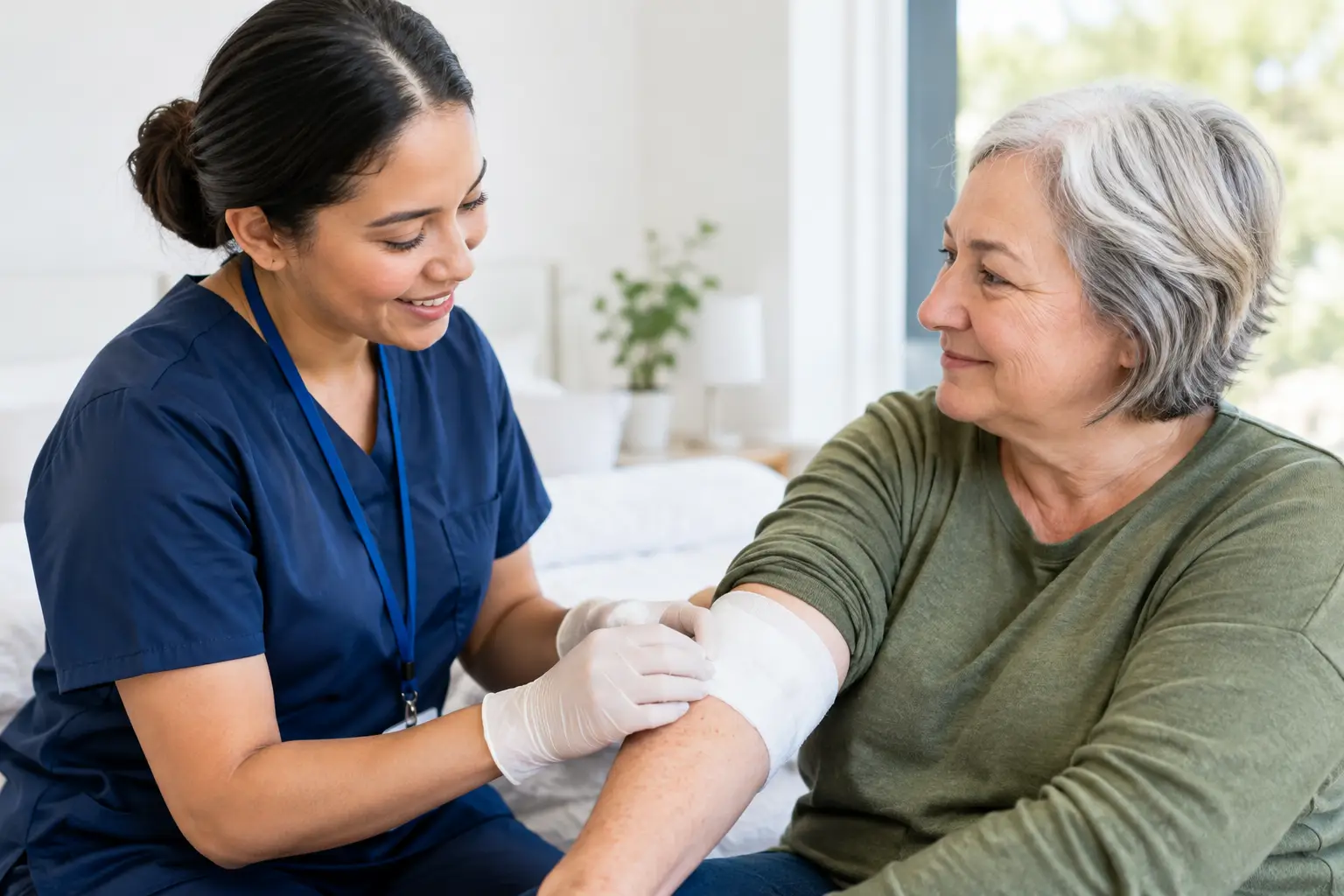
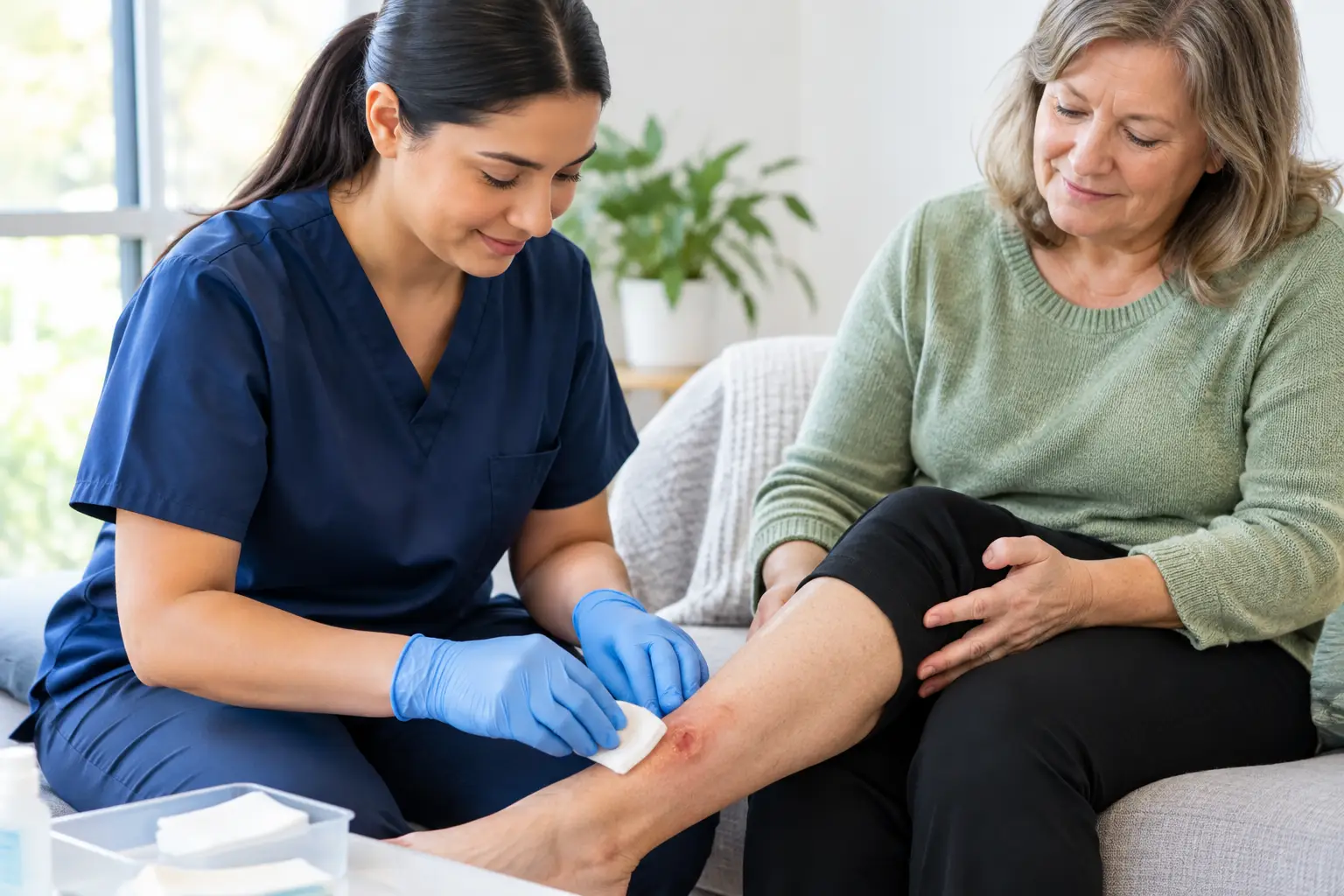
For wound and pressure care, a nurse considers the wound or area of concern, surrounding skin, pain, exudate, infection indicators, pressure risks, nutrition considerations and whether the existing dressing plan is effective. For catheter or stoma support, the assessment includes the device, the person’s usual presentation, signs of complication, hygiene processes, supplies and the capability of those providing care.
These assessments lead to care plans that are specific enough to guide action without becoming impractical. A good plan states what to do, what to observe, what to record and when to contact a nurse or seek urgent medical advice. It also respects the participant’s preferences and routine. Safe, dignity-focused care should fit real life wherever possible.
Support worker training is part of safe implementation
Even an excellent clinical care plan is ineffective if the people carrying it out are unclear, anxious or working from different instructions. High-intensity and health-related supports need the right training, competency checks and access to clinical guidance.
Support worker training and clinical oversight help create consistency across shifts and providers. Training should be based on the participant’s individual needs, not a generic scenario. A worker may need to understand the correct sequence for a catheter-related routine, what healthy versus concerning skin looks like, how to document a bowel action accurately, or what symptoms require immediate escalation.
Just as importantly, workers need permission to speak up. A culture of clinical escalation prevents a concerning change from being dismissed as ‘normal for them’. When staff know who to contact and what information to report, nurses can review issues earlier and help reduce avoidable hospital presentations.
Why documentation matters to participants and coordinators
Clinical documentation is often viewed as paperwork after the real work is done. In complex health support, it is part of the care itself. Clear records show what has been assessed, what risks have been identified, what supports are recommended and how the plan should be implemented.
For Support Coordinators, clear reports for Support Coordinators can make difficult decisions more manageable. They provide clinically grounded evidence when a participant’s needs have changed, when a care routine requires review, or when additional support worker capability is needed. The report should connect functional impact, clinical risks and practical recommendations in plain language, while remaining appropriate for NDIS planning discussions.
For families, documentation reduces the burden of repeating the same history to every new person. For support teams, it reduces guesswork. For participants, it can mean care is more consistent, respectful and responsive to their actual needs.
Nursing reports for plan reviews or a change of circumstances are most useful when they are timely and specific. A report that simply lists diagnoses is rarely enough. Strong evidence explains how health needs affect daily safety, what has changed, what clinical input has been required and what may happen if the current arrangement is insufficient.
What to include in a nursing referral
A referral does not need to be perfect, but a few details help a nurse assess urgency and prepare for the first visit. Include the participant’s main health concerns, relevant diagnoses, recent hospital or medical changes, current routines, known risks, treating team details and any existing care plans or discharge summaries.
It is also helpful to describe the problem in practical terms. Rather than writing ‘continence support needed’, explain whether there are leaks, constipation, skin damage, frequent urinary tract infections, product concerns or changes in the participant’s mobility. Rather than ‘wound care’, note the wound location, current dressing plan, recent changes and whether there are signs of infection.
Consent, preferred contact arrangements and the roles of family members or guardians should be clear from the outset. This supports respectful communication and avoids delays when the nurse needs to gather information or coordinate with the wider care team.
A clinical partner for complex care at home
The right nursing service should make care clearer, not more complicated. It should assess the issue, provide practical recommendations, train relevant workers, document the plan and remain available for review when needs change. This is especially valuable where several providers are involved and everyone needs one clinically sound source of direction.
Compassion Wings provides nurse-led NDIS care across Adelaide for participants whose continence, wounds, skin integrity, stoma, catheter, diabetes, medication or high-intensity support needs require professional clinical input. The focus is on practical nursing assessments, safe implementation and helping participants stay safe at home.
When care involves clinical risk, the most helpful next step is often not another general task list. It is a nursing assessment that gives the participant, family and support team a clear, safe way forward.