


What Nurse Led NDIS Care Should Include
A participant has repeated UTIs, their catheter routine keeps changing, and support workers are doing their best with mixed instructions. Another has a pressure area that started as redness and is now breaking down. In both cases, nurse led NDIS care is not an optional extra. It is often the difference between a manageable routine at home and an avoidable hospital presentation.
For Support Coordinators, families and SIL teams, the challenge is rarely goodwill. It is knowing when a health issue has moved beyond day-to-day support and needs clinical assessment, documentation and oversight. Good nursing input brings structure to complex care. It turns scattered concerns into a plan that is safer, clearer and easier to follow.
What nurse-led NDIS care actually means
nurse-led NDIS care is clinical support in the home for participants whose disability-related needs include ongoing health risks, high-intensity supports or complex routines that require nursing judgement. It is not simply having a nurse on file. It means assessments are completed by appropriately qualified clinicians, risks are identified early, recommendations are practical, and care is reviewed when things change.
That matters because many NDIS participants live with overlapping issues. Continence concerns can affect skin integrity. Reduced mobility can increase pressure injury risk. Medication changes can alter bowel routines, hydration and behaviour. A wound may look small but carry a significant infection risk. These situations need more than a task list. They need clinical reasoning.
The best nurse-led services do not overcomplicate care. They simplify it. They look at what is happening in real life, in the participant’s own home or community setting, and build routines that protect safety and dignity while remaining workable for support workers and families.
When nurse led NDIS care is needed
A referral is usually warranted when there is complexity, instability or uncertainty. If a participant has frequent skin breakdown, recurrent catheter blockages, poorly managed diabetes, stoma issues, constipation with escalation risk, or medication concerns that affect safe daily care, nursing input should be considered early rather than after a crisis.
Support Coordinators often feel this pressure first. They may hear that workers are unsure about a bowel routine, or that a wound dressing plan is inconsistent, or that a participant’s continence products are no longer appropriate. Families may notice subtle decline before anyone else does – more leakage, more redness, more pain, less confidence, more resistance to care. These are practical signs that a nursing review is needed.
There is also a documentation side to this. If supports have changed, if risks are increasing, or if additional clinical services may be required, nursing evidence can help clarify what is reasonable and necessary. Clear reports for Support Coordinators and plan review evidence are particularly important when health needs are complex and ongoing.
The core parts of good nurse-led NDIS care
At its best, nurse led NDIS care combines assessment, hands-on clinical support, education and documentation. Missing one of these elements often creates problems later.
Practical nursing assessments
A proper nursing assessment should do more than record symptoms. It should examine how the issue affects daily care, identify risks, and recommend specific next steps. In continence work, that might include reviewing toileting patterns, skin integrity, product suitability, fluid intake and current support routines. In wound or pressure care, it may involve assessing the wound itself, contributing factors, repositioning routines, equipment already in use, infection concerns and escalation triggers.
This practical approach matters because the goal is not just to describe a problem. It is to make care safer and more consistent at home.
Clinical care plans that can actually be followed
A care plan should be clear enough for the people providing support day to day. If a plan is vague, staff interpret it differently. If it is too technical, it gets ignored. Strong clinical care plans translate nursing assessment into actions that suit the participant’s environment, support model and health risks.
That may include continence routines, catheter support instructions, bowel and bladder care, wound dressing schedules, pressure care recommendations, medication support considerations and signs that require escalation. The balance is important. Plans need to be clinically sound, but also realistic for the home setting.
Support worker training and clinical oversight
For participants receiving high-intensity or complex health support, support worker training and clinical oversight are often what hold the entire arrangement together. Even experienced workers can become uncertain if there are changes in a stoma, increased leakage around a catheter, unstable blood glucose readings or a participant who refuses necessary care.
Nurse-led education gives workers a safer framework. It helps them understand not just what to do, but what to look for, what to record and when to escalate. This reduces risk for participants and gives providers greater confidence that routines are being implemented correctly.
Reporting that supports decisions
Clinical reports are not paperwork for the sake of it. They are often the bridge between what everyone can see on the ground and what needs to be documented for planning, review and service coordination. A useful report explains the participant’s clinical needs in plain language, outlines relevant risks, and links recommendations to safety, function and ongoing care requirements.
For Support Coordinators juggling multiple stakeholders, that clarity saves time. For families, it reduces the stress of having to explain the same health concerns repeatedly. For participants, it can mean decisions are made on better evidence.
Where nursing input makes the biggest difference
Some areas of NDIS clinical support carry more risk than they first appear.
Continence is a good example. People often think of products first, but the bigger issue is usually routine, skin health, infection risk and dignity. A continence assessment can identify whether the current approach is causing preventable problems such as dermatitis, moisture lesions, poor sleep, reduced community access or carer strain.
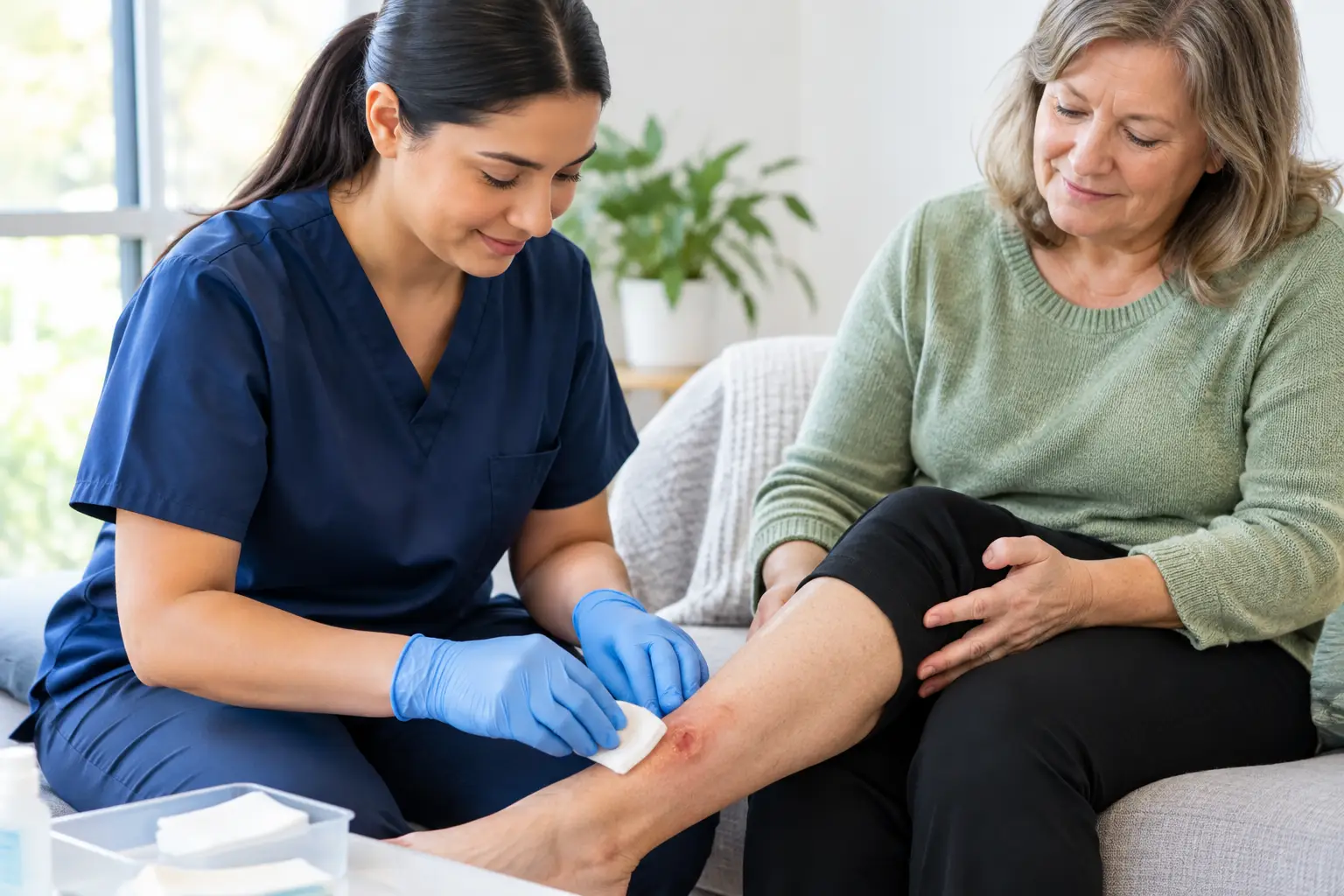
Wound care and pressure care are another area where delay can be costly. What starts as minor redness can progress quickly if offloading, repositioning and skin monitoring are inconsistent. In-home nursing review helps identify the cause, guide treatment and support prevention.
Stoma and catheter care also benefit from nurse-led oversight, particularly where there are recurring leaks, blockages, odour concerns, skin damage or staff uncertainty. These are not just inconvenient issues. They can affect infection risk, confidence, social participation and hospital use.
Bowel and bladder routines are similar. If a participant’s routine is ineffective, unpredictable or distressing, the impact often spills into every part of the day. Nursing input can help review patterns, triggers, current supports and escalation risks, then build a safer routine around what is clinically appropriate and practically achievable.
Why the nurse-led model matters for referrers
There is a reason many referrers prefer a nurse-led service rather than piecing together advice from multiple sources. When one experienced clinical team assesses, documents, trains and reviews, the care is usually more consistent.
That consistency is especially valuable when several providers are involved. A participant may have a Support Coordinator, a Plan Manager, a SIL provider, allied health clinicians and a family member all trying to keep care on track. Without clear clinical oversight, details get lost. With it, everyone is working from the same risk picture and the same recommendations.
In Adelaide, this is particularly relevant for participants with complex health support needs who want to remain safely at home rather than cycle through crisis responses. A responsive nursing team can often identify issues early, recommend practical adjustments and provide the documentation needed to support timely decisions.
What information helps before onboarding
Referrals move faster when the basics are clear from the start. That does not mean every detail must be perfect, but a nursing team usually needs a concise picture of the participant’s current clinical issues, recent changes, known diagnoses relevant to the referral, existing routines, current providers and any immediate risks.
It also helps to know the purpose of the referral. Is the need a continence assessment, wound review, support worker training, catheter support, diabetes support or a report for plan review? Sometimes it is several of these at once. Being clear about the main concern helps the nurse prioritise what needs attention first.
Photos, discharge summaries, wound charts, medication lists and recent incident information can all be useful where available. Not because more paperwork is always better, but because good clinical assessment depends on good context.
What good care feels like to the participant
Safe, dignity-focused care is not only about preventing harm. It should also reduce friction in daily life. When routines are clear, products are suitable, staff are trained and concerns are reviewed early, participants often feel less exposed and less exhausted by their own care.
That might mean fewer rushed changes, better skin comfort, less confusion between workers, more privacy around continence care, or greater confidence leaving the house. For families and guardians, it often means fewer unanswered questions and more trust that concerns will be assessed properly.
This is where a service like Compassion Wings can add real value – not through broad promises, but through practical nursing assessments, clear documentation, support worker education and ongoing clinical oversight designed to help participants stay safe at home.
The right nursing support does not make complex care simple overnight. What it does is make it clearer, safer and more manageable for everyone involved, which is often exactly what is needed to steady a situation before it turns into a crisis.



3 Comments
NDIS Wound Care Governance for Home Pressure Injuries - Compassion Wings
July 1, 2026[…] support workers attending at different times, allied health input, a GP, and community nursing or nurse-led NDIS care. Without clear clinical oversight, there can be gaps between what is recommended and what is […]
Catheter Support in Campbelltown, Adelaide - Compassion Wings
August 19, 2026[…] Nurse-led NDIS care should translate clinical needs into practical daily actions. Following assessment, the nursing team can develop or update a clinical care plan that sets out the catheter type and relevant medical directions, routine care requirements, observations to document, infection-control measures, equipment management and clear escalation steps. […]
Complex Care at Home Planning That Keeps Care Safe - Compassion Wings
August 20, 2026[…] little detail leaves workers uncertain. Too much technical language can make a plan hard to use. Nurse-led NDIS care helps find the practical middle […]