

Who Can Write an NDIS Wound Care Plan?
When a participant has a wound that is slow to heal, keeps breaking down, or is putting daily supports at risk, one question comes up quickly – who can write an NDIS wound care plan in Australia? The short answer is that wound care plans should be written by an appropriately qualified clinician, and in most NDIS community settings that usually means a Registered Nurse with wound care experience, sometimes alongside input from a GP, nurse practitioner, treating specialist or hospital team.
That distinction matters. A wound care plan is not just a set of dressing instructions. It needs to reflect clinical assessment, healing goals, infection risk, pressure or moisture factors, equipment considerations, support worker responsibilities, escalation triggers and the participant’s broader health needs. If the wound sits within complex disability supports, the plan also needs to be practical enough for everyday implementation in the home.
Who can write an NDIS wound care plan in Australia?
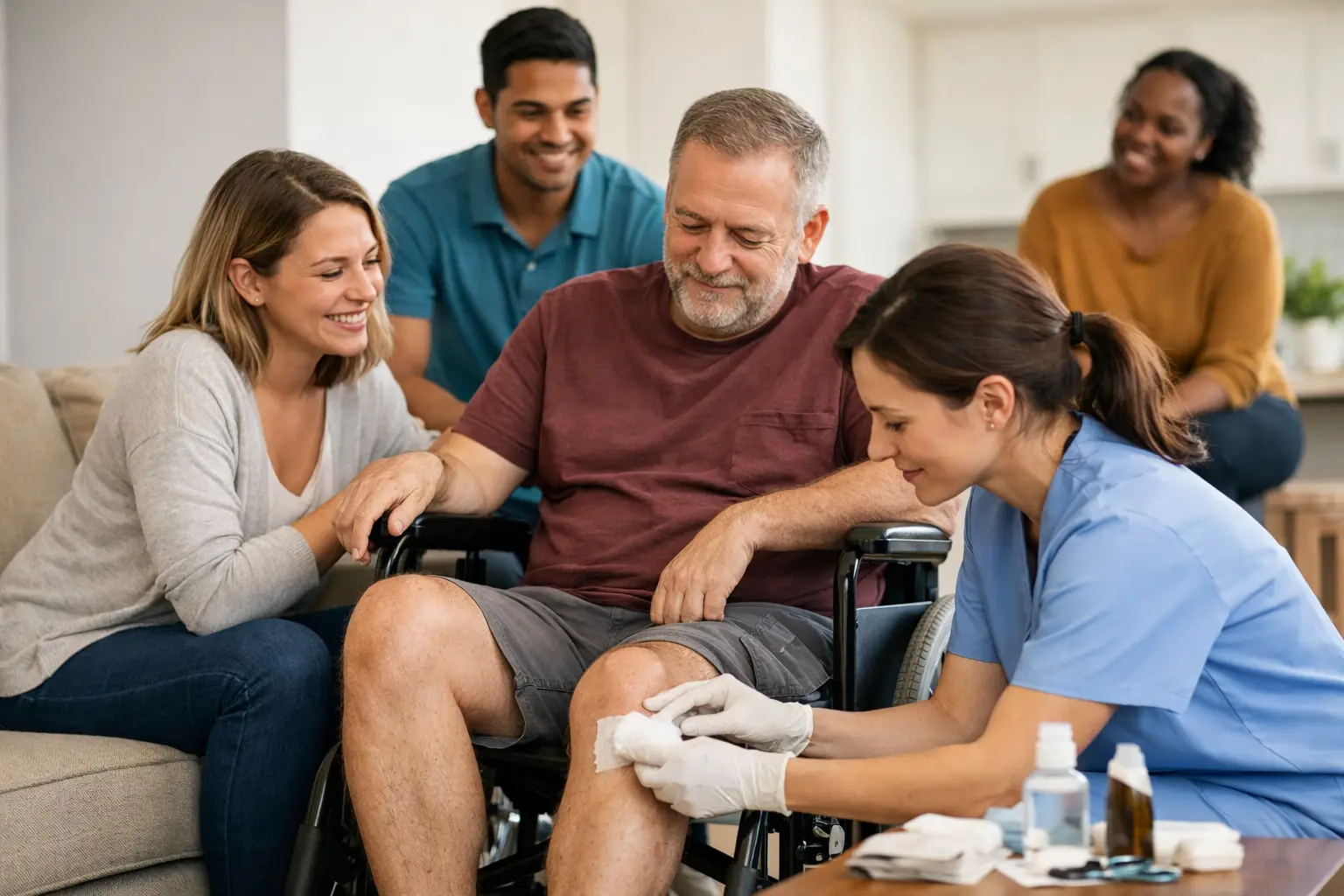
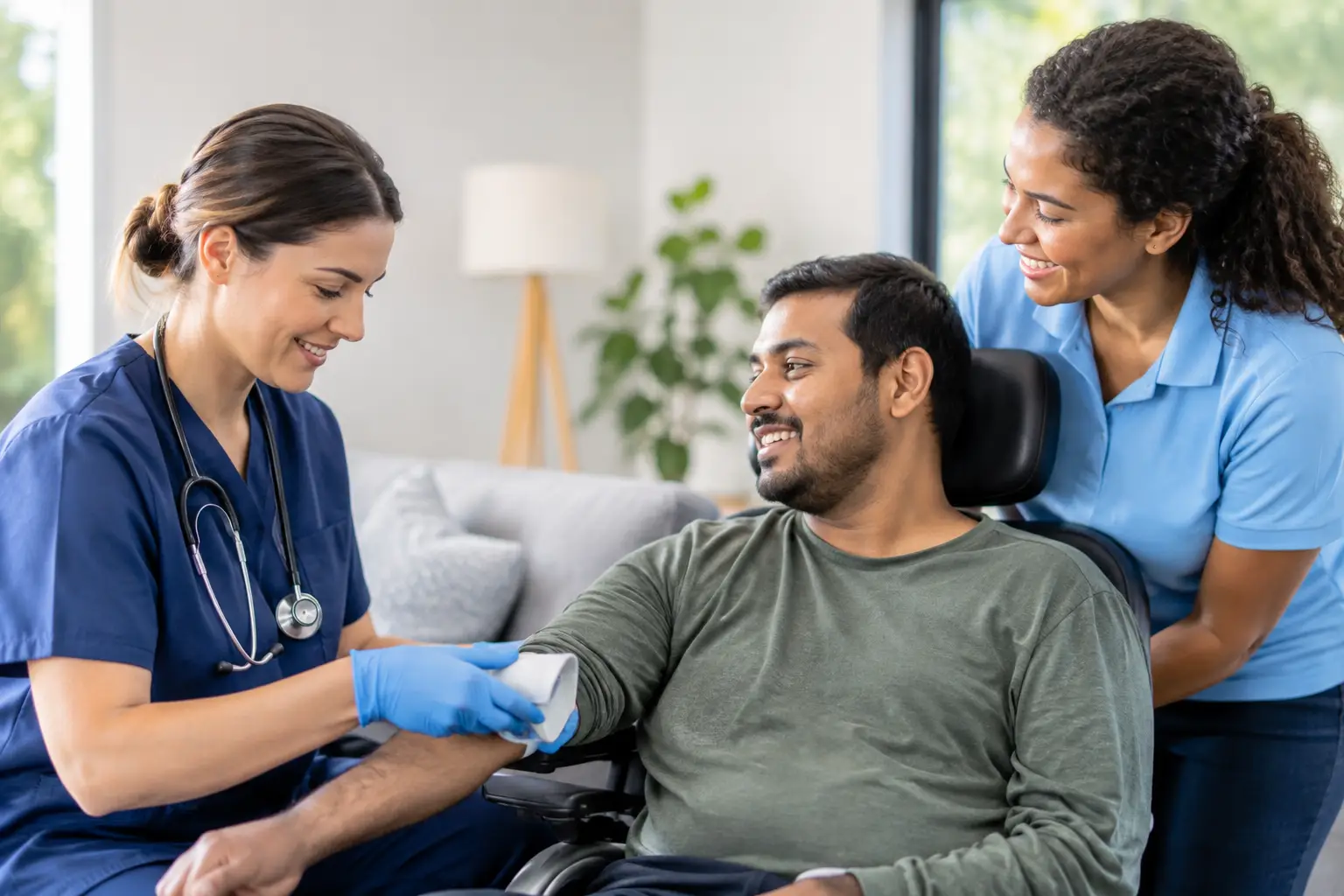
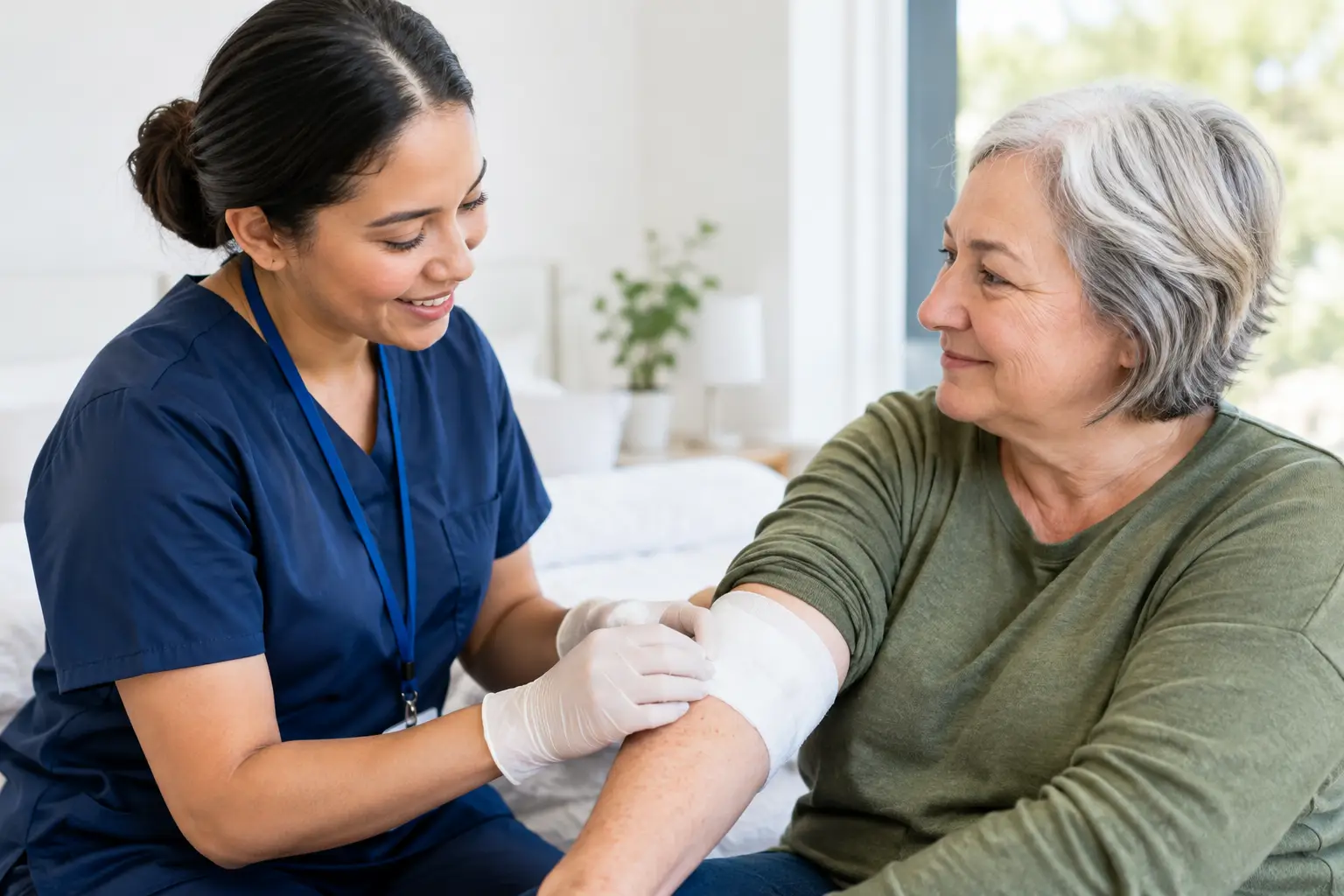
In practice, the most appropriate person is usually a Registered Nurse who is competent in wound assessment and community-based wound management. For participants with complex needs, a nurse-led NDIS care model is often the safest option because the nurse can assess the wound, document the plan clearly, review progress, educate support workers and escalate concerns when healing is not tracking as expected.
There are situations where another clinician may also be involved. A GP may diagnose underlying medical issues, prescribe treatment, review infection concerns or support referrals. A nurse practitioner may assess and manage the wound with a broader clinical scope. A specialist team, such as a hospital wound clinic, vascular service or surgeon, may direct treatment where the wound is severe, recurrent or linked to a complex medical condition.
What generally should not happen is a non-clinical provider, untrained support worker or family member creating a wound care plan on their own and treating it as a clinical document. They may provide valuable day-to-day observations, but they are not the right person to complete formal wound assessment, set treatment directions or determine clinical risk.
Why nursing input is often the right fit for NDIS wound care
Many wounds in the NDIS space are not simple. They may be pressure injuries, skin tears, venous leg ulcers, diabetic foot wounds, surgical wounds, moisture lesions or wounds complicated by continence issues, reduced mobility, poor nutrition, cognitive impairment or difficulty reporting pain. That is where practical nursing assessments make a real difference.
A nurse is not only looking at the wound bed. They are also looking at what is causing delayed healing and what is likely to happen between visits. Is the participant spending long hours in bed or seated? Are transfers causing friction? Is continence affecting skin integrity? Do support workers know when to escalate odour, slough, heat, swelling or increased exudate? Is the current routine realistic for the home environment?
For Support Coordinators and SIL providers, this is often the gap. There may be concern about a wound, but no clear clinical support in the home, no documented routine and no one taking responsibility for ongoing review. A nurse-led wound care plan helps close that gap with safe, dignity-focused care and clear reports for Support Coordinators.
What a proper wound care plan should include
A clinically sound wound care plan should go beyond dressing product names. It should include the wound type and location, relevant history, measurements, wound appearance, surrounding skin condition, pain, exudate, infection concerns, treatment approach, dressing frequency, pressure care or offloading requirements, hygiene and skin protection strategies, review timeframes and clear escalation pathways.
Just as importantly, it should explain who is doing what. Some participants need a nurse to complete all wound care. Others may have a nurse assess and set the plan, with trained support workers assisting under clinical oversight. That division of responsibility needs to be clear. If support workers are involved, they need documented guidance, practical training and defined limits on what they can and cannot do.
For NDIS purposes, the plan should also connect the wound to functional impact and support needs. If a participant requires regular nursing due to skin breakdown, pressure injury risk or wound-related complexity, the documentation should make that clear without drifting into unsupported funding claims.
When GP or specialist input is needed as well
A nurse can write and manage many community wound care plans, but there are times when additional medical input is essential. If the wound is not healing, shows signs of infection, involves ischaemia, exposes deeper structures, follows recent surgery, is linked to uncontrolled diabetes, or raises concern about osteomyelitis or systemic illness, the participant may need urgent GP or specialist review.
This is where good clinical care is not about working in silos. The best outcomes usually come from coordinated input. A nurse may lead the day-to-day wound management plan, while the GP manages prescribing and broader medical review, and a specialist service advises on complex treatment decisions.
For families, this can feel like a lot of moving parts. For referrers, it can be hard to know who should take the lead. Usually, the right answer is the clinician with the right wound care competence and enough visibility over the participant’s home routine to make the plan workable.
Can support workers follow a wound care plan?
Sometimes yes, but only within the scope of the participant’s needs, the complexity of the wound, the worker’s training and the level of clinical oversight. This is not an area for assumptions.
If a participant has stable needs and the wound care routine is straightforward, support workers may be able to assist with tasks that have been clearly delegated and taught. If the wound is unstable, high risk, clinically complex or changing quickly, direct nursing involvement is usually needed. Even where support workers are involved, support worker training and clinical oversight remain central to safe care.
That is especially important for pressure injuries, wounds affected by continence, participants with limited sensation, and situations where skin breakdown can escalate quickly. A written plan without education and review is rarely enough.
What Support Coordinators should look for
If you are coordinating supports for a participant with a wound, it helps to ask a few practical questions early. Has the wound been clinically assessed? Is there a current written care plan? Who is reviewing healing? Are support workers expected to do wound-related tasks, and if so, have they been trained? Is there a clear escalation process if the wound deteriorates?
When those answers are vague, delays tend to follow. Dressings get changed inconsistently, pressure care slips, the participant becomes uncomfortable, and what began as a manageable skin issue can turn into an avoidable hospital presentation. Early referral for practical nursing assessments often saves time and reduces risk.
For NDIS documentation, quality matters. A brief note saying wound care is needed is rarely enough when the participant has complex health support needs. Clear clinical reports help everyone understand what is required, why it is required and what level of nursing involvement is appropriate.
Who can write an NDIS wound care plan in Australia for plan evidence?
If the wound care plan is also being used as part of broader NDIS evidence, the safest approach is to have it completed by a clinician who can assess, document and justify the required supports in plain, functional terms. In many cases, that will be an experienced Registered Nurse providing clinical support in the home.
The reason is simple. Good NDIS evidence does two jobs at once. It describes the clinical issue accurately, and it explains how that issue affects day-to-day care, safety and support requirements. A nurse who understands both wound care and NDIS documentation requirements is often well placed to provide that bridge.
This does not mean every wound automatically requires intensive nursing input. Some wounds are short term and straightforward. Others sit within a much bigger picture involving continence, pressure care, manual handling, reduced mobility, medication factors and recurring skin breakdown. It depends on the participant, the wound and the care environment.
What to have ready before making a referral
A referral moves faster when a few basics are available. Recent discharge information, current wound history, photos where clinically appropriate, medication details, known diagnoses, current dressing routine, infection concerns, continence factors, mobility issues and details of who is currently supporting the participant are all useful.
It also helps to be clear about the immediate question. Do you need a fresh wound assessment? A written care plan? Support worker education? A nursing report for review evidence? Ongoing wound monitoring? Those are related needs, but not exactly the same.
For participants and families in Adelaide, a nurse-led provider with experience in complex health support can usually assess not just the wound itself, but the wider risks around skin integrity, pressure care, continence and daily routines. Compassion Wings provides this kind of practical nursing input with clear documentation and ongoing clinical oversight where needed.
A good wound care plan should make life safer, not more confusing. If the current arrangement feels unclear, inconsistent or too dependent on guesswork, that is usually the sign that a qualified nurse needs to step in and put a proper clinical plan around it.




2 Comments
Best Signs a Participant Needs Clinical Nursing Oversight - Compassion Wings
August 1, 2026[…] oversight can clarify the wound-care routine, monitor healing, identify escalation triggers and provide a care plan that support workers can […]
When Should Wounds Be Escalated? Nursing Guide - Compassion Wings
September 7, 2026[…] is not enough for a high-risk participant. A nursing review can identify whether the person needs a clinical care plan, more frequent skin checks, changes to continence routines, or support worker training and clinical […]