
NDIS Pressure Injury Care at Home in 2026
A red mark over a heel or tailbone can look minor at first. For an NDIS participant with reduced mobility, continence concerns or complex health needs, it can become a serious wound quickly. That is why NDIS pressure injury care at home in 2026 is less about reacting late and more about early nursing assessment, practical prevention and clear clinical oversight.
For Support Coordinators, families and SIL teams, the pressure is real. You need to know whether skin damage is a simple issue that can be managed with routine changes, or a sign that the participant needs nurse-led NDIS care, a wound care plan, support worker training and stronger documentation for plan review or change of circumstances. Getting that call right can reduce avoidable hospital presentations and help participants stay safe at home.
What pressure injury care at home looks like in 2026
Pressure injuries are not only about time spent in bed. They can develop in chairs, wheelchairs, recliners and during long periods of limited movement. Moisture, friction, poor nutrition, impaired sensation, continence issues, illness and equipment problems all raise the risk.
In 2026, home-based pressure care is expected to be more structured. Referrers and families are looking for practical nursing assessments, not vague advice. They need a clinician to assess skin integrity, identify risk areas, check whether current routines are realistic, and document what support workers actually need to do on shift.
That matters because prevention is only effective when it works in the real home environment. A repositioning plan that looks good on paper but cannot be followed consistently is not a safe plan. The same goes for dressings that are too complex for the current team, seating that is contributing to pressure, or continence issues that keep the skin damp for hours at a time.
Why early nursing input matters for NDIS pressure injury care at home in 2026
Pressure injuries can deteriorate fast, especially when there are overlapping risks such as incontinence, diabetes, poor circulation, infection risk or limited mobility. Early review by a nurse helps separate redness that will settle with pressure relief from skin changes that need active wound care and close monitoring.
A nurse-led assessment also brings something families and Support Coordinators often need urgently – clarity. Is the skin intact or broken? Is there slough, odour, exudate or signs of infection? Are current transfers causing shear? Is the participant spending too long in one position because their support routine is unrealistic or their pain is poorly managed? These details shape the care plan and the urgency of escalation.
This is also where documentation becomes more than paperwork. Clear reports for Support Coordinators can explain clinical risk, current wound status, required nursing supports, training needs and why additional NDIS-funded clinical support in the home may be reasonable and necessary. Good evidence helps everyone make safer decisions.
What a practical nursing assessment should cover
A proper pressure injury review at home should go well beyond checking the wound itself. The wound matters, but so does everything around it.
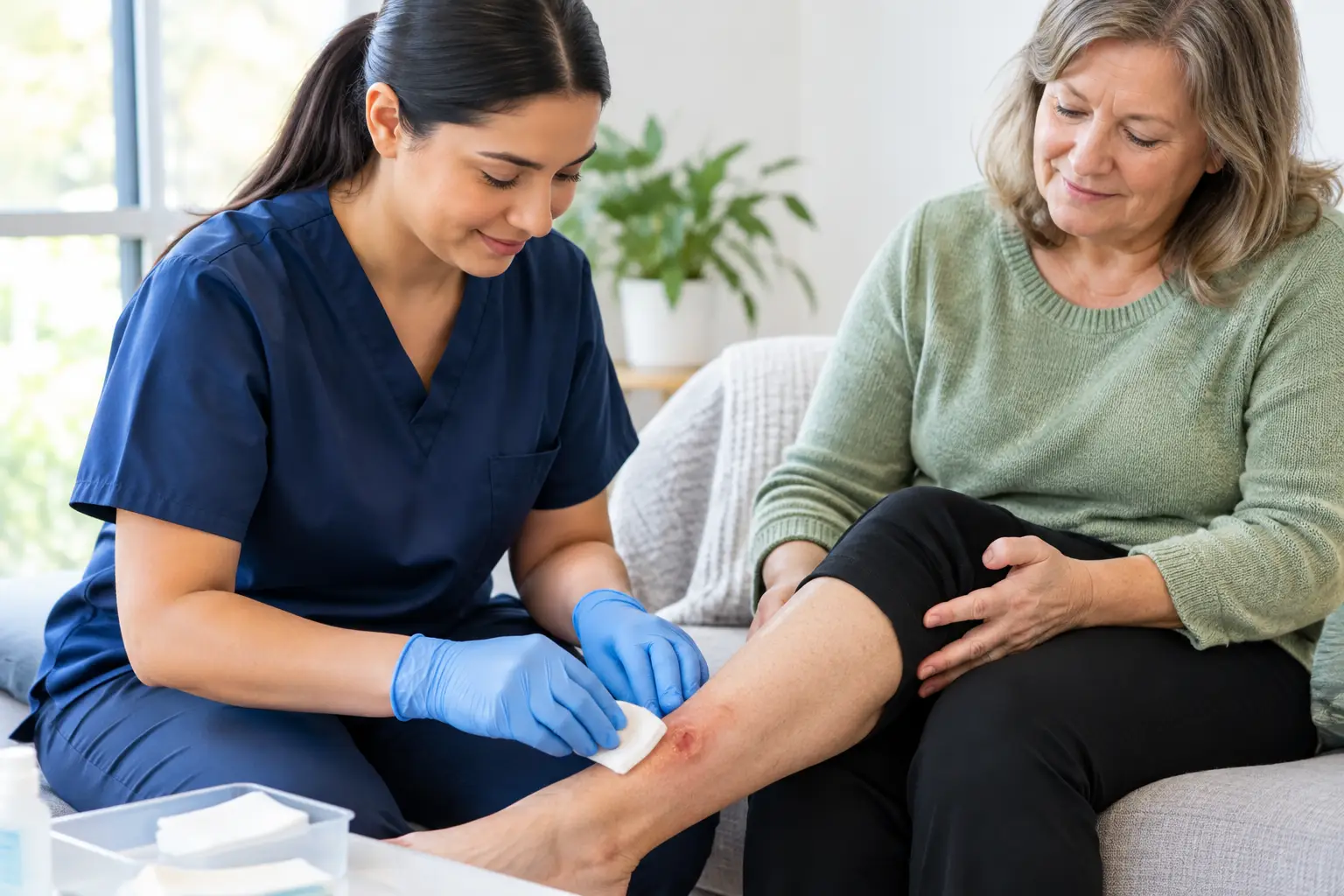
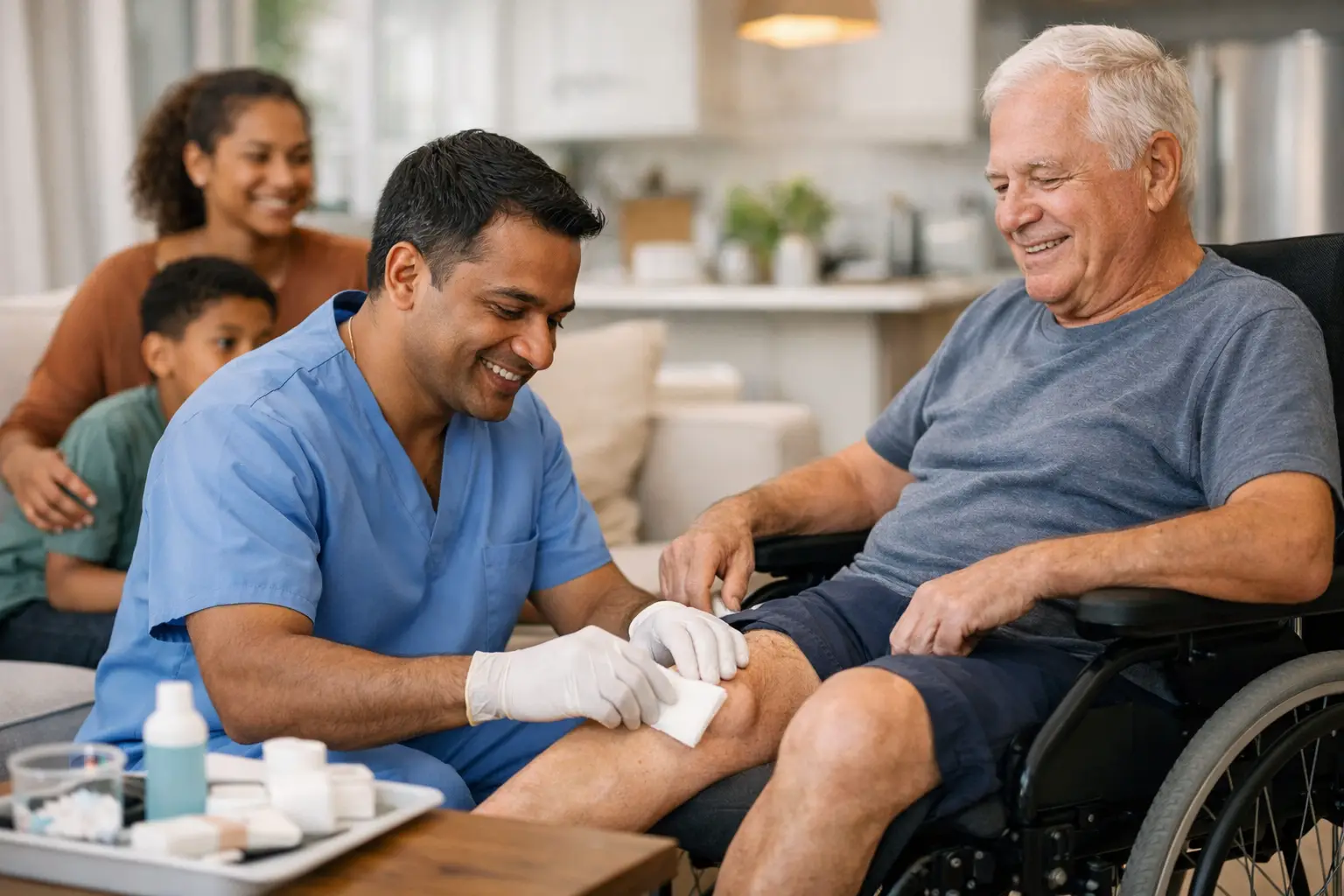
A nurse should assess the wound or at-risk area, the participant’s mobility and repositioning capacity, continence and moisture exposure, pain, current support routines, nutrition concerns, equipment being used, and whether support workers understand the care required. If the participant already has dressings in place, those need review too. Sometimes the issue is not the dressing product but inconsistent application, delayed changes or skin trauma caused during removal.
For participants with complex health support needs, the assessment should also consider related issues such as catheter care, bowel and bladder routines, stoma management, diabetes support and medication factors that may affect healing. Pressure injuries rarely sit in isolation.
This whole-picture approach is often what changes outcomes. A wound can stall for weeks if moisture damage from incontinence is not addressed, or if support workers are unsure how often to reposition safely. Practical nursing assessments identify these gaps early.
Prevention is still the main job
Once a pressure injury develops, care becomes more time-sensitive, more clinical and often more expensive in effort. Prevention remains the strongest strategy.
At home, prevention usually comes down to consistent pressure relief, moisture management, regular skin checks and support routines that can actually be maintained. That sounds simple, but it depends on the participant’s body, environment and supports. A person who can weight-shift independently needs a different plan from someone who needs full assistance with transfers and repositioning.
It also depends on dignity. Safe, dignity-focused care means skin inspections and continence support are handled respectfully, without rushing or exposing the participant unnecessarily. In practice, this often improves compliance and reduces missed warning signs.
Support worker training and clinical oversight are especially important where multiple staff are involved. If one worker repositions correctly and another does not, the participant still carries the risk. Training should be specific, practical and documented, not a generic handover that leaves room for guesswork.
When Support Coordinators should refer to a nurse
A referral is usually warranted well before a wound becomes severe. If there is persistent redness, broken skin, recurring skin damage, moisture lesions that are not resolving, pain during pressure, increasing exudate, odour, heat, swelling or concerns about infection, nursing input should be arranged promptly.
Referral is also sensible when the care routine is falling apart. This might look like repeated dressing failures, support workers feeling unsure, family members doing complex care without guidance, or a participant returning from hospital without a clear wound plan. In those cases, the risk is not just the wound itself but the lack of safe systems around it.
For Support Coordinators, another common referral point is evidence gathering. If a participant’s needs have changed, nursing reports for plan reviews or change of circumstances can document why additional wound care, pressure care, continence management or training support is clinically required.
What good documentation should include
When pressure injury care is being delivered under the NDIS, documentation needs to be clinically useful and audit-safe. A vague note that says “wound dressed” does not tell a coordinator, funder or incoming clinician enough.
Clear records should describe the wound location, condition, changes over time, treatment provided, participant response, risk factors, escalation steps and what support workers are expected to do between nursing visits. If there are red flags such as suspected infection, increased pain or tissue breakdown, those should be documented and escalated clearly.
This level of detail protects the participant first. It also gives families, Support Coordinators and plan managers confidence that complex care is being managed properly. For nurse-led services such as Compassion Wings, that reporting is part of the clinical service, not an afterthought.
The role of support workers in home pressure care
Support workers are often central to prevention, but they should not be left carrying clinical tasks without the right direction. In pressure care, their role may include observing skin changes, assisting with repositioning, following continence and hygiene routines, reporting concerns early and implementing the daily parts of an established care plan.
Where supports are high intensity, training matters. Workers need to understand what to look for, when to escalate, how to reduce friction and shear during movement, and how to protect skin dignity during personal care. They also need a documented plan they can follow confidently.
This is where clinical oversight makes the difference. A nurse can assess, set the routine, train the team and review whether the plan is working. If the participant’s condition changes, the plan can change with it.
Why local, home-based nursing support matters
For participants across Adelaide, particularly those with recurring wounds, limited mobility or frequent hospital admissions, local clinical support in the home can prevent long gaps between concerns and action. Home visits allow the nurse to see the chair, bed, transfer space and support routine in real conditions, not just in theory.
That context often explains why a wound is not healing. It may be a transfer technique, a continence timing issue, poor pressure relief in a recliner, or confusion across multiple workers. These are practical problems, and they need practical nursing responses.
The best outcomes usually come when the participant, family, support workers and coordinator are all working from the same clinical plan. Not a long document that sits unread in a folder, but a clear and usable guide for daily care.
Pressure injuries can be complex, but the response at home should still feel calm, organised and clinically clear. When the right nursing assessment happens early, the pathway becomes much easier to manage – for the participant, for the family, and for every professional trying to keep care safe.