

Wound Assessment Versus Wound Dressing Support
A dressing can be changed quickly. Understanding why a wound is not healing, whether it is deteriorating, and what daily supports may be contributing to the problem requires a different level of clinical input. That is the practical difference in wound assessment versus wound dressing support for NDIS participants with complex health needs.
For families and Support Coordinators, the distinction matters because a wound can look manageable one week and become a serious health risk the next. Nurse-led NDIS care brings clinical judgement to the home, along with documentation, escalation pathways and support worker guidance that help keep care consistent between nursing visits.
Wound dressing support focuses on the immediate task
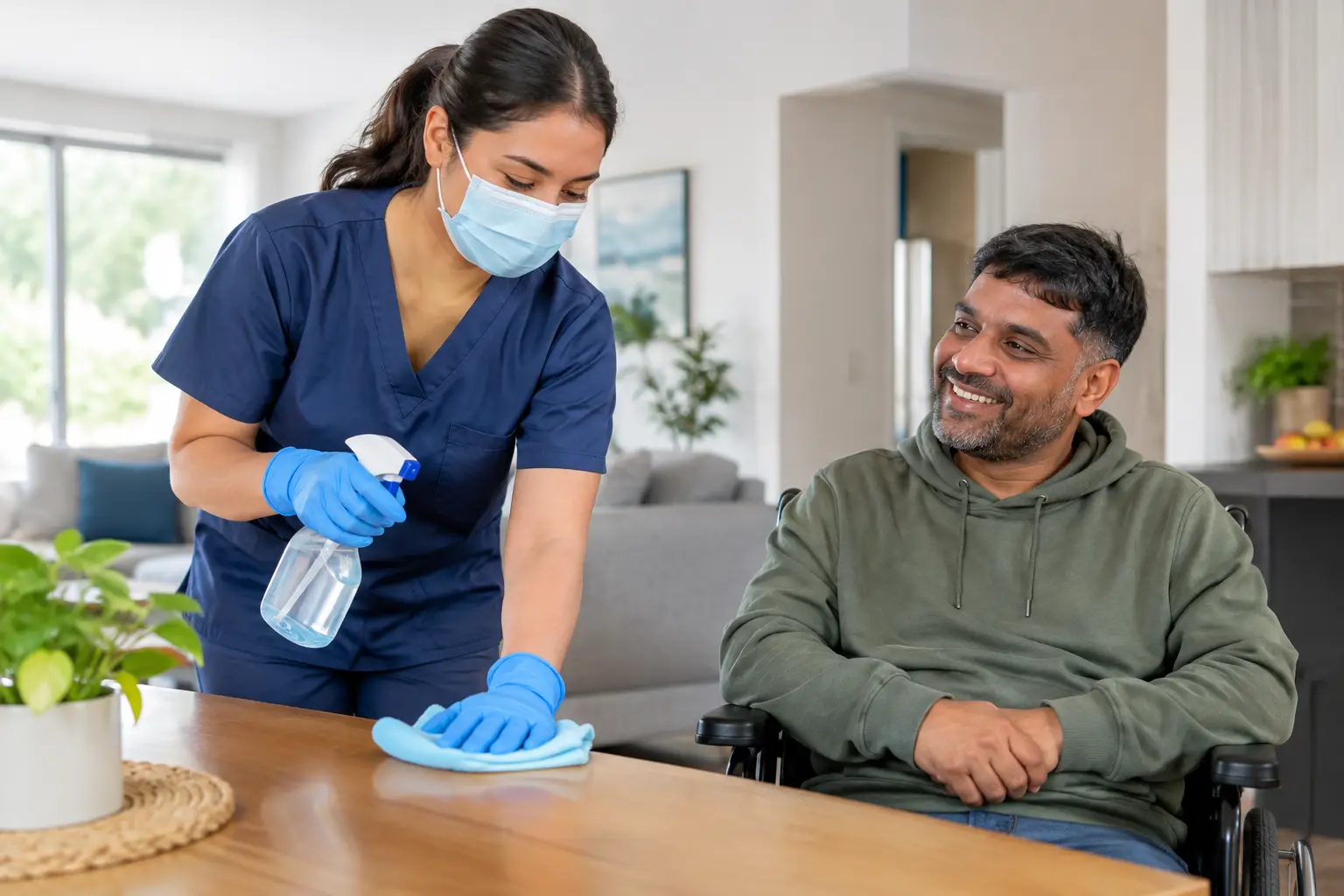
Wound dressing support generally refers to the hands-on care involved in maintaining a wound dressing according to an established plan. This may include removing a soiled dressing, cleansing as directed, applying the prescribed products, observing the wound for obvious changes and documenting that the task has been completed.
When the wound is stable and a current clinical plan is clear, this support can be an appropriate part of a participant’s routine. Consistency is particularly valuable where a participant needs assistance due to limited mobility, reduced hand function, cognitive impairment or a complex daily care schedule.
However, a dressing change is not the same as a clinical assessment. The task itself does not answer key questions: Is the wound healing at the expected rate? Is pressure, moisture, friction, diabetes, poor circulation or nutrition affecting recovery? Has the wound changed in size, tissue type, drainage or odour? Is the current dressing still suitable?
Support workers should not be expected to make clinical decisions outside their role or training. They need clear instructions, defined observation points and a reliable pathway for raising concerns. This is where clinical oversight protects both the participant and the people providing day-to-day support.
Wound assessment identifies risk and directs care
A wound assessment is a practical nursing assessment that examines the wound in context, rather than viewing it as an isolated skin problem. A nurse considers the wound’s location, dimensions, depth, tissue appearance, drainage, surrounding skin, pain, odour and signs that may indicate infection or deterioration.
Just as importantly, the assessment considers the person. A participant who spends long periods in bed or a chair, has reduced sensation, experiences incontinence, lives with diabetes, or has a history of pressure injuries may need a more detailed risk review. Their transfer routines, continence plan, nutrition, medication, equipment use and capacity to report pain can all affect skin integrity.
This does not mean every small wound needs an extensive nursing intervention. It depends on the cause, the participant’s health history, whether the wound is improving and whether the current care arrangement is working safely. But when healing stalls, the wound recurs, risks are unclear or several providers are involved, nursing assessment gives the whole team a safer starting point.
A nurse-led assessment can lead to a clear care plan that sets out what the wound requires, how often it should be reviewed, what must be documented, and which changes require prompt escalation. It can also identify when medical review, specialist wound advice or urgent treatment is needed.
Why the difference matters for NDIS planning
NDIS-funded clinical supports need to be connected to the participant’s disability-related functional needs and the practical supports required to maintain safe care at home. A well-written nursing report does not simply state that dressings are needed. It explains the clinical risks, the impact on daily function, the level of skill required and the consequences if care is inconsistent.
For Support Coordinators, this evidence can clarify whether the immediate need is regular dressing assistance, a comprehensive assessment, a clinical care plan, support worker training, ongoing nursing review, or a combination of these. These needs often change over time. A participant may initially require frequent nursing input while a wound is unstable, then transition to a defined support worker routine with scheduled nurse reviews once the plan is established.
Clear reports for Support Coordinators are especially helpful when preparing for a plan review or change of circumstances. They provide factual clinical information that can support discussions about risks, reasonable care routines and the resources needed to implement them safely. Funding decisions remain with the NDIA, but good nursing evidence makes the participant’s circumstances easier to understand.
When dressing support alone may not be enough
A request for dressing support should prompt a closer nursing referral when there are signs that the underlying plan may no longer be adequate. This includes wounds that are not reducing in size, increasing pain, new or worsening redness, heat, swelling, unexplained drainage, odour, bleeding, fragile surrounding skin or repeated dressing leakage.
A review is also sensible after a hospital discharge, a new diagnosis affecting circulation or diabetes management, a decline in mobility, recurrent falls, increasing incontinence, or a change in who provides daily care. These situations can alter the participant’s pressure and skin-integrity risks even if the wound itself appears unchanged.
Pressure injuries deserve particular attention. Changing a dressing without addressing the source of pressure can result in a repeated cycle of breakdown. The clinical response may need to include repositioning routines, skin checks, continence management, transfer considerations and practical education for the people supporting the participant.
The role of support worker training and clinical oversight
Even an excellent wound plan has limited value if it is difficult to follow in a real home environment. Support worker training and clinical oversight translate nursing recommendations into safe daily practice. Training should be specific to the participant’s needs, not a generic session that leaves staff uncertain about what they can and cannot do.
Depending on the plan, staff may need to understand infection prevention procedures, dressing instructions, documentation expectations, skin inspection points, pressure-relief routines and escalation triggers. They should know precisely who to contact if the wound changes and what information to report.
Good oversight also considers participant dignity. Wound and continence-related care can be intrusive, painful or distressing. A calm routine, clear consent processes, privacy and respectful communication are central to safe, dignity-focused care. They also make it more likely that concerns will be identified early rather than hidden because a participant feels embarrassed or overwhelmed.
What a useful referral should include
A nursing referral does not need to be lengthy, but a few accurate details help determine the right response. Include the wound’s known cause and location, current dressing routine, recent changes, relevant diagnoses, discharge information if available, treating team contacts and any current clinical plans.
It is also useful to explain the practical problem. Perhaps the family is worried about delayed healing, staff are receiving conflicting instructions, dressings are repeatedly coming off, or the participant has returned home without a workable care routine. These details help a nurse assess clinical risk and organise support that is realistic in the home.
For Adelaide participants with complex health support needs, Compassion Wings can provide clinical support in the home, practical nursing assessments, wound care plans, support worker education and clear nursing documentation. The aim is not to over-medicalise routine care. It is to ensure that the right clinical input is present when a wound creates uncertainty, risk or a growing burden for the participant and their care team.
If a wound care routine feels unclear, repeatedly changes, or depends on staff making judgement calls without a current plan, that is a useful point to seek nursing advice. Early assessment can turn uncertainty into a clear, workable routine that helps participants stay safe at home.