
Stoma Nursing Salisbury Adelaide for Complex Care
A leaking pouch at 2 am, broken skin around a stoma, or a sudden change in output can quickly turn an established routine into a serious concern. For participants and families seeking stoma nursing Salisbury Adelaide, the need is rarely limited to changing a bag. Safe stoma care requires practical nursing assessment, attention to skin and infection risk, clear routines, and clinical oversight that works in the home.
For Support Coordinators, SIL providers, discharge teams and families, the central question is often: does this participant need specialist nursing input, or can an existing support routine continue safely? The answer depends on the person’s stoma type, health history, capacity, support environment and current risks. A nurse-led assessment helps turn those details into a care plan that is practical, documented and appropriate for the people providing day-to-day support.
When stoma care needs nursing input
A person may manage their stoma independently for years, then need additional support after a hospital admission, change in mobility, cognitive decline, weight change, medication change or decline in hand function. Others need consistent assistance from the outset because the care is complex, the skin is vulnerable, or multiple health conditions affect their routine.
Nursing input is particularly valuable when there are repeated leaks, sore or weeping peristomal skin, bleeding, odour that is new or unusual, difficulty getting a secure seal, frequent pouch changes, uncertainty about supplies, constipation, diarrhoea, high or low output, or signs that the participant is becoming unwell. These issues can affect comfort, confidence, hydration, nutrition and skin integrity. They can also lead to avoidable urgent presentations when concerns are not recognised early.
A stoma nurse does not replace the participant’s treating medical team or stoma therapist. Rather, clinical support in the home can help monitor risks, implement recommendations, identify changes that need escalation and ensure everyday care is being carried out safely. This is especially relevant where paid support workers, family members or multiple providers share responsibility for the routine.
Stoma nursing in Salisbury Adelaide: what an assessment covers
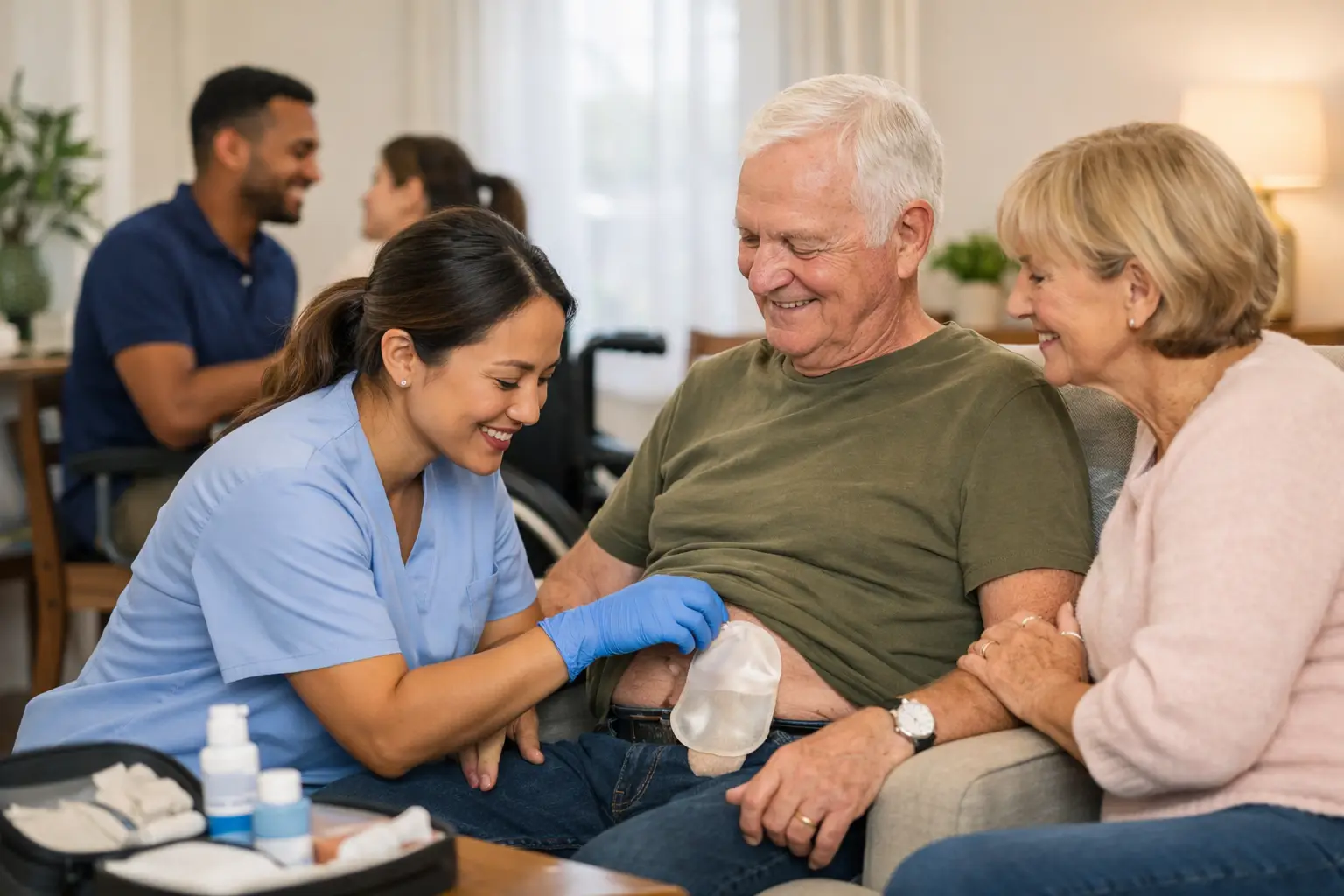
A thorough stoma assessment starts with the participant, not just the appliance. A nurse considers the reason for the stoma, whether it is a colostomy, ileostomy or urostomy, the participant’s usual routine, their ability to manage care, and what has recently changed. The assessment also considers existing conditions that can complicate care, including diabetes, reduced mobility, pressure injury risk, poor skin integrity, bowel conditions and medication effects.
The stoma and surrounding skin should be assessed respectfully and with consent. A nurse will look for issues such as redness, stripping, ulceration, moisture damage, fungal rash, a poor fit around the stoma, retraction, prolapse, hernia concerns or changes in the stoma’s appearance. Not every variation is an emergency, but changes need to be documented and assessed in context.
Practical nursing assessments also examine the actual environment in which care occurs. Is there a clean, private and well-organised space? Are the right supplies available and stored correctly? Does the participant have a routine that works on weekends and after hours? Do support workers know what is normal for that person, what to record and when to contact a nurse or seek urgent medical assistance?
These details are what make a clinical plan usable. A plan that only says “assist with stoma care” does not provide enough direction for complex health support. It should describe the care steps, infection prevention measures, preferred products where known, skin observations, waste disposal, documentation requirements, escalation pathways and the participant’s individual preferences.
Protecting skin, dignity and routine
Peristomal skin problems are among the most common reasons a previously manageable stoma routine becomes difficult. Leakage can expose the skin to output, adhesives can damage fragile skin during removal, and an ill-fitting appliance can create a cycle of discomfort and frequent changes. A participant may then avoid eating, drinking or leaving home because they fear another leak.
Safe, dignity-focused care means treating these concerns as clinical matters, not as an inconvenience. Nursing assessment can identify patterns behind recurrent leaks or skin irritation and provide practical recommendations for the care team. Where concerns sit outside the scope of home-based nursing support, the nurse can recommend timely review by the relevant treating clinician or stoma service.
Dignity is equally important during routine care. Participants should be involved in decisions wherever possible, including the timing of care, privacy arrangements, preferred language and what level of assistance they want. For a person who cannot direct every step of their care, consistent documentation and trained staff help preserve comfort and reduce unnecessary exposure or distress.
Support worker training and clinical oversight
When support workers assist with stoma care, they need more than a brief handover. They need clear, participant-specific guidance and a chance to demonstrate that they understand the required routine. Generic training may not address the risks created by a particular stoma, skin condition, bowel pattern or communication need.
Nurse-led NDIS care can include support worker training and clinical oversight tailored to the participant’s plan. Training may cover hygiene and infection prevention, preparation of the care area, safe assistance with the documented routine, recording output or skin observations where required, recognising a leak or skin change, and escalating concerns promptly. The goal is not to make support workers responsible for nursing decisions. It is to give them the knowledge needed to follow the plan safely and know when to seek clinical direction.
Ongoing oversight matters because needs change. A plan written after discharge may need review once the participant is back in their usual home routine. New support workers may need education. Repeated incidents can show that the routine, supplies or level of support needs to be reconsidered. Clinical review creates a defensible record of these changes and the actions taken.
Clear reports for Support Coordinators
Support Coordinators are often asked to coordinate care when information is spread across hospital discharge paperwork, family observations, provider notes and funding documents. A clear nursing report can bring the clinical picture together without relying on vague statements about “high needs”.
Useful reports describe the participant’s stoma-related support requirements, observed clinical risks, the impact on daily care, current management strategies, recommended nursing interventions, training requirements and reasons ongoing oversight is needed. This evidence can assist with plan reviews or a change of circumstances where the person’s health needs have increased or where current supports are no longer sufficient to manage risk safely.
Funding decisions are made by the NDIA, and recommendations do not guarantee an outcome. However, timely, specific clinical documentation helps decision-makers understand why particular supports are being requested. It also gives families and providers a shared reference point while decisions are being considered.
What to include in a referral
A referral is stronger when it gives the nurse enough information to triage risk and plan the first visit. Relevant details include the participant’s diagnosis, stoma type if known, recent hospital admissions or discharge information, current concerns, treating team contacts, existing care instructions, current supports, communication needs and any skin, bowel, bladder or infection risks.
It is also helpful to explain the immediate reason for referral. For example, a participant may need an initial clinical care plan after discharge, a review of recurring leaks and skin breakdown, training for a new support team, or a nursing report for an NDIS review. This allows the assessment to focus on the most urgent clinical issues while building a workable longer-term routine.
Compassion Wings provides nurse-led clinical support in the home across Salisbury and wider Adelaide for participants with complex stoma and continence needs. The focus is practical: assess the risks, document the plan, train the people who need to implement it, and keep clinical concerns from being missed.
If a stoma routine is becoming harder to manage, early nursing review can make a meaningful difference. Small changes in skin condition, output or support capacity are often easier to address before they become a crisis.