

NDIS Wound Clinical Governance at Home in 2026
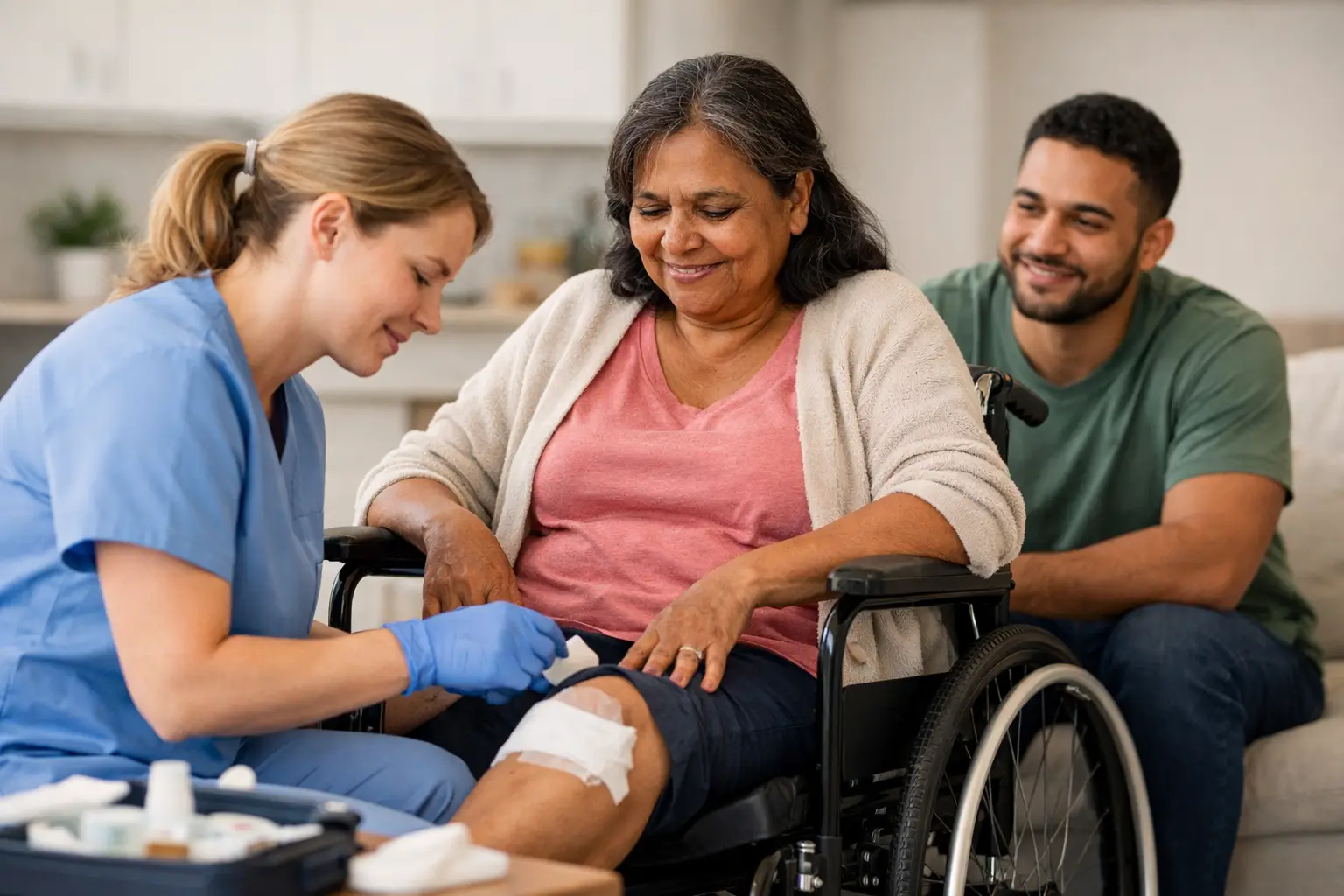
A wound dressing that gets changed on time is only one part of safe care. The bigger question in ndis wound clinical governance at home in 2026 is who is assessing the wound, how changes are documented, when risks are escalated, and whether everyone involved in the home routine understands their role.
For NDIS participants with complex health needs, wound care at home can become unsafe very quickly when oversight is loose. A wound may look stable for weeks, then suddenly show signs of infection, pressure damage, moisture injury or deterioration linked to continence issues, diabetes, poor nutrition or reduced mobility. Families and Support Coordinators are often left trying to piece together what happened from inconsistent notes, variable support worker practices and delayed nursing review. That is where clinical governance matters.
What NDIS wound clinical governance at home in 2026 actually means
Clinical governance is not just a policy folder sitting on a shelf. In home-based NDIS wound care, it means there is a clear system for assessment, planning, delegation, review, documentation and escalation. It is the framework that makes wound care safer, more consistent and easier to justify when clinical evidence is needed for plan reviews or change of circumstances.
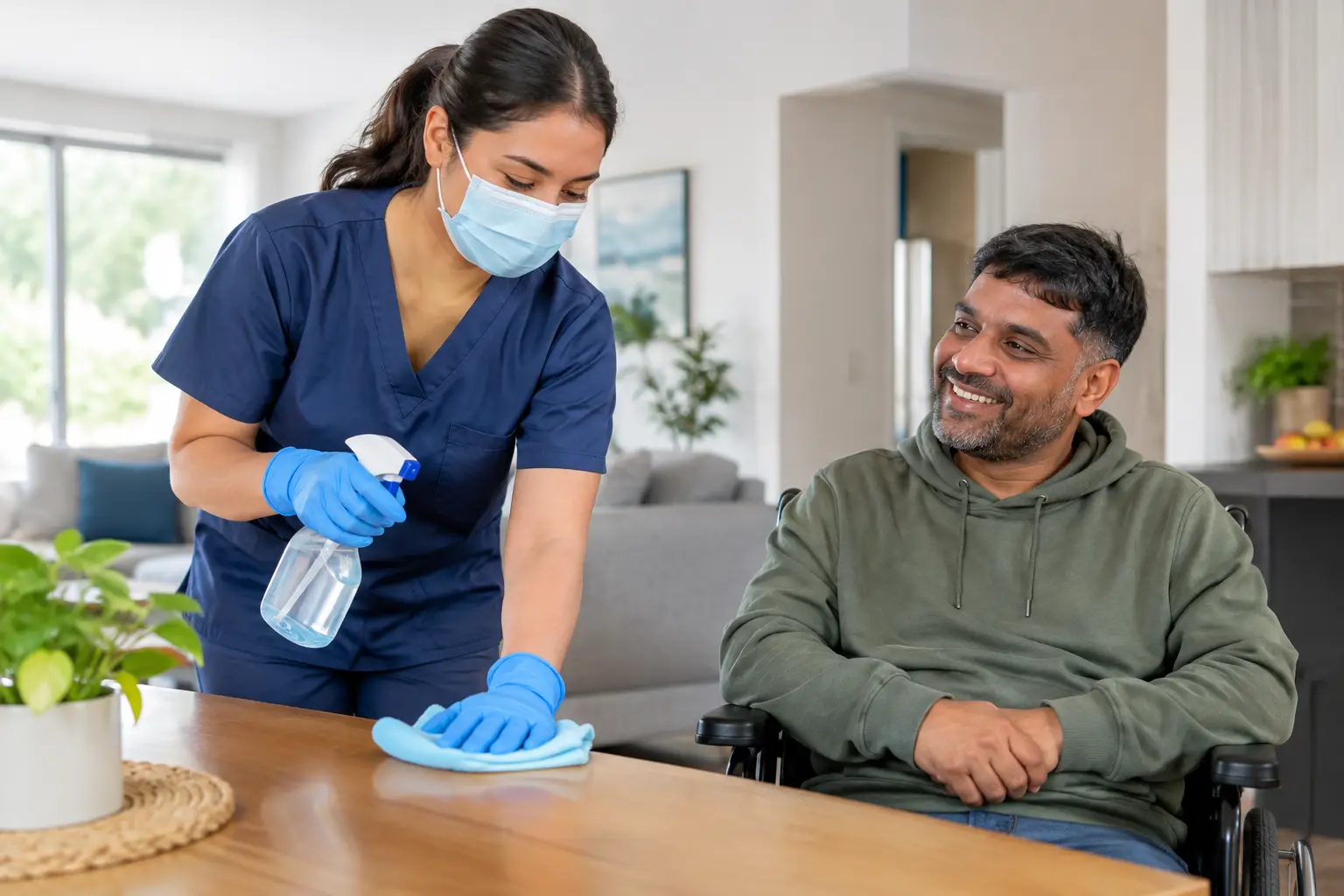
In practice, that means a nurse-led NDIS care approach where the wound is assessed properly, contributing risks are identified, care instructions are written clearly, and support workers know exactly what they can and cannot do. It also means there is ongoing clinical support in the home rather than a one-off visit followed by guesswork.
By 2026, expectations are higher. Referrers, families and providers are under more pressure to show that complex health support is being delivered with proper oversight. If a participant has pressure injuries, skin tears, surgical wounds, moisture-associated skin damage, diabetic foot concerns or wounds complicated by continence issues, casual arrangements are rarely enough.
Why home wound care can fail without governance
The main problem is not always a lack of goodwill. More often, it is a lack of structure. A participant may have several support workers, a SIL team, family involvement, GP input and occasional nursing review, yet no single clinically accountable plan that joins everything together.
This leads to familiar risks. Dressings may be changed inconsistently. Pressure care routines may be written vaguely or not followed at the right frequency. Support workers may notice odour, exudate, redness or pain but not know whether it needs urgent escalation. Continence-related moisture damage may be treated as a wound issue alone when the underlying bladder or bowel routine is the real driver. A participant with diabetes may have delayed healing that is observed but not actively managed through clinical review.
Good governance does not remove complexity. It reduces preventable gaps. That is especially important in the home, where participants deserve safe, dignity-focused care without feeling like they are being constantly shifted between services.
The nurse-led elements that matter most in 2026
A strong home wound care model starts with practical nursing assessments. That means more than measuring length and width. The nurse needs to identify wound type, healing stage, skin integrity risks, pressure areas, continence impact, infection indicators, mobility limitations and any barriers to treatment adherence.
The next step is turning assessment into a usable care plan. Many home care problems come from documents that are technically complete but hard for non-clinicians to follow. A useful wound care plan needs plain language instructions, dressing frequency, red flag symptoms, escalation timeframes, pressure care directions and any infection control precautions relevant to the home environment.
Clinical governance also depends on review intervals. Some wounds need close follow-up, while others can be monitored over a longer period if they are stable. It depends on the cause, the participant’s health profile and the reliability of the support environment. A pressure injury in a person with reduced mobility and continence issues carries different risk from a small uncomplicated skin tear.
Then there is documentation. Clear reports for Support Coordinators are not just helpful admin. They are often the evidence needed to explain why nursing input, consumables, support worker training or increased clinical oversight are required. When wound care is poorly documented, the participant carries the risk and the referrer carries the uncertainty.
Support worker training is part of governance, not an optional extra
One of the most overlooked issues in home wound care is assuming support workers will simply “pick it up” as they go. In high-intensity or clinically sensitive supports, that approach is risky.
Support worker training and clinical oversight should cover the participant’s specific routine, not just generic manual handling or infection control. Workers may need to understand repositioning schedules, skin checks, dressing protection during personal routines, signs of wound deterioration, continence-related skin care, and when to stop and escalate rather than continue.
This does not mean every support worker is performing clinical tasks beyond their scope. It means they are trained to safely support the care plan around the wound. That distinction matters. Good governance protects the participant, but it also protects the support team by making roles clear.
For Support Coordinators and SIL providers, this is often the difference between a support arrangement that keeps drifting into crisis and one that becomes manageable. Clear nursing direction reduces mixed messages and gives everyone a more reliable baseline.
Documentation in 2026 needs to be audit-safe and clinically useful
In home-based NDIS care, poor documentation usually shows up at the worst time – after a hospital admission, during a funding review, or when a referrer asks for evidence that risks have increased.
Clinical notes should record what was assessed, what changed, what was recommended, what education was provided and what action is required next. Photos may form part of wound monitoring where consent and clinical process allow, but images alone are not enough. They need interpretation. A photo cannot explain whether peri-wound skin damage is linked to pressure, moisture, friction, poor offloading or inconsistent care routines.
This is where nurse-led providers bring real value. Practical reporting can connect the wound to wider clinical needs such as continence assessment, pressure care scheduling, equipment use, diabetes support, catheter-related complications or support worker training needs. That broader picture helps with safer decision-making.
When Support Coordinators should refer early
If a wound is not healing as expected, if the cause is unclear, or if support teams are struggling to maintain a safe routine, early nursing referral is usually the better option. Waiting until there is obvious deterioration often means more distress for the participant and a harder funding conversation later.
Early referral is particularly important when wounds sit alongside pressure injury risk, stoma complications, catheter issues, recurrent moisture damage, diabetes, reduced mobility or frequent hospital presentations. These are not isolated concerns. They interact.
For Adelaide-based referrers, especially those coordinating supports across busy rosters and multiple providers, timely nursing input can stabilise a situation before it becomes an emergency. A nurse-led service such as Compassion Wings can assess, document, train and escalate appropriately, which gives families and coordinators more certainty about what happens next.
What good onboarding looks like for wound care at home
A smooth start depends on getting the right information early. The useful details are usually the current wound history, recent discharge information if relevant, known diagnoses, medications affecting healing, continence status, mobility profile, current dressings, existing care instructions and who is involved in daily support.
It also helps to know what is not working. Is the issue wound deterioration, inconsistent routines, support worker confidence, skin breakdown linked to continence, gaps in review, or lack of documentation for the NDIS? Different problems need different responses.
This is why practical nursing assessments matter. The first visit should not be treated as a basic intake exercise if the participant has clear clinical complexity. Good onboarding lays the groundwork for safe care, realistic review timing and stronger evidence if the participant’s supports need to change.
The direction of care in 2026
The shift in 2026 is towards clearer accountability in the home. Not more paperwork for the sake of it, but better alignment between assessment, care delivery, worker training and clinical escalation. Home-based wound care works best when it is treated as part of an ongoing clinical system rather than a task to tick off.
That matters because wounds are rarely just wounds. They are often signs of wider pressure care issues, continence problems, mobility limitations, compromised skin integrity or gaps in daily support routines. When those factors are recognised early, participants are more likely to stay safe at home and avoid unnecessary hospital presentations.
For families, the reassurance comes from knowing someone is clinically watching the whole picture. For Support Coordinators, confidence comes from clear reports, defined next steps and a provider who understands how to translate nursing evidence into practical NDIS documentation. And for participants, the best outcome is care that feels consistent, respectful and safe in the place they know best.




1 Comment
10 Best Wound Documentation Tips for Safer Care - Compassion Wings
August 16, 2026[…] can support wound monitoring when used within an approved clinical system, with informed consent and appropriate privacy […]