
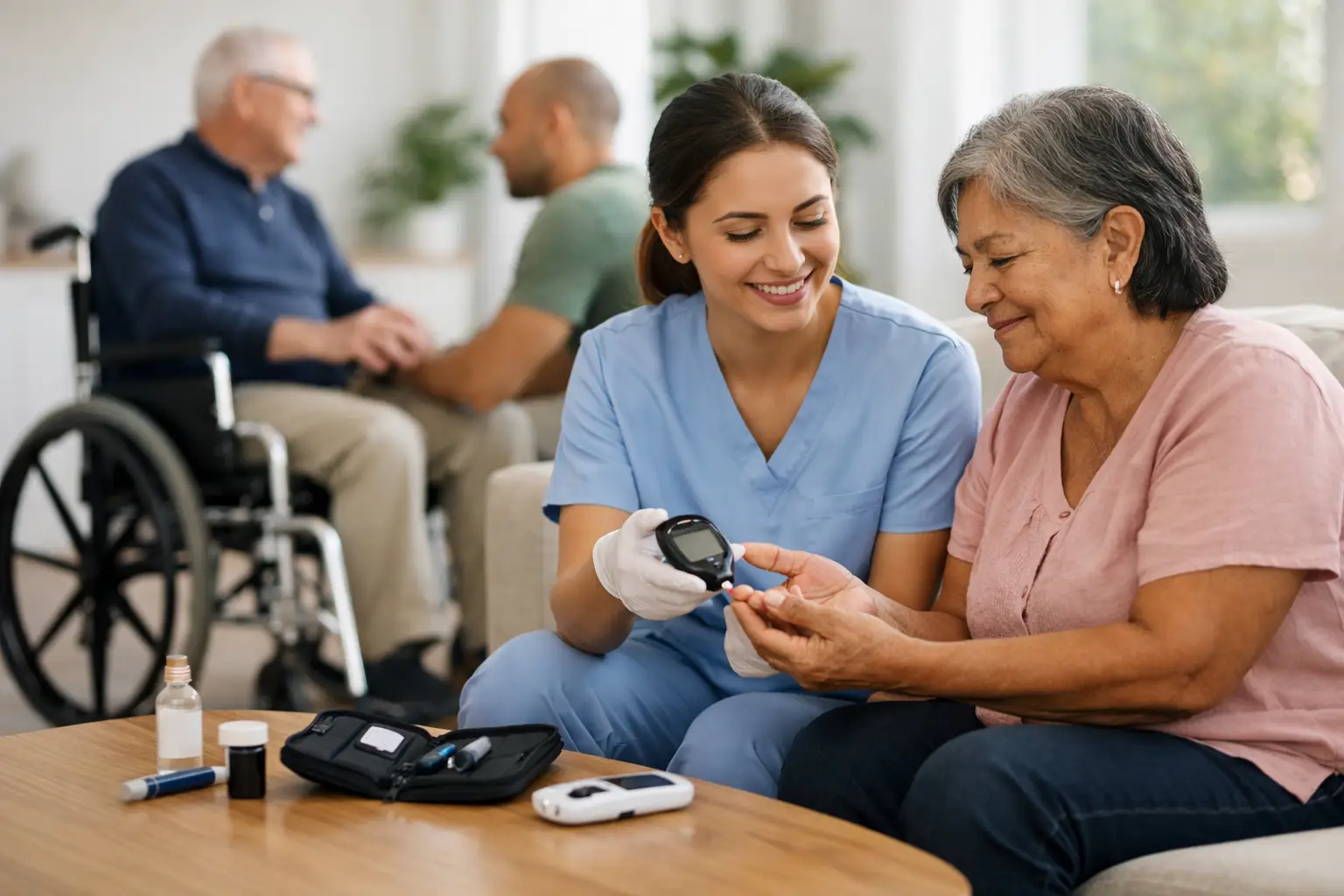
Diabetes Support for Safer NDIS Care at Home
A missed insulin dose, a change in appetite, vomiting, or an unfamiliar support worker can turn a stable diabetes routine into a clinical risk very quickly. Effective diabetes support is not simply a reminder to check blood glucose levels. It is nurse-led NDIS care that brings together practical nursing assessments, clear daily instructions, trained workers and prompt escalation when a participant’s condition changes.
For participants with complex health needs, families and Support Coordinators, the goal is straightforward: helping participants stay safe at home without leaving support workers to make clinical decisions beyond their role or training. Good diabetes care should protect health, preserve dignity and make the day-to-day routine more reliable.
When diabetes support needs nursing input
Diabetes management can vary greatly from one participant to another. Some people independently monitor their blood glucose and manage medication with minimal assistance. Others need hands-on support with blood glucose monitoring, insulin administration, meals, recognising symptoms, record keeping or responding to illness. The right level of clinical involvement depends on the person’s diabetes type, prescribed treatment, health literacy, mobility, cognition, vision, manual dexterity and the consistency of their support environment.
Nursing input is particularly valuable where routines have become inconsistent, there have been unexplained high or low blood glucose readings, medication changes, repeated hospital presentations, skin or wound concerns, or uncertainty among family and workers about what to do. It is also needed when a participant is transitioning home from hospital, starting services with a new provider, or relying on several workers across different shifts.
Diabetes can interact with other clinical issues in ways that are easy to overlook. Reduced sensation in the feet may mean a minor injury is not noticed early. Limited mobility can increase pressure and skin integrity risks. Cognitive changes may affect food choices, medication timing or the ability to report symptoms. Where continence, catheter, wound, bowel or medication needs are also present, care needs to be coordinated rather than managed in separate silos.
Diabetes support starts with a practical nursing assessment
A practical nursing assessment looks beyond a single blood glucose result. It considers how diabetes is actually being managed in the participant’s home and community setting. This includes the prescribed medication regimen, monitoring equipment, meal patterns, usual readings, warning signs, recent changes in health and the people who provide support.
The assessment should also identify what is working. A participant may already have a routine they understand well, but need workers to follow it consistently. Another participant may need information presented in a simpler format, visual prompts, or a clearer division between what they can do independently and when they need assistance. Safe, dignity-focused care avoids taking over tasks unnecessarily while making sure clinically significant risks are not ignored.
A nurse can review whether current documentation is practical for workers to use. If a plan is too vague, workers may record numbers without understanding what action is required. If it is too complicated, key steps may be missed during busy shifts. The most useful plan is specific enough to guide safe action and simple enough to be followed consistently.
What a safe daily diabetes care plan should cover
A diabetes care plan needs to reflect the participant’s individual medical directions. It should never replace advice from the treating doctor or diabetes team. Instead, it translates those directions into safe clinical support in the home, with clear boundaries around worker responsibilities and nursing oversight.
A well-developed plan commonly addresses blood glucose monitoring, prescribed medication or insulin support, meal and snack routines, fluid intake where relevant, documentation, and escalation pathways. It should state what a worker needs to observe, what must be recorded and who should be contacted if readings, symptoms or behaviour are outside the participant’s known pattern.
It should also account for the realities of daily care. What happens if the participant refuses a meal? What if they are unwell, sleeping later than usual, away from home, or their usual monitor is not working? What if a worker notices sweating, shakiness, confusion, fatigue, excessive thirst, frequent urination, nausea or a sudden change in responsiveness? These are not details to leave to guesswork.
Clinical instructions must align with the participant’s treating team directions, particularly for hypoglycaemia and hyperglycaemia responses. A plan should make it clear when to follow prescribed first-aid actions, when to contact a nurse or treating clinician, and when urgent medical assistance is required. If a participant is unconscious, having a seizure, severely confused or otherwise critically unwell, workers should call 000 and follow emergency procedures.
Support worker training and clinical oversight
Support worker training is a core safeguard in complex health support. Workers do not need to become diabetes specialists, but they do need to understand the participant-specific care plan, the tasks they are authorised and trained to perform, the signs that need escalation, and how to document care accurately.
Training should be practical, not just a document handed over at induction. It may include the correct use of the participant’s approved monitoring equipment, infection control, safe storage of supplies, observation of symptoms, responding within the written plan, and communicating clearly with family, coordinators and nurses. Competency needs can differ depending on whether workers are assisting with monitoring, medication support or high-intensity clinical tasks.
Regular clinical oversight matters because routines and risks change. A participant may lose weight, experience more frequent lows, begin a new medication, develop reduced appetite, or return from hospital with revised instructions. Without a review, workers can continue following an outdated plan with the best intentions. Nurse-led reviews help identify those changes early and update directions before small problems become significant ones.
Clear records support safer decisions
Accurate documentation is not paperwork for its own sake. Blood glucose records, medication support notes, symptom observations and incident details can show patterns that are otherwise missed. For example, repeated low readings at a particular time of day may indicate a need for treating-team review. Recurrent high readings during illness, changes in food intake or missed medication can also provide useful clinical evidence.
For Support Coordinators, clear reports for Support Coordinators can explain the participant’s current needs, risks, nursing recommendations and the level of oversight required. This is particularly helpful during plan reviews or a change of circumstances, where evidence needs to connect clinical needs with the practical supports required to implement care safely. Reports should be factual, participant-specific and based on assessment and observed care requirements rather than broad assumptions.
Good records also support continuity when there are multiple providers, family members or workers involved. They reduce reliance on verbal handovers and give the wider care team a shared understanding of what has occurred, what has changed and what needs follow-up.
When to refer for diabetes support
A referral for clinical diabetes support is worth considering when there is uncertainty about current routines, a new or changed diabetes diagnosis, declining self-management capacity, frequent blood glucose concerns, medication or insulin changes, hospital discharge, skin breakdown, repeated worker questions or family concern about safety. Early nursing involvement can be especially useful before a routine becomes unsafe, rather than after a preventable hospital presentation.
Useful referral information includes the participant’s diagnosis, current treating team, prescribed medication list, relevant discharge information, existing diabetes plans, recent concerns, other health conditions, current providers and the tasks workers are expected to assist with. This gives the nurse a clearer starting point for assessment, care planning and support worker education.
Compassion Wings provides nurse-led NDIS care across Adelaide for participants who need clinical assessment, care plans, training and ongoing nursing oversight. The focus is on practical recommendations that can be implemented safely by the people supporting the participant each day.
The most reassuring diabetes routine is not the one with the most paperwork. It is the one where the participant, family, workers and care team know what to do, know when something has changed, and know that a qualified nurse can step in before uncertainty becomes risk.