

Medication Oversight for Safe NDIS Care at Home
A missed dose can be concerning. A duplicated dose, unclear medication chart or sudden change in a participant’s alertness can be far more serious. For NDIS participants with complex health needs, medication oversight is not simply a reminder to take tablets. It is a clinical process that connects the participant, family, prescriber, pharmacist, nurse and support team around a safe, workable routine.
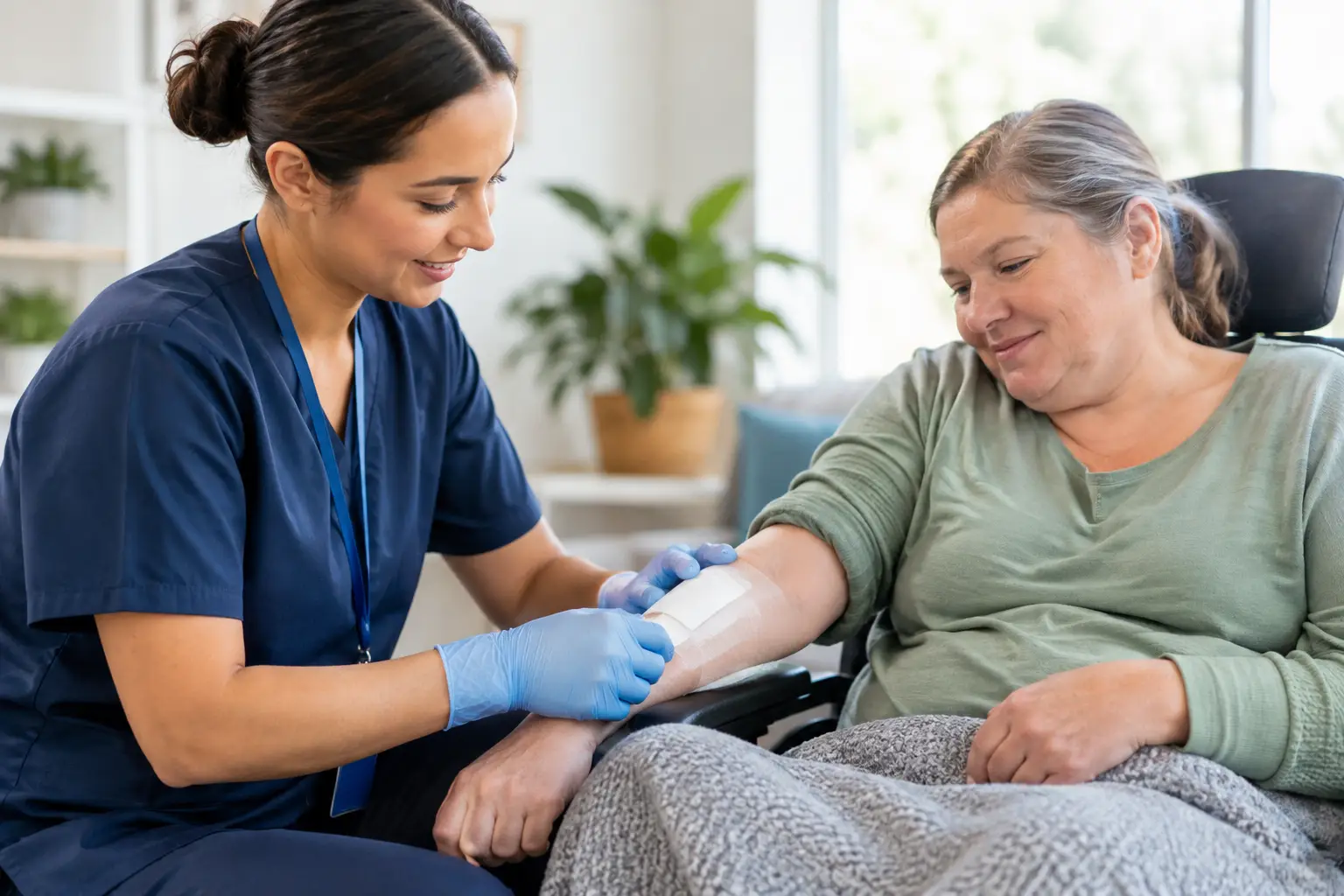
Where medication is part of a broader clinical picture – such as diabetes, epilepsy, catheter care, bowel management, chronic pain, wound healing or mental health treatment – small gaps in communication can quickly create risk. Nurse-led NDIS care helps identify those gaps early, establish clear responsibilities and support safe, dignity-focused care in the home.
What medication oversight means in NDIS care
Medication oversight is the ongoing clinical review of how medicines are stored, administered, monitored and documented within a participant’s daily care routine. It considers much more than whether a medication pack is available. A practical nursing assessment looks at whether the medication information is current, whether staff understand the required supports, whether the participant can safely self-manage, and whether changes in health need to be escalated.
This does not replace the role of a GP, specialist or pharmacist. Prescribers make prescribing decisions, and pharmacists provide medication supply and pharmacy advice. The nurse’s role is to assess clinical risks, translate health directions into daily care plans, monitor concerns within scope, educate support workers and ensure the right clinician is contacted when something changes.
For some participants, oversight may be focused on one high-risk medicine or a new treatment after hospital discharge. For others, it may involve a complex routine with multiple medicines, variable doses, PRN medication, injections, enteral feeding requirements or medicines that affect bowel and bladder function. The appropriate level of nursing involvement depends on the participant’s health needs, capacity, support environment and the risks identified.
Why medication risks are often hidden at home
Medication problems rarely start with a single dramatic error. More often, they develop in ordinary moments: a discharge summary has not reached the full support team; an old medication list remains in a folder; a participant sees multiple doctors; or a support worker is unsure whether a PRN medicine can be given.
A participant may also be unable to explain side effects, recognise a missed dose or communicate a change in symptoms. This can be particularly relevant where there are cognitive, communication, neurological or complex physical health needs. The person’s preferences and independence should remain central, but safe support must match their actual clinical circumstances.
Medication oversight also needs to account for practical realities. Is medication stored safely but still accessible to the participant? Is the medication administration record clear and current? Are dose times realistic around meals, appointments and sleep? Does the team know what to do if medication is refused, unavailable, vomited after administration or suspected to have been given twice?
Without a clear answer to these questions, even committed support teams can be placed in an unsafe position.
When a nurse-led medication review is needed
Support Coordinators, families and SIL providers should consider clinical nursing input when medication routines become confusing, health status changes or staff confidence is low. A review is especially valuable after a hospital admission, emergency department presentation, medication change, new diagnosis or decline in function.
Other referral triggers include repeated missed doses, uncertainty about self-administration, discrepancies between medication lists, frequent PRN use, concerns about sedation or falls, unexplained changes in behaviour or alertness, and difficulty obtaining clear information from multiple treating teams. Diabetes medicines, anticoagulants, anticonvulsants, insulin, injectable medicines and medicines linked to bowel routines may require more detailed assessment because errors or missed monitoring can have significant consequences.
A nursing referral can also be appropriate before a concern becomes an incident. Early assessment gives the team time to clarify directions, organise support worker training and put documentation in place rather than responding after a preventable problem.
Medication support is not one-size-fits-all
Some participants want to manage their own medicines with minimal prompting. Others need a worker to provide reminders, prepare equipment or assist according to an established plan. People with more complex clinical needs may require delegated high-intensity support delivered by trained workers under nursing oversight.
The aim is not to take control away from the participant. It is to determine what support is needed for safe medication use, preserve choice wherever possible and make responsibilities clear. A person’s capacity can also vary. They may safely manage a stable morning routine but need extra assistance during illness, after a medication change or following discharge from hospital.
What a practical nursing assessment looks for
A useful assessment begins with the participant’s everyday routine, not just a medication list. The nurse gathers current clinical information, observes the support environment where appropriate and speaks with the participant and relevant people involved in their care. Consent, privacy and the participant’s wishes guide this process.
The assessment may review current medication documentation, medication packaging and administration processes, known allergies, diagnoses, recent health events, prescribing instructions and escalation pathways. It also considers whether medication side effects could be contributing to falls, constipation, dehydration, skin changes, altered cognition, appetite changes or reduced participation in daily routines.
Clinical assessment is particularly important when medications interact with other care requirements. For example, constipation linked to medication can complicate a bowel routine and increase discomfort or continence issues. Reduced mobility or sedation can raise pressure care risks. Diabetes treatment may require workers to understand food intake, blood glucose monitoring instructions and when to escalate. These issues should not be managed in isolation.
Turning clinical instructions into safe daily practice
A prescription alone is not a care plan. Support workers need clear, practical instructions that reflect how care is delivered in the home. Vague notes such as “assist with medications” leave too much open to interpretation, particularly across a rostered team.
A nurse can develop or review a clinical care plan that sets out the participant’s medication support needs, level of independence, approved administration processes, required records, known risks and escalation steps. It should identify which directions come from the prescriber or pharmacist and when workers must stop and seek guidance rather than making a judgement themselves.
Good documentation is specific enough to guide safe action without becoming difficult to use. It should be reviewed when medicines change, when incidents occur, or when the participant’s condition changes. Clear reports for Support Coordinators can also describe the clinical need, risks identified, recommended supports and the rationale for ongoing nursing involvement or worker training.
Support worker training and clinical oversight
Training is most effective when it relates directly to the participant’s actual routine. General medication awareness may be useful, but it does not replace participant-specific education where complex care, high-risk medicines or delegated tasks are involved.
Support worker training and clinical oversight can cover correct use of the relevant documentation, medication storage processes, observation of side effects, infection prevention where needed, escalation requirements and professional boundaries. Workers should know what they are authorised and trained to do, as well as what they must report immediately.
Competency is not assumed because a person has worked in support for a long time. A nurse-led approach provides practical education, checks understanding and reviews practice when circumstances change. This gives workers confidence while protecting participants from avoidable variation between shifts.
Escalation is a core part of safe medication oversight
A medication plan should never ask workers to diagnose or make prescribing decisions. It should, however, make escalation straightforward. Workers and families need to know who to contact for non-urgent clarification, what symptoms require same-day clinical advice and when urgent medical assistance is needed.
Escalation may be required for suspected medication errors, an adverse reaction, sudden confusion, unusual drowsiness, collapse, breathing difficulty, seizures, marked changes in blood glucose where relevant, or a participant becoming acutely unwell. The exact response must follow the individual’s clinical instructions and emergency plan. Timely, factual documentation helps the treating team understand what occurred and respond appropriately.
For Support Coordinators, this is where clinical nursing input can reduce pressure. Rather than trying to interpret competing information from hospitals, pharmacies, families and providers, they can rely on a nursing assessment that identifies the risks, documents recommendations and helps coordinate safe implementation.
Information that helps a referral move quickly
When requesting medication oversight, it helps to provide the most recent medication list or chart, relevant discharge information, current care plans, details of recent incidents or concerns, and contact information for treating clinicians where consent permits. It is also useful to explain who currently supports the participant, what tasks workers perform and where uncertainty sits.
If documentation is incomplete, that should not delay asking for help. In many cases, identifying what is missing is part of the clinical work. The key is to raise concerns early and ensure urgent issues are directed to the appropriate medical service without delay.
For participants and teams across Adelaide, Compassion Wings provides practical nursing assessments, clinical care plans, support worker education and clear reporting where complex health support is required. The focus is helping participants stay safe at home while giving families and referrers confidence that medication routines are clinically understood, documented and reviewed as needs change.
Safe medication support is built in the everyday details: a current chart, a trained worker, a participant who is heard, and a nurse who can see the clinical risks before they become a crisis.