
Home Care vs Community Nursing Under NDIS: What’s The Difference?
Navigating NDIS support options can be confusing, especially when trying to figure out exactly what kind of help you or a loved one actually needs. At Compassion Wings, two terms we are often asked to clarify are home care and community nursing. Home care focuses on daily living support: showering, meal prep, cleaning, and companionship, delivered by support workers. Community nursing NDIS services involve clinical, medical-grade care such as wound management, medication administration, and complex health monitoring, delivered by a qualified NDIS registered nurse. Understanding this distinction helps you choose the right support for your needs.
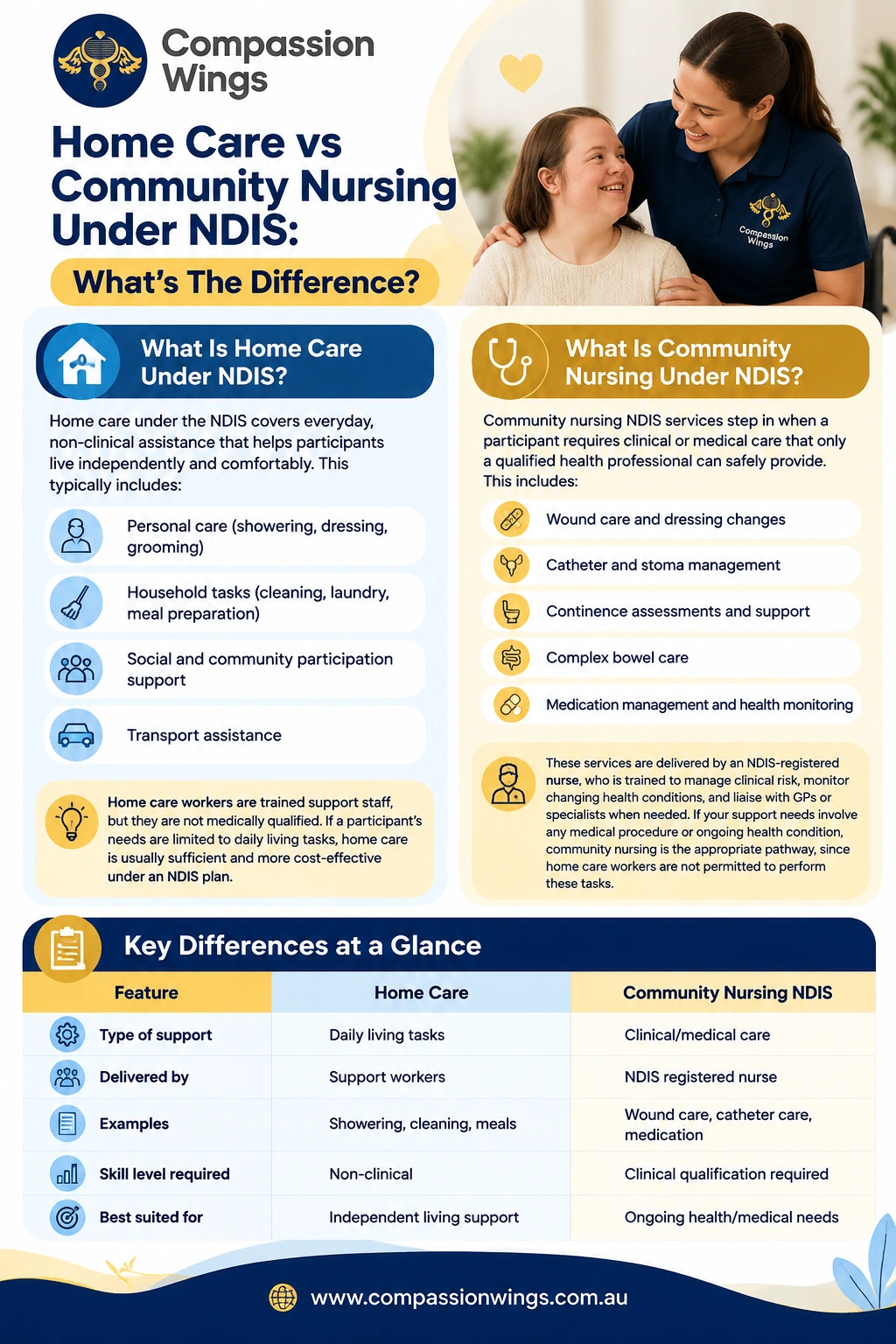
What Is Home Care Under NDIS?
Home care under the NDIS covers everyday, non-clinical assistance that helps participants live independently and comfortably. This typically includes:
- Personal care (showering, dressing, grooming)
- Household tasks (cleaning, laundry, meal preparation)
- Social and community participation support
- Transport assistance
Home care workers are trained support staff, but they are not medically qualified. If a participant’s needs are limited to daily living tasks, home care is usually sufficient and more cost-effective under an NDIS plan.
What Is Community Nursing Under NDIS?
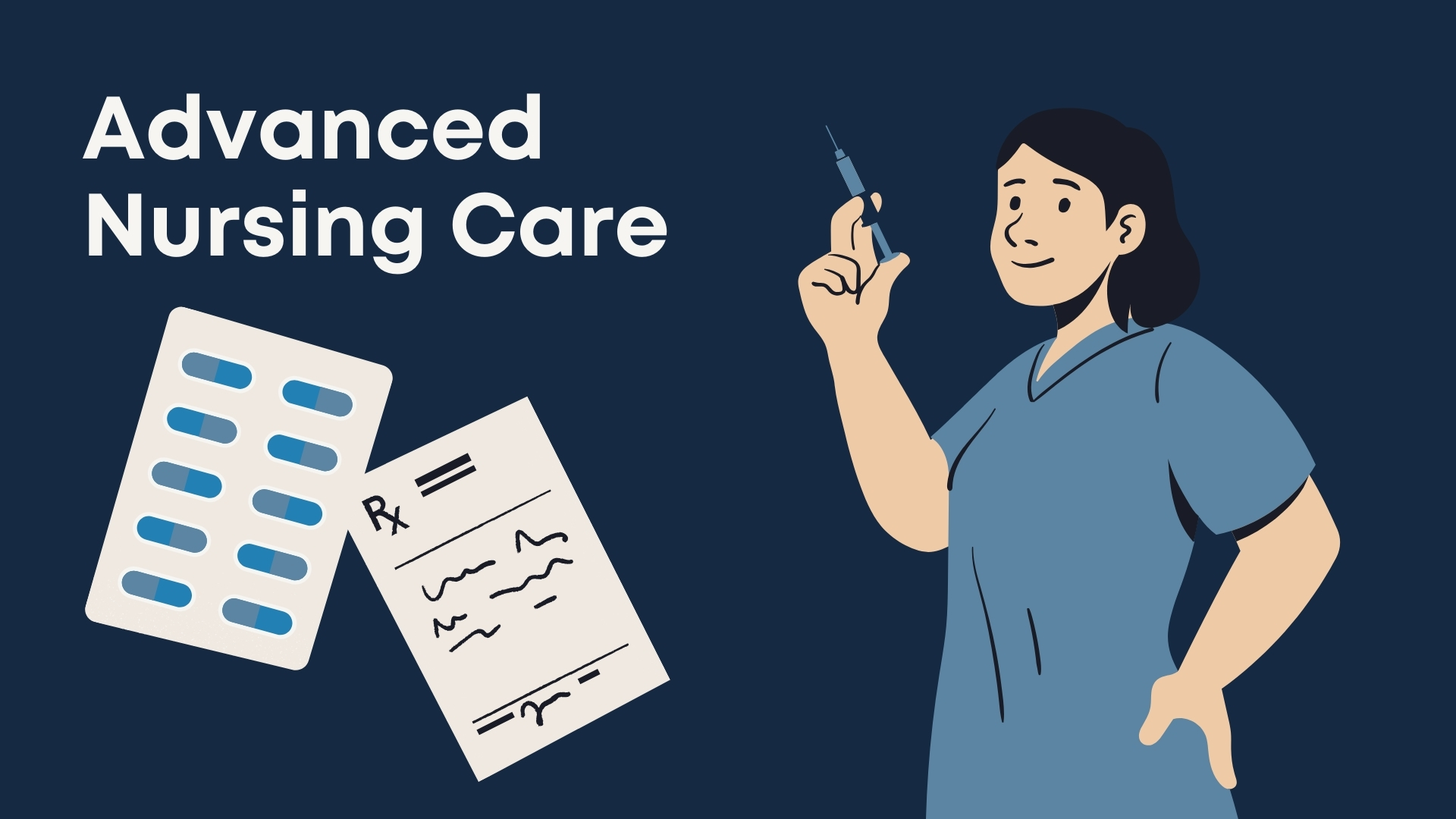
Community nursing NDIS services step in when a participant requires clinical or medical care that only a qualified health professional can safely provide. This includes:
- Wound care and dressing changes
- Catheter and stoma management
- Continence assessments and support
- Complex bowel care
- Medication management and health monitoring
These services are delivered by an NDIS-registered nurse, who is trained to manage clinical risk, monitor changing health conditions, and liaise with GPs or specialists when needed. If your support needs involve any medical procedure or ongoing health condition, community nursing is the appropriate pathway, since home care workers are not permitted to perform these tasks.
Key Differences at a Glance
| Feature | Home Care | Community Nursing NDIS |
| Type of support | Daily living tasks | Clinical/medical care |
| Delivered by | Support workers | NDIS registered nurse |
| Examples | Showering, cleaning, meals | Wound care, catheter care, medication |
| Skill level required | Non-clinical | Clinical qualification required |
| Best suited for | Independent living support | Ongoing health/medical needs |
Who Needs Which Service?
Most NDIS participants use a combination of both. For example, someone recovering from surgery might need a support worker for meals and cleaning, while also requiring a nurse for wound checks and dressing changes.
You likely need NDIS community nursing support if you have:
- A chronic wound or post-surgical recovery needs
- A catheter, stoma, or continence condition requiring clinical management
- Complex bowel care needs
- A condition requiring regular medication administration or health monitoring
You likely need home care if your primary need is help with daily tasks and independence, without ongoing clinical involvement.
How to Access These Services Under NDIS
Both home care and community nursing can be funded under Core Supports or Capacity Building categories in your NDIS plan, depending on your specific goals and assessed needs. It’s best to confirm funding categories with your NDIS planner or Local Area Coordinator, as allocations vary by individual plan.
If you are searching for an “NDIS provider near me” for clinical support, look for a specialist NDIS registered nurse team. Community nursing in Elizabeth is available locally, covering wound care, continence, catheter, and complex health needs.
Final Remarks
Choosing between NDIS home care vs community nursing comes down to whether your needs are daily living tasks or clinical care. Many participants use both, coordinated together for full support. Compassion Wings can help clarify what’s funded in your plan and guide you toward the right type of support.
Need NDIS Support? Get in Touch
Have questions about community nursing under your NDIS plan? Reach out to Compassion Wings today. Call us on +61 423 667 551 or email haki@compassionwings.com.au to discuss your care needs and find the right nursing support for you. We are here to help.
Frequently Asked Questions
Is community nursing covered under NDIS?
Yes. Community nursing is covered under NDIS when it’s deemed reasonable and necessary, and clinical care needs are documented in your plan.
Can the same provider deliver both home care and community nursing?
Some NDIS providers offer both, while others specialise in this kind of clinical nursing to ensure a higher standard of care.
What’s the difference between a support worker and an NDIS registered nurse?
A support worker assists with daily living tasks and holds no clinical qualifications. An NDIS registered nurse is a qualified health professional trained to deliver medical care such as wound treatment, catheter management, and medication support.
Do I need a doctor’s referral for community nursing under NDIS?
Not always, but clinical needs typically need to be documented through an NDIS assessment or referenced in your plan to access funding for nursing services.
Which NDIS funding category pays for community nursing?
Community nursing is usually funded under Core Supports for everyday hands-on care, while nursing assessments or training-focused supports may fall under Capacity Building.
Can I switch from home care to community nursing if my health needs change?
Yes. If your condition changes and you need clinical support, you can request a plan review to include community nursing, or your existing plan may already allow flexibility to access both.
Is community nursing available outside major cities?
Availability depends on the provider, but many NDIS nursing providers service surrounding suburbs. For example, in community nursing, residents can access wound care, continence, and catheter support locally.
What happens if I need both home care and community nursing at the same time?
Many participants use both together. Your support worker handles daily tasks while a registered nurse manages clinical needs, and both can be coordinated within the same NDIS plan.
Do NDIS registered nurses visit participants at home?
Yes. Community nursing is typically delivered in the participant’s home or community setting, allowing clinical care to happen in a familiar environment rather than a clinical facility.
How do I find a reliable NDIS provider near me for nursing support?
Look for a provider with qualified, registered nurses experienced in complex care such as wound management, continence, and catheter care, and confirm they can align their services with your NDIS plan goals.