

What Should a Home Wound Assessment Include?
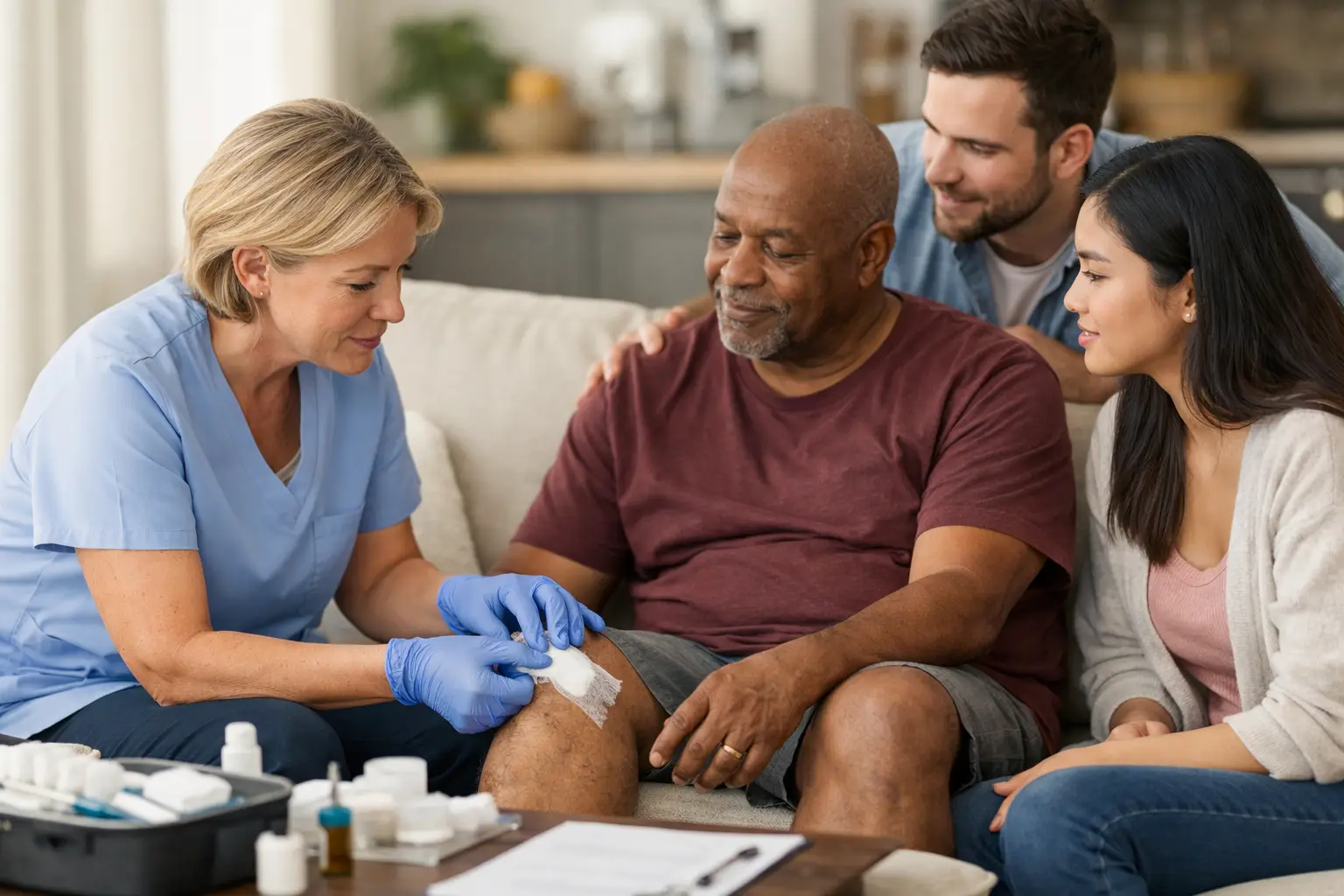
A dressing change can show whether a wound looks better or worse, but it does not tell the whole clinical story. Knowing what should a home wound assessment include helps families, support teams and Support Coordinators move beyond “the dressing was changed” to a clear picture of healing, risk and the care required to keep a participant safe at home.
For NDIS participants with complex health support needs, wound assessment should be nurse-led, systematic and repeated at clinically appropriate intervals. It needs to identify not only what is visible on the skin, but also the factors that may be delaying healing, increasing infection risk or making the current routine unsafe to carry out at home.
What should a home wound assessment include?
A thorough assessment starts with the person, then examines the wound in a consistent way. The findings should be documented clearly enough that another clinician can understand the wound’s condition, the treatment rationale, the risks to monitor and when escalation is needed.
Participant history and the cause of the wound
The first question is not simply “How long has it been there?” A nurse will ask how the wound occurred and what has changed since it first appeared. A skin tear after a transfer, a pressure injury linked to prolonged sitting, a post-operative wound or a diabetic foot wound each carry different risks and need different clinical considerations.
Relevant history includes previous wounds, recent hospital admissions or surgery, diabetes, reduced circulation, oedema, reduced mobility, neuropathy, immune conditions and any history of pressure injuries. Current medicines also matter. For example, some medicines may affect bleeding, pain, fluid balance or healing.
The assessment should also record the participant’s own experience: pain, itching, odour, sleep disruption, anxiety during dressing changes and what has or has not worked before. Safe, dignity-focused care means the person is involved in decisions wherever possible, including how privacy, positioning and dressing changes will be managed in their home.
Wound location, type and measurements
Accurate baseline information is essential. The wound location should be described precisely, such as the left heel, sacrum, lower leg or abdomen. Where appropriate, a nurse may identify the wound type or use a recognised pressure injury classification. Classification should not be guessed by untrained staff, as an incorrect description can lead to the wrong care pathway.
Measurements create an objective record of progress. This usually includes length, width and depth in centimetres, using a consistent technique. If there is undermining or tunnelling, its location and depth should also be recorded. A wound that appears smaller on the surface may still have a deeper cavity, so a quick visual check is not enough.
Clinical photographs can support ongoing comparison when consent has been obtained and images are managed in line with privacy requirements. Photographs do not replace written assessment. They should sit alongside measurements and a clear clinical description.
The wound bed, edges and surrounding skin
A home wound assessment needs to describe what is actually present in the wound bed. This may include healthy granulation tissue, epithelial tissue, slough, necrotic tissue or exposed structures. The amount and appearance of each tissue type can indicate whether healing is progressing or whether review is required.
The wound edges are equally relevant. Are they attached and moving towards closure, rolled, dry, macerated or fragile? The skin around the wound should be checked for redness, warmth, swelling, breakdown, moisture damage, bruising, dryness or changes in colour. For a participant with reduced sensation or darker skin tones, early pressure damage may not present as obvious redness, making careful observation especially important.
A wound is never assessed in isolation from the skin around it. For example, leakage from a dressing, urinary or faecal incontinence, perspiration or repeated adhesive use can cause moisture-associated skin damage that prevents the wound from improving.
Exudate, odour, pain and infection indicators
Wound fluid, known as exudate, should be assessed for amount, colour, consistency and whether it is increasing. Clear, light drainage may be expected in some wounds, while thick, cloudy, green or foul-smelling drainage may need prompt clinical review. Odour should be assessed after the old dressing has been removed and the wound cleaned, as a temporary odour from an old dressing is different from persistent odour from the wound itself.
Pain should be recorded using a method that suits the participant’s communication needs. A sudden increase in pain, new tenderness, or pain that continues despite an established plan can be a warning sign. This is particularly relevant for people with diabetes, impaired sensation or communication differences, where infection or tissue damage may not be reported in typical ways.
Local signs that require attention can include increasing redness, heat, swelling, discharge, delayed healing or wound breakdown. Systemic symptoms such as fever, chills, confusion, rapid deterioration or the participant feeling acutely unwell need urgent medical assessment. If there are signs of a medical emergency, call 000. A nurse-led service can assess, document and escalate concerns, but urgent medical care should never be delayed while waiting for a routine visit.
Looking beyond the wound: healing risks at home
The most useful practical nursing assessments identify why the wound developed and what may stop it healing. Without this step, even a technically correct dressing plan can fail.
For pressure-related wounds, the nurse will consider time spent in bed or seated, ability to reposition, transfer techniques, skin checks, continence-related moisture and whether support workers understand the pressure care routine. The plan may need clear instructions on repositioning frequency, skin monitoring and when to report changes. Support worker training and clinical oversight are often vital where several people deliver daily care.
For lower limb and diabetic wounds, circulation, swelling, footwear, sensation, blood glucose management and the person’s ability to notice injury are relevant. Compression, offloading and medical treatment decisions require appropriate clinical assessment and, in some cases, direction from the treating medical team. Home nursing should not apply a one-size-fits-all solution.
Nutrition, hydration, smoking, sleep, pain control and the ability to access supplies can also affect healing. So can the home environment. The assessment may identify practical barriers such as limited space for safe dressing changes, poor lighting, difficulties maintaining hygiene, unreliable stock levels or a care routine that is too complex for the people expected to follow it.
Turning assessment findings into a workable care plan
Assessment becomes valuable when it produces a plan that is safe, specific and achievable. A clinical wound care plan should state the wound baseline, treatment aim, dressing regimen, skin protection measures, pain considerations, supply requirements, review frequency and escalation triggers. It should also clarify which tasks require a nurse and which tasks support workers may complete after suitable training, delegation and competency assessment.
Instructions such as “monitor wound” are too vague to protect the participant or guide a busy team. A usable plan explains what to look for, what to document, who to contact and how quickly to act. For example, it can define changes in drainage, odour, pain, redness or wound size that require the nurse to be contacted the same day.
Clear documentation also helps Support Coordinators understand the clinical need behind requested supports. Nursing reports can describe the wound’s impact on daily routines, the frequency and complexity of care, risks if care is missed, training requirements and evidence of progress or deterioration. This is more helpful than broad statements that a participant “needs wound care”.
When to refer for nurse-led wound care
A referral is appropriate when a wound is new, deteriorating, recurring, slow to heal or difficult for the current team to manage safely. It is also appropriate where a participant has multiple risks, such as diabetes, immobility, incontinence, catheter or stoma-related skin complications, reduced capacity to report symptoms, or frequent hospital presentations.
Families and providers should seek clinical input when dressing changes are inconsistent, staff are unsure what is normal, or there is no current written plan. A nurse can complete a practical assessment, establish a baseline, coordinate with the treating team where needed, provide support worker education and develop clear reports for Support Coordinators.
For Adelaide participants with complex wounds or skin integrity risks, Compassion Wings provides nurse-led NDIS care that connects assessment findings to practical clinical support in the home. The focus is not just on changing a dressing. It is on helping participants stay safe at home with a plan that families and care teams can follow confidently.
A good home wound assessment gives everyone a shared starting point: what the wound is doing now, what may be driving it, what care is required today and what changes cannot wait until the next visit.






3 Comments
Wound Report Example for Plan Review Explained - Compassion Wings
August 18, 2026[…] strongest reports are based on a practical nursing assessment, current observations and relevant clinical history. They are written in plain language where […]
How to Reduce Hospital Visits With NDIS Nursing - Compassion Wings
August 21, 2026[…] nutrition concerns, poor supply arrangements or delays in recognising infection. A nurse can assess the wound and surrounding skin, review current routines, identify risks and clarify what needs escalation to […]
Wound Assessment Versus Wound Dressing Support - Compassion Wings
August 23, 2026[…] wound assessment is a practical nursing assessment that examines the wound in context, rather than viewing it as an […]