

Who Provides Pressure Care Education for Support Workers?
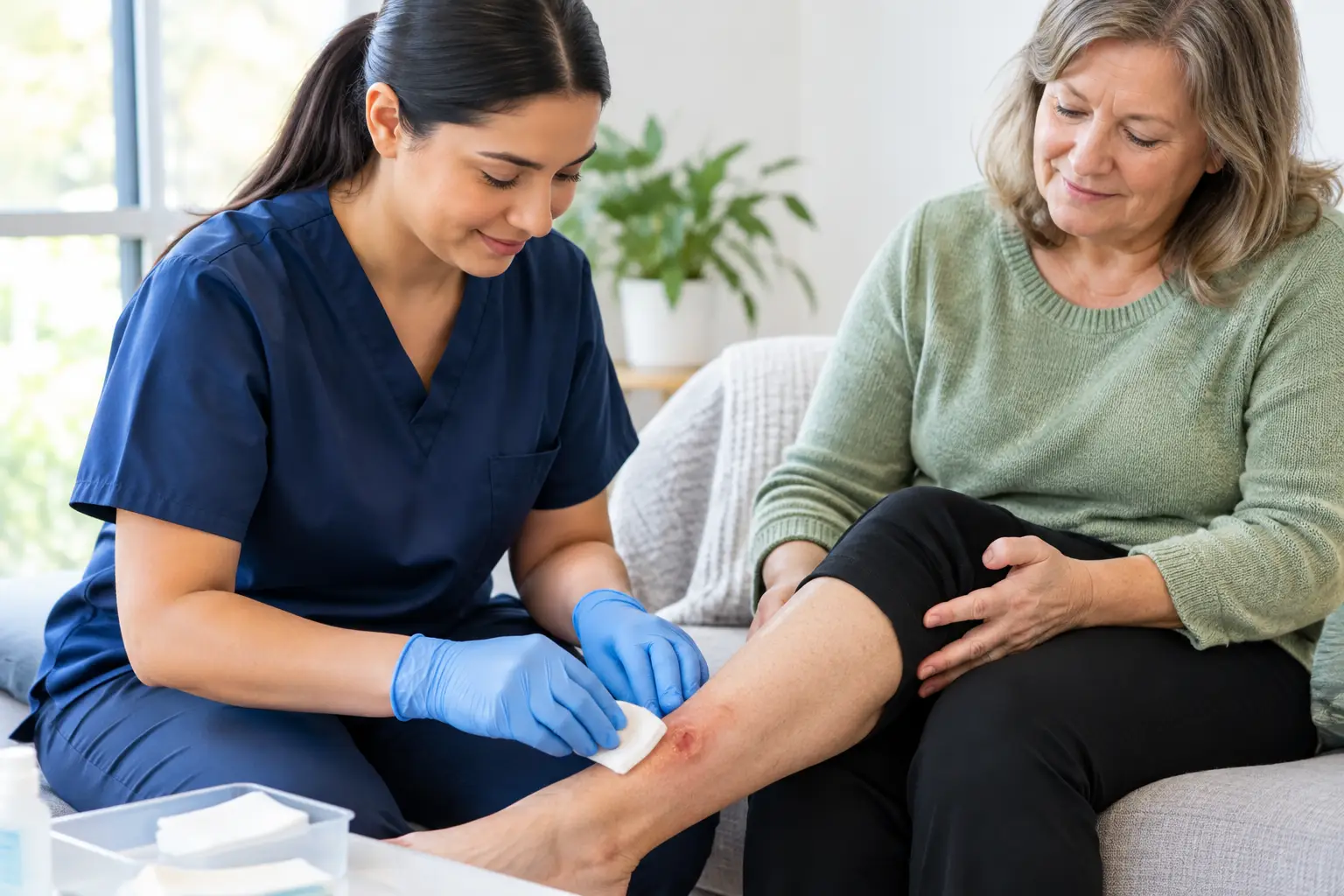
A support worker notices redness on a participant’s heel during a morning routine. By that afternoon, the skin looks worse. This is where the question of who provides pressure care education for support workers stops being theoretical and becomes a safety issue.
Pressure care education is not just about showing someone how to reposition a person in bed. It involves skin integrity, clinical risk, equipment use, documentation, escalation, and dignity-focused daily care. For participants with limited mobility, continence issues, poor nutrition, spinal injury, neurological conditions, or a history of wounds, poor pressure care can lead to avoidable skin breakdown, infection, pain, and hospital admission.
Who provides pressure care education for support workers?
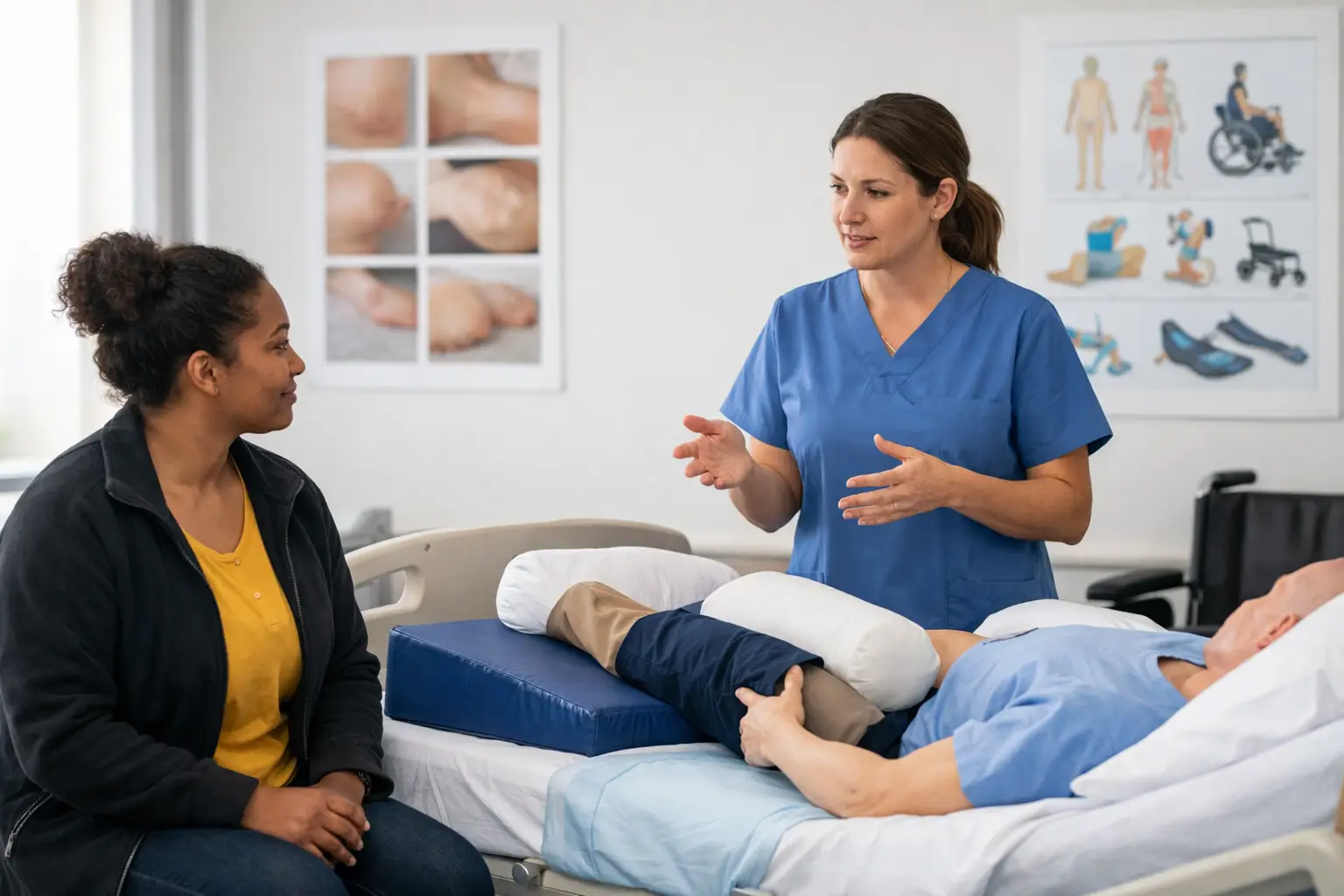
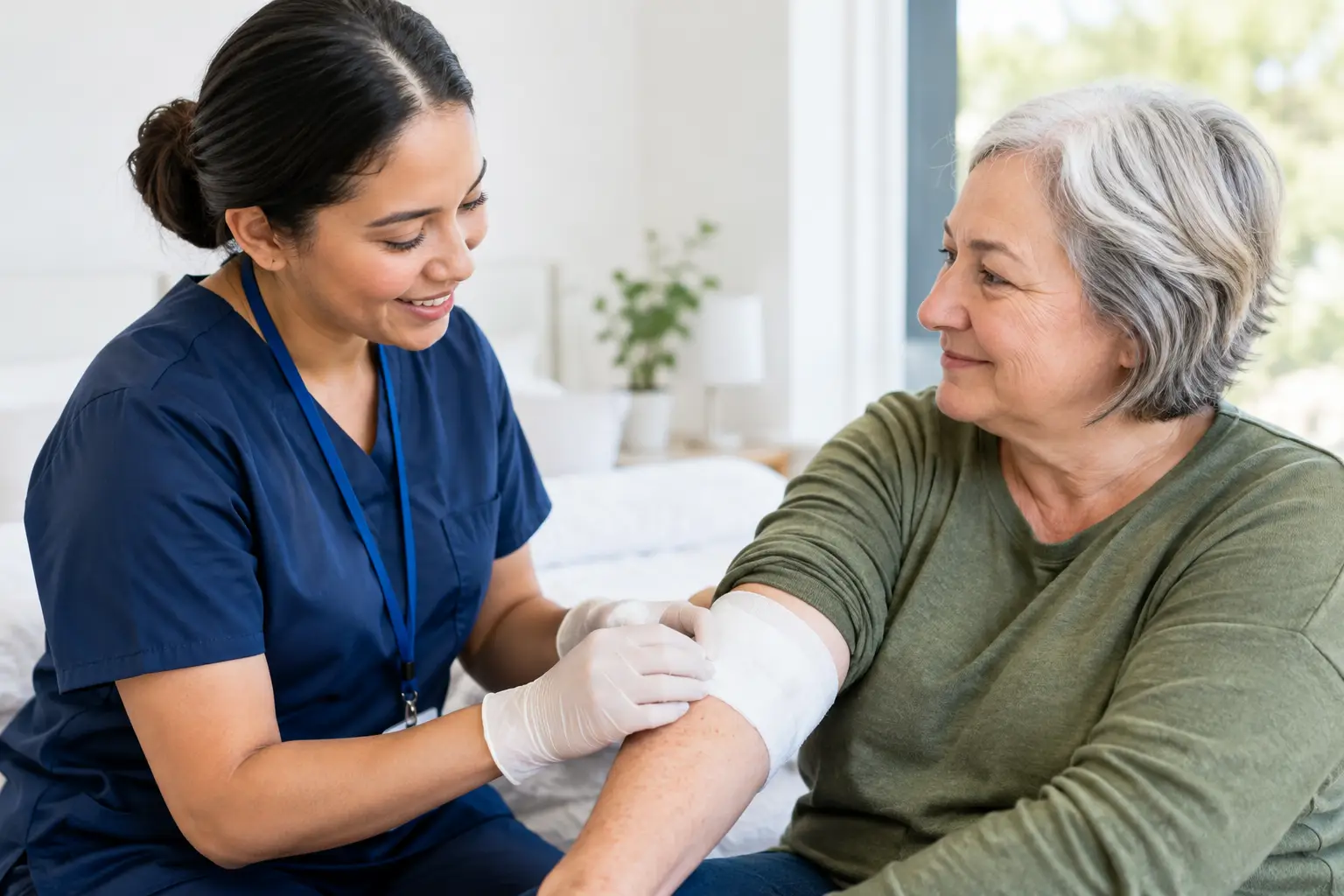
The most appropriate provider is usually a nurse with relevant clinical experience in wound care, pressure injury prevention, continence, manual handling considerations, and community-based disability support. In practice, that often means a registered nurse delivering nurse-led NDIS care and support worker training with clinical oversight.
Not all education on pressure care is equal. A generic manual handling session or standard induction module may help with broad workplace safety, but it will not always cover participant-specific pressure risks. The right educator needs to understand how clinical needs translate into daily support routines in the home. They also need to recognise when a participant’s presentation requires review, documentation, escalation, or a change in the care plan.
For participants with complex health support needs, pressure care education is best delivered by clinicians who can assess the person first, identify the actual risks, and train support workers around those risks. That is very different from broad, one-size-fits-all training.
Why nurse-led pressure care education matters
Pressure injuries rarely happen because one person made one obvious mistake. More often, they develop because small risks are missed over time. A worker may not understand that moisture from incontinence increases skin breakdown risk. A family member may not know that a new chair cushion is not enough on its own. A team may reposition regularly but overlook friction during transfers, poor nutrition, or early signs of tissue damage.
This is where nurse-led education adds value. Nurses can connect the dots between posture, continence, mobility, wound history, medical conditions, pain, infection risk, and the realities of support shifts. They can also tailor education so support workers know exactly what matters for that participant rather than trying to apply generic rules to a complex situation.
Good education should not leave workers with vague advice like “check the skin” or “move the participant often”. It should give them clear, practical actions. What areas need monitoring? What does concerning redness look like? When should they document? When should they contact the nurse, family, or coordinator? What steps are safe, and what tasks need clinical review first?
What good pressure care education for support workers should include
Pressure care education should match the participant’s actual support environment. That means training may look different in a private home, SIL setting, hospital discharge transition, or community arrangement with mixed staff experience.
At a minimum, education should cover how pressure injuries develop, who is at higher risk, and what early signs must never be ignored. Support workers also need practical guidance on repositioning schedules where relevant, bed mobility support, chair positioning, use of pressure-relieving equipment, skin checks within their role, and documentation expectations.
For many participants, continence is part of pressure care. Moisture-associated skin damage can quickly complicate pressure injury risk, especially when absorbent products, prolonged sitting, or overnight routines are involved. That is why practical nursing assessments often need to consider both skin integrity and continence management together rather than treating them as separate issues.
Education should also clarify boundaries. Support workers need to know what they can safely do, what needs delegation or nursing instruction, and what signs require prompt escalation. This protects the participant and the workers themselves.
Participant-specific training is often the safest option
There is a place for general education, especially for newer staff. But when a participant already has a wound, a history of skin breakdown, reduced mobility, spinal cord injury, palliative needs, or equipment that requires careful use, generic education is not enough.
Participant-specific training allows the nurse to assess the person’s skin risks, routines, transfer methods, seating, continence factors, and support environment. From there, the team can receive practical guidance that fits the home and the participant’s preferences. This is often the difference between a care plan that looks fine on paper and one that actually works during a rushed morning shift.
Who should organise the training?
It depends on the situation. A Support Coordinator may identify the need after concerns about skin integrity, repeated incidents, or a hospital discharge. A family may request training because they are worried the current team is missing signs of breakdown. A SIL provider or support organisation may seek education after onboarding a participant with higher clinical needs. Allied health professionals may also flag concerns where seating, mobility, or positioning issues overlap with skin risk.
Whoever initiates it, the best starting point is usually a clinical review rather than booking education in isolation. Without assessment, training can miss the real problem. A participant may appear to need repositioning advice when the deeper issue is an unsuitable routine, moisture damage, poor mattress use, inconsistent documentation, or a wound that already needs nursing intervention.
When Support Coordinators should refer for pressure care education
Support Coordinators are often under pressure to keep supports safe while managing incomplete information. Pressure care is one of those areas where early referral matters.
A nursing referral is worth considering when there is redness that does not resolve, a history of pressure injuries, recent hospital discharge, reduced mobility, long periods spent in bed or chair, pain during repositioning, changes in continence, or staff uncertainty about how to prevent skin breakdown. It is also appropriate when workers are giving inconsistent feedback, equipment is in place but not being used correctly, or the participant’s support needs have increased beyond routine care.
Clear reports for Support Coordinators can then document the risks, current presentation, practical recommendations, training delivered, and whether further review is needed. That kind of evidence helps with safe service coordination and supports stronger clinical documentation when plans or supports need review.
What qualifications and experience should you look for?
If you are asking who provides pressure care education for support workers, the better question is who can provide clinically reliable education for this participant.
Look for a registered nurse with experience in wound care, pressure injury prevention, skin integrity monitoring, continence-related skin issues, and clinical support in the home. Experience with NDIS participants and high-intensity support environments also matters. The educator should be able to assess, train, document, and escalate, not just deliver a presentation.
Practical communication matters too. Support workers need clear teaching they can use on shift. Families need reassurance without fluff. Coordinators need documentation they can rely on. A good nurse educator can speak to all three groups without losing the clinical detail.
What pressure care education should lead to
Training should change practice. After education, workers should understand the participant’s risks, know the daily routine expected of them, document concerns properly, and escalate early signs without hesitation.
In stronger models of care, training also feeds into written clinical care plans, wound prevention strategies, continence-related skin care routines, and ongoing review. That is especially important where staff turnover is high or multiple providers are involved. One education session can help, but ongoing clinical oversight is often what keeps standards consistent.
For participants with complex needs, safe, dignity-focused care usually depends on more than staff goodwill. It depends on clear instructions, the right equipment, practical review, and a nurse who can step in when the situation changes.
In Adelaide, services such as Compassion Wings provide support worker training and clinical oversight as part of broader nurse-led NDIS care. That model is often the most useful when pressure care sits alongside continence, wound care, catheter support, diabetes management, or other overlapping clinical needs.
A practical way to decide what is needed
If the participant has no skin issues, low risk, and stable mobility, broad education may be enough. If there is any history of wounds, compromised mobility, continence-related skin problems, repeated redness, pain, complex equipment, or uncertainty in the team, a nursing assessment should come first.
That approach is safer because pressure care is rarely just about one task. It sits inside the bigger picture of complex health support, daily routines, and risk management in the home. The right education does not only tell support workers what to do. It helps everyone around the participant understand why it matters, what to watch for, and when to act quickly.
When pressure care is handled well, participants are more likely to stay comfortable, avoid preventable wounds, and remain safe at home with a team that knows what good care actually looks like.




1 Comment
How to Reduce Wound Infection Risk at Home - Compassion Wings
July 17, 2026[…] bony area, ongoing pressure can prevent healing and deepen the injury. Regular repositioning, pressure care strategies and checking that footwear, bedding or seating are not rubbing the wound should be part of daily […]