
When Stoma Care at Home Needs Nursing Support
A leaking pouch at 2 am, sore skin that worsens with every appliance change, or uncertainty about what support workers can safely do can quickly turn stoma care into a major clinical risk. For NDIS participants with complex health needs, the issue is not simply changing a bag. It is maintaining skin integrity, managing output, recognising deterioration early and preserving dignity in everyday care.
Nurse-led NDIS care can bring structure to a routine that may otherwise rely on trial and error. It also gives families, Support Coordinators and providers clear clinical direction when a participant’s needs change.
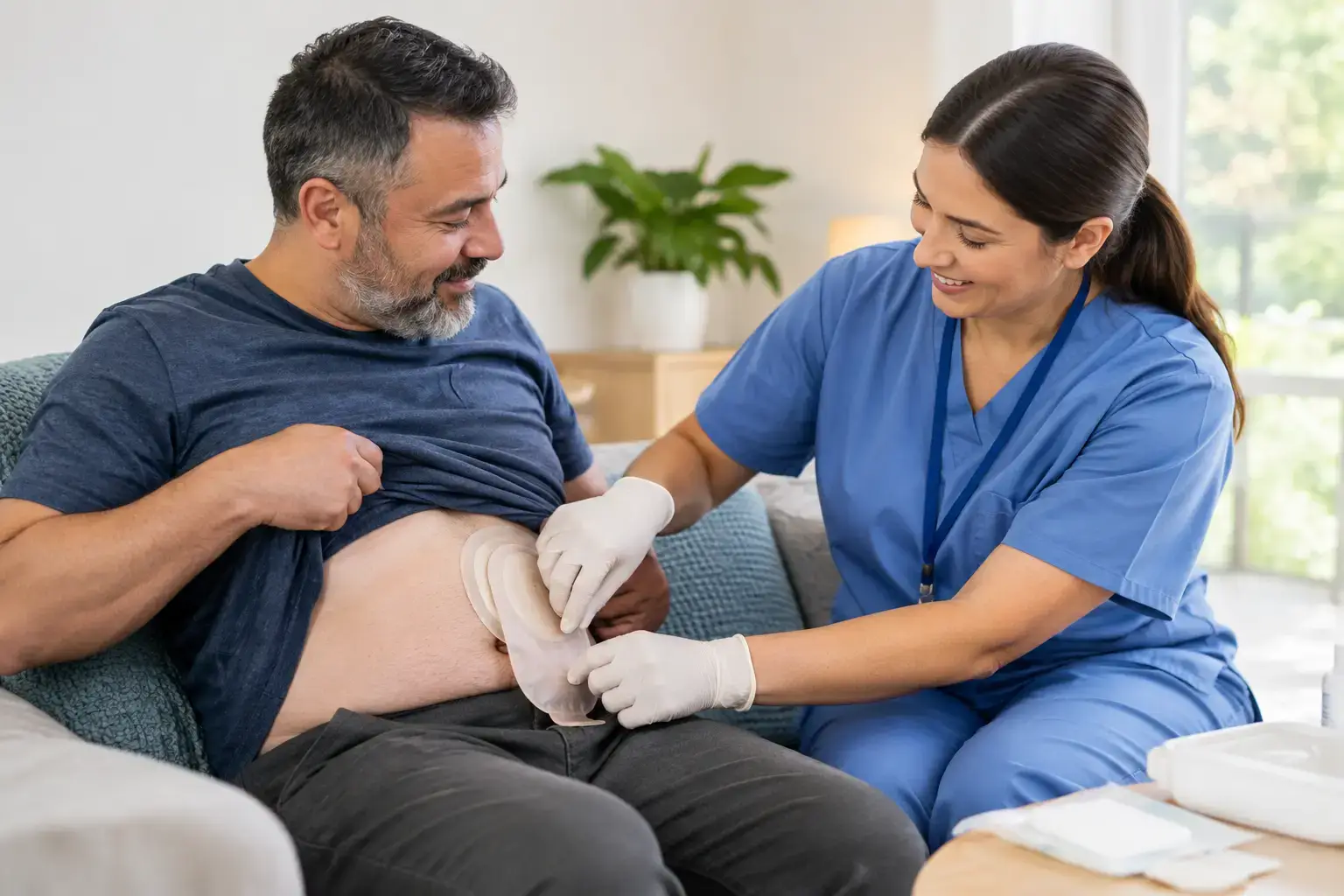
What safe stoma care looks like at home
A stoma is an opening created surgically to divert bowel or urinary output. It may be a colostomy, ileostomy or urostomy, and each can involve different routines, products, output patterns and risks. The participant’s diagnosis, surgery history, dexterity, vision, cognition, skin condition and living arrangements all affect the level of support required.
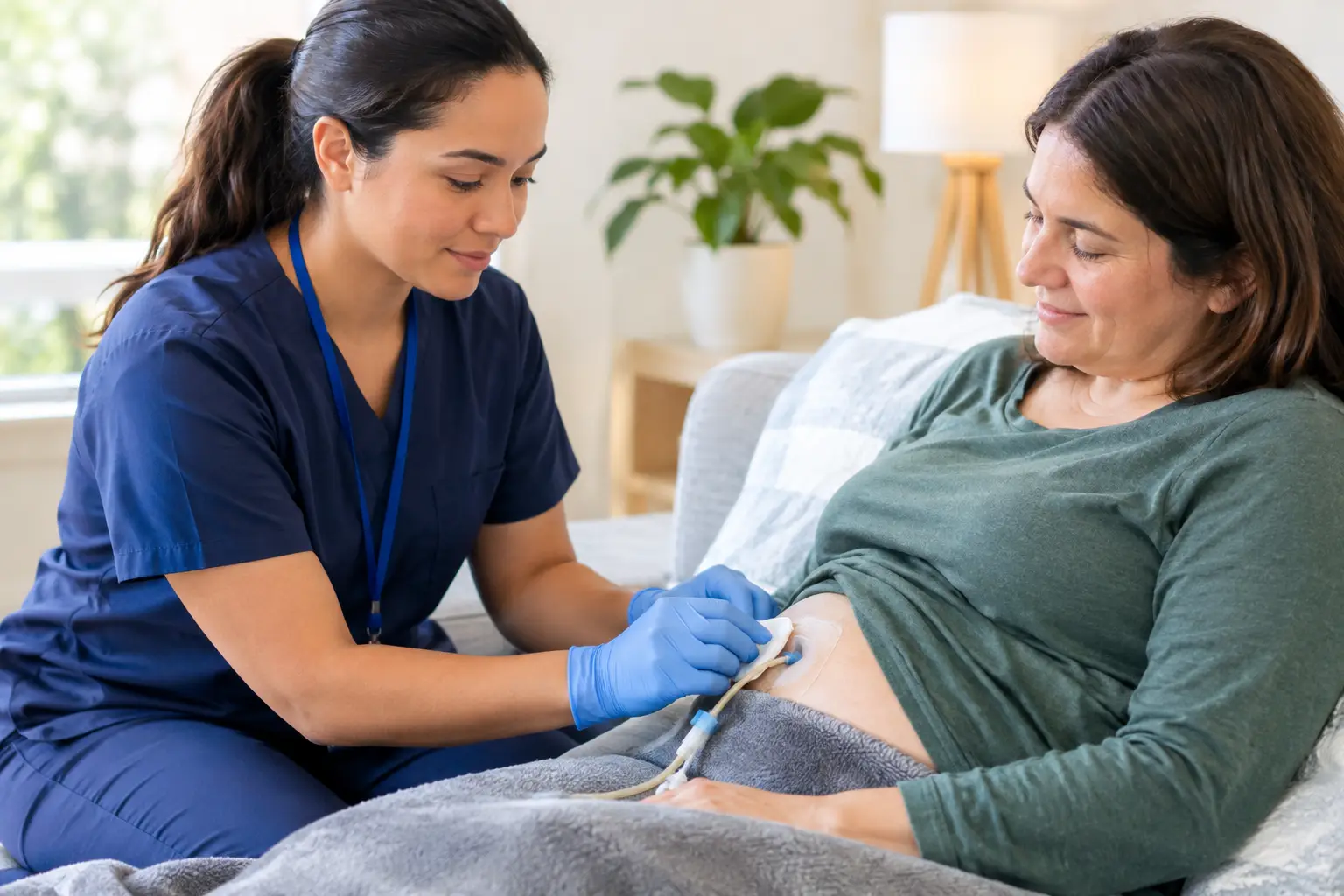
Safe, dignity-focused care begins with an individual assessment rather than a generic checklist. A routine should identify the correct appliance system, how and when it is changed, what the stoma and surrounding skin normally look like, and which changes require clinical escalation. It should also account for privacy, communication preferences and the participant’s own level of involvement.
For some people, a family member or trained support worker may assist with a predictable routine. Others need a nurse to manage complex peristomal skin problems, recurring leaks, high output, medication-related concerns or a recent transition home from hospital. The right level of support depends on clinical complexity, not just how often an appliance is changed.
Stoma care routines need more than a product supply
Having pouches and accessories in the cupboard does not guarantee a safe routine. A poorly fitting appliance can contribute to leakage, odour, skin breakdown and distress. Repeatedly changing products without identifying the cause can increase both cost and discomfort while leaving the underlying problem unresolved.
Practical nursing assessments consider the stoma’s shape and location, the contours of the abdomen, scars, creases and changes in body weight. They also consider whether the current product system is appropriate and whether the person can safely complete any parts of the routine themselves. This is particularly relevant where a participant has reduced hand function, fatigue, memory changes, visual impairment or fluctuating health.
A clear clinical care plan should set out the daily routine in plain language. It may include the agreed equipment, hygiene requirements, usual wear time, storage arrangements, waste disposal, skin observation and documentation expectations. It should be specific enough for trained staff to follow consistently, while making clear when they must contact a nurse rather than attempting to solve a problem independently.
Consistency matters. Different approaches between family members, agency staff and SIL teams can lead to avoidable leakage or skin trauma. Support worker training and clinical oversight help ensure that the routine is understood, delivered respectfully and reviewed when circumstances change.
Skin integrity is central to safe stoma care
The skin around a stoma should not be persistently painful, weeping, bleeding, broken or severely itchy. These signs may be linked to leakage, adhesive injury, moisture-associated skin damage, allergy, infection or a change in the stoma itself. They should not be dismissed as an unavoidable part of wearing an appliance.
Nursing input can help identify patterns and put practical controls in place. This may involve reviewing the current routine, documenting the condition of the skin, improving appliance fit, arranging appropriate escalation to the treating team and monitoring whether interventions are working. Good documentation is especially valuable where several people provide care across a week.
When stoma care needs urgent clinical escalation
Support workers and families do not need to diagnose a problem, but they should know when to act. Early escalation is often safer than waiting for the next scheduled visit, particularly for participants who have difficulty communicating pain or changes in their health.
Seek urgent medical advice through the appropriate treating service, GP, after-hours service or emergency care when there is severe or increasing abdominal pain, heavy bleeding, a marked change in stoma colour such as darkening or black appearance, vomiting, fever, sudden absence of output with symptoms of obstruction, or signs of significant dehydration. A stoma that becomes severely swollen, prolapsed or retracted also requires prompt assessment.
Less urgent concerns still deserve timely nursing review. These include frequent leaks, recurring redness, a new rash, an appliance that no longer fits well, changes in output that persist, increasing odour, or a participant becoming reluctant to eat, drink or leave home because they fear an accident. Small problems can become much harder to manage when they are left unaddressed.
A care plan should state who to contact, what observations staff should record and what information is needed during escalation. This reduces uncertainty for workers and helps clinicians make decisions based on a clear picture rather than incomplete recollections.
Training support workers for complex health support
Stoma support can be a high-intensity task where workers need practical education, competency assessment and ongoing access to clinical guidance. Reading a written plan is useful, but it is not a substitute for hands-on instruction tailored to the participant’s equipment, body position, communication needs and risks.
Effective support worker training covers the agreed change routine, infection prevention measures, privacy and consent, product handling, skin checks, record keeping and escalation pathways. It also defines boundaries. Workers need to know what they are authorised and trained to do, as well as when a nurse should review the participant.
Clinical oversight should not end after the first training session. Changes in health, weight, mobility, cognition, equipment or staff roster may make an existing plan unsafe or impractical. Regular review gives providers and families an opportunity to identify gaps before they result in preventable skin damage, dehydration or hospital presentation.
For Support Coordinators, this approach provides reassurance that complex health support is backed by practical nursing assessments, clear reports and accountable clinical direction. For participants, it means care is more predictable and less intrusive.
How nursing evidence supports NDIS planning conversations
When stoma care needs have increased, clear clinical evidence can help explain the functional impact and the support required to implement safe care at home. A nursing report may describe the participant’s stoma-related risks, current routine, level of independence, support worker training needs, frequency of review and consequences if care is inconsistent.
This is different from making assumptions about funding outcomes. NDIS decisions are made by the relevant agency, and supports must be considered against the participant’s individual circumstances and applicable requirements. However, timely, objective nursing documentation can give Support Coordinators and plan reviewers a clearer understanding of why clinical oversight, training or a revised care plan may be necessary.
Useful reports are specific. They record observable concerns such as persistent leakage, skin breakdown, changed output management needs or reduced ability to complete the routine. They also explain the practical steps needed to reduce risk, without overstating what can be achieved.
Referring for nurse-led stoma support in Adelaide
A referral is most effective when it includes the participant’s relevant medical history, stoma type where known, current concerns, recent hospital or specialist advice, existing care plans, medication information relevant to the routine and details of who provides day-to-day support. Consent and the participant’s communication needs should be considered from the outset.
Compassion Wings provides clinical support in the home across Adelaide for participants whose stoma routines require assessment, care planning, worker education, monitoring or nursing reports. This may be particularly helpful following discharge, when recurrent skin issues or leakage are affecting daily life, or when a provider needs clearer clinical governance around a high-intensity task.
The most useful next step is not to wait for a crisis. A timely nursing review can turn an uncertain routine into a clear, documented plan that protects comfort, dignity and safety while helping participants stay safe at home.