
How to Manage Hypoglycaemia Safely at Home
A blood glucose reading below 4.0 mmol/L can become a clinical emergency quickly, particularly when a person cannot recognise their early warning signs, has communication difficulties, or relies on others for medication and meals. To manage hypoglycaemia safely, the response needs to be prompt, calm and guided by an individualised diabetes care plan – not guesswork.
For NDIS participants with complex health needs, hypoglycaemia management is more than keeping sugary food nearby. It requires practical nursing assessments, clear instructions for the people providing support, appropriate escalation pathways and documentation that shows what happened, what action was taken and whether the plan remains safe.
What hypoglycaemia can look like
Hypoglycaemia, often called a hypo, occurs when blood glucose levels fall too low. For most people with diabetes, a reading below 4.0 mmol/L is treated as hypoglycaemia. However, symptoms and safe thresholds can differ between individuals, especially where there is recurrent hypoglycaemia, impaired awareness, enteral feeding, kidney disease or a changing medication regimen. The person’s treating team and clinical care plan should always guide care.
Early symptoms may include shaking, sweating, hunger, headache, tingling around the lips, dizziness, nausea, irritability, confusion or difficulty concentrating. A participant may become unusually quiet, distressed, unsteady, drowsy or unlike themselves. Not everyone can describe these symptoms. For a person with limited speech or cognitive impairment, support workers and family may instead notice changes in facial colour, behaviour, coordination, responsiveness or mood.
If untreated, a hypo can progress to disorientation, loss of consciousness, seizure or inability to swallow safely. This is why staff should never wait for symptoms to become severe before acting when the blood glucose meter shows a low reading or the person’s usual signs are present.
How to manage hypoglycaemia safely: the immediate response
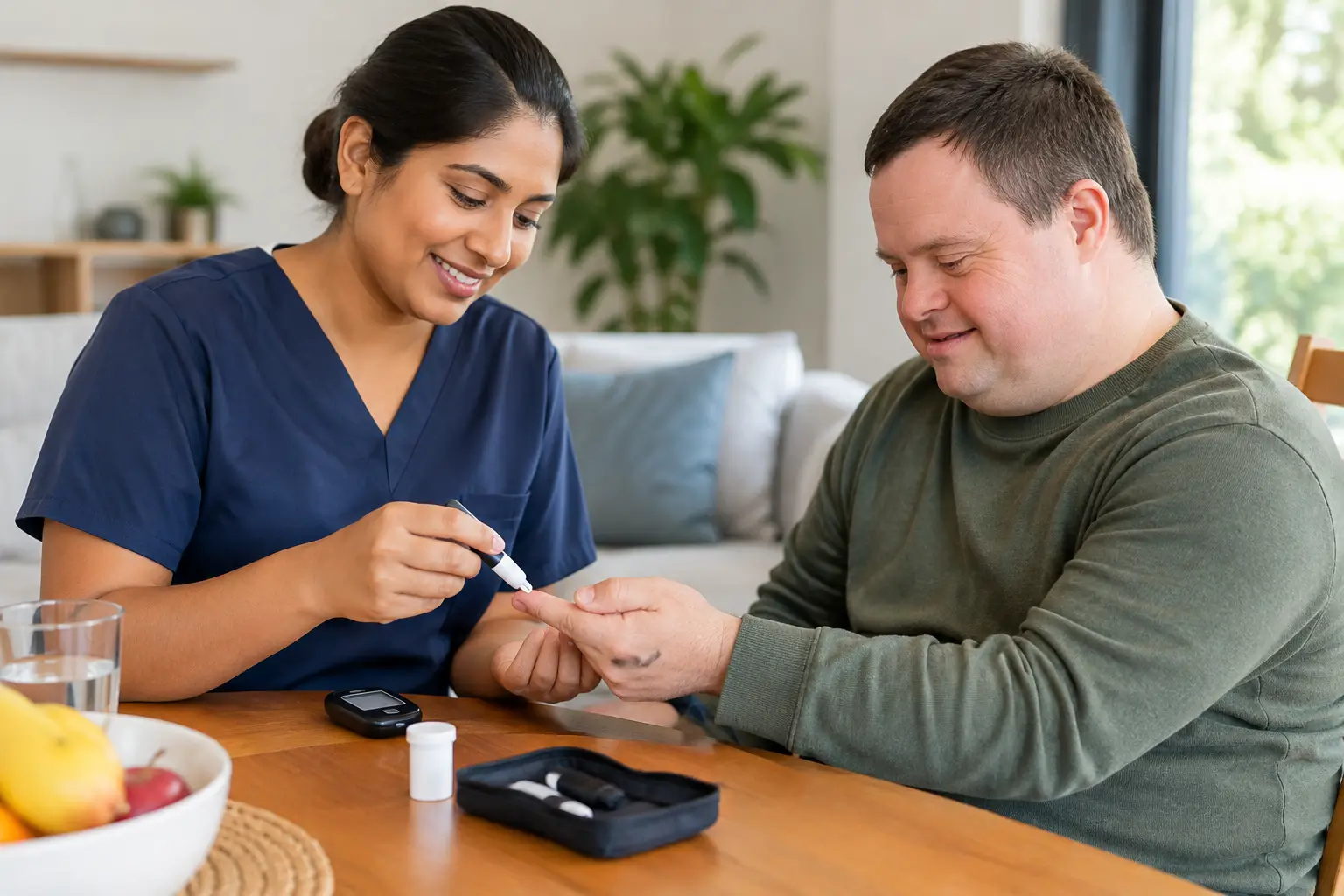
First, follow the participant’s current diabetes or hypoglycaemia management plan. If they are awake, able to swallow safely and their reading is below the agreed threshold, give fast-acting carbohydrate as specified in the plan. A common approach is 15 grams of fast-acting carbohydrate, such as glucose tablets, glucose gel, regular soft drink or juice, followed by a blood glucose recheck after 15 minutes.
The exact product and amount matter. Diet soft drink will not treat a hypo, and chocolate, biscuits or milk are generally slower to raise blood glucose because they contain fat or protein. They may be useful as follow-up food in some circumstances, but should not replace the prescribed fast-acting treatment for an acute low.
Once blood glucose has returned to a safe level, the participant may need a longer-acting carbohydrate snack or their planned meal, depending on timing, activity, medication and their individual instructions. For example, a person who has treated a hypo before a delayed meal may require different follow-up from someone who has had a hypo after exercise. Avoid making assumptions based on a single generic rule.
Support should remain with the participant until they are alert, their blood glucose has been rechecked, and they are clinically settled. Document the reading, symptoms, treatment given, follow-up reading, likely contributing factors and any escalation. This information helps identify patterns and gives treating clinicians meaningful evidence to review the plan.
When oral treatment is not safe
Do not give food, drink, tablets or gel by mouth to a person who is unconscious, having a seizure, unable to swallow, severely confused or at risk of choking. Place them in the recovery position where appropriate, call 000, and follow their emergency plan.
If prescribed glucagon is available, it should only be administered by a person trained and authorised under the participant’s care plan and organisational procedures. Glucagon can be lifesaving in severe hypoglycaemia, but it does not remove the need for emergency assessment. After glucagon or a severe hypo, the participant needs clinical review and careful monitoring as directed by emergency clinicians and the treating team.
Why some participants face greater risk
Hypoglycaemia is often linked to insulin or certain glucose-lowering medications, a missed or delayed meal, reduced appetite, vomiting, increased activity, alcohol use, illness or a dose that no longer matches the person’s needs. Yet the cause is not always obvious. Repeated lows may indicate a medication issue, an inconsistent meal routine, changes in renal function, weight loss, infection, or poor communication between services.
Risk is higher when several people share parts of the routine. One worker may administer medication, another may support meals, and a family member may notice symptoms later in the day. Without a clear plan, essential details can be lost at handover. This is particularly concerning for participants who cannot independently test their blood glucose, prepare treatment, recognise symptoms or call for help.
A nurse-led review can identify where the routine is breaking down. It may show that the issue is not simply a missed snack, but a mismatch between medication timing, meal support, monitoring frequency and staff responsibilities.
A care plan should make decisions easier
A useful hypoglycaemia plan is specific enough to guide a new or relief worker at 2 am, while still reflecting the participant’s preferences and usual routine. It should state the person’s recognised symptoms, blood glucose threshold for action, approved treatment options and quantities, when to re-test, and when to contact family, a nurse, the GP, diabetes team or emergency services.
It should also identify where the glucose meter, test strips, hypo treatment and glucagon are stored, as well as expiry-check responsibilities. For participants using continuous glucose monitoring, the plan should explain how alerts are interpreted, when a finger-prick check is required, and what to do if sensor readings do not match symptoms.
Clear role allocation is essential. Staff need to know who can administer medication, who may provide treatment, who records the incident, and who is responsible for notifying the relevant clinician. Vague wording such as ‘monitor closely’ is not enough in a high-risk situation. Safe, dignity-focused care depends on clear actions, not broad intentions.
Support worker training and clinical oversight
Written plans alone do not guarantee safe care. Workers need practical education that connects the plan to real situations: recognising a subtle change in presentation, checking a blood glucose reading correctly, selecting the right fast-acting carbohydrate, responding when a person refuses treatment, and escalating when treatment does not work as expected.
Training should also address dignity. Some participants may feel embarrassed after a hypo, frightened by symptoms or tired of repeated questioning. A calm, respectful approach protects the person’s privacy while still ensuring clinically safe monitoring and documentation.
For services supporting participants with insulin, recurrent hypos or limited capacity to self-manage, support worker training and clinical oversight should be reviewed when there is a medication change, hospital presentation, increased frequency of lows, change in food intake, new illness or a change of residence or support arrangement. These are not administrative details. They can change clinical risk overnight.
When to refer for nursing input
Support Coordinators, families and providers should consider a nursing assessment when hypoglycaemia is recurring, symptoms are difficult to recognise, staff are unsure about escalation, or existing instructions are incomplete or inconsistent. Referral is also appropriate after a severe event, ambulance attendance, hospital discharge, medication change, unexplained falls or a decline in the participant’s ability to manage diabetes independently.
Compassion Wings provides nurse-led NDIS care for participants who need clinical support in the home. Practical nursing assessments can review diabetes routines, treatment supplies, monitoring records, staff capability and clinical risks. The resulting care plan and clear reports for Support Coordinators can support safer implementation, informed communication with treating teams and evidence for plan reviews or changes in circumstances.
Keep learning from every hypo
Every hypoglycaemic episode should prompt a simple question: what made this more likely, and what needs to change before the next one? The answer may be as practical as replacing expired glucose tablets, adjusting handover notes or arranging a medication review. For a participant with complex health support needs, that small change can be what helps them stay safe at home.