
Can Support Workers Check Glucose Safely?
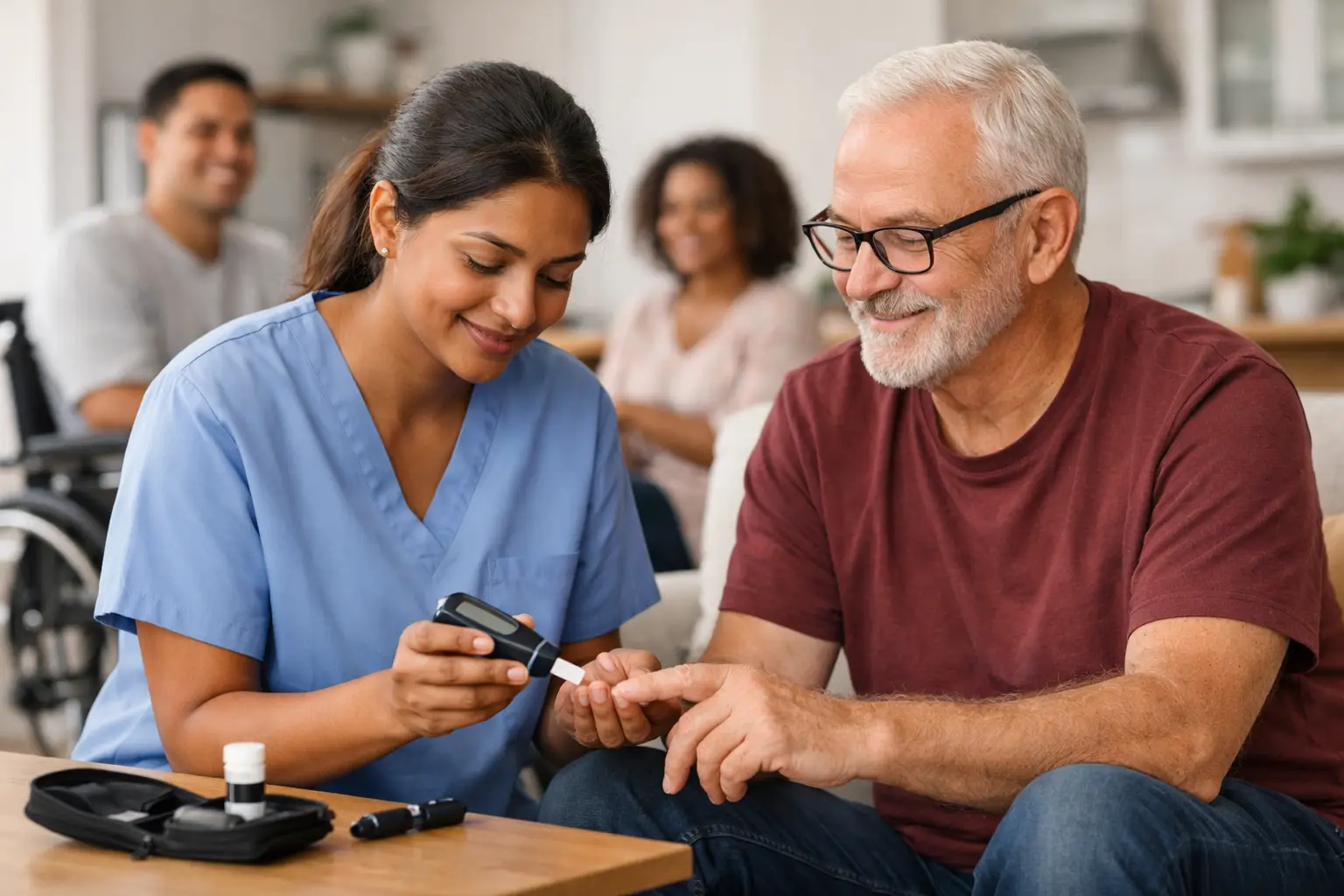
A glucose reading can look simple: prepare the meter, use a lancet, apply blood to a strip and record the result. But for an NDIS participant using insulin or living with unstable diabetes, the number is only one part of the clinical picture. Can support workers check glucose? Often, yes – but only where the task is appropriate for the worker, backed by training, delegated within a clear framework and supported by an individualised clinical care plan.
For families, Support Coordinators and service providers, the safer question is not simply whether a worker can use a glucometer. It is whether the participant has the right safeguards around monitoring, recognising changes and responding before a low or high blood glucose level becomes an emergency.
Can support workers check glucose under NDIS supports?
Support workers may be able to perform blood glucose monitoring when it is part of a participant’s assessed support needs and their employer’s policies allow it. The arrangement should sit within an individualised diabetes management plan, with suitable education, competency assessment, documentation and clinical oversight.
Checking a blood glucose level is not the same as making a clinical judgement or independently changing treatment. A worker needs to understand what they are authorised to do when the result is outside the participant’s expected range. This may include following a written escalation pathway, providing the agreed first response for a known low glucose event, contacting a nominated clinician or emergency service, and documenting what occurred.
Requirements vary according to the participant’s health needs, the support setting, the worker’s role, organisational policy and the relevant state-based practice framework. For this reason, a generic diabetes checklist is not enough. A participant who uses a continuous glucose monitor, has hypoglycaemia unawareness, communicates non-verbally, has frequent infections or receives insulin has a different risk profile from someone with stable diet-controlled diabetes.
Monitoring is a task. Diabetes support is a clinical system.
A meter reading without context can create false reassurance. A glucose level may be affected by food intake, illness, exercise, stress, missed medication, alcohol, a blocked insulin pump site or inaccurate testing technique. The participant may also show signs of deterioration before a number reaches a pre-set threshold.
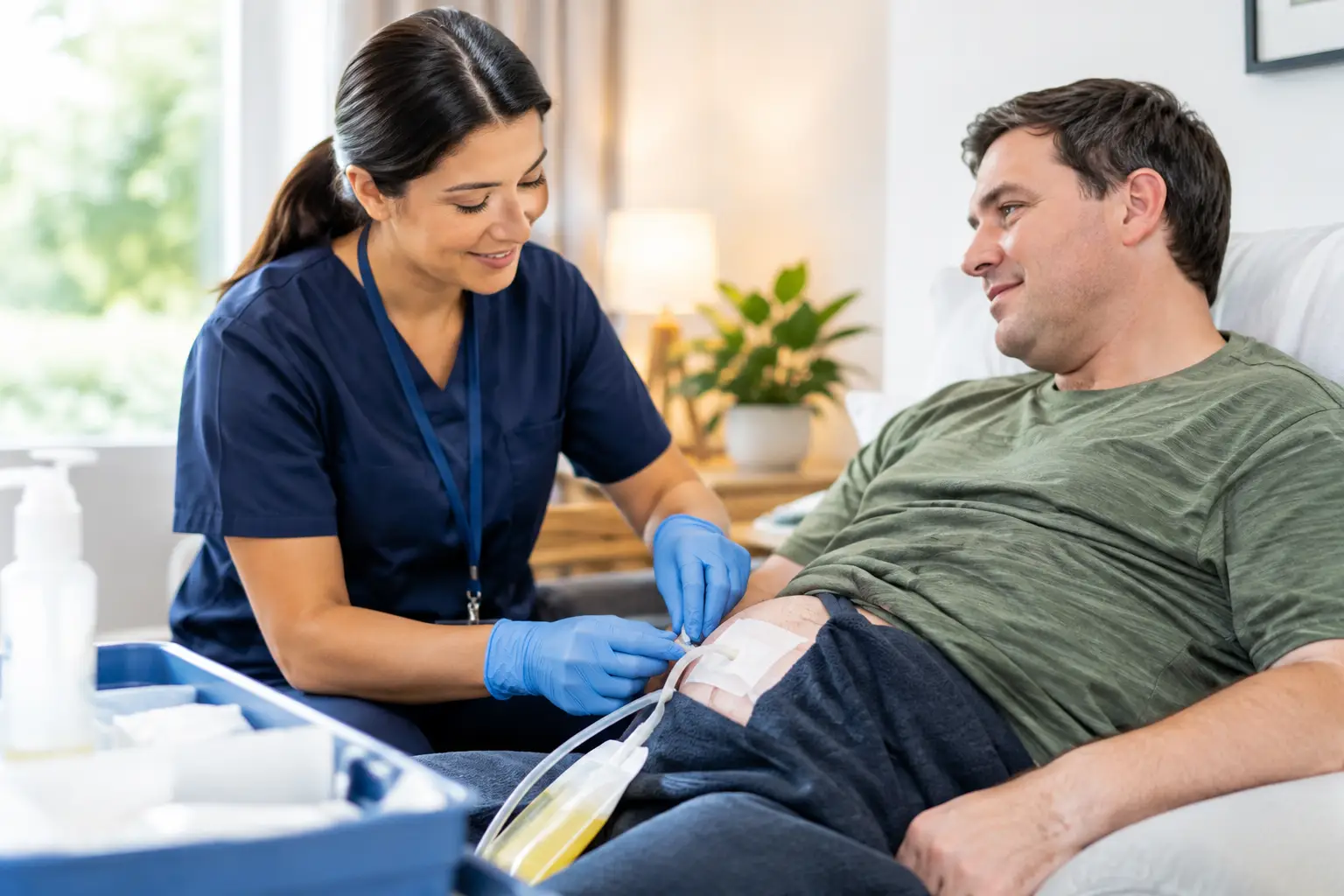
This is why nurse-led NDIS care considers the whole routine. Practical nursing assessments can identify when testing is needed, what equipment is used, how results are recorded, whether the participant can report symptoms, and who is responsible for each part of the response.
A clear plan should answer practical questions such as: What are this person’s usual glucose targets? When must testing occur? What symptoms suggest hypoglycaemia or hyperglycaemia? What food, medication or emergency supplies need to be available? Who should be called, in what order, and when is an ambulance required?
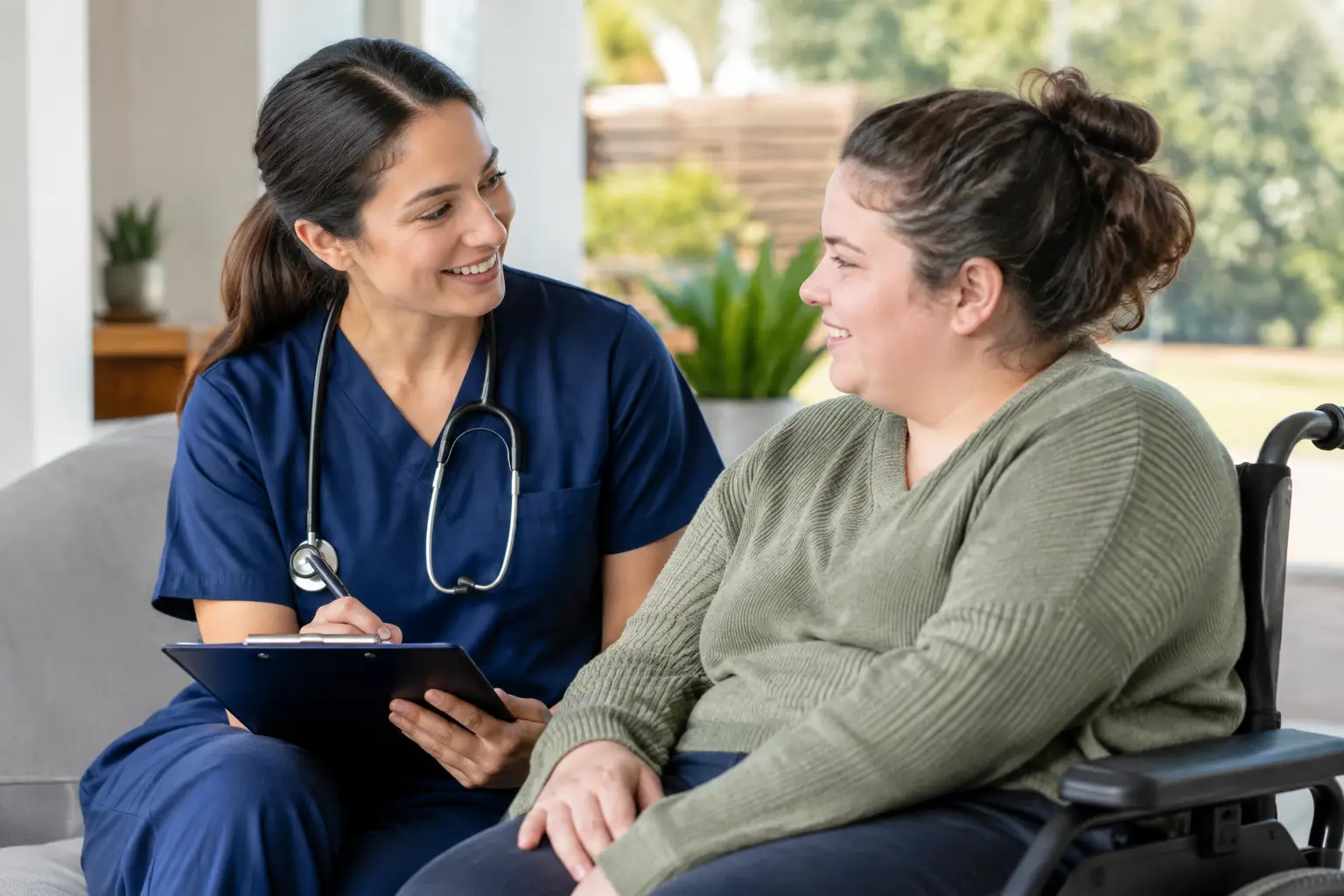
It should also distinguish between support worker tasks and nursing responsibilities. Workers may be trained to perform and record a reading, observe the participant and follow defined instructions. A nurse should assess changes in health status, recurring abnormal results, skin or injection-site concerns, repeated hypo episodes, equipment problems, or uncertainty about whether the plan remains safe.
When glucose monitoring needs nursing review
Support worker training and clinical oversight are particularly important where diabetes management is complex or changing. Referral to a nurse is sensible when a participant has recently returned home from hospital, started insulin, changed diabetes technology, experienced a severe hypo, or has had frequent readings outside their usual range.
Nursing input is also needed where there are barriers to safe monitoring. Examples include poor vision, reduced hand function, cognitive changes, difficulty communicating symptoms, needle anxiety, limited understanding of the routine, or inconsistent records across a team. These issues do not automatically prevent support workers from checking glucose. They do mean the task needs careful assessment and a plan that reflects the person’s actual day-to-day circumstances.
Consider a participant who becomes confused when their glucose drops. A worker who only knows how to operate the meter may record a result but miss the urgency of behavioural change. Or consider a person with recurrent high readings and a foot wound. Their diabetes support cannot be separated from wound healing, infection risk and timely clinical review.
For Support Coordinators, these are situations where clear reports for Support Coordinators can make risk, required supports and recommended training easier to evidence. A nursing report can document the clinical need, identify gaps in the current arrangement and set out practical steps to make care safer at home.
What good support worker training looks like
A brief demonstration at the kitchen bench is rarely enough for a high-risk routine. Effective training is participant-specific and checks that workers can apply the plan safely, not just repeat general diabetes information.
Training should cover correct use and cleaning of the participant’s device, infection prevention, safe sharps disposal, accurate recording and how to recognise relevant symptoms. It should also explain the participant’s usual presentation, communication preferences, food and drink requirements for a hypo response, and the exact escalation steps set by the treating team.
Competency needs to be observed and documented. New staff, agency workers and relief workers should not assume that experience with another person’s diabetes routine transfers automatically. Glucose meters, monitoring systems, action plans and risks differ. Regular review is equally valuable, especially after a hospital admission, medication change, new diagnosis, equipment change or concerning incident.
Training must never ask a support worker to work beyond their role. If an instruction is unclear, a reading is unexpected, the participant is unwell or the written plan does not cover the situation, escalation is the safe response. Clinical support in the home should reduce guesswork, not shift clinical decisions onto workers without the authority or preparation to make them.
The difference between checking glucose and giving insulin
These tasks are often discussed together, but they carry different responsibilities. A worker may be trained and authorised to monitor blood glucose, while insulin administration requires additional assessment, training, delegation arrangements and organisational governance. The details depend on the participant’s prescribed regimen and the provider’s policy.
A glucose result should not lead to ad hoc insulin dose changes by a worker unless there is an explicit, current and clinically approved instruction that the worker is trained and authorised to follow. This is especially relevant with sliding scales, correction doses, insulin pumps and periods of illness, when the risk of error is higher.
Families may understandably rely on a familiar support worker who knows the participant well. Familiarity is valuable, but it is not a substitute for a current care plan or clinical review. Safe, dignity-focused care means making the routine reliable even when the usual worker is away.
Documentation protects the participant and the team
Good records are a clinical safety tool, not paperwork for its own sake. At a minimum, documentation should show the date and time of testing, the reading, relevant symptoms or observations, food or medication factors noted in the care plan, action taken and any escalation.
Patterns matter. Several overnight lows, rising pre-meal readings, recurring missed tests or repeated equipment errors may indicate a problem that cannot be seen from one isolated entry. Nurses can review these patterns alongside the participant’s broader health needs and advise when the treating GP, diabetes educator or other clinician needs to be involved.
Records should be factual and completed promptly. Instead of writing “participant seemed off”, document observable changes such as sweating, shaking, drowsiness, confusion, reduced appetite, vomiting or refusal of fluids, along with the glucose result and the actions taken. This supports continuity across workers and provides a defensible account of care.
A practical referral pathway for complex diabetes support
When diabetes support is not working smoothly, early nursing review is usually more useful than waiting for a serious incident. A referral can begin with the current diabetes plan, recent glucose records, medication chart, hospital discharge information, details of the monitoring device, known hypo or hyperglycaemia episodes, and a description of what workers are currently being asked to do.
Compassion Wings provides nurse-led assessment, participant-specific clinical care plans, support worker education and ongoing review for people needing complex health support across Adelaide. The focus is on practical routines that workers can follow, clear escalation points and documentation that helps participants stay safe at home.
The most reassuring diabetes arrangement is not one where every worker memorises a complicated clinical protocol. It is one where the participant’s needs are understood, the plan is current, workers know their boundaries, and a nurse is available to reassess risk when the routine changes.