

When to Book a Clinical Care Plan Review in Adelaide
A clinical care plan review Adelaide participants can rely on is not a paperwork exercise. It is a practical nursing assessment of whether daily clinical supports still match the person’s health needs, risks, routines and goals for staying safely at home. For families, it can bring clarity when care is becoming harder to manage. For Support Coordinators and providers, it provides current clinical direction that can be implemented, monitored and clearly explained in NDIS documentation.
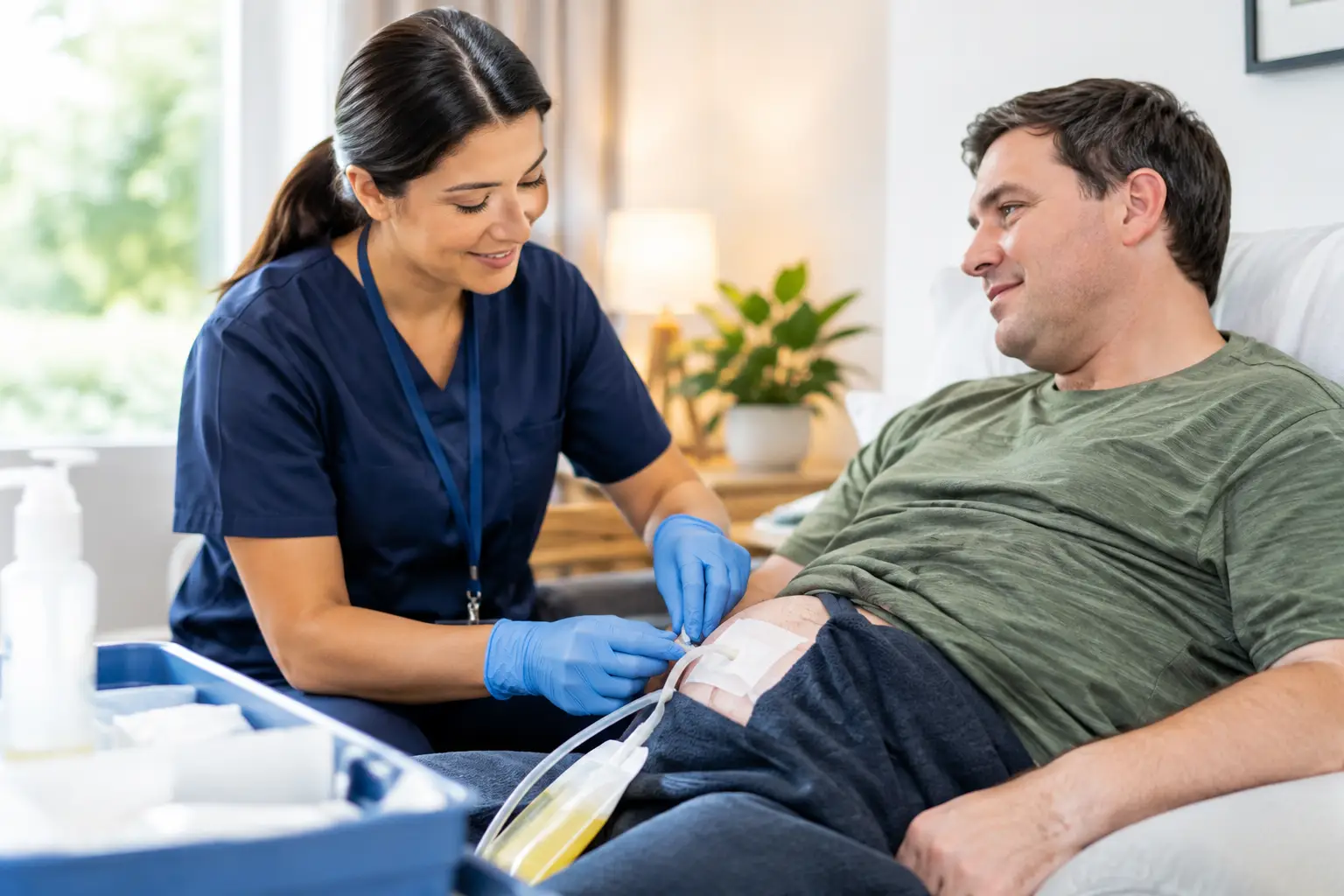
When a participant has continence needs, wounds, pressure injury risks, a stoma, catheter, diabetes, complex medication routines or changing skin integrity, an old plan can quickly become unsafe. A plan that was suitable six months ago may no longer reflect the supplies, supervision, training or nursing oversight now required.
What a Clinical Care Plan Review in Adelaide Should Cover
A quality review begins with the participant, not a standard template. The nurse should understand what is happening in the home or community, what the participant finds comfortable or distressing, which routines are working, and where workers or family members are encountering uncertainty.
The assessment then considers the clinical picture. This may include current diagnoses and treatment directions, recent hospital presentations, infection history, skin condition, continence patterns, mobility-related pressure risks, medication processes and the participant’s ability to recognise or communicate changes in their health. The review should also consider how care is delivered across different shifts, homes or support teams.
The resulting care plan needs to be specific enough for safe implementation. “Monitor skin” is not sufficient direction where there is a history of pressure damage or moisture-associated skin breakdown. Workers need to know what to check, how often to check it, what changes require escalation, who to contact, and what must be documented.
A nurse-led NDIS care plan may include clear daily routines, clinical observations, hygiene and infection-control requirements, equipment or consumable considerations, escalation pathways, incident response guidance and communication expectations. It should protect the participant’s dignity as well as their safety. For example, bowel and bladder support needs to be described in a respectful, practical way that supports privacy, choice and consistency.
When a Care Plan Needs Reviewing
Reviews should occur at planned intervals, but the most valuable reviews are often triggered by change. Waiting for an annual review can leave support workers following directions that no longer reflect the participant’s needs.
A nursing review is worth considering when there has been a hospital admission, emergency department presentation or a new diagnosis. It is also appropriate after a decline in mobility, an increase in falls, weight loss, recurrent urinary tract infections, worsening constipation, a new wound, skin redness that does not resolve, or changes to diabetes or medication management.
Changes in the support environment matter too. A new roster of workers, a new provider, a move between homes, or family carers becoming unable to maintain a complex routine can create clinical risk even when the participant’s diagnosis has not changed. In these situations, support worker training and clinical oversight may be as important as updating the written plan.
For Support Coordinators, another clear trigger is repeated uncertainty from providers. If workers are asking how to manage a catheter bag, what to do when a stoma appliance leaks, whether a wound dressing has changed, or when to escalate bowel concerns, the care arrangement needs clinical review. Uncertainty should not be managed through guesswork, informal handovers or instructions passed from one worker to another.
The Difference Between a Care Plan and a Nursing Report
These documents serve related but different purposes. A clinical care plan guides safe day-to-day delivery of support. It translates assessed needs into clear instructions, boundaries and escalation steps for the people involved in care.
A nursing report for an NDIS plan review or change of circumstances explains the clinical evidence behind those needs. It may outline the participant’s health complexity, functional impact, foreseeable risks, current support requirements, changes since the previous plan and the consequences if necessary clinical supports are not in place.
Both documents should be accurate, current and based on practical nursing assessments. However, neither should make unsupported promises about NDIS funding. Funding decisions sit with the NDIA, while a well-prepared nursing report gives decision-makers and coordinators clear evidence about why a support is clinically necessary and how it relates to participant safety, health maintenance and daily care routines.
What Good Clinical Documentation Looks Like
Good documentation is clear enough for a new worker to follow safely and detailed enough for a Support Coordinator to understand the level of need. It does not rely on vague phrases such as “high care” or “requires assistance” without explaining what that means in practice.
For complex health support, clinical documents should describe the task, the frequency, the skill required, relevant risks, signs of deterioration and escalation instructions. Where workers are expected to undertake high-intensity supports, the plan should identify training requirements, competency expectations and the need for ongoing review when the participant’s condition changes.
It also needs to reflect the participant’s voice. A clinically sound plan does not treat someone as a list of risks. It records preferences around timing, privacy, communication, cultural considerations and what helps the person feel safe during intimate or stressful care. Safe, dignity-focused care is more likely when workers understand both the clinical task and the person receiving it.
A Practical Review Process for Coordinators and Families
Before referring for a review, gather the most relevant information available. Recent discharge summaries, specialist letters, medication charts, wound or continence information, existing care plans, incident records and notes about what has changed can help the nurse assess the situation efficiently. It is also helpful to identify who currently provides support and where the routine is breaking down.
The nurse can then assess the participant in their actual support setting where possible. This matters because clinical support in the home looks different on paper than it does during a busy morning routine, a continence episode, a dressing change or a handover between workers. Observing the environment and discussing real-life barriers often identifies risks that a referral form cannot capture.
Following assessment, the plan should be updated in practical language and shared with the appropriate people, with consent and privacy requirements respected. If workers need training, that should be organised alongside the plan rather than treated as an afterthought. A written instruction is not a substitute for demonstrated competency in a high-risk task.
Finally, set a review point and identify triggers for earlier contact. This keeps the plan active rather than filing it away until something goes wrong.
Why Timely Nursing Input Matters
Early clinical review can reduce the chance that a small issue becomes a crisis. A minor area of redness may become a pressure injury. A change in urine output, appetite or behaviour may be an early sign of infection or discomfort. Recurrent leakage from a stoma or catheter may affect skin health, confidence and participation in daily routines.
Not every change requires an urgent reassessment, and the right response depends on the risk. Acute symptoms should be escalated to the appropriate treating health professional or emergency service. But where patterns are emerging, a timely nursing review can clarify what is happening, strengthen the daily routine and help prevent avoidable hospital presentations.
For Adelaide participants with complex health needs, Compassion Wings provides practical nursing assessments, clear reports for Support Coordinators, support worker training and ongoing clinical oversight. The focus is not simply on producing a document. It is on helping participants stay safe at home with care instructions that people can understand and use.
The best time to review a clinical care plan is usually before the current arrangement fails. When routines are changing, workers are uncertain or health needs are becoming more complex, current nursing guidance gives everyone a safer place to start.